


The neck is seven small vertebrae carrying a head of four to five kilos, and every centimetre the head is pushed forward increases the load on the neck muscles by roughly a kilo. That is why screen work, phone in the lap and reading in bed are the most common causes of neck pain: the small muscles under the skull base, the neck extensors and the upper trapezius work statically hour after hour, become sore, develop trigger points and finally a neck that is stiff in the morning and aches in the evening. Add stress (shoulders up towards the ears), cold and draughts, a poor pillow, and a neck that isn't trained. Nine in ten neck complaints are this kind of muscular, harmless pain, and it responds well to movement, strength, ergonomics, heat and cupping. The tenth case is something else: an acute wry neck that locks movement, a nerve pinched by a disc herniation giving pain, numbness and weakness down the arm, wear in the small joints giving stiffness and neck-related headache, whiplash after an accident, or rare but important: infection, fracture or vascular injury giving the warning signs below. Here is where it hurts and what it means, when to seek care, and what helps.
Where in the neck does it hurt, and what it usually means
| Location and character | Most common | Also consider | Read more |
|---|---|---|---|
| Back of the neck, up towards the skull base, ache and stiffness, often with headache in the back of the head or forehead | Tight suboccipital muscles and neck extensors from a forward head (screen); neck-related headache | Osteoarthritis in the upper neck joints (over 50, stiff in the morning, worse looking up) | Forward head posture, headache |
| Side of the neck down towards the shoulder, tender "string", painful to turn the head one way | Tight upper trapezius and levator scapulae; trigger points | Acute wry neck if it came suddenly and locks movement | Stiff neck and tight shoulders, wry neck |
| Sudden locking, woke up with the head tilted, can't turn or tilt one way | Wry neck (acute torticollis): muscle spasm and locking in a small joint | – | Wry neck |
| Neck and down between the shoulder blades, burning point at the inner edge of the shoulder blade | Rhomboids and middle trapezius, shoulders falling forward, screen work | A disc herniation in the neck often radiates to the shoulder blade before going down the arm | Upper back pain |
| Neck and down the arm, sharp or electric pain, tingling, numbness in the fingers, sometimes weakness | Nerve root involvement: disc herniation or narrowing in the neck (cervical radiculopathy) | Which fingers go numb tells the level; weakness should be assessed | Herniated disc, nerve pain |
| Stiffness and ache in the whole neck, worst in the morning, grinding, less mobility with the years | Osteoarthritis and disc degeneration (cervical spondylosis), normal ageing from 40–50 | With numbness in the hands and unsteady gait: spinal cord involvement, investigate | Osteoarthritis |
| Neck pain after a car accident or a fall, often with headache, dizziness, fatigue | Whiplash | Always assessment within the first day after an accident | Whiplash |
| Neck pain with dizziness when turning the head, unsteadiness | Neck-related dizziness from tight muscles and joints | BPPV (dizziness on changing position in bed) is the ears, not the neck | Dizziness |
| Neck, jaw and ear, tender jaw muscles, tinnitus | Tight jaw and teeth grinding that tense the neck | – | Teeth grinding, tinnitus |
| Front of the throat, tender glands, difficulty swallowing | Infection, lymph nodes, thyroid: not the neck in this guide's sense | – | Swollen lymph nodes |
When to seek care
- Call emergency services: stiff neck (can't put chin to chest) with fever, headache, light sensitivity or skin bleeding (meningitis); sudden severe neck or head pain with dizziness, double vision, speech difficulty, weakness or numbness in the face or one side of the body (vascular injury, stroke); neck pain after major trauma to head or neck with numbness or weakness.
- Same day: neck pain after an accident or fall (especially over 65 or with osteoporosis); increasing weakness in the arm or hand; numbness in both hands with unsteady gait or difficulty with buttons (spinal cord involvement); neck pain with chest pain or breathlessness.
- Your doctor within one to two weeks: pain radiating down the arm with numbness not improving in two weeks; neck pain that wakes you at night regardless of position; neck pain with weight loss, fever or previous cancer; wry neck that hasn't released in a week; neck pain not improved in four to six weeks despite self-care; recurrent neck-related headache or dizziness.
Ordinary muscular neck pain needs no X-ray; the examination is mobility, strength, sensation and reflexes. MRI is done for nerve involvement that doesn't improve or for warning signs.
What helps neck pain
1. Keep moving, not still
The neck heals through movement. Even with wry neck: move the head gently within what is possible, several times a day, instead of holding it still. A collar is no longer recommended other than a few days after injury. Avoid long spells in the same position; change every 30 minutes.
2. Five minutes of neck exercises, twice a day
- Chin tuck: pull the chin straight back as if making a double chin, hold 5 seconds; 10 times. The exercise that counteracts a forward head.
- Rotation: turn the head slowly to the right to tension, hold 3 seconds, back, left; 10 times per side.
- Side bend: ear towards the shoulder without lifting the shoulder, hold 10 seconds; 5 per side. Place the hand lightly on the head for an upper trapezius stretch.
- Shoulder rolls backwards, 10 big slow ones.
- Shoulder blade squeeze: pull the shoulder blades together and down, hold 5 seconds; 10 times.
- Isometric strength: hand against the forehead, press the head against the hand without moving, 5 seconds; then against the back of the head and against each side; 5 times per direction. The deep neck muscles get stronger in four weeks, and strength is what prevents best.
The full programme in neck exercises for a stiff neck. With nerve involvement: only do what doesn't increase the arm pain, and let a physiotherapist set the plan.
3. The workstation and the phone
Top of the screen at eye level, an arm's length away; laptop on a stand with a separate keyboard; a chair with forearm support so the shoulders can drop; phone up at eye level instead of head down. Breaks every half hour with chin tucks and shoulder rolls. See cupping for people who sit a lot.
4. Pillow and sleeping position
The pillow should keep the neck in line with the rest of the spine: lower for back sleepers, higher for side sleepers, and no stomach sleeping with the head turned. Waking with neck pain is almost always pillow or position; see deep sleep and sleeping position.
5. Heat, and temporary medication
A heat pad, hot shower or wheat bag on neck and shoulders for 15–20 minutes loosens the muscles before exercises and cupping. Over-the-counter painkillers for a few days with wry neck let you dare to move; they aren't a long-term solution.
6. Stress and jaw
Shoulders that creep up and jaws that clench are the signature of stress, and they tense the neck around the clock. Notice it ten times a day and release (shoulders down, tongue on the palate, teeth apart), and add five minutes of slow exhalation morning and evening; see stress and relaxation exercises.
7. Cupping the neck and shoulders
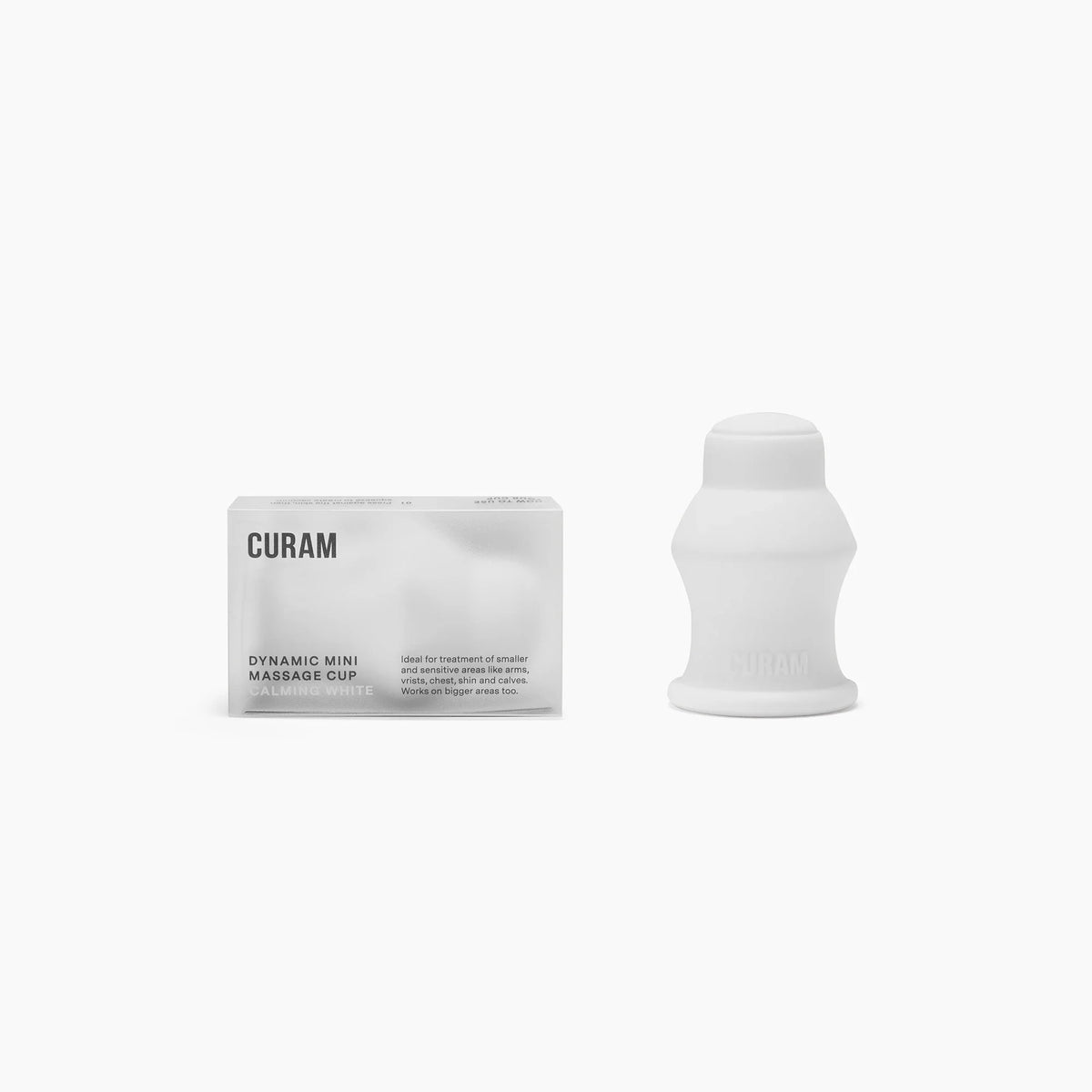
Cupping is one of the best documented applications: several randomised studies on chronic neck pain show moderately reduced pain and better mobility and function after a series of treatments, on a par with or better than heat and ordinary massage, and best combined with exercises. The suction lifts skin and fascia from the upper trapezius, levator scapulae and neck extensors, increases blood flow, releases trigger points and lowers tension. How to: sit or lie on your front, oil neck and shoulders, glide the mini cup with light suction from the skull base down the sides of the neck to the shoulders, 2 minutes per side, and the dynamic cup from the neck out along the trapezius towards the shoulder and down the inner edge of the shoulder blade, 2–3 minutes per side. Then place static cups on the upper trapezius midway between neck and shoulder and on the most tender point at the shoulder blade, 5 minutes, while you slowly turn and tilt the head. Finish with chin tucks and side bends. Two to three times a week; with acute wry neck, light cupping of the shoulders from day two, not on the locked point itself. Never cup the front of the neck or the sides in front of the large neck muscle, not over the spine with strong suction, not with nerve involvement with weakness that hasn't been investigated, not in the first week after whiplash, not with fever or any of the emergency signs, and not if you take blood thinners without having asked; see when to avoid cupping. Routines in stiff neck and tight shoulders, neck massage at home and the cupping programme for arm and shoulder.
Deeper guides
Stiff neck and tight shoulders, wry neck, neck exercises, forward head posture, whiplash, herniated disc, muscle knots and back pain: where does it hurt.
Frequently asked questions
Why does my neck hurt?
Almost always because the neck muscles have worked statically for too long: forward head in front of screen and phone, stress with raised shoulders, a poor pillow, cold or unaccustomed load. Sudden locking is wry neck; pain radiating down the arm with numbness is nerve involvement; stiffness increasing with the years is osteoarthritis; pain after an accident is whiplash. Where it hurts and how it started point to the cause.
When is neck pain dangerous?
Call emergency services for a stiff neck with fever and headache, sudden severe neck or head pain with dizziness, double vision, speech difficulty or weakness, and for neck pain after major trauma with numbness. Seek care the same day after an accident or fall, with increasing weakness in the arm, or numbness in both hands with unsteady gait. Book your doctor if the pain radiates down the arm for over two weeks, wakes you at night or hasn't improved in four to six weeks.
What helps quickly against neck pain?
Heat for 15 minutes, then chin tucks, rotations and side bends for five minutes, shoulder rolls, and cupping of the upper trapezius and sides of the neck with light suction for 5–10 minutes. Change working position, raise the screen to eye level, and sleep with a pillow that keeps the neck straight. With wry neck: move the head gently within what is possible, heat, and if needed a painkiller for a few days.
Does cupping help neck pain?
Yes, neck pain is one of the best studied areas: randomised studies show moderately less pain and better mobility after cupping of neck and shoulders, on a par with or better than heat and massage, especially together with exercises. Cup the upper trapezius, the back and sides of the neck and the edge of the shoulder blade with light suction, never the front of the neck. Not with nerve involvement with weakness, fever, right after whiplash or with blood thinners without a doctor's OK.
Which pillow should I have if my neck hurts?
One that keeps the neck in line with the rest of the spine in your sleeping position: lower and softer for back sleepers, higher and firmer for side sleepers so the head doesn't drop towards the mattress, and preferably no stomach sleeping. Test with a rolled towel in the neck part of the pillow before buying new. If you wake with neck pain several times a week, it is almost always the pillow or the position.
Related guides
- Arm pain and upper arm pain – where does it hurt and what it can be
- Jaw pain and jaw joint pain – causes, exercises and what helps
Written by Curam. Last updated 17 October 2026. This is general self-care information and does not replace medical care. For sudden, severe or unusual symptoms, contact your doctor. Talk to your doctor before cupping if you are pregnant, take blood thinners or have a condition affecting skin, blood vessels or blood.


