


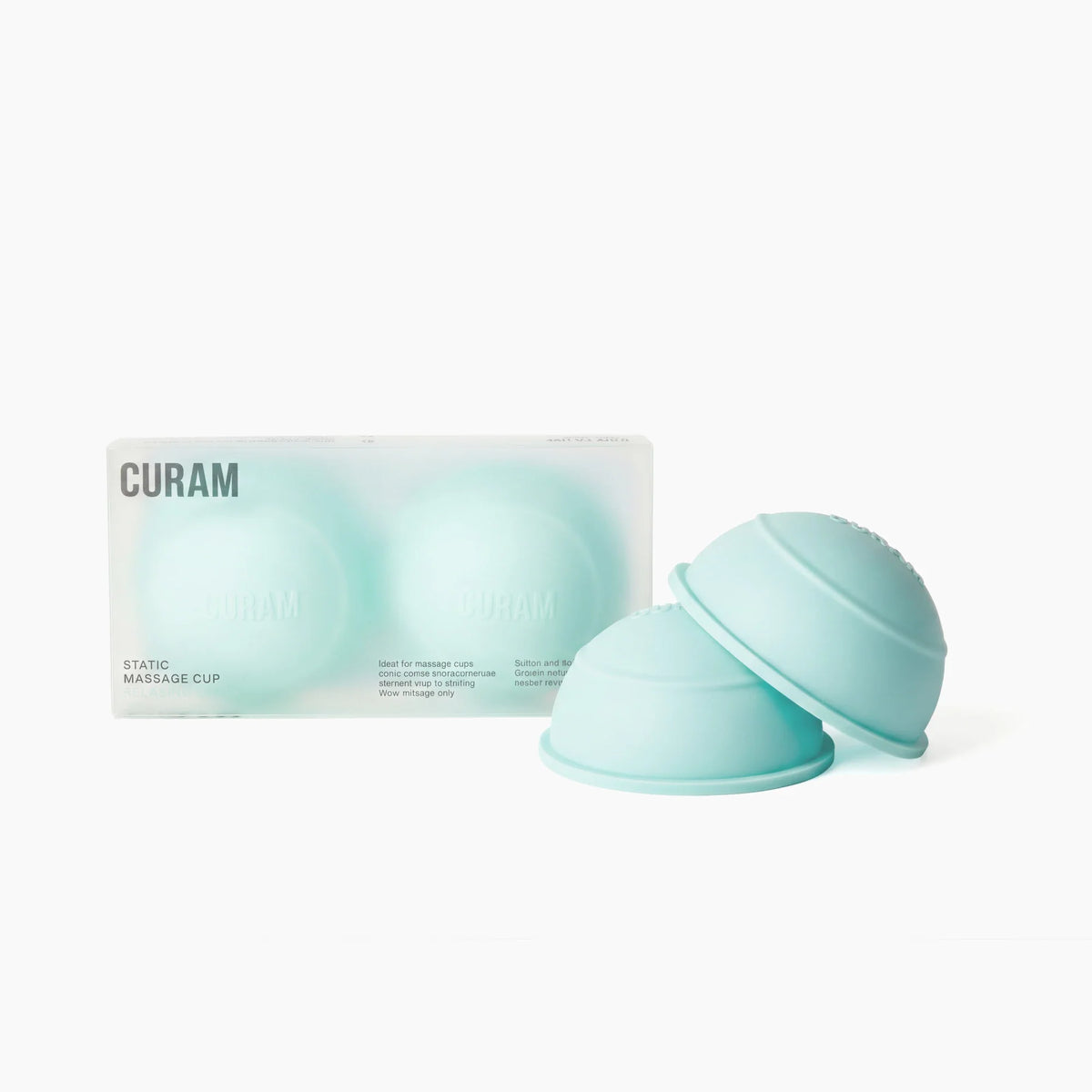
Sitting for long periods makes the connective tissue tight and the circulation sluggish, above all in the neck, shoulders, forearms, lower back and legs. The remedy is movement and variation, but cupping is a way to reach the areas that have stiffened in five minutes, without leaving your desk. Here are five short routines, one per area, which cups you need and how to build a habit that actually sticks.
Why sitting in particular?
When you sit still the leg muscles are not activated, and the lymphatic system, which depends on the muscle pump, slows down. At the same time neck, shoulders and forearms work statically for hours. The result is stiffness, "fuzz" in the connective tissue, heaviness in the legs and often tension headache. Cupping increases blood and lymphatic flow locally and lifts the connective tissue, and because static cups can stay on while you work, the method suits the office unusually well.
What you need
At the office: two static cups in the desk drawer. At home: the Dynamic Cup, the mini cup and body oil, that is Body Kit Small. The programme Curam Office Break guides you through cupping, self-massage, mobility and stress management for the working day and the evening.
1. Neck and shoulders, 5 minutes at the desk
Place a static cup on top of each shoulder, on the trapezius, and keep working for three to five minutes. Roll the shoulders and do ten "double chins" when you take them off. Two to three times a day as needed. More: Stiff neck and tight shoulders. Getting headaches: Tension headache and a tight jaw.
2. Forearms and mouse arm, 3 minutes
With mouse arm or stiff forearms: place the static cups on the top of the forearm where it is tender, one on each arm, for one to three minutes. At home: light strokes with the mini cup from the wrist towards the elbow, five per side. Stretch the wrist gently afterwards.
3. Lower back, 3–5 minutes
Stand up, lean against the desk and place the static cups on either side of the spine in the lower back (not on the vertebrae) for three to five minutes. At home someone can glide the Dynamic Cup along the back. More: Lower back pain and Cupping on the back.
4. Heavy legs and calves, 5 minutes at home
After a sitting day: oil and glide the Dynamic Cup from the ankle up towards the back of the knee and from the knee up towards the groin, five strokes per lane, light suction. Then lie with the legs raised for a few minutes. More: Lymphatic massage at home.
5. Breathing and stress, 3 minutes
Place the static cups below the collarbones or on the lower ribcage, lean back and breathe slowly towards the cups for three minutes. It opens the chest that has collapsed over the keyboard and slows the pace. Programme: breathwork.
How to make it happen
- Attach the routine to something that already happens: cups on the shoulders at the first meeting after lunch, legs in the shower.
- Keep the cups visible on the desk, not in a drawer.
- Still stand up every half hour. Cupping does not replace movement, it complements it.
- Screen at eye level, forearms supported, feet on the floor.
- Strength-train the upper back twice a week; that is what makes the biggest difference for neck and shoulders in the long run.
When not to cup
With fever, infection or damaged skin, over numbness or radiating pain that has not been assessed, on the front of the neck or directly on the spine, and on blood thinners without a doctor's advice. Marks from static cups are harmless but visible; shorten the time if that is unsuitable at work.
Frequently asked questions
Can I cup at work?
Yes, static cups on shoulders or forearms can stay on while you work. They are hidden under a top and leave at most light marks if they stay on briefly.
Which cups suit the office?
Two static cups are enough for neck, shoulders, forearms, lower back and breathing. The Dynamic Cup you use at home for legs and back.
How often?
Short static sessions can be done daily, even several times a day on different areas. Dynamic cupping of the legs two to three times a week.
Does cupping help with mouse arm?
Many find relief from static cups and light strokes on the forearm. Address the cause at the same time: mouse position, forearm support and breaks. With numbness in the fingers, contact your doctor.
Written by Curam. Last updated 16 October 2026. This is general self-care information and does not replace medical care. For sudden, severe or unusual symptoms, contact your doctor. Talk to your doctor before cupping if you are pregnant, take blood thinners or have a condition affecting skin, blood vessels or blood.


