


Back pain most often sits in the lower back, and lower back pain is, in nine cases out of ten, non-specific pain from muscles, joints and connective tissue, not an injury to the spine. It improves when you keep moving, use heat and carry on with daily life, and gets worse with bed rest and fear of movement. Cupping can relieve muscle tension around the lower back and make it easier to move. Here is what helps, how to cup the lower back safely, what to avoid and which symptoms mean medical care rather than self-care.
Why does the lower back hurt?
The most common causes are prolonged sitting, heavy or unaccustomed lifting, sudden twists, stress and too little movement. The muscles along the spine and in the glutes tighten, the connective tissue stiffens and the small joints of the back become tender. The pain can be dull or sharp and sit on one or both sides. It is often worst in the morning or after sitting for a long time, and better once you get going. "Lumbago" is a sudden, severe variant that usually eases within one to two weeks.
Where in the back does it hurt? Find the right guide
- Lower back, dull, without radiation – this guide.
- Sudden stab in the lower back with a lift, locked back – Lumbago.
- Radiates down the leg, tingling or numbness – Sciatica; deep in the buttock and worse with sitting – Piriformis syndrome.
- Between the shoulder blades or in the upper back – Upper back pain.
- At the very bottom, on the tailbone, when sitting – Tailbone pain.
- The neck – Neck pain and stiff neck.
- Pregnant with pain in the pelvis, lower back or groin – Pelvic girdle pain.
Pain in the lower back and hips at the same time
The lower back and hips are connected via the pelvis, and when both hurt it is almost always the same cause: stiff hips and weak glutes that make the lower back take the movement, or conversely a stiff lower back that makes the hips compensate. Typical is an ache across the lower back spreading out towards both hips and the buttocks, worst after sitting, car journeys and in the morning, better with movement. In women it is one of the most common everyday complaints, and around menopause, during pregnancy and after childbirth it is amplified by looser ligaments and changed posture, see the guide to menopause and pelvic girdle pain. What helps is the combination: hip mobility (hip stretches), strength in glutes and trunk (core exercises, glute exercises), changed sitting habits, and cupping of both the lower back muscles and the glutes as in the steps below. Pain on the outside of the hip that makes it hard to lie on your side is described in the guide to trochanteric bursitis.
Low back pain, lumbago and backache: the same back, different words
The low back, or small of the back (in Swedish "korsryggen" or "svanken"), is the everyday name for the lowest part of the back, the lumbar spine down to the sacrum; "low back pain" and "lumbar pain" are therefore the same thing, and that is where nine in ten back complaints sit. Backache is used for the dull, long-standing variant that comes and goes with load, sitting and stress, while lumbago is the acute one: a stab in the low back during a lift or a twist, with locking and difficulty straightening up, which usually releases in a few days to two weeks (see lumbago). Self-care is the same for all three: keep moving, avoid bed rest, heat, calm mobility and gradual return, with the difference that lumbago needs a couple of days of caution with lifting and twisting while long-standing backache above all needs strength, variation and sleep. Low back pain radiating down the leg below the knee is sciatica; pain on one side at the top of the buttock, just below the belt line, is often the SI joint or the gluteal muscles; and low back pain that is worst in the morning with stiffness for over an hour and improves with movement in someone under 45 should be mentioned to the doctor (inflammatory back disease). The warning signs in the next section apply whatever word you use.
When to see a doctor
Seek emergency care if you have difficulty passing urine or controlling urine or bowel movements, numbness in the genital area or inner thighs, or sudden weakness in the legs. These are signs of pressure on the nerves that needs rapid treatment.
See your doctor if the pain radiates below the knee (sciatica), if you have numbness or tingling in a leg or foot, if the pain followed a fall or accident, if you have fever, weight loss or night pain that does not ease with a change of position, if you are over 50 or have osteoporosis and get new back pain, or if you have not improved after three to four weeks of self-care. Do not cup over radiating pain or numbness until the cause has been assessed.
Self-care that helps
- Keep moving. Short walks several times a day, at whatever pace works. Movement is the best-documented treatment.
- Heat on the lower back for 15–20 minutes: warm shower, heat pad, wheat bag.
- Change position often. Do not sit for more than half an hour at a stretch. Stand for part of the day if you can.
- Calm, large movements: cat-cow on all fours, knees to chest lying down, pelvic tilts. No deep stretches in the acute phase.
- Over-the-counter painkillers as directed can help you move in the first days. Ask the pharmacist if you take other medicines.
- Sleep on your side with a pillow between the knees, or on your back with a pillow under the knees.
- Avoid bed rest, holding your breath and bracing when you move, and stopping activities out of fear. The back is strong and tolerates movement even when it hurts.
Cupping the lower back, step by step
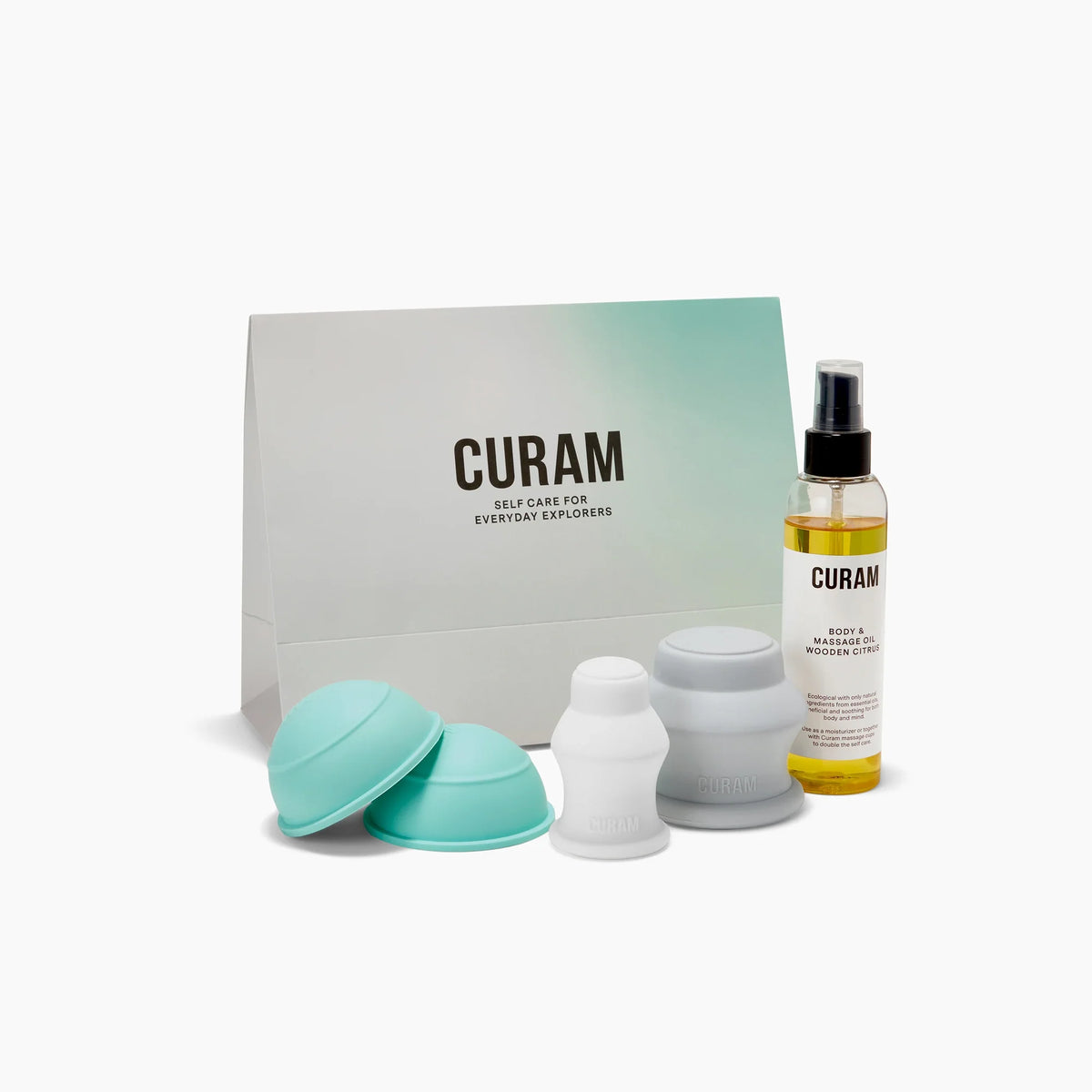
Cupping lifts skin and connective tissue over the tight muscles along the spine and in the glutes, increases blood flow and often gives a sense that "something releases". It does not replace movement but can make it easier. You need static cups, ideally four, the Dynamic Cup and body oil. For dynamic cupping of the lower back you need someone's help; static cups you can place yourself.
- Warm up with a warm shower or a five-minute walk.
- Find the right area. The muscles on either side of the spine in the lower back, and the gluteal muscles. Never directly on the vertebrae.
- Static, on your own: oil lightly. Place two static cups on either side of the spine at the height where it hurts most, a few centimetres from the vertebrae. With four cups, add two on the glutes or higher up. Leave for three to five minutes. Lie on your stomach or stand leaning on a table meanwhile.
- Dynamic, with help: oil the whole lower back. Your helper places the Dynamic Cup on one side of the spine and glides it slowly upwards along the muscles, from the sacrum to the lower ribs, then outwards towards the hip. Five strokes per side with light suction. Then the glutes, in circles.
- Finish with a few knees-to-chest lying down and a glass of water.
Two to three times a week is enough. Dark marks mean too much suction or too long. Technique and placement in detail: Cupping on the back.
Prevent back pain
- A strong core and glutes: planks, hip thrusts, squats, twice a week.
- Vary your position during the day, and walk at least 30 minutes.
- Lift close to the body with bent knees, and avoid twisting under load.
- Manage stress: a tense back often goes with tense breathing. Slow exhalation in the evening helps.
- Sit a lot? Curam Office Break has short sessions for back, neck and shoulders during the working day.
When not to cup the lower back
With radiating pain, numbness or weakness in the legs that has not been assessed, with known disc herniation or spinal stenosis without a doctor's advice, after an accident, with osteoporosis, during pregnancy, with fever or infection, on damaged skin, and on blood thinners without a doctor's advice. With kidney pain (pain in the flank with fever or difficulty urinating), do not cup at all; seek care.
Frequently asked questions
Does cupping help with lower back pain?
Studies on cupping for non-specific lower back pain often show less pain and more mobility in the short term, but study quality varies. Cupping can relieve muscle tension and make it easier to move, which is what heals. It is a complement, not a treatment of the cause.
Where do I place the cups for back pain?
On the muscles on either side of the spine in the lower back and on the glutes, never on the vertebrae themselves.
Can I cup with sciatica?
Not until a doctor or physiotherapist has assessed the cause. With radiating pain or numbness you need a diagnosis first.
Should I rest or move?
Move. Bed rest longer than a day prolongs the problem. Take short walks and change position often.
How long does lower back pain usually last?
Most people are clearly better within two weeks and recovered within six. If you are not better after three to four weeks, see your doctor.
Related guides
- Lumbago (acute low back pain) – first days, self-care and gentle cupping
- Sciatica – self-care, warning signs and what cupping can do
- Piriformis syndrome – deep buttock pain, stretching, strength and cupping
- Upper back pain between the shoulder blades – exercises and cupping
- Lower back stretches and back exercises at home – 10 exercises
- Core exercises at home – 10 exercises for a strong trunk
- Herniated disc – symptoms, self-care and what helps
- Scoliosis – symptoms, exercises and self-care for adults
- Vertebral compression fracture – symptoms, healing, exercises
- Back pain – where does it hurt and what can it be?
- Deep sleep and sleeping position – sleep better, wake pain-free
- Neck and back massage at home – how to
- TENS for pain – how it works, and TENS or cupping
- Back pain in pregnancy – lower back, pelvis, sciatica and what helps
- Pelvic pain – where does it hurt and what it can be
- Back pain in the morning – why the back is stiff when you wake
- Spinal stenosis – symptoms, exercises and what helps
Written by Curam. Last updated 16 October 2026. This is general self-care information and does not replace medical care. For sudden, severe or unusual symptoms, contact your doctor. Talk to your doctor before cupping if you are pregnant, take blood thinners or have a condition affecting skin, blood vessels or blood.


