


The hips are the body's joints most damaged by sitting: hours in a chair shorten the hip flexors at the front, switch off the gluteal muscles and make the joints stiff in the directions you never use. The result is tight hips, a lower back pulled into an arch, tired legs and sometimes knee or back pain that actually comes from the hip. What helps is regular stretching in all the hip's directions, front, back, inside and outside, together with strength for the glutes and less sitting. Cupping of the lower part of the hip flexor, the glutes and the outer thigh before stretching makes the muscles warm so the stretches go deeper. Here are eight exercises, how to structure them, when not to stretch the hip and how to combine with cupping.
Before you start: when the hip should not be stretched
The exercises suit stiffness and tightness from sitting, training and daily life. Refrain and see a doctor if you have pain deep in the groin with stiffness increasing over time (hip osteoarthritis or joint injury is assessed first), if the hip locks or gives way, if you have fallen and cannot bear weight, if you have fever or swelling at the hip, if you are pregnant with pelvic pain (see Pelvic girdle pain), or if you have a hip replacement without first asking your orthopaedic surgeon. With trochanteritis (tender to lie on the outside of the hip) do not stretch the outside hard; stretches that take the leg across the midline compress the tendon attachment. With sciatica, the back of the leg is not stretched hard. Stretching should feel like a stretch, never sharp pain or tingling.
Eight exercises for the hip
- Kneeling hip flexor stretch. One knee on the floor (cushion under), the other foot in front. Tuck your tail under so the pelvis tilts back, tighten the glutes and move the hip forward. The stretch should be felt at the front of the hip, not in the lower back. 30–45 seconds per side. The most important exercise for anyone who sits a lot.
- Hip flexor and front of thigh ("couch stretch"). Same position but with the back foot's instep against a sofa or wall so the knee is bent. More intense; ease into it. 30 seconds per side.
- Figure-4 on the back (glutes and piriformis). Lie on your back, place one ankle on the opposite knee and pull that knee towards the chest until it stretches deep in the buttock. 30 seconds per side. See also Piriformis syndrome.
- Pigeon (seated version). Sit on the floor with one leg bent in front of you and the other stretched back, lean the upper body forward over the front leg. A deeper stretch of the glutes and the hip's external rotation; skip if the knee protests.
- Butterfly (inner thighs). Sit with the soles of the feet together, hold the feet and let the knees sink towards the floor, lean slightly forward with a straight back. 30–60 seconds.
- Wide side lunge stretch (adductors). Stand wide, bend one knee and straighten the other leg to the side; the stretch is felt on the inside of the straight leg. 30 seconds per side.
- Standing outer hip and outer thigh. Stand with the legs crossed (the leg to be stretched behind), lean the upper body away from that side with the arm over the head. A light stretch; skip with trochanteritis.
- 90–90 sitting (rotation). Sit on the floor with both knees at 90 degrees, one leg in front and one to the side. Lean the upper body over the front leg, switch sides by swinging the knees over. Trains the hip's internal and external rotation, which is what stiffens most from sitting.
How to structure it, and what makes the biggest difference
Choose four exercises a day and rotate, ten minutes, ideally after the working day or after a walk when the muscles are warm. Stretching relieves tightness immediately but does not last without two more things: strength for the glutes (hip bridges, side-lying leg raises, clamshells, every other day) so the glutes take over the work from the hip flexors, and less sitting: get up every half hour, switch to standing, take the stairs. For those who sit a lot, Cupping for people who sit a lot is a good daily routine, and the back's exercises are in Lower back stretches and back exercises at home.
Cupping before the hip stretches
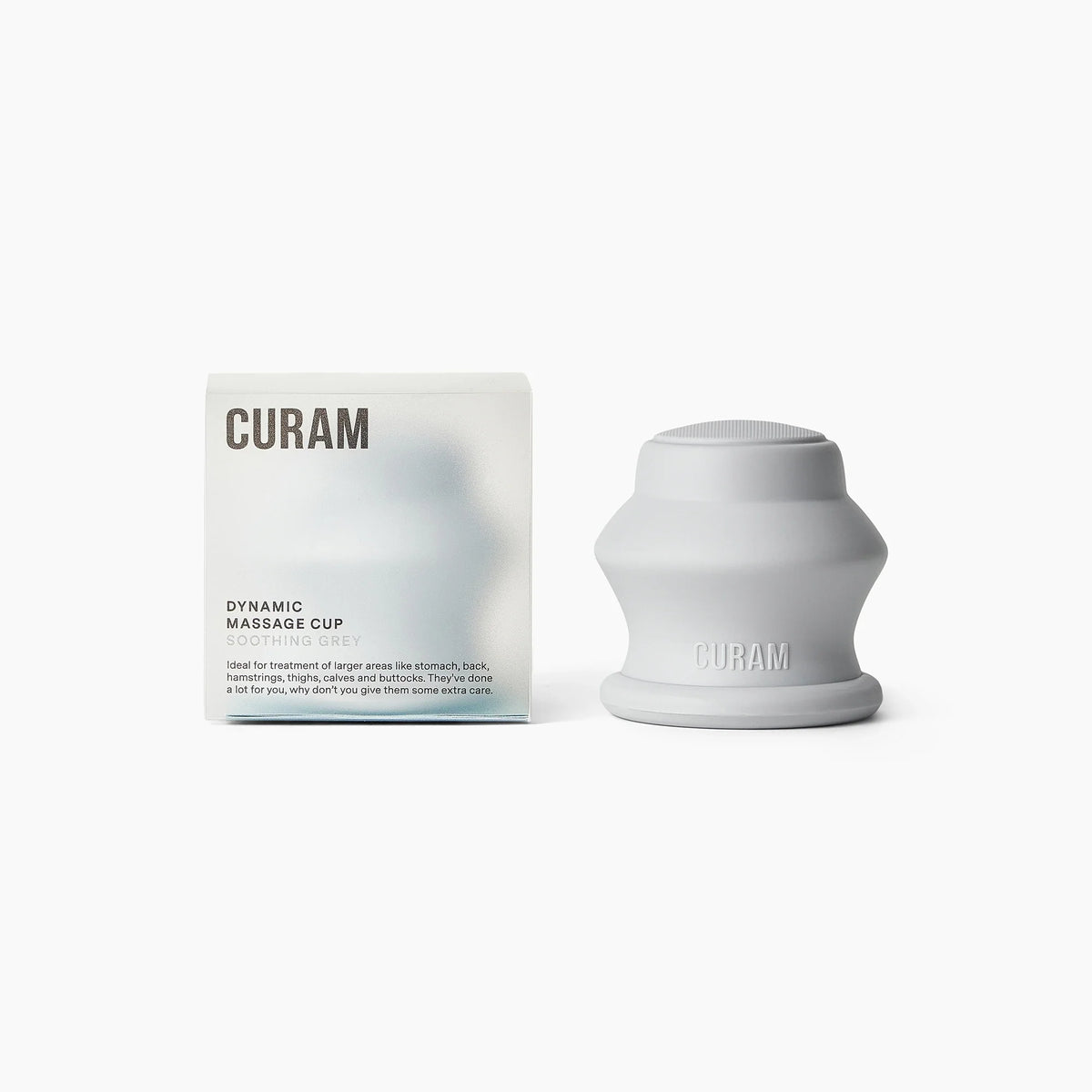
The hip muscles are large and deep, and cupping warms them more effectively than a short warm-up. You need the dynamic cup and body oil; the glutes and outer thigh you do yourself lying on your side, the front lying on your back.
- Front of the thigh and lower part of the hip flexor. Lie on your back. Oil. Light strokes from just below the hip crease down towards the knee, five strokes per line. Not into the groin.
- Glutes. Lie on your side. Large circles over the buttock and strokes from the sacrum out towards the hip, light to moderate suction.
- Outer thigh. Strokes from the outside of the knee up towards the hip, light suction. Release a hand's width below the hip bump; never on the bump itself.
- Inner thigh. Lie on your back with the knee bent outwards. Very light strokes from the knee up towards the groin, but stop a hand's width from the groin.
- Go straight to the exercises.
Five minutes is enough. The basics are in Cupping at home. Do not cup with any of the conditions under "Before you start", not in the groin, not on the hip bump, not over a replacement without your surgeon's advice, and not without medical advice if you are pregnant, take blood thinners or have osteoporosis.
Frequently asked questions
Why do the hips get tight from sitting?
When sitting, the hip flexors are held shortened for hours and the gluteal muscles are relaxed, so the body adapts: the front becomes short and tight, the back weak. The joints also move in only one position and stiffen in the others. Stretching, glute strength and breaks reverse it.
How often should you stretch the hips?
Daily, ten minutes, ideally after a walk or the working day. Strength exercises for the glutes every other day make the effect last.
Does cupping help with tight hips?
As preparation, yes: cupping the glutes, outer thigh and the lower part of the hip flexor makes the muscles warm and soft so the stretch goes deeper. It does not replace the exercises or the glute strength.
Can tight hips cause back or knee pain?
Yes. Short hip flexors pull the lower back into an arch, and weak glutes let the knee fall inwards with every step. Many people with a tired lower back or runner's knee improve with hip stretching and glute strength.
When should I not stretch the hip?
With deep groin pain and increasing stiffness, locking, after a fall, with fever or swelling, with trochanteritis (not the outside hard), with sciatica (not the back of the leg hard), with pelvic pain in pregnancy and with a hip replacement without your surgeon's advice.
Sources
- 1177 Vårdguiden (Swedish national health guide), search for "ont i höften" for medical information and when to seek care.
- Curam's FAQ and cupping programmes, developed together with trained massage therapists.
Written by Curam. Last updated 17 October 2026. This is general self-care information and does not replace medical care. For sudden, severe or unusual symptoms, contact your doctor. Talk to your doctor before cupping if you are pregnant, take blood thinners or have a condition affecting skin, blood vessels or blood.


