


Hip pain is rarely a problem with the hip joint itself. Where the pain sits usually tells you where the problem is: if it hurts on the outside of the hip, especially when lying on your side or climbing stairs, it is usually trochanteritis (irritated tendon attachments and bursa at the large bump of the thigh bone); if it hurts deep in the groin and the hip stiffens, it may be hip arthritis or a joint problem; if it hurts in the buttock and radiates down the leg it is the piriformis or sciatica; and if it hurts at the front after a lot of sitting or running it is usually the hip flexors. Almost all variants improve with the same things: continued movement, stronger gluteal muscles, less sitting and offloading what provokes it. Here is how to read your hip pain, what helps, when to see a doctor and how cupping the muscles around the hip can relieve it.
Where does it hurt? How to read hip pain
| Location | Likely cause | How it feels | What helps |
|---|---|---|---|
| Outside of the hip | Trochanteritis / gluteal tendinopathy (tendon attachments and bursa at the large bump of the thigh bone) | Tender to lie on, pain on stairs, getting up and after long walks; most common in women 40–60 | Stop lying on and crossing the leg over that side, strengthen the gluteal muscles, pillow between the knees |
| Groin, deep | Hip arthritis, labral tear, impingement (FAI) | Ache and stiffness increasing slowly, difficulty putting on socks, pain when the leg is turned inwards; morning stiffness with arthritis | Movement, cycling, strength, weight control, physiotherapy; medical assessment |
| Buttock | Piriformis syndrome, sciatica, SI joint | Deep pain in the buttock, worse with sitting, can radiate down the thigh | Stretching, hip strength, less sitting, cupping the buttock |
| Front / hip crease | Tight or overloaded hip flexors, sometimes an inguinal hernia | Tight feeling after sitting, pain when lifting the knee or running; a hernia gives a lump that grows when coughing | Hip flexor stretches, stand and walk more; a hernia is assessed by a doctor |
| Radiating from the lower back | The back's joints and nerves | Hip pain together with back pain, worse with back movements | Treat the back: Lower back pain |
When to see a doctor
Call emergency services if you have fallen and cannot stand or bear weight on the leg, especially if you are older or have osteoporosis; it may be a hip fracture. Seek urgent care if the hip is swollen, warm and red with a fever (joint infection), if the pain is very severe and came suddenly, or if a child has hip pain or limps (should always be assessed). Contact your doctor if the pain wakes you at night or is present at rest, if you are losing weight without trying, if you have or have had cancer, if you have numbness or weakness in the leg, if the hip locks or gives way, if you have a lump in the groin, or if you are not better after six to eight weeks of self-care.
Self-care that helps
- Keep moving, but change the load. Walks on flat ground, cycling with a high saddle and swimming are gentle for most hip problems. Temporarily pause what provokes it: long hill walks with trochanteritis, deep squats and running with groin pain.
- Strengthen the gluteal muscles, the key to almost all hip pain. Hip bridges (lying on your back, lift the pelvis), side-lying straight-leg raises, clamshells, standing leg swings outwards against a band, single-leg standing. Three sets of 10–15, every other day, slowly and with control. With trochanteritis: avoid exercises where the leg crosses the midline in the first weeks.
- Change habits that press on the outside. With trochanteritis: do not lie on the sore side, sleep with a pillow between the knees, do not stand with the hip pushed out to the side, do not sit with crossed legs, avoid low chairs.
- Stretch the hip flexors and front of the thigh if the front is tight: kneeling lunge with the pelvis tilted back, 30 seconds, three times. But do not stretch the outside hard with trochanteritis; it compresses the tendon attachment against the bone.
- Sit less. Hip flexors shorten and gluteal muscles switch off when you sit. Get up every half hour and walk a few steps.
- Heat on the outside and the buttock relieves muscle tension; with an acutely irritated bursa, cold may feel better in the first days.
- Weight and patience. Tendon attachments and arthritis respond slowly; expect six to twelve weeks of consistent training before the result is clear. With arthritis, every kilo less load makes a noticeable difference over time.
- Medical options: physiotherapy with an exercise programme, cortisone injection for trochanteritis with severe pain, arthritis education programmes, and for advanced arthritis a hip replacement.
Cupping around the hip, step by step
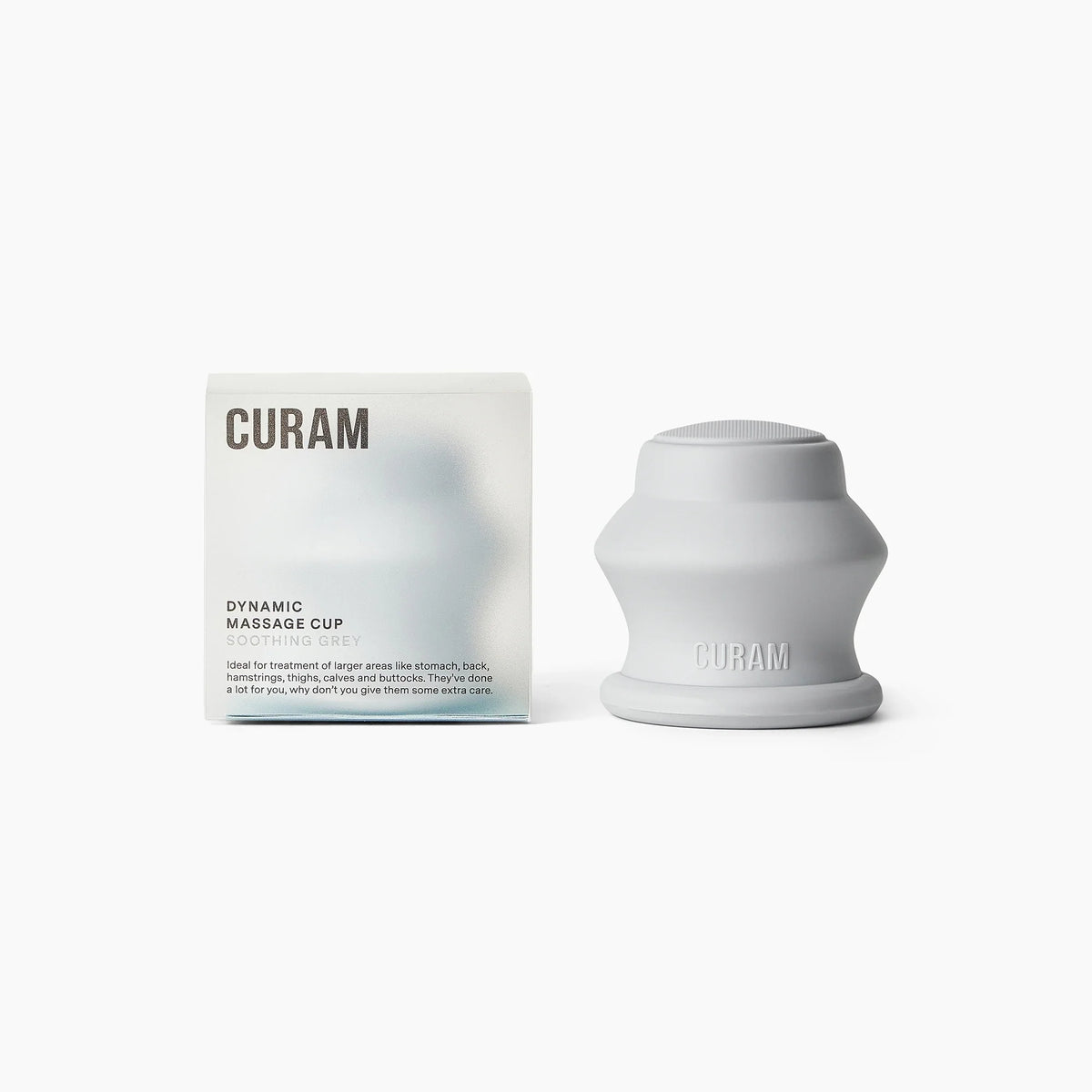
Cupping does not reach the hip joint or the bursa, but the muscles surrounding the hip, the gluteals, the outside of the thigh (tensor fasciae latae and the iliotibial band), the hip flexors and the lower back, become tight and tender with all forms of hip pain and contribute to it. When they let go, the ache decreases and training becomes easier. You need the dynamic cup, static cups and body oil. You can do the outside of the thigh yourself; the buttock is better with help. The ground rule: the muscles, not the bony bumps, not the groin.
- Warm up the hip and buttock with a shower or heat pad for ten minutes.
- The buttock. Lie on your side or stomach. Oil. Glide the cup in large circles over the whole buttock and in strokes from the sacrum out towards the hip, five to eight strokes, light to moderate suction.
- Outside of the thigh. Lie on your side. Glide the cup with light suction from the outside of the knee up towards the hip along the outside of the thigh, five to eight strokes; this line is often tender. Let the cup release a hand's width below the hip bump with trochanteritis; never place the cup directly on the bump.
- Hip flexor and front of the thigh. Lie on your back. Light strokes from just below the hip crease down towards the knee on the front of the thigh. Not into the groin.
- Lower back. Light strokes upwards along the back muscles a hand's width from the spine; the lower back and hip are connected.
- Static. One to two static cups with light suction on the most tender points of the gluteal muscle and the outside of the thigh (not on the hip bump), two to three minutes.
- Finish with a hip flexor stretch and a few hip bridges.
Two to three times a week. The basics of static and dynamic cupping are in Cupping at home, and the buttock is described in more detail in Piriformis syndrome. If you sit a lot: Cupping for people who sit a lot.
When not to cup
Not directly on the hip bump with trochanteritis, not in the groin, not if the hip is swollen, warm and red, not after a fall before the injury has been assessed, not over a hip replacement without first asking your orthopaedic surgeon, not on wounds, rashes, bruises or varicose veins, and not without medical advice if you are pregnant, take blood thinners or have osteoporosis. If the pain increases with cupping, stop.
Frequently asked questions
Why does my hip hurt when I lie on my side?
That is the typical sign of trochanteritis: the tendon attachments and bursa at the large bump of the thigh bone are pressed against the surface. Lie on the other side with a pillow between the knees, strengthen the gluteal muscles and avoid crossing the legs.
How do I know if it is hip arthritis?
Arthritis usually gives pain deep in the groin, morning stiffness, difficulty turning the leg inwards and putting on socks, and the symptoms increase slowly over months and years. An X-ray confirms it. Movement, strength and weight control are the basic treatment for arthritis too.
Does cupping help with hip pain?
Cupping does not reach the joint or the bursa, but it can get the tight muscles around the hip, the buttock, the outside of the thigh and the hip flexors, to let go and relieve aching. It is a complement to strength training and changed habits, which are what solve the problem.
Should I stretch the outside of the hip with trochanteritis?
No, not hard. Stretches that take the leg across the midline compress the tendon attachment against the hip bump and can make it worse. Strengthen the gluteal muscles instead and stretch the hip flexors.
Can I exercise with hip pain?
Yes, in adapted form: cycling, swimming, walking on flat ground and strength training for the glutes. Avoid what provokes it until the pain has eased, then increase gradually. Activity that does not cause more pain the next day is generally fine.
Sources
- 1177 Vårdguiden (Swedish national health guide), search for "ont i höften" and "trokanterit" for medical information and when to seek care.
- Curam's FAQ and cupping programmes, developed together with trained massage therapists.
Written by Curam. Last updated 17 October 2026. This is general self-care information and does not replace medical care. For sudden, severe or unusual symptoms, contact your doctor. Talk to your doctor before cupping if you are pregnant, take blood thinners or have a condition affecting skin, blood vessels or blood.


