


The shoulder is the body's most mobile joint, and it is the muscles, not the skeleton, that hold it in place: the rotator cuff's four small muscles centre the ball of the joint, and the shoulder blade muscles give it a stable base. When they weaken from sitting with the shoulders forward, or are overloaded by overhead work, the most common shoulder problems arise: sore desk shoulders, impingement where the tendons are pinched when the arm is lifted, and stiffness after a frozen shoulder. What helps is the same in all three cases: strength for the rotator cuff and shoulder blade with a resistance band, mobility for the upper back and chest muscles, and a posture that carries the head over the shoulders. Cupping the trapezius, shoulder blade and chest muscle before the exercises makes the muscles warm and makes the exercises easier to perform with good technique. Here are ten exercises, how to adapt them to your problem, when to refrain and how to combine with cupping.
Before you start: when the shoulder should not be trained at home
See a doctor instead if the shoulder pain came after a fall or jerk and you cannot lift the arm, if the shoulder looks deformed, if it is red, warm and swollen with a fever, if you have numbness or weakness in the arm, or if the pain comes together with pressure over the chest or shortness of breath (call emergency services). With suspected frozen shoulder in the freezing phase (increasing pain and stiffness), pain relief and gentle movement apply, not strength; read Frozen shoulder and shoulder pain for the phases. The exercises should feel like effort and mild discomfort up to 3–4 on a ten-point scale, settled by the next day; increasing pain means you are doing too much or the wrong exercise.
Ten shoulder exercises at home
You need a resistance band with handles or a mini band. Do the exercises slowly, with the shoulders down and the shoulder blades "in your back pockets".
- Pendulum. Lean forward with support, let the arm hang and swing in small circles, one minute. A warm-up and the first exercise with frozen shoulder and acute soreness.
- Shoulder blade squeeze. Stand or sit, draw the shoulder blades back and down, hold five seconds, ten times. The basis for everything else.
- External rotation with band. Elbow at your side at 90 degrees, band anchored to the side, rotate the forearm outwards against the resistance. Three sets of 15 per side. The most important rotator cuff exercise for impingement and desk shoulders.
- Internal rotation with band. Same position, pull the forearm in towards the stomach. Three sets of 15.
- Band row. Band anchored in front of you, pull the handles towards the waist with the elbows close to the body and the shoulder blades together. Three sets of 12. Strengthens the upper back that holds the shoulders back.
- Face pull. Band anchored at face height, pull towards the face with the elbows high and out, finish with external rotation. Three sets of 12. The best exercise for posture and the rear shoulder.
- Thumbs-up raise (to 60 degrees). Light weight or band, lift the arm diagonally forward and out with the thumb up, only to shoulder height if it pinches higher. Three sets of 12. Trains the rotator cuff in function.
- Wall crawl. Stand facing a wall, walk the fingers up as far as you can without pain, hold, walk down. Five times forward and sideways. Mobility, especially after frozen shoulder.
- Chest stretch in a doorway. Forearms against the door frame at shoulder height, step forward until it stretches across the chest, 30 seconds. Tight chest muscles pull the shoulders forward and worsen impingement.
- Upper back rotation on all fours ("thread the needle"). On all fours, pass one arm under the body and rotate, then open up towards the ceiling. Ten per side. A stiff upper back forces the shoulder to compensate; see Upper back pain.
Adapt to your problem
- Desk shoulders (tense, drawn forward): exercises 2, 5, 6, 9, 10 daily, plus breaks every half hour. Complement with Neck pain and stiff neck.
- Impingement (pain when the arm is lifted): exercises 3, 4, 5, 6, 7 every other day, avoid heavy work and training overhead until it has settled. Do not lift into the pain.
- After frozen shoulder (thawing phase): exercises 1, 8, 9 daily, add 3, 4, 5 with light resistance once mobility has returned.
- Prevention and for training: the whole programme twice a week.
Expect six to twelve weeks for a clear change with impingement; frozen shoulder takes longer.
Cupping before the shoulder exercises
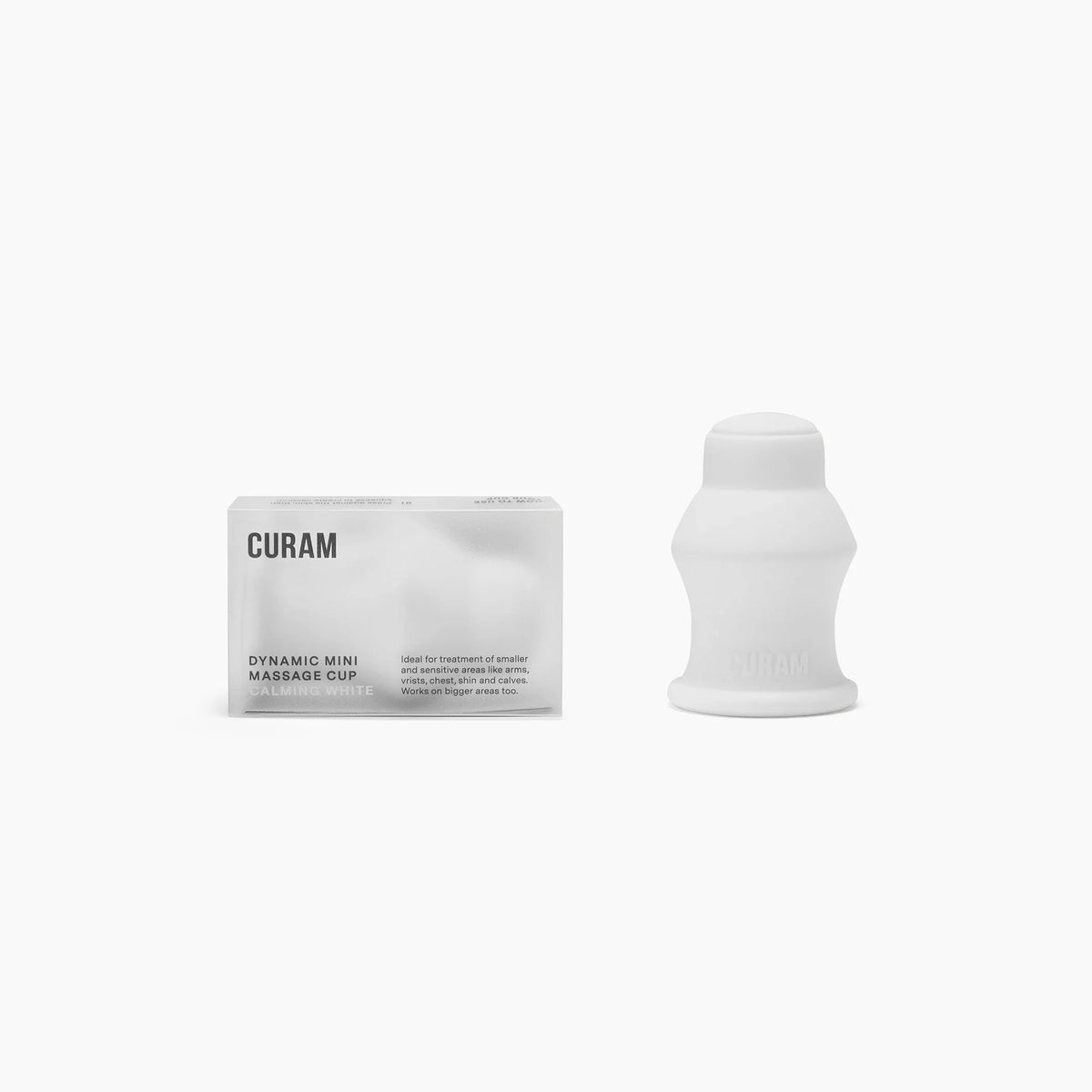
Light cupping of the trapezius, the shoulder blade muscles and the chest muscle warms them and gets the overactive muscles to let go, so the rotator cuff and shoulder blade muscles can work correctly in the exercises. You need the dynamic mini cup and body oil; the trapezius and chest muscle you do yourself, the shoulder blade with help.
- Trapezius. Oil. Light strokes from the base of the neck out towards the shoulder, five per side.
- Shoulder blade. Strokes in all directions over the flat back of the shoulder blade and along its inner edge.
- Chest muscle. Light strokes from the breastbone out towards the shoulder below the collarbone, five strokes. Not on the collarbone, not in the armpit.
- Outside of the upper arm from the shoulder down towards the elbow.
- Go straight to the exercises.
Five minutes is enough. The basics are in Cupping at home. Do not cup on the front of the shoulder joint, in the armpit, on a red, warm and swollen shoulder, after a fall before the injury has been assessed, or without medical advice if you take blood thinners or are pregnant.
Frequently asked questions
Which shoulder exercises are best for impingement?
External and internal rotation with a band, thumbs-up raises to shoulder height, face pulls and rows, every other day, together with a break from overhead work. Never lift into the pain; expect six to twelve weeks.
How often should you do shoulder exercises?
Strength exercises with a band every other day, mobility and posture exercises daily. Some soreness is normal; increasing shoulder pain is a sign of too much or the wrong exercise.
Can I train the shoulder with frozen shoulder?
In the freezing phase only pendulums and pain-free movement. In the frozen phase gentle stretching (wall crawls, towel behind the back) several times a day. In the thawing phase, band exercises are added. Never force past the pain.
Does cupping help with sore shoulders?
As preparation and relaxation, yes: cupping the trapezius, shoulder blade and chest muscle warms the muscles and gets the overactive ones to let go, so the exercises are done with good technique. The strength is built by the exercises, not by the cup.
Do I need weights for shoulder exercises?
No. A resistance band is enough for the rotator cuff and shoulder blade, which is what needs training in most shoulder problems. Heavy weights overhead are rather something to wait with until the shoulder is stable and pain-free.
Sources
- 1177 Vårdguiden (Swedish national health guide), search for "ont i axeln" for medical information and when to seek care.
- Curam's FAQ and cupping programmes, developed together with trained massage therapists.
Written by Curam. Last updated 17 October 2026. This is general self-care information and does not replace medical care. For sudden, severe or unusual symptoms, contact your doctor. Talk to your doctor before cupping if you are pregnant, take blood thinners or have a condition affecting skin, blood vessels or blood.


