


Drooping eyelids have two main causes that need different things. The most common is excess skin on the upper eyelid (dermatochalasis): the skin and connective tissue lose elasticity with age, the eyebrow sinks a little, and a fold of skin settles over the lid margin. The other is ptosis: the lifting muscle itself or its attachment has weakened, so the lid margin hangs down over the pupil. Fluid swelling, allergy and tiredness can worsen both. Self-care, face cupping and skincare can reduce swelling, lift the brow area somewhat and firm the skin, but nothing except surgery removes a large excess of skin or a weakened lifting muscle. An eyelid that suddenly starts to droop, especially with double vision, unequal pupils or facial weakness, is an emergency symptom. Here are the causes, the warning signs, what you can do yourself and what is reasonable to expect.
Why do eyelids droop?
| Cause | Recognised by | What helps |
|---|---|---|
| Excess skin (dermatochalasis) | A fold of skin over the lid margin, heavy eyelids in the evening, hard to apply eyeshadow. More common from 40–50, often hereditary. The lid margin itself sits in the right place | Skincare, face cupping and brow lifting as self-care for smaller excess; surgery (blepharoplasty) for larger |
| Sinking eyebrows | The whole brow and forehead have dropped, a "heavy" expression; the lids look droopy despite little excess skin | Exercise and cupping of forehead and temple, posture; brow lift for bigger problems |
| Ptosis (weakened lifting muscle) | The lid margin covers part of the pupil, often one side more; you raise the eyebrows or tilt the head back to see. Comes with age, after eye surgery, after long-term contact lens use or from birth | Assessment by a doctor; surgery if the visual field is affected. Self-care does not affect the muscle |
| Swelling | Heavier and puffier in the morning, after salty food, alcohol, crying, allergy or poor sleep; improves during the day | Cold, lymphatic drainage around the eyes, less salt, sleeping on a higher pillow, allergy treatment. See under-eye bags |
| Sudden drooping eyelid | Comes on over hours or days, often one side, sometimes with double vision, unequal pupils, facial weakness, headache | Urgent care: may be nerve involvement, stroke, myasthenia gravis, Horner's syndrome |
Seek care if
Seek urgent care if an eyelid suddenly starts to droop, especially together with double vision, one pupil smaller than the other, weakness or numbness in the face or one side of the body, severe headache, slurred speech or difficulty swallowing. Contact your doctor or an eye specialist if the lid covers the pupil and disturbs vision, if it is clearly worse in the evening or when tired (may be myasthenia gravis), if it is only one side without explanation, if the eye is red, painful or watering, or if the problem came after an injury.
Self-care that makes a difference
- Reduce swelling. Sleep with the head slightly raised, less salt and alcohol in the evening, cold in the morning (a cold spoon, chilled eye cups or a chilled face cup), and treat allergy if you have it. That removes the part of the heaviness that is fluid.
- Skincare that firms. Daily sunscreen is the most important, since UV light breaks down elastin. Retinoids (over-the-counter retinol or prescription tretinoin), peptides and vitamin C have evidence for thicker, firmer skin over time; use eye-specific products around the eyes. Oils such as jojoba and rosehip give glide and nourishment. See the guide to oils.
- Lift the brow area. Drooping eyelids are often largely due to the forehead and brow having sunk. Massage and cupping upwards from the brow towards the hairline and out towards the temple, daily, give many people a slightly more open eye area; the effect is moderate and needs maintenance.
- Facial exercises. Raising the eyebrows against the resistance of your fingers, squeezing the eyes shut and relaxing, and "looking up" with a lowered forehead, ten repetitions, have limited research support but are harmless and many find they give a fresher expression.
- Sleep and screens. Tired eyes look more droopy; blink more often at screens, take breaks, sleep enough.
- Posture. A head held forward pulls down the forehead and brows; see neck exercises.
Face cupping for eyelids and brows: how to
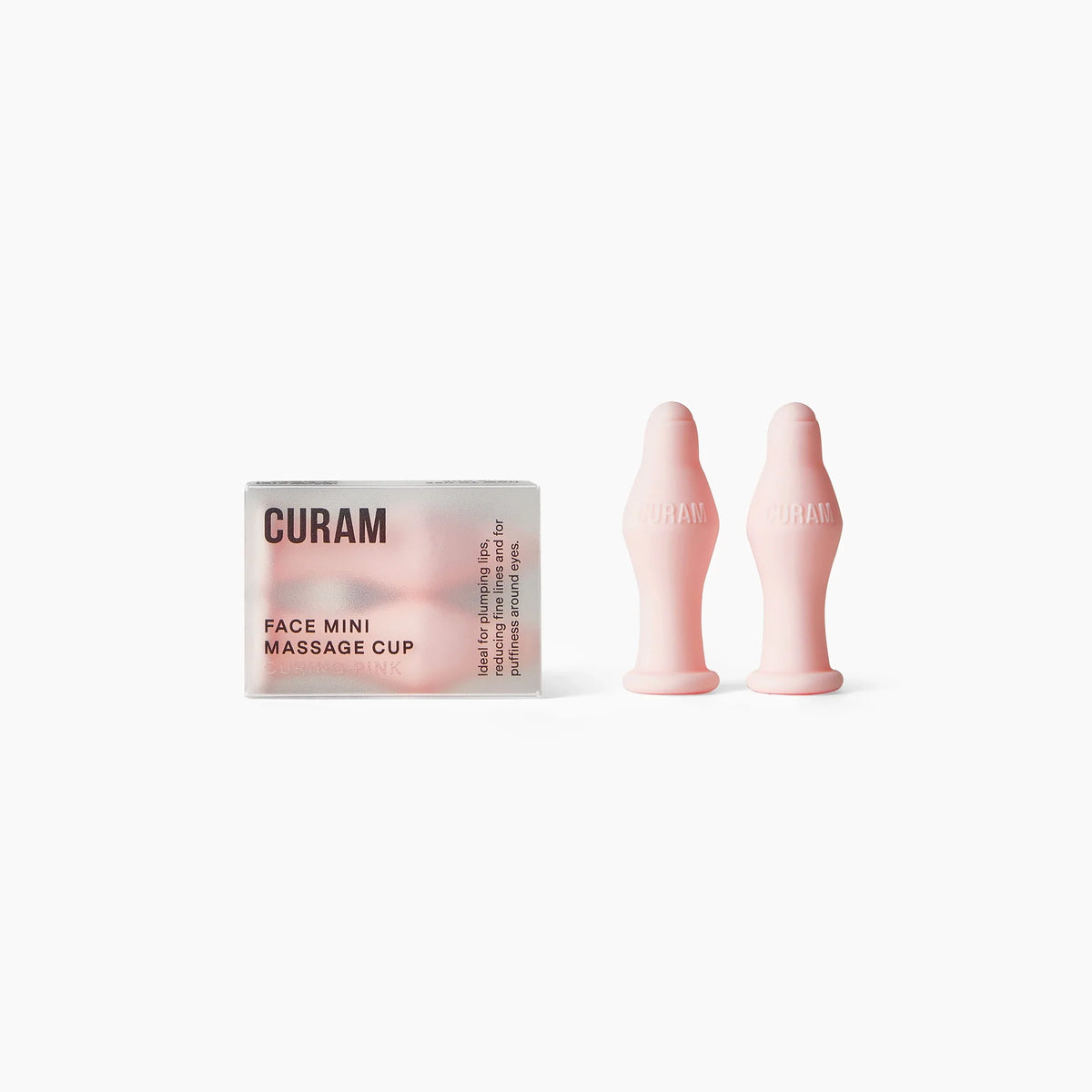
Face cupping around the eyes is done around the eye socket, never on the eyelid itself (the skin is too thin and the eye underneath must not be exposed to suction). The aim is to drain swelling from the eye area, increase circulation in the forehead and temple and soften the forehead and temple muscles so the brow gets a slightly higher resting position. Use the small face cup with very light suction and face oil.
- Open the lymph first: stroke with your fingers from the temple down in front of the ear to the collarbone, five times per side, so the fluid has somewhere to go.
- Forehead upwards. Place the cup just above the eyebrow and glide up towards the hairline, five strokes per brow, from the inner end out towards the temple.
- Brow outwards. Place the cup at the start of the eyebrow (not below it) and glide along the brow out towards the temple, five strokes per side. Keep the skin taut with the fingers of the other hand.
- Temple. Small circles on the temple, ten seconds per side; the temple muscle is often tight in people who clench.
- Under the eye: only with the cup at its lightest setting, from the nose outwards along the cheekbone (on the bone, not on the soft area under the eye), three strokes. Finish by stroking down towards the collarbone again.
- Three to five minutes in total, three to four times a week. The skin should turn lightly pink, never red or marked; if you get a mark the suction was too strong.
Guided programs: de-puff eyes, smoother forehead and natural face lift. The basics are in the guide to face cupping, and what is reasonable to see in the mirror in facial cupping before and after.
Do not cup on the eyelid itself, with an eye infection, after recent procedures or injections around the eyes (wait at least two weeks after botox and four after fillers), with active rosacea or eczema in the area, or if you have a known vascular disease of the eye.
What is reasonable to expect?
Swelling you can influence within days. A slightly more open eye area through a higher brow position and firmer skin takes weeks of daily routine and lasts only as long as you keep going. A large excess of skin resting on the lashes, or a lid covering the pupil, cannot be massaged away; there, eyelid surgery (blepharoplasty) is the effective solution, a common day-surgery procedure. Face cupping suits as maintenance before and after (after healing, at least six weeks and with the surgeon's go-ahead).
Frequently asked questions
Can you exercise away drooping eyelids?
Partly, if the cause is sinking brows and swelling: daily massage, cupping upwards from the brow and facial exercises can give a slightly more open eye area. A large excess of skin or a weakened lifting muscle (ptosis) cannot be exercised away.
Does face cupping help drooping eyelids?
It reduces swelling, increases circulation and softens the forehead and temple so the brow gets a slightly higher resting position; the effect is moderate and needs maintenance. The cup is used around the eye socket, never on the eyelid. It does not replace surgery for a large excess.
What is the difference between drooping eyelids and ptosis?
With excess skin the lid margin sits in the right place but a fold of skin settles over it. With ptosis the margin itself hangs down over the pupil, because the lifting muscle or its attachment has weakened. Ptosis should be assessed by a doctor, especially if it came on suddenly or varies during the day.
When are drooping eyelids dangerous?
When they come on suddenly, especially with double vision, unequal pupils, facial weakness, severe headache or slurred speech. That may be nerve involvement or stroke and needs urgent care. Eyelids that droop more in the evening may be myasthenia gravis and should be investigated.
What does eyelid surgery cost?
Privately in Sweden an upper eyelid lift often costs between SEK 15,000 and 30,000 for both eyes. If the excess skin or ptosis affects the visual field, the procedure may be done within public healthcare after referral; ask your doctor.
Sources
- 1177 Vårdguiden (Swedish national health guide), search for "hängande ögonlock", "ptos" and "ögonlocksoperation" for medical information and when to seek care.
- Curam's FAQ and face cupping programs, developed with trained skin and massage therapists.
Related guides
- Forehead wrinkles, nasolabial folds and eye wrinkles – what helps
- Blocked nose and sinuses – self-care and face cupping
Written by Curam. Last updated 17 October 2026. This is general self-care information and does not replace medical care. For sudden, severe or unusual symptoms, contact your doctor. Talk to your doctor before cupping if you are pregnant, take blood thinners or have a condition affecting skin, blood vessels or blood.


