


Thumb pain has two common causes that need different things. Thumb base osteoarthritis, wear in the joint at the base of the thumb where it meets the wrist, gives pain with gripping, turning keys, opening jars and using a phone, often in women over 50, and sometimes a bump at the thumb base. De Quervain's tenosynovitis, inflammation of the thumb tendons' sheath on the thumb side of the wrist, gives sharp pain when you lift something with the thumb up or wring out a cloth, often in new parents and people who grip a lot. Stiff, aching fingers with nodes on the end joints are hand osteoarthritis, while softly swollen, warm joints with morning stiffness over an hour are signs of rheumatism that should be investigated. What helps is hand exercises that keep the joints mobile and the grip strong, a splint under load, heat, aids that offload, and cupping of the forearm muscles, which control the fingers and are often tight and tender. Here are the causes, the warning signs, the exercises and how cupping is used.
Why do the thumb and fingers hurt?
| Cause | Recognised by | What helps |
|---|---|---|
| Thumb base osteoarthritis | Pain with gripping, keys, jars, phone; tender at the thumb base, sometimes a bump; weaker pinch; over 50, mostly women | Thumb splint under load, heat, grip and thumb exercises, aids; cortisone injection in flares, surgery in stubborn cases |
| De Quervain's tenosynovitis | Sharp pain on the thumb side of the wrist when lifting with the thumb up, twisting, lifting children; tender and sometimes swollen along the thumb side. Test: make a fist around the thumb and bend the wrist towards the little finger | A thumb splint that immobilises the thumb for a few weeks, offloading, then gradual training; cortisone injection if it does not settle. See the guide to wrist pain |
| Finger osteoarthritis | Nodes on the finger end joints (Heberden's) or middle joints (Bouchard's), stiff and tender fingers in the morning for under 30 minutes, pain with loading; hereditary, after menopause | Hand exercises, heat, paraffin bath, aids, pain relief in flares. See the guide to osteoarthritis |
| Trigger finger | The finger or thumb gets stuck in a bent position and "clicks" when straightened, tender in the palm at the base of the finger | Offloading, a night splint, stretching; cortisone injection often helps; sometimes minor surgery |
| Rheumatism (RA, psoriatic arthritis) | Softly swollen, warm joints in the finger base joints and wrists, often both hands, morning stiffness over an hour, fatigue | Investigation within weeks; see the guide to rheumatism |
| Carpal tunnel syndrome | Numbness in the thumb, index and middle fingers at night, weak grip | See the guide to carpal tunnel syndrome |
| Injury | Swelling and pain after a fall on the hand or a thumb bent backwards (skier's thumb); hard to pinch | Assessment: ligament injury or fracture |
Seek care if
Seek urgent care if the thumb or a finger is deformed, heavily swollen or cannot be moved after an injury, if a joint becomes hot, red and very tender with fever, or if you suddenly lose strength in the hand. Contact your doctor if you have softly swollen, warm finger joints for more than a few days, morning stiffness over an hour, pain in both hands symmetrically or with fatigue (suspected rheumatism, which should be treated early), if a finger gets stuck in a bent position, if numbness wakes you at night, if you cannot manage everyday grips despite self-care for six to eight weeks, or if you want a splint and hand training via an occupational therapist.
Hand exercises with evidence (5–10 minutes, daily)
In hand and thumb base osteoarthritis, hand training reduces pain and improves grip in studies, and in de Quervain's and trigger finger gradual training rebuilds the tendons once the acute phase has passed. Do the exercises in warm water or after a warm towel if the hands are stiff in the morning. Some pain during the exercise is fine, more pain afterwards is too much.
- Make a fist and extend. Close the hand slowly, hold 3 seconds, extend the fingers fully, 10 times.
- Finger spreading. Place the hand flat on the table, spread the fingers and bring them together, 10 times. With a rubber band around the fingers once it is easy.
- Thumb to each finger (O sign), hold 2 seconds, 5 rounds.
- Thumb lifts: hand flat on the table, lift only the thumb towards the ceiling, 10 times; then against a rubber band. Strengthens the thumb base.
- Pinch grip with a clothes peg or soft ball, 10 x 3 seconds, light resistance. With thumb base osteoarthritis: pinch with the tip of the thumb against the side of the finger, not with the thumb bent into the palm.
- Wrist circles and forearm rotation (palm up and down with the elbow at the side), 10 each.
- Stretch the thumb gently backwards and out from the palm, 20 seconds, 3 times (not in acute de Quervain's).
Splints, aids and everyday tricks
- A thumb splint (soft or supportive) under load and at night for a few weeks with thumb base osteoarthritis and de Quervain's; not around the clock for months. An occupational therapist fits it.
- Heat in the morning: warm water, a paraffin bath or heated gloves soften stiff joints; cold for hot swelling in flares.
- Offload the pinch grip: thick grips on pens, cutlery and tools, jar openers, key holders with a lever, the phone on the table or in a holder instead of a thumb grip, lift the child with the forearm instead of the thumb.
- Change grip often in repetitive work and take breaks.
- Pain relief: anti-inflammatory gel on the thumb base or a tablet for a few days in flares; a cortisone injection can relieve thumb base osteoarthritis, de Quervain's and trigger finger for weeks to months. Surgery for thumb base osteoarthritis is the last step when splint, training and injections are not enough.
Cupping the forearm for thumb and finger pain
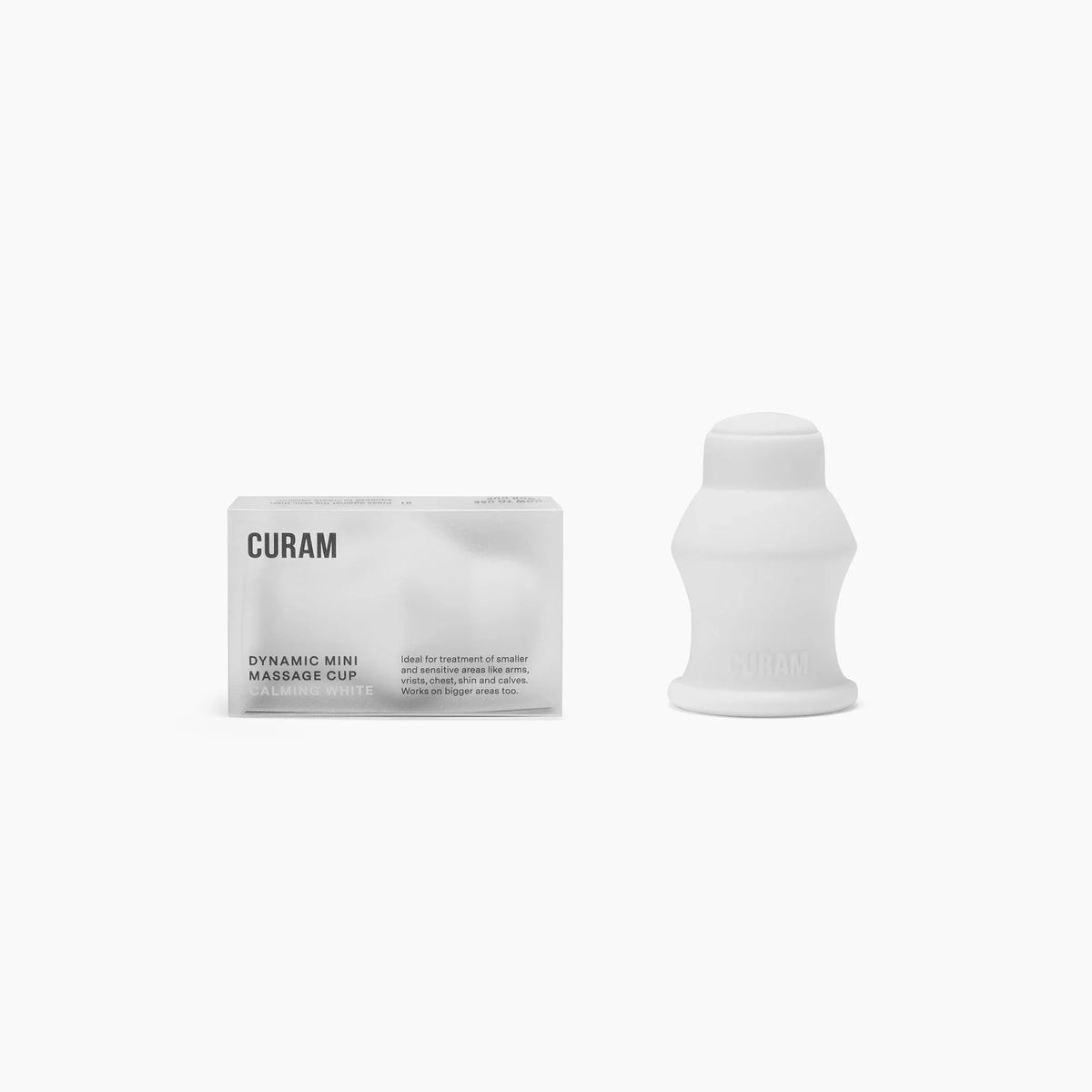
The muscles of the fingers and thumb sit mostly in the forearm, and with hand problems they become tight, tender and overworked from protective grips and compensation. Cupping the forearm increases circulation, softens the tension and reduces the pull on the tendons running down into the hand; it helps most hand problems indirectly and makes the exercises easier. The finger joints themselves are not cupped; warm water and massage with the fingers work better there. Use the mini cup with light suction and massage oil.
- Rest the forearm on a table with the palm up. Oil the whole forearm.
- Inside: long strokes from the wrist up towards the elbow, two minutes; these are the flexor muscles that manage the grip. Small circles just below the inside of the elbow, 30 seconds.
- Top: turn the hand, strokes from the wrist up towards the elbow over the extensor muscles, two minutes; circles on the muscle belly below the outside of the elbow.
- Thumb side of the forearm (with de Quervain's, once the acute phase has passed): light strokes from three centimetres above the wrist up towards the elbow, 30 seconds. Not on the tendon sheath itself at the wrist.
- Thumb base muscles (the thenar pad in the palm below the thumb): massage with the other hand's thumb in circles, one minute; no cup.
- Finish with the hand exercises in warm water. Three times a week, or every evening during a period of heavy hand work. The full hand and forearm routine is in the Happy Hands cupping program.
Do not cup fingers, thumb or wrist, a hot and swollen joint, in an active rheumatic flare, after an injury before it is assessed, after a cortisone injection (wait a week), with numbness or on skin thinned by cortisone treatment.
Frequently asked questions
Why does my thumb hurt?
Usually thumb base osteoarthritis (pain with gripping and twisting, over 50) or de Quervain's tenosynovitis (sharp pain on the thumb side of the wrist when lifting with the thumb up). Trigger finger gives a thumb that gets stuck, carpal tunnel syndrome numbness, and a thumb bent backwards in a fall may have a ligament injury that should be assessed.
What helps hand osteoarthritis?
Daily hand training (fist and extend, finger spreading, thumb lifts, pinch grip), heat in the morning, a thumb splint under load, aids that offload the pinch grip, and pain relief in flares. Cupping the forearm softens the muscles that control the fingers. The joint is not rebuilt, but grip and pain can be influenced clearly.
Does cupping help thumb pain?
Indirectly, yes: cupping the forearm muscles, which control the thumb and fingers, reduces tension and pull on the tendons and increases circulation, which relieves thumb base osteoarthritis, de Quervain's (after the acute phase) and general overload. The thumb and wrist themselves are not cupped.
Should you use a thumb splint?
Yes, under load and at night for a few weeks with thumb base osteoarthritis, de Quervain's and trigger finger: it offloads and reduces pain clearly in studies. Not around the clock for months, as the muscles weaken; always combine with hand exercises.
When should thumb pain be operated on?
Rarely. With thumb base osteoarthritis, surgery is considered when splint, training and cortisone injections are not enough and the pain prevents daily life; with de Quervain's and trigger finger when injections have not helped. Most people get better without surgery.
Sources
- 1177 Vårdguiden (Swedish national health guide), search for "artros i händerna", "tumbasartros", "de Quervains tendinit" and "triggerfinger" for medical information and when to seek care.
- Curam's FAQ and cupping programs, developed with trained massage therapists.
Written by Curam. Last updated 17 October 2026. This is general self-care information and does not replace medical care. For sudden, severe or unusual symptoms, contact your doctor. Talk to your doctor before cupping if you are pregnant, take blood thinners or have a condition affecting skin, blood vessels or blood.


