


Diastasis recti, or separated abdominal muscles, means the band of connective tissue that holds the two rectus muscles together (the linea alba) has been stretched during pregnancy, so the muscles sit further apart and the belly can bulge in the middle when you sit up or strain. It happens to almost all pregnant women in the third trimester and remains in about one in three six months after childbirth. It is not an injury and not dangerous, but a weak midline means the trunk supports less well, which can give back pain, poor posture, a belly that "pokes out" and leakage if the pelvic floor is weak too. What heals it is not sit-ups, which increase pressure and widen the gap, but training of the deep abdominal muscles (transversus) and pelvic floor, breathing that controls abdominal pressure, gradual loading and time; most see a clear difference in eight to twelve weeks. Cupping of the belly and back is used only once the tissue has healed, with very light suction. Here is the self-test, the causes, the training week by week, what to avoid, when to seek help and how cupping is used.
Self-test: do I have diastasis recti?
- Lie on your back with bent knees and feet on the floor. Place your fingers across the middle of the belly, just above the navel.
- Lift the head and shoulders slightly off the floor as at the start of a sit-up, so the rectus muscles tense.
- Feel: how many fingers fit in the gap between the muscle edges, and how deep do the fingers sink? Repeat at the navel and just below.
Up to two fingers with a firm "floor" under the fingers is normal. Two to three fingers, or a soft, deep gap where the fingers sink in, is a diastasis that should be trained. More than three fingers, a belly that bulges like a ridge or cone on exertion, or problems despite training for three months, should be assessed by a physiotherapist or doctor. The depth and firmness of the midline say more than the number of fingers: the aim of the training is a midline that becomes firm when you tense, not necessarily that the gap closes completely.
Why does diastasis recti happen, and who gets it?
The growing uterus pushes the abdominal wall out and hormones soften the connective tissue; the midline stretches as part of pregnancy. The risk of persistent diastasis increases with several pregnancies, twins, a large baby, a lot of sit-ups and heavy lifting during pregnancy, age over 35, and a weak trunk to begin with. Men and people who have not given birth can also get diastasis from excess weight or incorrect heavy training. The diastasis itself rarely hurts; what hurts is the back and pelvis that have to compensate, see the guide to pelvic girdle pain and back pain.
Seek help if
Seek urgent care if after childbirth you get fever, heavy bleeding, severe abdominal pain or a red, hot and swollen calf. Contact your midwife, physiotherapist or doctor if the gap is wider than three fingers or bulges like a ridge on exertion, if you have a lump at the navel that hurts (umbilical hernia), if you leak urine or stool, have a feeling of heaviness in the pelvic area (prolapse), pain during intercourse, back pain that does not improve, or if the diastasis has not improved with training in three months. After a caesarean, the healing of the scar comes first, see the guide to scars.
Training after childbirth, week by week
The principle is inside out: first breathing and the deep muscles, then the pelvic floor, then the whole trunk, then the rest of the body. Everything is done without the belly bulging in the middle; if it bulges, go back a step. After a caesarean: the same order but wait with everything except breathing and pelvic floor until the scar has healed (about six weeks) and the midwife has given the go-ahead.
- Weeks 0–2: breathing and pelvic floor. Lie on your side or back, breathe in so the belly and ribs widen, breathe out slowly and feel how the lower belly draws in by itself and the pelvic floor lifts slightly. 10 breaths, several times a day. Short walks.
- Weeks 2–6: activate the transversus. Lying with bent knees: breathe out and draw the navel lightly in towards the spine without holding your breath or tensing the glutes, hold 5–10 seconds while continuing to breathe, 10 times. Add pelvic tilts and heel slides (drag one heel along the floor with the belly active). Pelvic floor training daily, see the guide to pelvic floor training.
- Weeks 6–12: stability. Dead bug with an active belly, bird dog, side-lying leg lifts, bridges, sit-to-stand squats and wall plank. 3 x 10 each, three times a week. Check in a mirror or with your hand that the belly does not bulge.
- Months 3–6: loading. Plank on the knees, side plank, lunges, band rows, carries with a straight back, and a gradual return to running (at the earliest twelve weeks, when you can hop on one leg without leakage or heaviness). See core exercises and home workout without equipment.
- After six months: full training when the midline is firm on exertion, the pelvic floor holds and the back is strong. Sit-ups and crunches can be reintroduced carefully last, if at all; they are not needed.
What to avoid until the midline is firm
- Sit-ups, crunches, straight-leg raises, bicycle crunches and all exercises where the belly bulges in the middle.
- Sitting straight up from lying: roll onto your side first, for three to six months.
- Heavy lifts with held breath (the car seat is often the heaviest): breathe out and tense the lower belly as you lift.
- Planks on straight arms, push-ups and jumps before you manage them without the belly bulging.
- A firm abdominal binder around the clock: a soft support in the first weeks can feel good, but the muscles must take over themselves.
Cupping the belly and back after childbirth
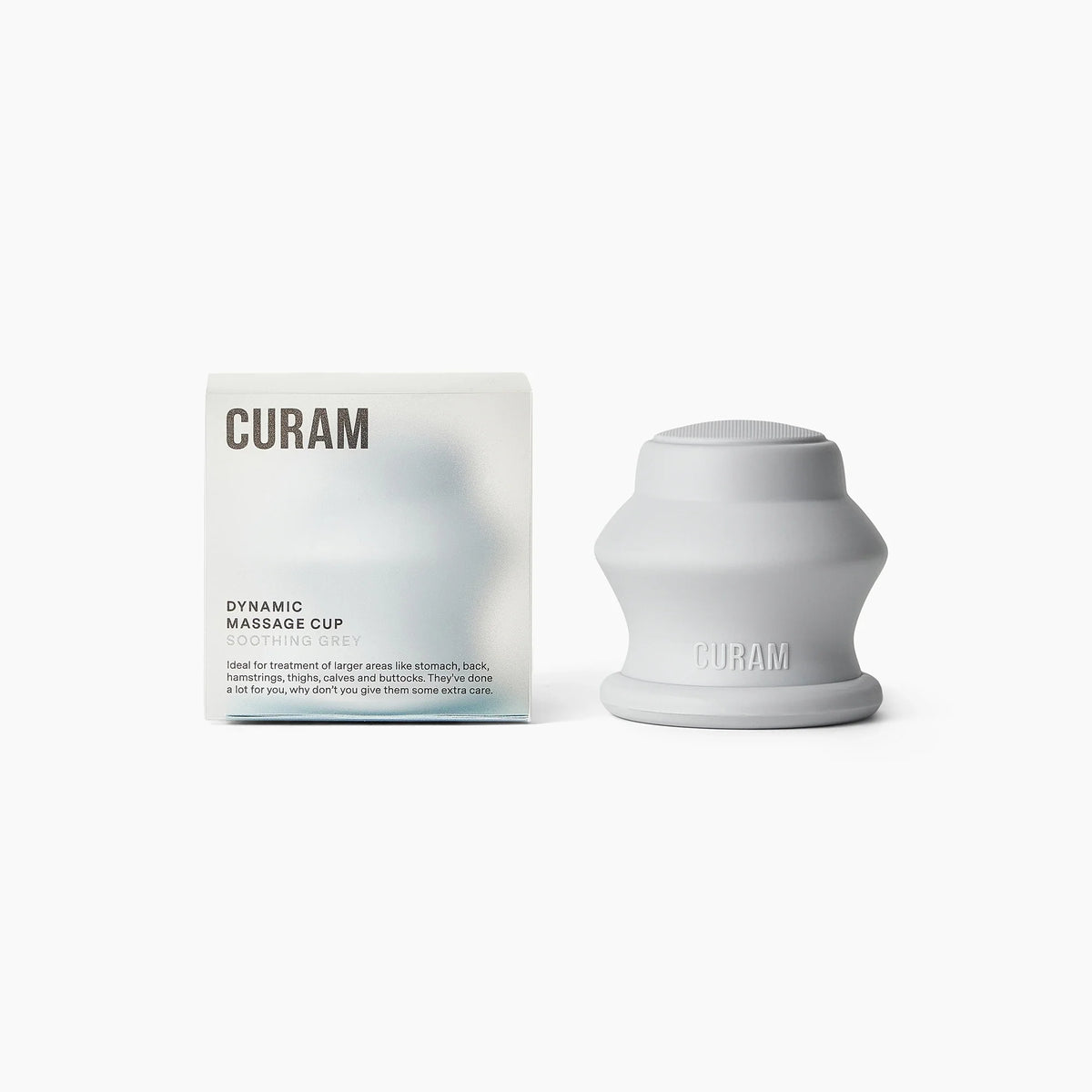
Cupping is used here for two things: to relieve the back and neck, which are loaded by carrying, breastfeeding and lack of sleep, and, once the tissue has healed, to increase circulation in the skin and connective tissue of the abdominal wall and soften scars. It does not make the diastasis smaller; the training does that. Wait with the belly until six weeks have passed and the bleeding has stopped, and after a caesarean until the scar has fully healed and the midwife or doctor has given the go-ahead. Use the dynamic cup with very light suction and massage oil.
- Back and neck (from week one if all is well): upper trapezius and shoulders with the mini cup, two minutes; the lower back muscles with static cups a hand's width out from the spine, three minutes with calm breathing. This is what most new parents benefit from. See Cupping on the back.
- Belly (from six weeks, light): lie on your back with bent knees, breathe calmly. Light strokes from the sides in towards the midline and upwards towards the ribs, not over the midline itself in the first weeks, two minutes. The suction should barely lift the skin. Clockwise abdominal massage with the cup also helps a sluggish bowel after childbirth, see the guide to sluggish bowels.
- Caesarean scar (from six weeks after full healing): light strokes around the scar and later a light lift on the scar, as in the guide to scars.
- Finish with breathing and transversus activation. Two to three times a week.
Do not cup the belly during pregnancy or in the first six weeks after childbirth, over an unhealed scar, with an umbilical hernia, with fever or infection, or while bleeding. Lightest suction on the abdominal wall; the skin and connective tissue are sensitive during the first year.
Frequently asked questions
What is diastasis recti?
Separated abdominal muscles: the band of connective tissue between the rectus muscles has been stretched during pregnancy so a gap remains, and the belly can bulge in the middle on exertion. Normal in the first months after childbirth, remaining in about one in three after six months. Heals in most people with training of the deep abdominal muscles and pelvic floor.
How do you test for diastasis recti?
Lie on your back with bent knees, place your fingers across above the navel, lift the head slightly and feel how many fingers fit in the gap and how deep they sink. Up to two fingers with a firm floor is normal; wider or a soft, deep gap should be trained; more than three fingers or a belly that bulges like a ridge should be assessed.
Which exercises heal diastasis recti?
Breathing with an exhale that draws in the lower belly, transversus activation, pelvic floor training, pelvic tilts, heel slides, dead bug, bird dog, side-lying leg lifts, bridges, sit-to-stand squats and wall plank, in that order over three to six months. Not sit-ups and crunches, which increase pressure and widen the gap.
When can you start training after childbirth?
Breathing, pelvic floor and walks from the first week; transversus activation from week two; stability exercises from week six; loading and running from twelve weeks when the pelvic floor holds. After a caesarean: wait with everything except breathing, pelvic floor and walks until the scar has healed and the midwife has given the go-ahead.
Does cupping help diastasis recti?
Not the gap, which is closed by training. Cupping relieves the back and neck loaded by carrying and breastfeeding, and from six weeks after childbirth very light cupping of the abdominal wall can increase circulation and soften a caesarean scar. Never on the belly during pregnancy or before the tissue has healed.
Sources
- 1177 Vårdguiden (Swedish national health guide), search for "delade magmuskler", "träning efter förlossning" and "bäckenbotten" for medical information and when to seek care.
- Curam's FAQ and cupping programs, developed with trained massage therapists.
Written by Curam. Last updated 17 October 2026. This is general self-care information and does not replace medical care. For sudden, severe or unusual symptoms, contact your doctor. Talk to your doctor before cupping if you are pregnant, take blood thinners or have a condition affecting skin, blood vessels or blood.


