


The meniscus is one of the knee's two crescent-shaped cartilage discs that distribute load and stabilise the joint, and a meniscus tear is one of the most common causes of knee pain. There are two kinds: the acute tear, often in younger people, after a twist of the knee with the foot planted (football, skiing, a bad landing), with immediate pain, swelling within a day and sometimes locking; and the degenerative tear, in most people over 40, where a worn meniscus splits without a clear event, often after rising from a squat or turning in bed, and which is essentially part of early osteoarthritis. The symptoms are pain along the joint line (most often on the inside), swelling, difficulty squatting and climbing stairs, clicking and a feeling of the knee catching or giving way. The most important thing to know: for degenerative tears, structured exercise works as well as keyhole surgery in large studies, and most people recover in three to four months without surgery; acute tears with a locked knee, or large tears in young people, should be assessed quickly, because some can be repaired. Cupping is used on the thigh and calf muscles around the knee to reduce protective tension and swelling, not on the joint line itself while the knee is swollen. Here are the symptoms, when to seek care, the rehab and the cupping.
Symptoms: how a meniscus tear feels
| Symptom | Acute tear | Degenerative tear |
|---|---|---|
| Onset | Sudden pain on twisting with a loaded knee, sometimes a pop | Creeping or after an everyday movement (rising from a squat, turning in bed) |
| Where | Joint line on the inside (most common) or outside, tender when you press there | Inside, often diffuse, worse at night and after loading |
| Swelling | Within 6–24 hours (swelling within an hour suggests a cruciate ligament or fracture instead) | Moderate, comes and goes; see swollen knee |
| Locking | The knee gets stuck in a bent position and can't be fully straightened, a meniscus flap is caught; should be assessed quickly | Catches, clicks, "gives way" briefly |
| Function | Hard to squat, twist, climb stairs; pain at full extension or flexion | The same, plus morning stiffness; often signs of osteoarthritis on X-ray |
Pain on the inside of the knee can also come from the inner ligament, the pes anserinus (tendon attachments below the joint line, tender to pressure two to three centimetres below it) or osteoarthritis; pain on the outside from runner's knee; pain behind the knee from a Baker's cyst. Overview in swollen knee and fluid on the knee.
When should you seek care?
- Quickly (within one to two days): the knee is locked and can't be straightened, heavy swelling within an hour of the injury, you can't bear weight on the leg, the knee feels unstable and gives way, or the injury was high-energy. Emergency department or doctor; X-ray and if needed MRI.
- Book a doctor or physiotherapist: knee pain along the joint line with swelling, clicking or catching that hasn't improved in two to three weeks, or problems that stop work, training and sleep. The physiotherapist tests the meniscus (McMurray, Thessaly, deep squat) and sets up rehab; an MRI isn't needed to start training and shows meniscus changes in many healthy people over 40.
Surgery or exercise?
| Situation | What applies |
|---|---|
| Degenerative tear over 40, no locking | 12 weeks of exercise gives results as good as arthroscopy at one and two years in several large studies; surgery removes meniscus that is still needed and increases the risk of osteoarthritis. The standard advice is rehab first, surgery only if locking continues |
| Acute tear with a locked knee | Prompt assessment; a trapped flap may need to be freed or repaired, especially in younger people, where the outer rim of the meniscus has a blood supply and can heal if repaired within a few weeks |
| Acute tear without locking, younger | Often rehab first for six to eight weeks; surgery if pain, swelling and catching persist |
| Meniscus tear together with a cruciate ligament tear | Assessed by an orthopaedic surgeon; the meniscus is often repaired at the same time as the ligament |
After a meniscus repair, offloading and limited bending apply for six weeks according to the surgeon's schedule; after removal of a piece (partial meniscectomy) you bear weight immediately and follow the same rehab as below from week one.
Rehab week by week
| Phase | Goal | Exercises |
|---|---|---|
| Weeks 1–2 | Swelling down, full extension, walk normally | Elevation and compression; straighten the knee lying with a towel under the heel (5 minutes, several times a day); quadriceps setting 10 × 10 s; straight leg raises 3 × 10; heel slides for bending in a pain-free range; cycle with a high saddle and no resistance 10 minutes; walk short distances without a limp |
| Weeks 3–6 | Strength and control | Squats to 60–90 degrees 3 × 12, step-ups 3 × 10 per leg, leg press or wall sit 3 × 30 s, hip bridges 3 × 15, hamstrings with a band, lateral walks with a mini band, single-leg balance 3 × 30 s; bike with resistance 20 minutes; swimming (front crawl legs, not breaststroke) |
| Weeks 6–12 | Full function | Single-leg squats, lunges, stairs with weight, two-leg hops then single-leg, easy jogging on flat ground once you manage 30 single-leg squats to 45 degrees without pain or swelling; changes of direction last |
| After 12 weeks | Back to sport and preventing osteoarthritis | Strength twice a week all year for thighs, glutes and calves; see leg and glute exercises at home. Avoid deep squatting with twisting until the knee is fully symptom-free |
The rule throughout rehab: pain up to 3 out of 10 during exercise is okay if the knee isn't more swollen or sore the next morning. If it is, step back one level. Pain on the inside when squatting and twisting can linger for months without meaning something is wrong.
Cupping around the knee with a meniscus tear
Cupping doesn't repair the meniscus, but it does two things that make rehab easier: reduces the protective tension that makes the front thigh, hamstrings and calf short and sore (and which itself causes knee pain and poorer extension), and helps swelling around the knee drain once the acute phase is over. Don't cup in the first days after an acute injury while the knee is swelling, never on a locked knee, never directly on the kneecap or in the back of the knee, and not over the joint line itself as long as the knee is swollen or warm. After surgery: wait until the wounds have healed and the surgeon has given the go-ahead, usually two to three weeks.
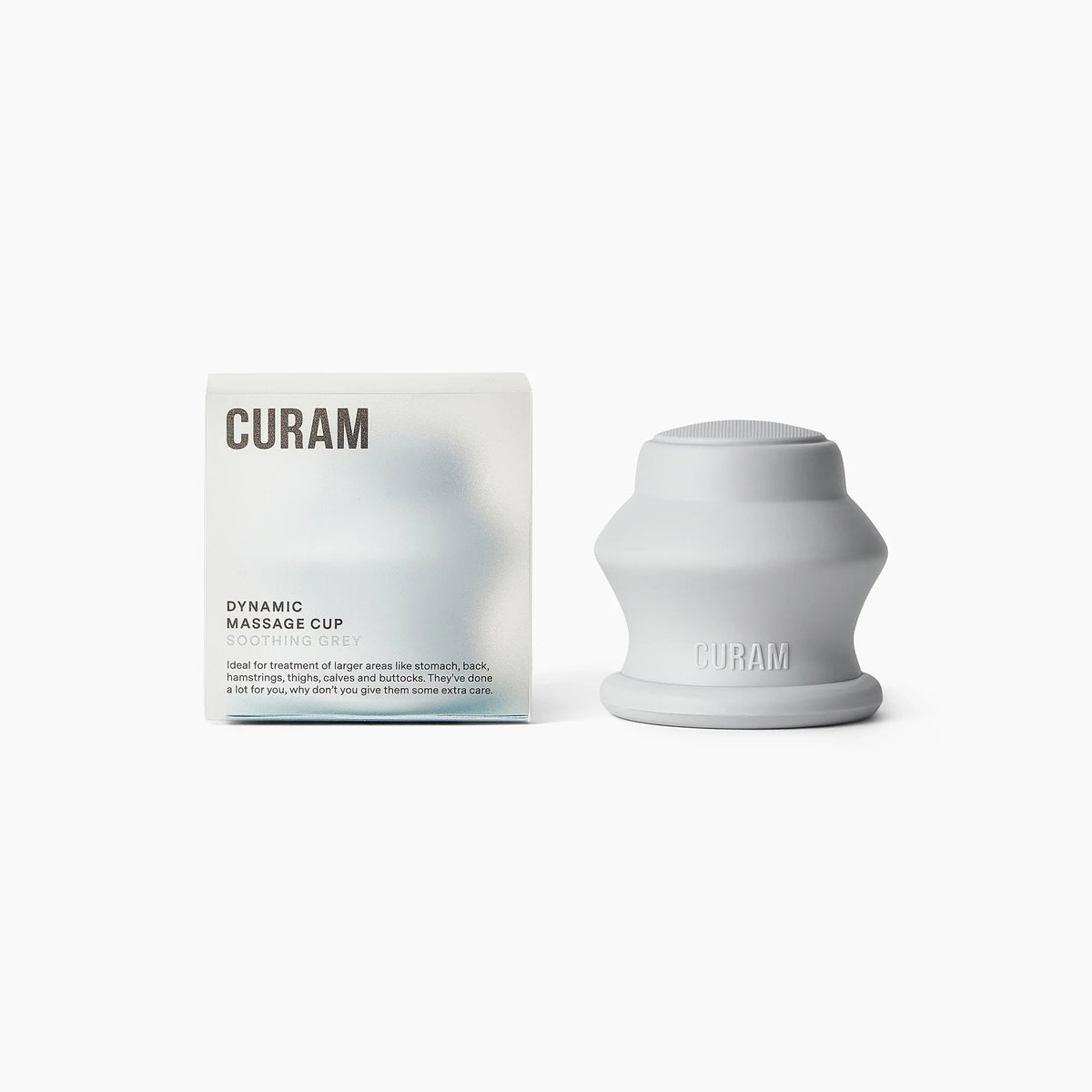
- Front thigh: the dynamic cup with massage oil, light to medium suction, long strokes from just above the kneecap up toward the hip, 2 minutes; extra on the inside of the thigh (vastus medialis, the muscle that "switches off" first with knee swelling) and the outside (ITB).
- Hamstrings and calf: strokes from the back of the knee up toward the buttock, 1–2 minutes, and from the heel up toward the back of the knee on the calf, 1–2 minutes; skip the back of the knee itself.
- Around the knee (once swelling has settled): the small cup on the lowest suction in short strokes from the sides of the knee upward toward the thigh, 30 seconds per side, to drain; not on the kneecap, no pressing into the joint line.
- Static: a static cup on a tender spot in the front thigh or calf for 3 minutes, never on the knee.
- Finish with quadriceps setting and heel slides while the muscles are warm, and elevation. Programmes: the cupping programme for sensitive knees and for runners.
Don't cup with a suspected blood clot (swollen, warm, tender calf), over damaged skin or fresh surgical wounds, or if you take blood thinners without having asked your doctor. More situations in when to avoid cupping.
Frequently asked questions
How do I know if I have a meniscus tear?
Typical signs are pain along the joint line, most often on the inside of the knee, tenderness when you press there, swelling within a day, difficulty squatting and climbing stairs, clicking and the knee catching or locking. In younger people it follows a twist with a loaded knee; over 40 often without a clear event. A physiotherapist or doctor confirms with tests; an MRI is rarely needed to start rehab.
Does a meniscus tear have to be operated on?
Usually not. For degenerative tears in people over 40, twelve weeks of exercise gives results as good as keyhole surgery, and surgery increases the risk of osteoarthritis. Surgery is needed for a locked knee, for large acute tears in younger people that can be repaired, and if locking and swelling persist after proper rehab.
How long does a meniscus tear take to heal?
Most degenerative and smaller acute tears recover in three to four months with rehab; pain when squatting can linger longer without anything being wrong. A repaired meniscus needs six weeks of offloading and four to six months before sport. After removal of a piece you bear weight immediately and are often back in training in six to twelve weeks.
What should you avoid with a meniscus tear?
Deep squatting and twisting with a loaded knee, breaststroke, jumping and sharp turns until the knee is symptom-free, and complete rest; stillness makes the thigh weak and the knee stiff. Walk, cycle and strength train within the pain limit from the first week.
Does cupping help a meniscus tear?
Cupping doesn't repair the meniscus but releases the protective tension in thigh and calf that causes pain and poorer extension, and helps swelling around the knee drain once the acute phase is over. Cup the thigh and calf, not the kneecap, back of the knee or joint line while the knee is swollen, and never a locked knee.
Related guides
- Compression fracture and osteoporosis – exercises
- Knee pain – where does it hurt and what can it be?
- Rehab after knee and hip replacement – week by week
Written by Curam. Last updated 17 October 2026. This is general self-care information and does not replace medical care. For sudden, severe or unusual symptoms, contact your doctor. Talk to your doctor before cupping if you are pregnant, take blood thinners or have a condition affecting skin, blood vessels or blood.


