


The knee is the body's largest joint and the one that most often hurts in runners, desk workers and older people alike, and where the pain sits is the best clue: the inside with a meniscus tear, the inner ligament, the pes anserinus (tendon attachments below the joint line) and osteoarthritis; the outside with runner's knee (ITB) and the outer meniscus; the front and below the kneecap with anterior knee pain (the kneecap tracking off-centre), jumper's knee (the tendon below the kneecap) and bursitis (a swollen cushion in front of the kneecap after kneeling); behind the knee with a Baker's cyst, tight hamstrings or calf, and rarely a blood clot; and the whole knee with swelling with osteoarthritis, injury or inflammation (swollen knee). Add when it hurts (stairs down: kneecap and front thigh; squatting and twisting: meniscus; after running: ITB or jumper's knee; stiff after sitting and in the morning: osteoarthritis; at night: osteoarthritis or inflammation) and how it began (a twist with the foot planted: meniscus or ligament; creeping with more training: overload; without cause over 50: osteoarthritis), and you usually have the answer. What helps almost all knee pain is the same: strong thigh and hip muscles, load in the right dose instead of rest, weight stability, and cupping of the muscles around the knee that pull the joint off-centre. Here is the map, the warning signs and what to do.
Where does it hurt? The map
| Where and when | Recognised by | Most likely | Guide |
|---|---|---|---|
| Inside, along the joint line, worse squatting and twisting | Tender when you press the joint line, swelling, clicking, sometimes locking | Meniscus tear (acute in younger people, degenerative over 40) | Meniscus tear |
| Inside, 2–3 cm below the joint line, worse on stairs and at night when the knees lie against each other | Tender at a spot on the inside of the shin bone, often in runners, overweight people and with osteoarthritis | Pes anserinus tendinopathy/bursitis | Knee osteoarthritis (section on the inside) |
| Inside after an outward twist or a blow to the outside | Tender over the ligament above and below the joint line, feels unstable sideways | Inner ligament injury (MCL) | Physiotherapist; the principles in sprained ankle apply (PEACE & LOVE) |
| Outside, just above the joint line, comes after 10–20 minutes of running or downhill | Burning, sharp pain on the outside at a certain knee angle, disappears at rest | Runner's knee (ITB syndrome) | Runner's knee |
| Around or behind the kneecap, worse on stairs down, squatting and after long sitting ("cinema knee") | Diffuse ache at the front, crunching, hard to pinpoint | Anterior knee pain (patellofemoral pain syndrome): weak hip and thigh, kneecap tracking off-centre | Runner's knee and sensitive knees |
| Below the tip of the kneecap, worse with jumping, at the start of a session | Tender at a spot on the tendon below the kneecap | Jumper's knee (patellar tendinopathy) | Runner's knee (jumper's knee section) |
| In front of the kneecap, a soft swollen cushion | After kneeling work or a blow, warm and red if infected | Bursitis (prepatellar) | Swollen knee |
| Behind the knee, tight or a lump | Tightness when you bend or straighten fully, a lump in the back of the knee | Baker's cyst (fluid from the joint), often with osteoarthritis or a meniscus tear | Swollen knee (Baker's cyst section) |
| Behind the knee, in the calf, sudden with swelling and warmth | Tender, swollen, warm lower leg without injury, sometimes after travel or bed rest | Blood clot (DVT), to be assessed the same day | Doctor or emergency care |
| Whole knee, stiff in the morning and after sitting, over 50 | Ache on loading, crunching, swells periodically, worse in cold | Osteoarthritis | Knee osteoarthritis |
| Whole knee, heavily swollen within an hour of injury | A pop, unstable, can't bear weight | Cruciate ligament injury or fracture | Emergency care; see swollen knee |
| Several joints, warm, morning stiffness over an hour | Swelling without injury, fatigue, sometimes fever | Rheumatic disease, gout, infection | Doctor; Rheumatism |
| Pain radiating to the knee from the hip or back | The knee isn't tender when you press, the hip is stiff or the back hurts | Hip osteoarthritis (often causes knee pain in older people), sciatica | Hip pain, Sciatica |
Warning signs: when knee pain means medical care
- The same day: heavy swelling within an hour of an injury, a clear pop followed by instability, you can't bear weight on the leg or straighten the knee (locked), the knee is warm, red and swollen with fever (joint infection is an emergency), or the lower leg is swollen, warm and tender without injury (blood clot).
- Within one to two weeks: swelling that comes without injury and doesn't go down, locking or catching, pain that wakes you, pain that hasn't improved at all in three to four weeks with self-care, a knee that gives way repeatedly, or knee pain in children and teenagers who limp.
What helps almost all knee pain
- Strength in thighs and hips. The knee is controlled by the muscles above it: a weak front thigh (especially the inside), weak glutes and outer hip let the knee fall inward and the kneecap track off-centre. Squats to a pain-free depth, step-ups, hip bridges, lateral walks with a band and single-leg balance three times a week is the treatment with the best evidence for runner's knee, anterior knee pain, osteoarthritis and after a meniscus tear. Programmes in leg and glute exercises at home and resistance band training.
- Load in the right dose, not rest. Cartilage, tendons and menisci need load to stay healthy; the rule is pain up to 3 out of 10 during activity that isn't worse the next morning. Temporarily reduce what hurts most (jumping, hills, deep squats), replace with cycling, swimming and walking, and build back up.
- Weight and shoes. Every kilo of body weight becomes three to four on the kneecap on stairs; five per cent weight loss gives clearly less pain in osteoarthritis. Shoes with cushioning and support, and new running shoes every 600–800 km.
- Mobility in ankle and hip: a stiff ankle and hip force the knee to compensate; see stiff body and hip stretches.
- Heat for stiff knees, cold for acute swelling in the first days; after that movement and cupping of the muscles around the knee give the most.
- Over-the-counter pain relief when needed in order to train; topical anti-inflammatory gel on the knee for osteoarthritis has evidence and fewer side effects than tablets.
Cupping around the knee: what applies
Cupping is done on the muscles around the knee, not on the joint itself: the front thigh (especially the inside above the kneecap), the outside of the thigh (ITB and vastus lateralis), the hamstrings, the calf and if needed the outer hip. It releases the muscles that pull the kneecap off-centre, increases blood flow to tendons with poor circulation (jumper's knee, pes anserinus) and reduces the protective tension that makes the knee stiff after injury and with osteoarthritis. Don't cup directly on the kneecap, in the back of the knee, on a swollen and warm joint, on a locked knee, over fresh injuries in the first days, with a suspected blood clot, or over fresh surgical wounds.
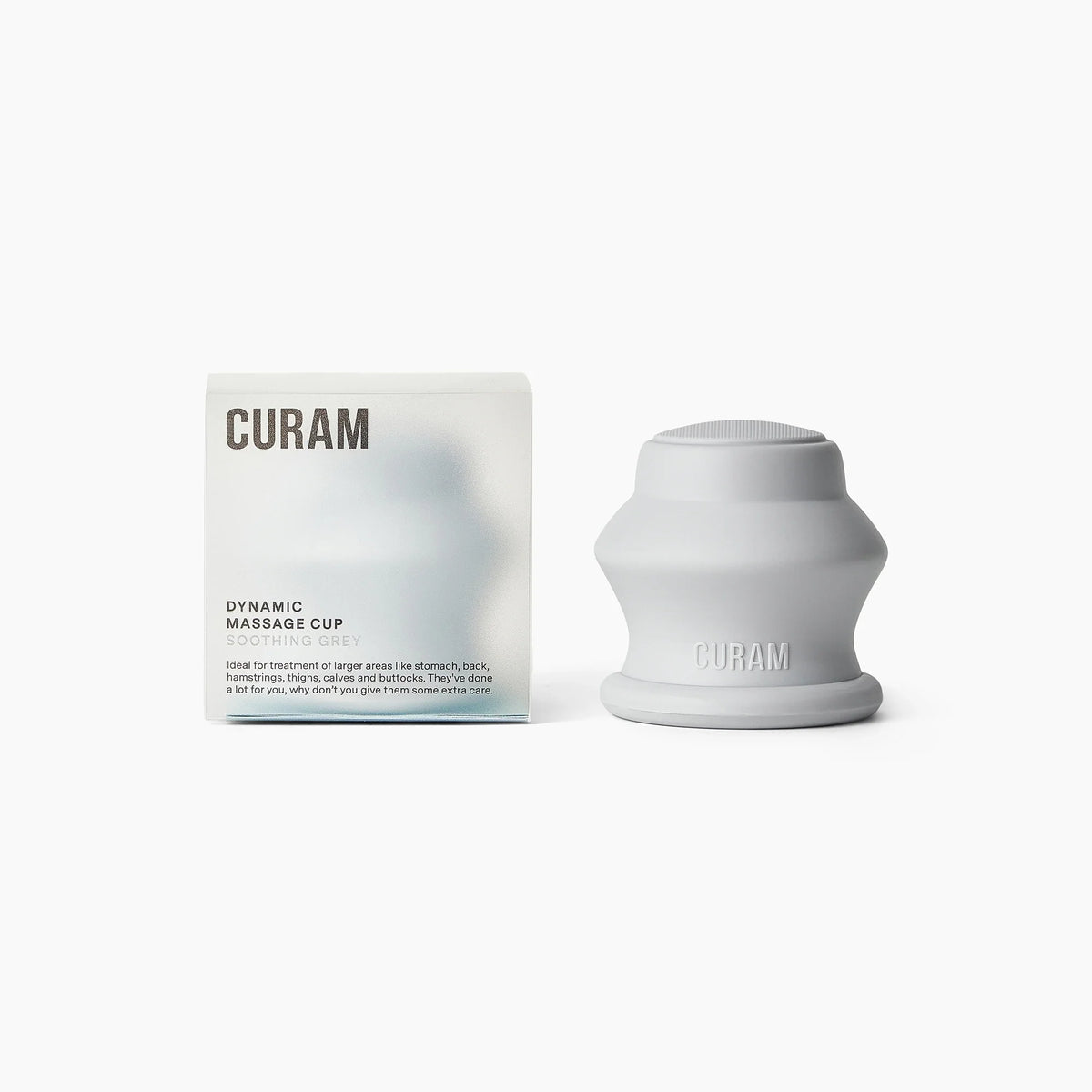
- Front thigh: the dynamic cup with oil, light to medium suction, long strokes from just above the kneecap up toward the hip, 2 minutes; extra on the inside (vastus medialis) for anterior knee pain and osteoarthritis.
- Outside of the thigh: strokes from the outside of the knee up toward the hip along the ITB, 2 minutes; the spot that does most for runner's knee. A static cup on the most tender point for 3 minutes.
- Hamstrings and calf: from the back of the knee up toward the buttock 1–2 minutes, and from the heel up toward the back of the knee 1–2 minutes; skip the back of the knee.
- Around the knee when it isn't swollen: the small cup on the lowest suction in short strokes from the sides of the knee upward, 30 seconds per side, to drain; never on the kneecap.
- Finish with quadriceps setting, step-ups or squats while the muscles are warm. Programmes: the cupping programme for sensitive knees and for runners.
More situations in when to avoid cupping; with blood thinners, ask your doctor.
What is reasonable to expect?
Runner's knee and anterior knee pain: clearly better in four to eight weeks with hip and thigh strength and an adjusted running dose. Jumper's knee and pes anserinus: three months of heavy, slow strength training. Meniscus tear: three to four months of rehab for most. Osteoarthritis: pain decreases with twelve weeks of exercise and stays lower as long as you continue; the osteoarthritis itself doesn't reverse but function can stay good for many years. Pain that doesn't respond at all to eight weeks of proper rehab should be reassessed.
Frequently asked questions
Why does the inside of my knee hurt?
Most common are a meniscus tear (tender in the joint line, worse squatting and twisting), pes anserinus (tender at a spot 2–3 cm below the joint line, worse on stairs and at night), the inner ligament after a twist, or osteoarthritis (stiff in the morning, aching on loading, over 50). Press and feel where it is most tender; that tells them apart.
Why does my knee hurt on stairs?
Stairs down load the kneecap with three to four times body weight; pain around or behind the kneecap on stairs is almost always anterior knee pain (weak hip and thigh, kneecap tracking off-centre) or osteoarthritis behind the kneecap. Stairs up with pain on the inside below the joint line is pes anserinus. Strength in thighs and hips is the treatment in both cases.
Why does my knee hurt at night?
Night knee pain is most common with osteoarthritis (aching after the day's loading), pes anserinus (the knees lie against each other in side-lying; a pillow between the knees helps) and inflammation. Night pain with swelling and warmth, or that wakes you every night without a clear cause, should be assessed.
Should you exercise with knee pain?
Yes, in the right dose: pain up to 3 out of 10 during activity that isn't worse the next morning is okay, and strength training for thighs and hips is the treatment with the best evidence for almost all knee pain. Temporarily swap what hurts most (jumping, hills, deep squats) for cycling, swimming and walking. Complete rest makes the knee weaker and stiffer.
Does cupping help knee pain?
Cupping the muscles around the knee (front and outside of the thigh, hamstrings, calf) releases what pulls the kneecap off-centre, increases blood flow to the tendons and reduces protective tension, making the exercises easier. Don't cup the kneecap, the back of the knee, a swollen and warm joint or a locked knee.
Related guides
- Back pain – where does it hurt and what can it be?
- Bursitis – hip, knee, shoulder, elbow and heel
- Growing pains, Osgood-Schlatter and Sever's – leg pain in children
- Rehab after knee and hip replacement – week by week
- Cracking knees and popping joints – harmless or not, and what helps
- Baker's cyst and pain behind the knee – symptoms, causes, exercises and when to seek care
Written by Curam. Last updated 17 October 2026. This is general self-care information and does not replace medical care. For sudden, severe or unusual symptoms, contact your doctor. Talk to your doctor before cupping if you are pregnant, take blood thinners or have a condition affecting skin, blood vessels or blood.


