


A sprained ankle means the ankle has rolled over, almost always inwards, so that the ligaments on the outside of the ankle have been stretched or partly torn. It hurts, swells and bruises within hours to days, but in the vast majority of cases heals on its own in two to six weeks. The most important things in the first days are to offload, cool and elevate the foot, and to start moving it as soon as you can. The most important thing after that is rehab with balance and strength training, because an ankle that is not retrained is sprained again in up to half of cases. Cupping has no place in the acute phase, but at the end of rehabilitation light cupping of the calf can help stiff muscles let go. Here is first aid, the signs that the foot should be X-rayed, the rehab programme step by step and when cupping can be used.
What happens in a sprain?
The outside of the ankle is held together by three ligaments. In an inward roll (you step awkwardly off a kerb, land on someone's foot, twist on a trail) the front ligament is stretched most. The injury is graded from a mild stretch (grade 1: slight swelling, you can walk) through a partial tear (grade 2: clear swelling and bruising, painful to walk) to a complete tear (grade 3: marked swelling, unstable ankle, difficult to bear weight). Even grade 3 is usually treated without surgery. Swelling and bruising that migrates down towards the toes and heel is normal and does not mean something is broken. What determines the outcome is not the grade but how well the ankle is retrained afterwards.
When to see a doctor: the signs of a fracture
See a doctor the same day for an X-ray if you cannot take four steps on the foot straight after the injury or in the emergency department, if it hurts when you press on the back edge or tip of the ankle bone (outside or inside), on the outside of the midfoot (the base of the fifth metatarsal) or on the navicular bone on the inside of the foot, if the foot looks deformed, if you have numbness or white, cold skin below the injury, or if the pain is very severe. Also seek care if you heard a clear snap and the ankle feels completely unstable, if the swelling has not started to go down after a week, if you cannot walk normally after two weeks, or if the ankle keeps "giving way" after six weeks of rehab. Children with ankle injuries should always be assessed, since the growth plates can be injured.
The first days: what to do
- Offload, but not completely. Avoid what hurts for the first two to three days, use crutches if you cannot walk normally, but bear as much weight as the pain allows. Early weight-bearing heals faster than complete rest.
- Cold for 15–20 minutes at a time, several times a day for the first two days, with a towel between ice and skin. It relieves pain and swelling temporarily.
- Compression with an elastic bandage or ankle support during the day, from the toes upwards, not so tight that the foot goes numb.
- Elevation. Foot above heart level as often as possible in the first days, ideally when sitting and sleeping.
- Move the foot early. Already on day one to two: draw the alphabet in the air with the big toe, flex and point the ankle, circle gently. Several times a day, within the pain limit.
- Pain relief as advised by your pharmacist if needed to get going. Many choose to skip anti-inflammatory tablets in the first days since inflammation is part of healing; talk to the pharmacy.
- Avoid heat, alcohol, massage on the swollen area and hard loading in the first two days; they increase the swelling.
Rehab that prevents the next sprain
The ligaments heal, but the ankle's sense of position (proprioception) and the strength of the muscles that stabilise it deteriorate after a sprain and do not come back on their own. That is why rehab determines whether you sprain the ankle again. Start as soon as you can bear weight without severe pain, usually within a week, and continue for six to twelve weeks.
- Mobility (weeks 1–2): flex and point, circle, seated heel raises, gentle calf stretch with a towel.
- Strength (from weeks 1–2): resistance band around the forefoot, pull the foot outwards and inwards, up and down, three sets of 15 in each direction. Standing heel raises on both legs, then on one. Hip strength (side-lying leg raises) so the knee and foot do not fall inwards.
- Balance (from week 2), the most important part: stand on one leg for 30 seconds, three times, daily; make it harder with closed eyes, on a cushion or with head turns. Continue balance training for at least three months.
- Function (weeks 4–8): walk on toes and heels, side steps, light two-leg hops, then one-leg, changes of direction. Back to running when you can hop ten times on one leg without pain.
- Protection in sport: an ankle brace or taping for ball sports and trail running in the first six to twelve months reduces the risk of a new sprain. Replace worn-out shoes.
When cupping can help: late in rehab, on the calf, not on the swelling
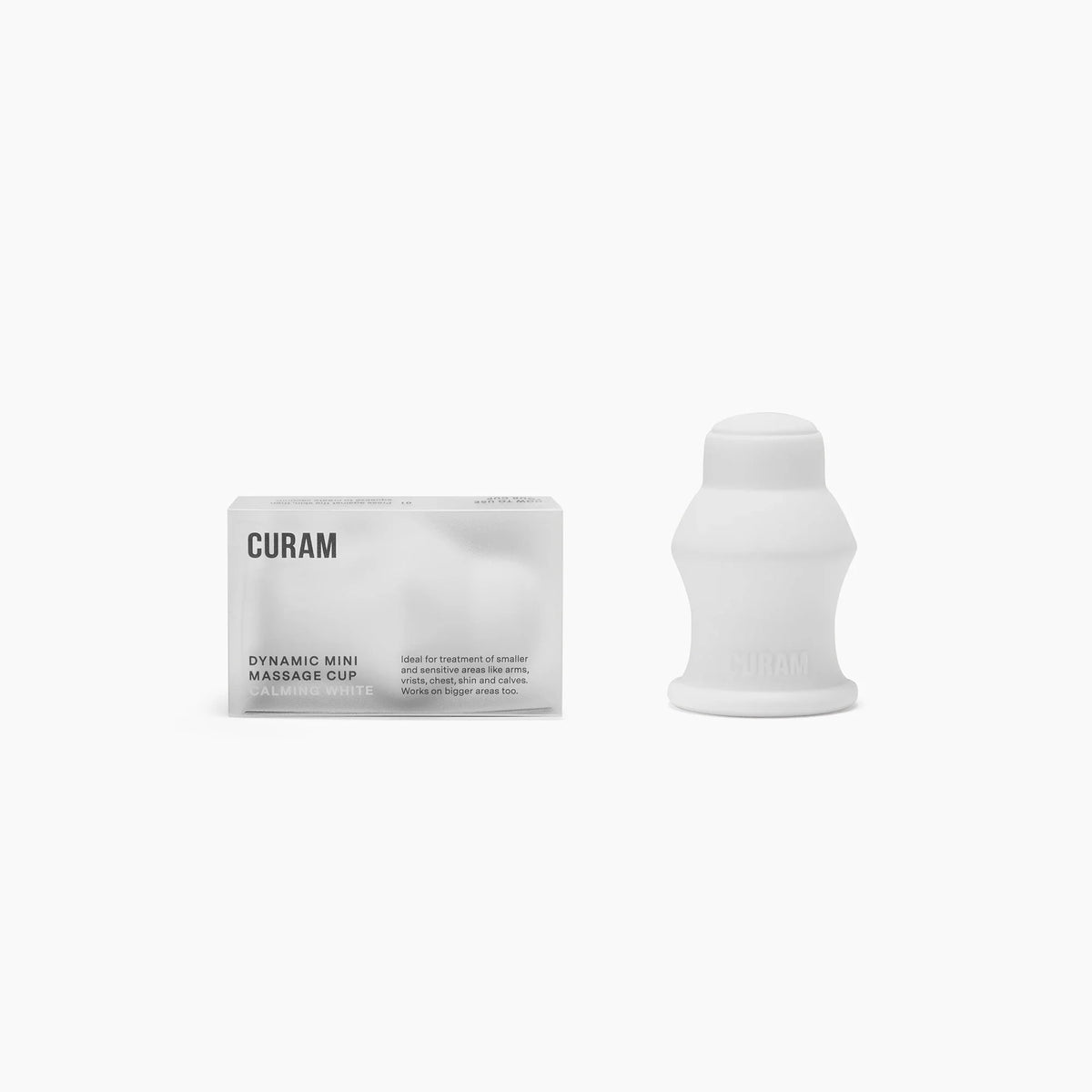
Cupping has no place in the acute phase: the suction increases circulation and fluid in an area that is already swollen and has bleeding in the tissue. But after two to three weeks, when the swelling and bruising have gone and you are bearing weight normally, the calf and the muscles on the outside of the lower leg (the peroneal muscles) are often stiff and tender from limping and offloading. Then light cupping can help them let go and make the rehab exercises easier. You need the dynamic mini cup and body oil. The ground rule: the calf and lower leg, not the ankle, and never where it is still swollen or bruised.
- Wait until swelling and discolouration are gone and you walk without limping.
- Warm up with a warm shower or ten minutes of cycling.
- The calf. Oil. Glide the mini cup with light suction from a hand's width above the ankle up towards the back of the knee, inside, middle and outside, five strokes per line.
- Outside of the lower leg. Strokes along the muscles outside the shin bone and behind the fibula, from the ankle upwards, light suction. These are the muscles that stabilise the ankle against rolling inwards, and they often become tight after a sprain.
- The top of the foot and the arch can be cupped very lightly if they are stiff, but skip the outside of the ankle where the ligaments sit.
- Finish with the band exercises and balance training.
Twice a week for the rest of the rehabilitation. The basics of cupping are in Cupping at home. Related lower leg problems: Shin splints, Achilles tendinopathy, Heel spur and plantar fasciitis and Calf cramps.
When not to cup
Not in the first two to three weeks after the sprain, not on swelling, bruising or warmth, not directly on the ankle ligaments, not with a suspected fracture or before the foot has been assessed if you had any of the warning signs, not with a suspected blood clot in the calf (one-sided swelling, warmth, tenderness that does not belong to the injury), not on varicose veins, wounds or eczema, and not without medical advice if you take blood thinners or are pregnant. If swelling or pain increases after cupping, stop.
Frequently asked questions
How long does a sprained ankle take to heal?
Mild sprains heal in one to two weeks, moderate in three to six weeks, severe in six to twelve weeks. Walking normally comes sooner than being stable enough for sport; expect rehab for at least six weeks and balance training for three months.
Should I have a sprained ankle X-rayed?
If you cannot take four steps straight after the injury, if it hurts when you press on the back edge of the ankle bones, the outside of the midfoot or the inside of the foot, if the foot looks deformed or if you have numbness. Otherwise an X-ray is usually not needed; ligament injuries do not show on X-ray.
Should I use heat or cold?
Cold in the first two days for pain and swelling. After that, heat can feel good for stiff calf muscles, but not on the ankle itself while it is swollen.
Does cupping help a sprained ankle?
Not acutely; then it increases the swelling. After two to three weeks, when the swelling has gone down, light cupping of the calf and lower leg muscles can help stiffness from limping and make the rehab exercises easier. Never on the ankle ligaments or on swelling.
Why do I keep spraining my ankle?
Because the sense of balance and the stabilising muscles deteriorate after a sprain and are not retrained on their own. Single-leg balance training for at least three months, strength with a band and an ankle brace in sport for the first year reduce the risk considerably.
Sources
- 1177 Vårdguiden (Swedish national health guide), search for "stukad fot" for medical information and when to seek care.
- Curam's FAQ and cupping programmes, developed together with trained massage therapists.
Related guides
Written by Curam. Last updated 17 October 2026. This is general self-care information and does not replace medical care. For sudden, severe or unusual symptoms, contact your doctor. Talk to your doctor before cupping if you are pregnant, take blood thinners or have a condition affecting skin, blood vessels or blood.


