


Plantar fasciitis, often simply called heel spur in everyday speech, is an overload of the tendon plate under the foot, the plantar fascia, and feels like sharp pain under the heel with the first steps in the morning or after sitting for a while. It heals with time, but faster if you offload correctly, strengthen and soften the calf, and keep the sole mobile. Cupping the calf and sole is a simple way to work on exactly that chain at home. Here are the causes, what helps, a cupping routine and when to see a doctor.
What is plantar fasciitis?
The plantar fascia is a thick band of tissue running from the heel bone to the toes that holds up the arch. When it is loaded beyond what it tolerates, by increased training, lots of standing, hard surfaces, worn-out shoes, tight calves or weight gain, the attachment at the heel becomes irritated and tender. A "heel spur" is a calcium deposit at the attachment that shows on X-ray but is rarely the cause of the pain. Typical: worst with the first steps in the morning, better after warming up, worse again after prolonged load or sitting.
Heel spur or plantar fasciitis – are they the same thing?
No, but the words are used for the same complaint. A heel spur is a small bony outgrowth (calcium deposit) where the plantar fascia attaches to the heel bone. It shows on X-ray and is common even in people who have never had heel pain, so the spur itself is rarely the problem. Plantar fasciitis is the irritation of the attachment itself, and that is what hurts. When someone says "I have a heel spur", they almost always mean the pain under the heel, that is, plantar fasciitis. The self-care is therefore the same whichever word you use: offload, strengthen the calf, keep the sole mobile and give it time. The spur does not need to be removed for the pain to go away, and surgery is uncommon.
How it differs from other causes of heel pain: Achilles tendon problems hurt at the back of the heel (not underneath), a stress fracture hurts constantly on loading and is tender when you squeeze the sides of the heel bone, and nerve entrapment gives tingling or numbness. If unsure, let a physiotherapist or doctor assess it.
When to see a doctor
Seek care if the pain came suddenly during a jump or sprint (suspected rupture), if the heel is swollen, warm or red, if you have numbness or tingling in the foot, fever, night pain at rest, if you have diabetes or reduced sensation in the feet, or if you have not improved after two to three months of self-care. Do not cup a swollen or inflamed area.
Self-care that helps
- Offload smartly. Reduce what hurts (long runs, hard surfaces, barefoot on stone floors) but keep walking and moving. Switch temporarily to cycling or swimming.
- Strengthen the calf: heel raises on a step, slowly up and down, ideally with a rolled towel under the toes. Three sets of twelve, every other day. This is the best-documented self-treatment.
- Stretch sole and calf before the first steps in the morning: pull the toes towards you with your hand for 30 seconds, three times, and stretch the calf against a wall.
- Roll the sole on a ball or a cold bottle for a few minutes a day.
- Shoes with support and cushioning, indoors too for a period. Heel cups or insoles can help.
- Taping of the arch can offload during healing; ask a physiotherapist to show you.
- Patience. Most people recover within a few months, but it can take up to a year.
Cupping the calf and sole, step by step
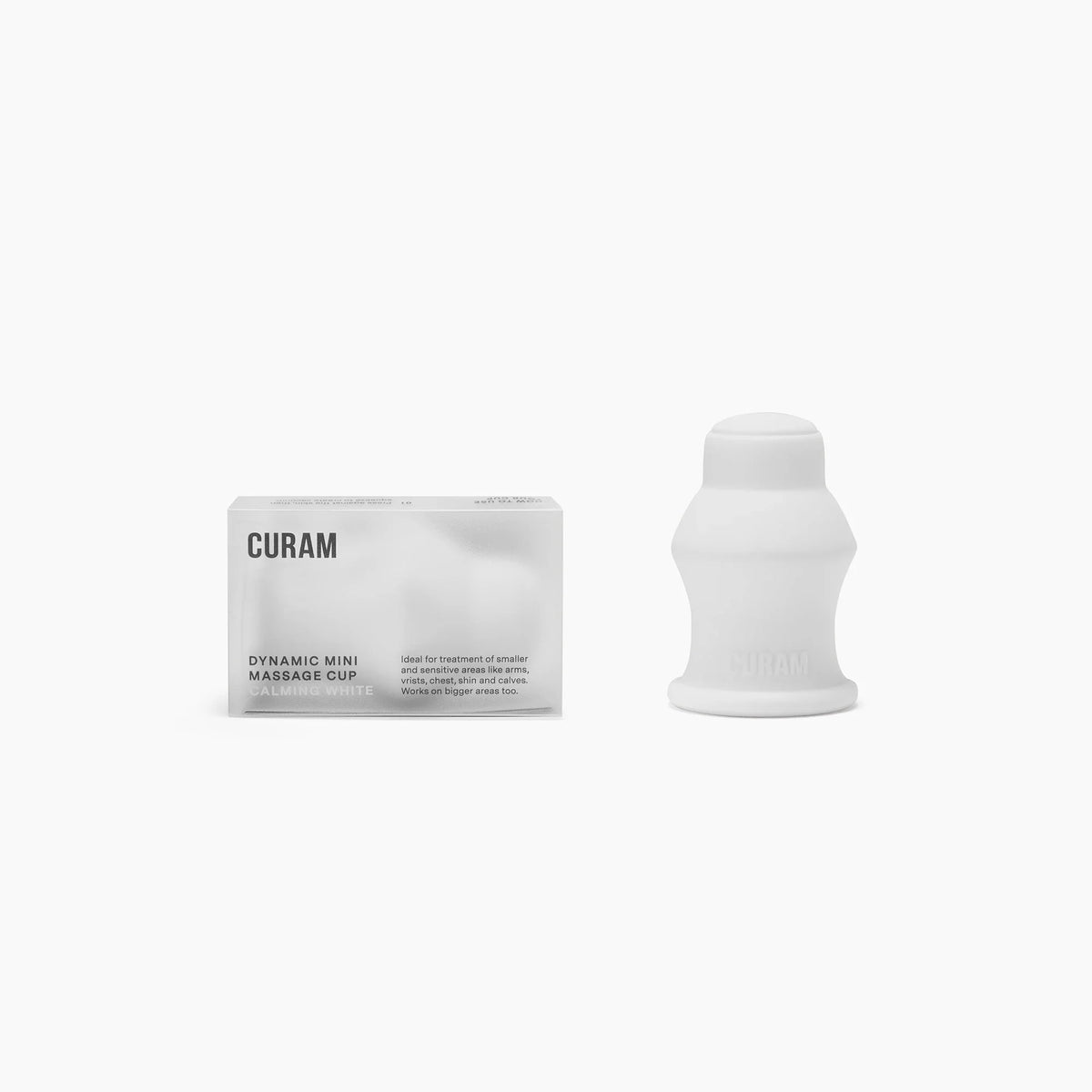
The calf and the plantar fascia are connected via the Achilles tendon. Tight calves pull on the heel and increase the load on the sole, so the calf matters as much as the foot. You need the Dynamic Mini Cup, ideally static cups, and body oil. Do it in the evening or after a warm shower.
- Calf. Oil. Glide the mini cup in slow strokes from the heel up towards the back of the knee on the inside, back and outside of the calf, five strokes per lane, letting the cup release before the knee fold. Pause with light suction on tender points for ten seconds.
- Achilles tendon. Light, short strokes on either side of the tendon, from the heel upwards. Not directly on the tendon if it is tender.
- Sole. Sit with the foot on the opposite knee. Oil. Glide the mini cup from the heel forwards towards the toes along the arch, with light suction, five to eight strokes. The skin of the sole is thick so the suction may need to be slightly stronger than on the calf, but it should not hurt.
- Static. Place a static cup on the most tender point of the calf and one in the arch (not on the underside of the heel where it hurts), for one to three minutes.
- Finish with a calf stretch and a few heel raises.
Two to three times a week, and ideally a short version on the calf after training. How static and dynamic cupping work in general: Cupping at home. Heavy or swollen legs as well? Read Lymphatic massage at home.
Tired feet without plantar fasciitis
If you stand a lot at work or have walked far, the same routine works as recovery: calf and sole with light suction, ideally followed by lying with the legs raised for a while. Many also like to put static cups on the soles on the sofa. It stimulates circulation in the foot and feels much like a foot massage.
When not to cup the feet
With swelling, warmth or redness, with suspected rupture, on wounds, fungal infection or eczema, with diabetes with reduced sensation or poor circulation in the feet without a doctor's advice, with a blood clot or on blood thinners without a doctor's advice, and not on varicose veins.
Frequently asked questions
Does cupping help with plantar fasciitis?
Cupping the calf and sole can reduce tension in the chain that pulls on the heel and make the foot more mobile, which many find relieving. It is a complement to calf strength, stretching and the right load, which is what heals.
Can I cup directly on the heel?
Avoid the most tender point under the heel. Work in the arch, along the sides of the Achilles tendon and on the calf.
How long does plantar fasciitis take to heal?
Usually a few months with the right self-care, sometimes up to a year. The earlier you start with calf strength and offloading, the faster.
Are heel spur and plantar fasciitis the same thing?
No. The heel spur is a calcium deposit that can exist without pain. What hurts is almost always the attachment of the plantar fascia, that is, plantar fasciitis.
Can I run with plantar fasciitis?
Often at reduced volume on soft surfaces, if the pain is low and does not increase the next day. Switch to cycling or swimming during the worst weeks.
Written by Curam. Last updated 17 October 2026. This is general self-care information and does not replace medical care. For sudden, severe or unusual symptoms, contact your doctor. Talk to your doctor before cupping if you are pregnant, take blood thinners or have a condition affecting skin, blood vessels or blood.


