


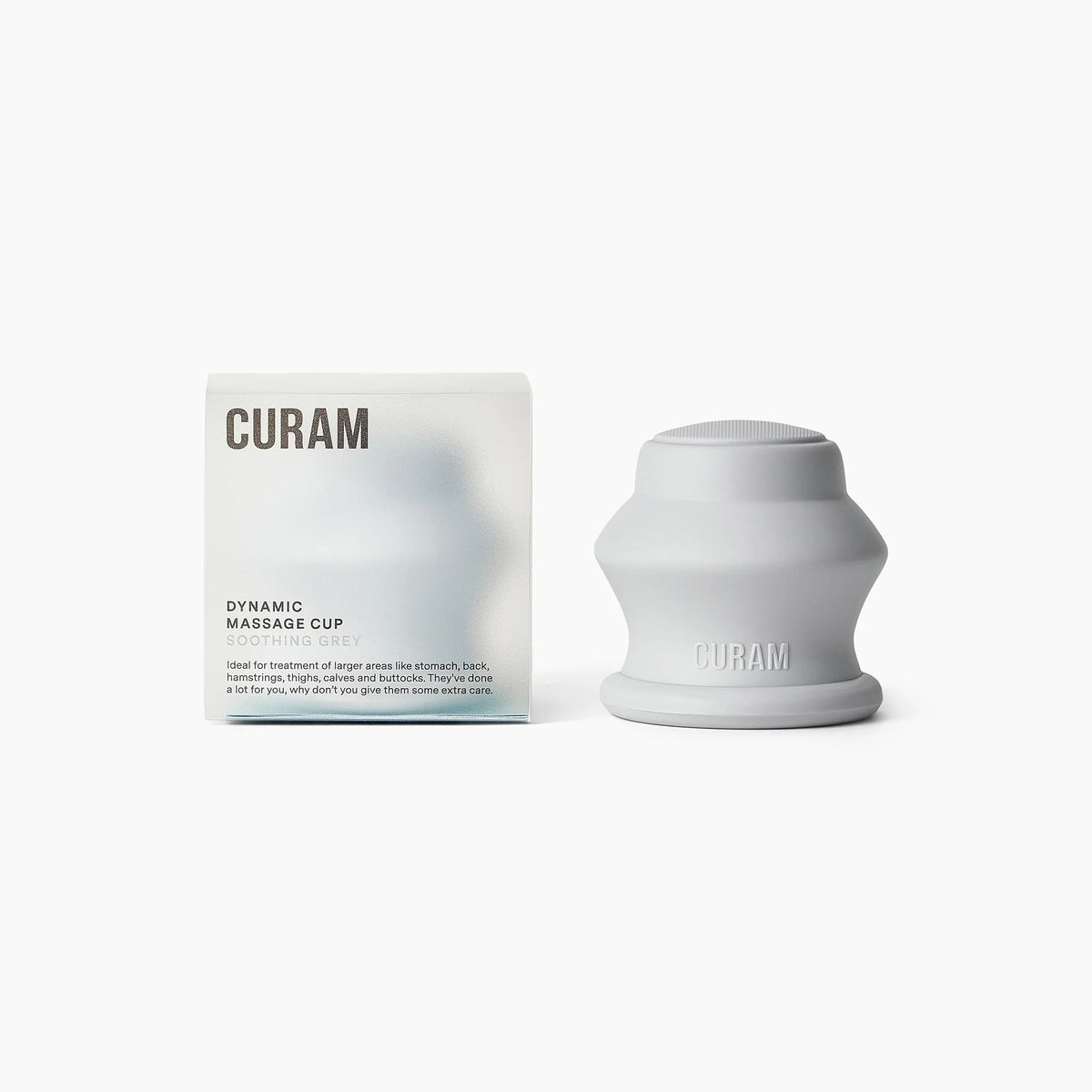
Lymphatic massage at home is very light, rhythmic massage in the direction of the lymph nodes, done to support healthy lymphatic flow and reduce temporary swelling. Three rules apply whether you use your hands or a silicone cup: always work towards the nearest nodes (groin, armpits, collarbones), keep the pressure as light as a stroke, and open the "stations" first. With Curam's dynamic cups you use the lightest suction the cup can give. Below: what lymphatic massage is, signs of sluggish flow, a full-body routine, detailed routines for legs, abdomen and face, cups vs hands vs dry brushing, how often, and when to avoid it.
What is lymphatic massage?
Lymphatic massage, or lymphatic drainage, is a very light, rhythmic massage that follows the flow direction of the lymphatic system. The lymphatic system is the body's drainage network: thin vessels that collect excess fluid, waste products and immune cells from the tissues and return them to the blood via lymph nodes in the groin, armpits and at the collarbones. It has no pump of its own and relies on muscle movement, breathing and pressure changes.
Manual lymphatic drainage (MLD) was developed in the 1930s and is used in healthcare as part of lymphoedema treatment. The home version described here is simpler and gentler: a way to support healthy flow and help reduce temporary swelling, not a medical treatment.
Signs of sluggish lymphatic flow
- Swollen legs, feet and ankles towards the evening, especially after a day of standing or sitting.
- Heaviness in the legs or a "bloated" feeling in the whole body.
- A puffy face and swollen eyes in the morning.
- Socks and rings that leave marks or feel tighter than usual.
- Dense, stiff connective tissue: the skin feels tough and hard to lift, sometimes with cellulite.
- Tiredness and sluggishness not explained by lack of sleep.
Swelling can also have medical causes. Seek care if swelling is one-sided, sudden, warm or painful; it can be a sign of a blood clot or infection and must be assessed before you massage.
Lymphatic massage at home, step by step
Direction towards the nearest nodes, pressure as light as a stroke, open the stations first. Think of it as pulling the plug before you empty the bath. With the Dynamic Cup or Dynamic Mini Cup, always apply a thin layer of body oil so the cup glides without dragging, and squeeze the cup only slightly.
Step 1: open the stations at the collarbones (1 minute)
Place your fingertips in the hollows just above the collarbones. Make ten soft, pumping circles; the pressure should barely show on the skin.
Step 2: activate armpits and groin (1 minute)
Place a palm against the armpit and make ten light pumps, switch sides. Do the same in the groin creases, ten pumps per side.
Step 3: breathe deeply into the belly (1 minute)
Five slow breaths where the belly rises. The diaphragm acts as a pump for the large lymph vessels in the abdomen.
Step 4: legs, from thigh to foot (4–5 minutes)
Always work the part nearest the station first: thigh, then lower leg, then foot. Glide the cup in slow strokes upwards towards the groin, five to ten strokes per stretch, pressure as light as a stroke.
Step 5: abdomen (2 minutes)
Five to eight strokes from the sides of the belly in towards the navel and on down towards the groin, followed by slow clockwise circles around the navel.
Step 6: arms (2 minutes)
Cup or palm from wrist to elbow and from elbow to armpit, five strokes per stretch and arm.
Step 7: face and neck (2–3 minutes)
Finish with neck and face, downwards towards the collarbones; see the detailed steps below. Drink a large glass of water afterwards.
To see the movements on video, follow the cupping programme for lymphatic drainage. Completely new to cupping? Read Cupping at home or the complete guide to cupping first.
Cups, hands or dry brushing: which is best?
All three can be done at home and follow the same direction rules. The difference is how they affect the tissue. Hands give the finest control and need no equipment, but it is easy to press too hard. Silicone cups lift the skin instead of pressing, which moves fluid with minimal pressure and reaches the connective tissue as well; they are the easiest way to get a whole leg done evenly. Dry brushing stimulates the skin and the most superficial vessels and is quick before a shower, but works less on deeper tissue. Many combine: dry brushing for a couple of minutes in the morning, cups in the evening when the legs feel heavy. All body cups are in the body cups collection; for cups, oil and guidance in one box, Body Kit Large is what we most often recommend for full-body lymphatic massage.
Lymphatic massage for swollen legs and feet
Swollen legs are the most common reason people start lymphatic massage at home. Gravity works against the lymph in the legs all day, and when you sit still the calf muscle pump is off duty.
Step 1: open the groin
Ten light pumps with the palm in each groin crease. Thirty seconds that make a difference to the whole routine.
Step 2: thighs
Place the Dynamic Cup on the front of the thigh just above the knee with minimal suction. Glide slowly up towards the groin, lift, start again. Five to ten strokes on the front, outside and back.
Step 3: back of the knee
A group of lymph nodes sits behind the knee. Make ten soft circles with your fingertips in the knee fold before moving to the lower leg.
Step 4: lower legs
Switch to the Dynamic Mini Cup. Glide from the ankle up towards the back of the knee, five to ten strokes on the back of the calf and five to ten on the outside of the shin.
Step 5: feet
Stroke with the palm from the toes over the top of the foot towards the ankle, five strokes. Then circles around the ankle bones, where fluid likes to collect.
Lymphatic massage can make the legs feel lighter right away, but the biggest effect comes in combination with movement, breaks from sitting and legs raised for a while every day. More everyday tips in Tips for swollen legs and feet (in Swedish).
Lymphatic massage of the abdomen
Some of the body's largest lymph structures sit in the abdomen, and the belly is often the area that gives the most effect on bloating. Lie on your back with bent knees so the belly is relaxed.
Step 1: breathe
Five deep belly breaths, a hand on the belly to feel it rise.
Step 2: sides towards the middle
Glide the cup from the sides of the waist in towards the navel, five strokes per side. Pressure as light as a stroke.
Step 3: clockwise circles
Follow the direction of the colon: up the right side, across above the navel, down the left side. Five to eight slow circles.
Step 4: down towards the groin
Finish with five strokes from the navel diagonally down towards each groin. Two to three minutes in total. Not during pregnancy.
Lymphatic massage of the face and neck
The face is where many notice the effect fastest: a puffy morning face usually looks fresher after a few minutes. Extra light pressure applies, and the cup must always move; a cup standing still on the face can leave marks.
Step 1: collarbones
Ten soft pumps in the hollows above the collarbones. Always first.
Step 2: neck
Stroke downwards from the ear along the side of the neck to the collarbone, five strokes per side. Avoid pressing on the front of the neck at the larynx.
Step 3: jawline and cheeks
From the chin along the jawline out to the ear, five strokes. Then from the side of the nose over the cheek to the ear, five strokes.
Step 4: eyes and forehead
With the Face Cup Mini or the ring finger: from the inner corner of the eye, under the eye out towards the temple, five strokes. Forehead from the centre out to the temples, five strokes. Finish down the neck to the collarbones. Full face routine: Face cupping: how to do it.
How often should you do lymphatic massage?
Lymphatic massage is gentle and most people can do it often, but the body needs to get used to it. Our rule of thumb for beginners is three times a week for the first weeks, then as needed. The best time is when you have peace and quiet: morning for the face, evening for the legs. If an area feels tender, wait a day.
When to avoid lymphatic massage
- Lymphoedema and lipoedema. With diagnosed lymphoedema (for example after cancer surgery) or lipoedema, self-treatment should be planned with a lymphatic therapist or physiotherapist. Cupping can be part of the routine for some, with the lightest possible suction, but direction, pressure and frequency need to be adapted.
- Infection and fever. Do not massage during an infection, fever or erysipelas; the lymphatic system is already busy and stimulation can spread the infection.
- Suspected blood clot. One-sided, sudden swelling in a leg, especially if warm, red or painful, needs urgent assessment. Never massage before a clot has been ruled out.
- Heart failure, kidney or liver disease. Swelling caused by the body not managing fluid balance is treated by a doctor, not with massage.
- Ongoing cancer treatment. Always consult your treating team first.
- Skin and general condition. Avoid cupping over open wounds, eczema, psoriasis, fresh scars and varicose veins. Be careful during pregnancy (no cupping on the abdomen), with blood thinners, high blood pressure and diabetes.
Further reading: What is lymphatic massage? Effects and side effects · Lymphatic massage for the face · Lymphatic massage and weight loss · Machine, cups or hands? · Lymphatic drainage – manual, mechanical and at home · Lymphatic massage near you · Fluid retention
Frequently asked questions
Which cups should I use for lymphatic massage?
All Curam's cups affect lymphatic flow by releasing the fascia. For lymphatic massage, where you glide towards the larger nodes, dynamic cupping is recommended: the Dynamic Cup for thighs and abdomen, the Dynamic Mini Cup for lower legs and arms, and the face cups for face and neck.
How much suction?
The lightest the cup can give. Lymph vessels lie just under the skin and are compressed if you press hard. The skin should turn pale pink, not red.
Can lymphatic massage help with cellulite?
It can reduce the fluid component of cellulite and make the skin smoother. For the connective-tissue strands you need somewhat more suction; see Cupping for cellulite.
How long until the swelling goes down?
Legs often feel lighter straight after a session, and a puffy face looks fresher within minutes. Lasting change comes with regular sessions combined with movement and legs raised daily.
Can I do lymphatic massage every day?
Once your body is used to it, yes, with the lightest suction. Start with three times a week.
Written by Curam. Last updated 16 October 2026. This is general self-care information and does not replace medical care. For sudden, severe or unusual symptoms, contact your doctor. Talk to your doctor before cupping if you are pregnant, take blood thinners or have a condition affecting skin, blood vessels or blood.


