


Lymphatic drainage is the umbrella term for techniques that help lymph fluid leave the tissue and flow on towards the lymph nodes. There are three forms: manual lymphatic drainage (MLD), a medical massage technique used by lymphoedema therapists for lymphoedema and after surgery; mechanical lymphatic drainage (pressotherapy), compression boots or sleeves with air chambers; and self-care at home with hands or soft silicone cups for ordinary swelling, heavy legs and a puffy face. All three rest on the same principle: very light pressure, in the direction of lymph flow, with the "stations" closest to the heart opened first. Here is what separates them, what they cost, what they suit and how to do a simple lymphatic drainage yourself.
What does lymphatic drainage mean?
The lymph is the body's drainage system without a pump of its own (how the lymphatic system works). Drainage simply means helping the run-off along. In everyday language lymphatic drainage and lymphatic massage mean the same thing; in healthcare manual lymphatic drainage means a specific, standardised technique (developed in the 1930s by Emil and Estrid Vodder) that is part of lymphoedema treatment. What the treatment does in the body, side effects and expectations are described in What is lymphatic massage?; this page is about the forms and how to choose.
Three forms of lymphatic drainage
| Manual lymphatic drainage (MLD) | Mechanical (pressotherapy) | Self-care at home | |
|---|---|---|---|
| Who performs it | Lymphoedema therapist (healthcare) or trained massage/skin therapist (wellness) | Clinic, salon, gym or at home with your own machine | You |
| Used for | Lymphoedema, after surgery and injury, swelling, wellness | Lymphoedema (complement), sports recovery, heavy legs | Ordinary swelling, heavy legs, puffy face, recovery |
| Areas | Whole body including face, trunk and scars | Legs, sometimes arms | Legs, abdomen, arms, face, neck |
| Time | 45–75 min | 20–45 min | 5–15 min |
| Price (approx., Oct 2026, Sweden) | Healthcare: patient fee. Wellness: SEK 700–1,300 | SEK 300–600 per session; machine SEK 2,000–15,000 | Hands free; cups from a couple of hundred kronor |
| Strength | Precision, adapted to your body, can treat lymphoedema | Even, sequential pressure over the whole leg; pleasant and passive | Free, any time, whole body; regularity beats intensity |
| Limitation | Cost and access; the effect needs follow-up at home | Does not reach trunk, abdomen or face; not for all conditions | Needs technique and a light hand; no treatment of disease |
Manual lymphatic drainage with a therapist
The therapist works with very light, rhythmic pressure in a set order: neck and collarbones first, then armpits and groin, then the body part to be drained, always from the part closest to the nodes and outwards. For lymphoedema, MLD is combined with compression, exercise and skin care in a treatment series; that is healthcare and goes through a GP or cancer clinic, see Lymphoedema. As wellness, MLD is booked with massage and skin therapists; how to choose and what it costs is in Lymphatic massage near you.
Mechanical lymphatic drainage (pressotherapy)
Air chambers in boots or sleeves are inflated in sequence from the bottom up, pushing fluid towards the groin or armpit. It is used as a complement for lymphoedema, in sports recovery and in salons for heavy legs. It is pleasant and demands nothing of you, but only reaches legs or arms, takes 20–45 minutes per session and is expensive to own. The comparison with cups and hands: Lymphatic massage machine, cups or hands?
Lymphatic drainage at home: how to do it
- Open the stations. Stroke lightly 5–10 times over the hollows above the collarbones, the armpits and the groin.
- Breathe. Five slow belly breaths; the diaphragm pumps the lymph in the trunk.
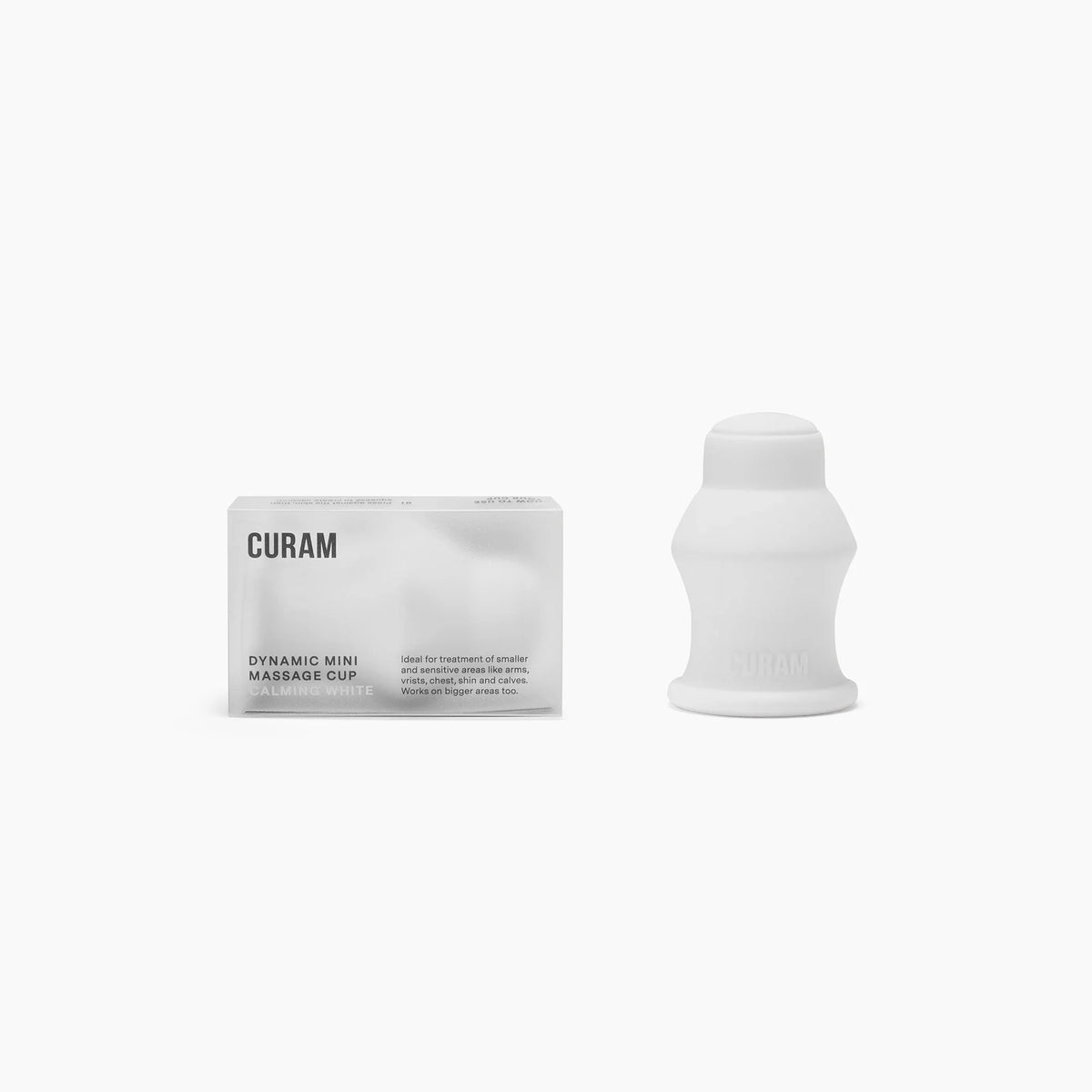
- Legs. From the ankle towards the back of the knee, then from the knee towards the groin, with your hands or an oiled silicone cup with light suction, 10–15 strokes per section. Curam Dynamic Cup for thighs and calves, Dynamic Mini Cup for ankles, knees and arms.
- Abdomen. Soft clockwise circles around the navel.
- Face and neck. From the centre outwards towards the ears and down towards the collarbones, see Lymphatic massage for the face.
- Finish by stroking down the neck and over the collarbones again.
The full technique with pictures: Lymphatic massage at home. The pressure should be so light that the skin barely moves; firm pressure compresses the lymph vessels. Two to four times a week is enough, daily in periods of swelling.
What suits you?
- Lymphoedema, swelling after surgery, unexplained one-sided swelling: healthcare and manual lymphatic drainage with a lymphoedema therapist. Not self-care in the first instance.
- Heavy legs, swollen ankles in the evening, puffy face, recovery after training: self-care at home, ideally with cups, and a treatment now and then as wellness.
- Very swollen legs every day or hard training: pressotherapy can be worth the money, complemented with cups for the rest of the body.
- Want to lose weight: lymphatic drainage moves fluid, not fat; read Lymphatic massage and weight loss before you book.
When lymphatic drainage should not be done
With fever or infection, a suspected blood clot, untreated heart failure, acute kidney disease or active cancer without a doctor's clearance. Swelling that comes on suddenly, in one leg only, is warm or tender must be assessed by healthcare the same day. Full list: When to avoid cupping. On the causes of swelling in general: Fluid retention in the body.
Frequently asked questions about lymphatic drainage
What is the difference between lymphatic drainage and lymphatic massage?
In everyday language, none. Manual lymphatic drainage is the medical technique lymphoedema therapists are trained in; lymphatic massage is used more broadly for any light massage in the direction of lymph flow, including what you do yourself.
What does lymphatic drainage cost?
Through healthcare for lymphoedema: a patient fee. As wellness with a massage or skin therapist in Sweden: about SEK 700–1,300 for 45–75 minutes. Pressotherapy SEK 300–600 per session. At home: the cost of cups and oil, or nothing with your hands.
How often should you do lymphatic drainage?
At home 2–4 times a week, daily for the legs in periods of swelling. With a therapist often a series of 3–5 treatments and then as needed. For lymphoedema, the therapist decides.
Can I do lymphatic drainage with cups?
Yes, dynamic cupping with light suction in the direction of lymph flow is a simple way to do lymphatic drainage on yourself, especially on legs, abdomen and face with small cups. Not on a limb with lymphoedema without a therapist's guidance.
What does it feel like when lymphatic drainage works?
Lighter legs, less swelling, often urinating more the same day and feeling thirsty. It should not hurt and should not leave marks if the pressure is right.
Written by Curam. Last updated 17 October 2026. This is general self-care information and does not replace medical care. Lymphoedema is treated through healthcare.


