


Achilles tendinopathy is an overload of the Achilles tendon, the strongest tendon in the body, which connects the calf muscles to the heel bone. The tendon becomes stiff, tender and sometimes thickened, worst with the first steps in the morning and at the start of a session, better once you are warm, worse again afterwards. Despite often being called "Achilles tendinitis", it is rarely a classic inflammation but a tendon that has been loaded more than it has had time to recover from, usually by increased running, jumping, hills or a change of shoes or surface. It heals, but slowly: what heals it is correctly dosed load, above all slow, heavy heel raises over twelve weeks, not rest. Here is how to recognise Achilles tendinopathy, what helps, when to suspect a rupture and how cupping the calf helps the muscles that pull on the tendon to let go.
What is Achilles tendinopathy?
The Achilles tendon tolerates enormous loads, up to several times body weight when running, but adapts slowly. If the load increases faster than the tendon can remodel, its structure becomes disordered, small vessels and nerves grow in, and the tendon becomes tender and stiff. There are two variants: the mid-portion (2–6 cm above the heel bone), which is most common and often gives a palpable, tender thickening, and the insertion at the heel bone, which hurts at the very bottom of the back of the heel and is worse walking uphill and with hard shoe heel counters. Risk factors: rapid increase in running or jumping, hill running, stiff or weak calves, flat feet or high arches, age over 40, overweight, diabetes, certain antibiotics (fluoroquinolones) and cortisone treatment. The difference from heel spur and plantar fasciitis: there it hurts under the heel, here at the back and above it.
When to see a doctor
Seek urgent care if you felt a snap or a pop in the calf or heel, as if someone kicked you, followed by difficulty walking on your toes or pushing off; it may be an Achilles rupture and needs assessment the same day. Also see a doctor if the heel is swollen, warm or red, if you have a fever, if the pain came suddenly without loading the tendon, if you are being treated with fluoroquinolone antibiotics or cortisone and develop Achilles problems (do not stop the medicine without advice), if you have diabetes or rheumatic disease, or if you are not better after three months of a consistent exercise programme.
Self-care that heals: load in the right dose
- Reduce what provokes it, but not to zero. Cut running, jumping and hills to a level where pain during activity is at most 3–4 on a ten-point scale and not worse the next morning. Cycle, swim or walk instead in the meantime. Complete rest makes the tendon weaker.
- Heavy, slow heel raises, the core of the programme. Stand on a step with the forefoot, rise onto the toes with both legs, shift the weight to the sore leg and lower the heel slowly below the level of the step over three to four seconds. Three sets of 15 with a straight knee and then three sets of 15 with a slightly bent knee, twice a day, for twelve weeks. Add load with a backpack when it gets easy. Moderate pain during the exercise is allowed; it should have settled by the next morning. For insertional problems: do not lower the heel below the step, do the exercise on a flat floor.
- Isometric heel raises for pain. Stand on the toes of the sore leg and hold still for 30–45 seconds, five times. It dampens the pain temporarily and can be done before training.
- A heel wedge in the shoes (1–1.5 cm) in the first weeks offloads the tendon. Avoid completely flat shoes and walking barefoot on hard floors during healing. For insertional problems: shoes without a hard, pressing heel counter.
- Calf strength and mobility in the rest of the chain: bent-knee heel raises for the soleus, hip strength, gentle calf stretching (not aggressive stretching that pulls on the tender tendon, especially not with insertional problems).
- Heat before exercises; cold after activity if it relieves.
- Return to running when you can do 25 single-leg heel raises without increased pain the next day: short sessions on flat, soft ground, increase by at most 10 percent a week, hills and speed last. Expect three to six months for full recovery.
- Medical options for prolonged problems: physiotherapist-led rehabilitation, shockwave therapy, in rare cases surgery. Cortisone injection into the Achilles tendon is avoided because of the risk of rupture.
Cupping the calf around the Achilles tendon, step by step
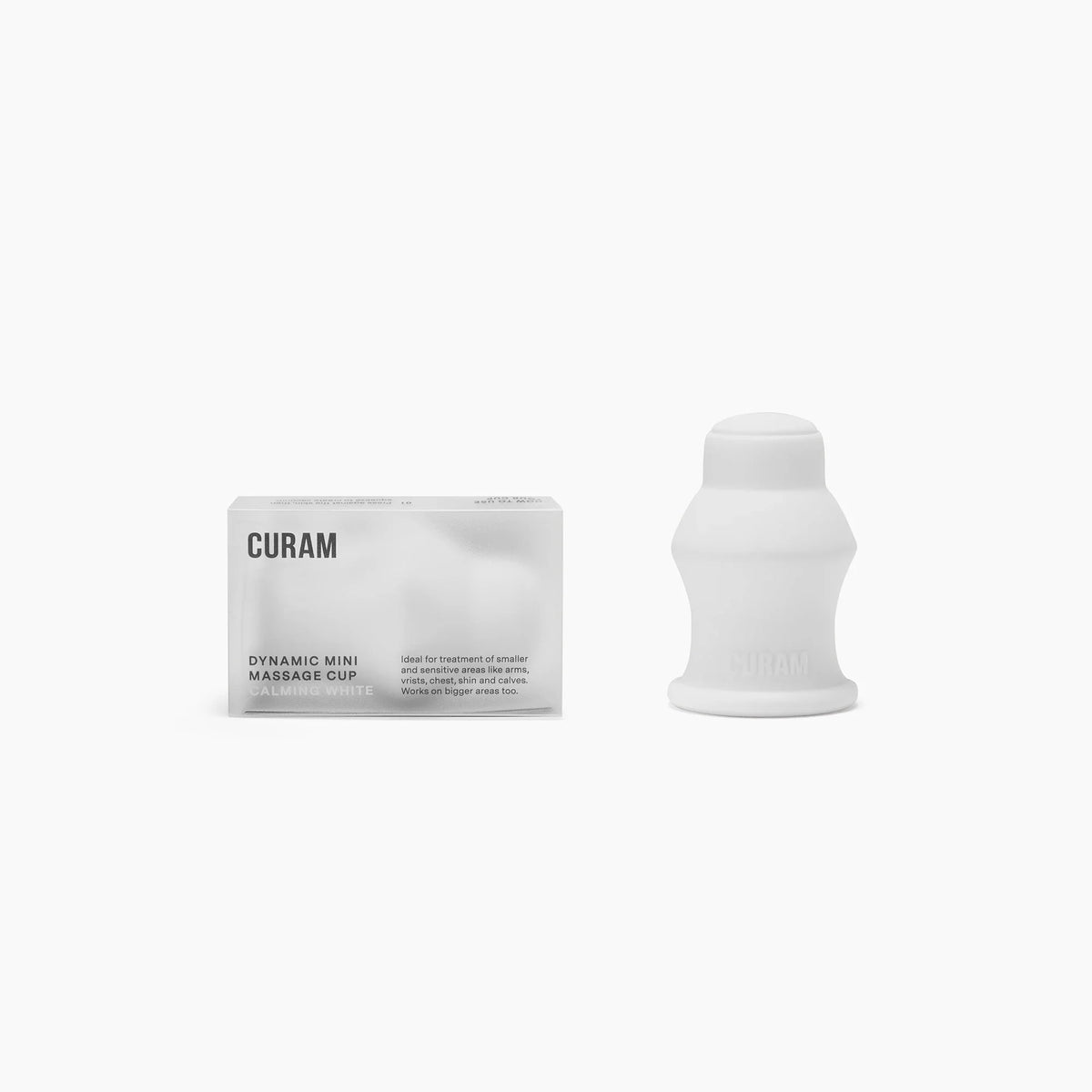
Cupping does nothing to the structure of the tendon; only loading exercises do that. But the tendon is loaded by how stiff the calf is: stiff, hard calf muscles pull constantly on the tendon and increase the load with every step. Light cupping of the calf makes the muscles soft and well supplied with blood, which many find reduces morning stiffness and makes the heel raises easier. You need the dynamic mini cup, ideally static cups, and body oil. The ground rule: cup the calf, not the tendon.
- Warm up the calf with warm water or a heat pad for five to ten minutes.
- Oil the whole calf from above the heel to the back of the knee.
- The calf, light suction. Glide the mini cup in slow strokes from the lower part of the calf up towards the back of the knee on the inside, middle and outside, five to eight strokes per line. Start a hand's width above the tender part of the tendon and release before the back of the knee.
- The deep calf muscle (soleus). With a slightly bent knee, short strokes on the lower, broader part of the calf, where the soleus lies. It is often the stiffest with Achilles problems.
- The sides of the tendon. Very light, short strokes either side of the tendon, never with suction directly on the thickened or tender part and never on the insertion at the heel bone.
- Static. One static cup with light suction on the most tender point of the calf, one to two minutes.
- Finish with isometric heel raises or your eccentric programme.
Two to three times a week, ideally before the exercises or the evening after training. The basics are in Cupping at home. Related: Heel spur and plantar fasciitis, Shin splints, Calf cramps and Runner's knee.
When not to cup
Not directly on the Achilles tendon or its insertion, not with a suspected rupture, not on a swollen, warm or red heel, not if you are being treated with fluoroquinolones or cortisone without medical advice, not on varicose veins, wounds or bruises, not with a suspected blood clot in the calf, and not without medical advice if you are pregnant or take blood thinners. If the pain increases with cupping, stop.
Frequently asked questions
How long does Achilles tendinopathy take to heal?
With a consistent programme of heavy, slow heel raises most people notice clear improvement after six to twelve weeks and have recovered within three to six months. If you have had the problem for a long time it takes longer. Rest without exercise does not heal the tendon.
Should I rest the Achilles tendon?
No, not completely. Reduce what provokes it, but load the tendon daily with heel raises; it is the load that makes the tendon remodel. Complete rest makes it weaker and more sensitive.
Does cupping help with Achilles tendinopathy?
Cupping does not affect the tendon, but light cupping of the calf makes the stiff muscles that pull on the tendon softer, which many find reduces morning stiffness and makes the exercises easier. Cup the calf, never the tendon itself.
Can I run with Achilles tendinopathy?
Often at reduced volume on flat, soft ground, if the pain during running is low and not worse the next morning. Avoid hills, intervals and jumping until you can do 25 single-leg heel raises without a reaction.
How do I know if the Achilles tendon has ruptured?
A sudden snap or pop at the back of the calf or heel, like a kick, followed by difficulty walking on your toes or pushing off, sometimes a gap in the tendon. Seek care the same day; a rupture is treated with a cast, a boot or surgery.
Sources
- 1177 Vårdguiden (Swedish national health guide), search for "hälseneinflammation" for medical information and when to seek care.
- Curam's FAQ and cupping programmes, developed together with trained massage therapists.
Written by Curam. Last updated 17 October 2026. This is general self-care information and does not replace medical care. For sudden, severe or unusual symptoms, contact your doctor. Talk to your doctor before cupping if you are pregnant, take blood thinners or have a condition affecting skin, blood vessels or blood.


