


Tailbone pain (coccydynia) is pain at the very bottom of the spine, in the small bony tip above the anus, which hurts when you sit, especially on hard surfaces and when you lean back, and often gives a stab when you stand up. Common causes are a fall on the buttocks, childbirth, long days on hard chairs or bicycle saddles, rapid weight change and sometimes no clear cause at all. It is unpleasant but almost always harmless, and most people recover within weeks to months with offloading. What helps is a seat cushion that lifts the tailbone off the surface, shorter periods of sitting, sitting leaning forward, heat or cold, and relaxation of the gluteal and pelvic floor muscles that tense around the sore area. Cupping is used here only on the muscles around it, never on the tailbone itself. Here are the causes, the self-care, when to see a doctor and how to cup the buttocks safely.
Why does the tailbone hurt?
The tailbone consists of three to five small fused vertebrae forming a tip at the lower end of the spine. Several muscles attach there, including parts of the pelvic floor and the large gluteal muscle, and the joint between the sacrum and the tailbone moves a little when you sit down and stand up. Pain arises when the joint or ligaments are irritated by a fall, when the tailbone is pushed backwards during childbirth, when it is loaded for hours on hard chairs or a narrow saddle, when the surrounding muscles are tight, or when the fat pad that protects it has shrunk with rapid weight loss. Women are affected more often, partly because of the shape of the pelvis and childbirth. Typically: local pain exactly on the tailbone when sitting and standing up, relief when standing or walking, sometimes pain when using the toilet or during sex. Pain that sits higher up, in the sacrum or buttock, is more often piriformis syndrome or lower back pain.
When to see a doctor
See a doctor the same day if the pain came after a heavy fall and is severe, if you have swelling, redness or warmth over the tailbone, an abscess or pus near the anus, fever, bleeding from the back passage, numbness in the groin or difficulty passing urine or controlling your bowels. Contact your doctor if the pain has not started to ease after six to eight weeks of self-care, if you have night pain at rest, unexplained weight loss or cancer in your history, if the pain came during or after childbirth and stops you sitting and breastfeeding, or if it keeps coming back. Healthcare can X-ray, fit a cushion, provide physiotherapy or pelvic floor treatment, and in some cases give a cortisone injection.
Self-care that helps
- A seat cushion. A wedge-shaped cushion with a cut-out at the back (a coccyx cushion) or a ring lifts the tailbone off the surface. Have one at work, in the car and at home. It is the single most important measure.
- Sit leaning forward and for short periods. Lean slightly forward so the weight is on the sitting bones rather than the tailbone, avoid sinking into soft sofas, and get up every 20–30 minutes. Stand and walk as much as you can.
- Stand up correctly. Lean forward and push off with your hands so the tailbone is not loaded as you rise; that is when the stab usually comes.
- Heat or cold. Cold in the first days after a fall, then heat (sitz bath, heat pad) for tight muscles around it. Try which feels best.
- Soft stools. Fibre and fluids, so that toilet visits are not painful; straining increases pressure on the tailbone.
- Relaxation of the pelvic floor and buttocks. Tight pelvic floor muscles often keep the pain going. Deep belly breathing lying on your side, "child's pose" with the knees apart, and gentle gluteal stretches (knee to chest, figure-4). For prolonged problems a physiotherapist specialising in the pelvic floor helps.
- Pain relief as advised by your pharmacist if needed, especially to be able to sit and sleep in the first weeks.
- Cycling and rowing are paused or done with a wider saddle and higher handlebars until the pain has settled.
Cupping the buttocks, without touching the tailbone
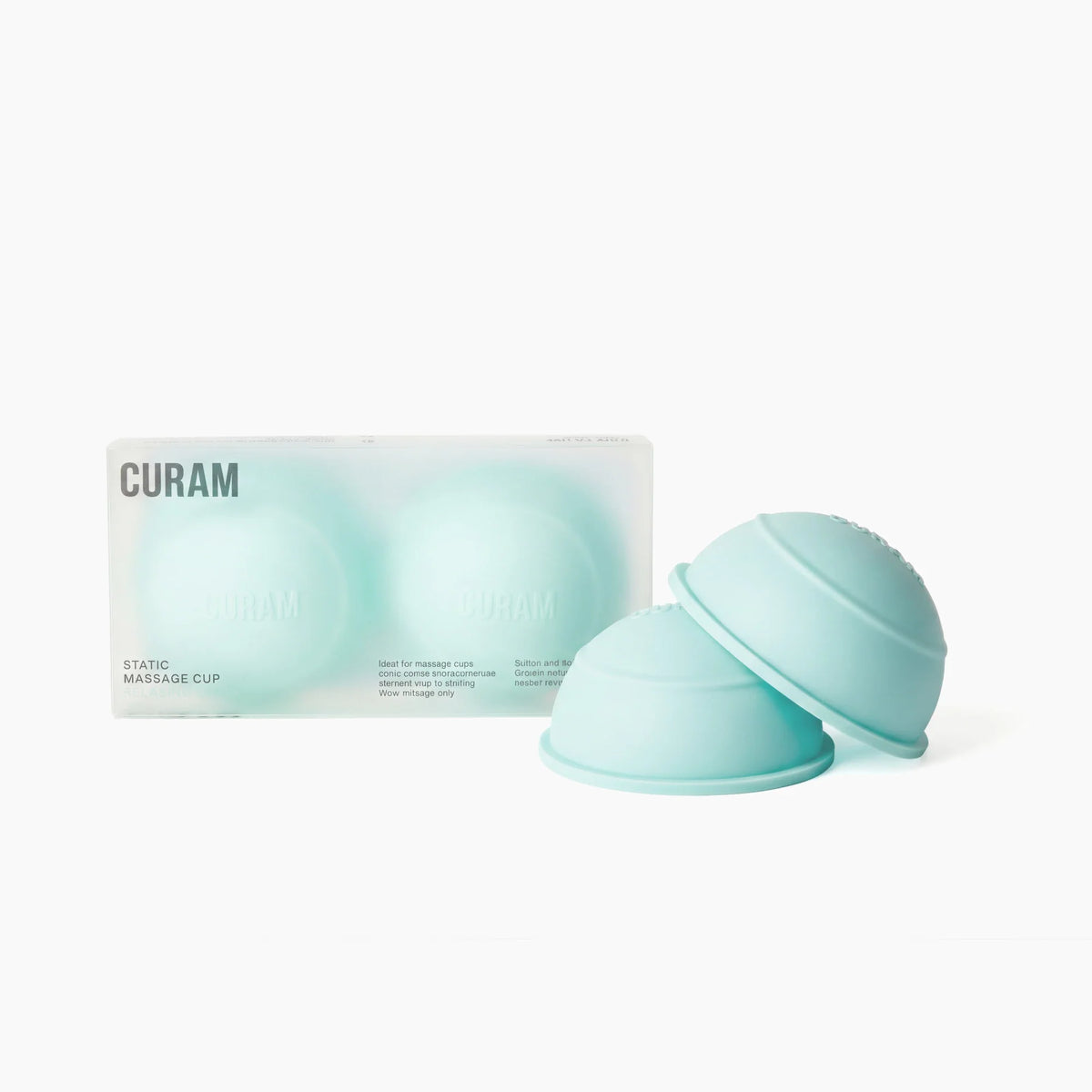
Cupping on or next to the tailbone is out of the question: the bone lies directly under the skin and the suction does more harm than good. But the gluteal muscles and the deep hip muscles almost always tense up around a sore tailbone area, and when they let go the pull on the tailbone's attachments decreases and sitting becomes easier. The target is therefore the buttocks and the lower part of the lower back, with a hand's width of margin to the tailbone and the edge of the sacrum. You need someone to help you, the dynamic cup, static cups and body oil.
- Wait at least one to two weeks after a fall, until you know nothing is broken and the worst pain has settled.
- Warm up the buttocks with a heat pad or shower for ten minutes. Lie on your stomach with a pillow under the hips.
- Mark the boundary. Feel where the tailbone and the lower edge of the sacrum are; the cupping stays at least a hand's width away from there, out towards the middle and outer parts of the buttocks.
- Dynamic, light suction. Strokes from the middle of the buttock diagonally up and out towards the hip, five to eight strokes per side, and large circles over the outer halves of the buttocks. Never in towards the midline.
- Static. One to two static cups with light suction on the most tender point of the buttock out to the side (the piriformis area), two to three minutes.
- The lower muscles of the lower back, a hand's width from the spine and above the sacrum, light strokes upwards.
- Finish with the figure-4 stretch and deep belly breathing lying on your side.
Twice a week while the problem lasts. The buttock is described in more detail in Piriformis syndrome, the back in Cupping on the back, and the basics in Cupping at home. If the problem came after childbirth, also read Cupping during pregnancy and breastfeeding about what applies while breastfeeding.
When not to cup
Not on or next to the tailbone and the edge of the sacrum, not in the first weeks after a fall before the injury has been assessed, not if you have any of the warning signs above, not with an abscess, swelling or warmth in the area, not on wounds, eczema or bruises, and not without advice from a doctor or midwife if you are pregnant or have recently given birth, take blood thinners or have osteoporosis. If the pain when sitting increases after cupping, stop.
Frequently asked questions
How long does tailbone pain last?
After a fall or childbirth it usually takes a few weeks to a couple of months with offloading. Pain that has lasted longer than two to three months is called chronic and should be assessed by healthcare, which can offer physiotherapy, pelvic floor treatment or an injection.
Which seat cushion should I use for tailbone pain?
A wedge-shaped cushion with a cut-out at the back, so the tailbone hangs free and the weight is on the sitting bones and thighs. Ring cushions work for some but can increase pressure around it. Take the cushion everywhere you sit for long.
Does cupping help with tailbone pain?
Not on the tailbone itself; you should never cup there. But cupping the gluteal muscles and the lower back, with a margin to the tailbone, can get the tight muscles that pull on the tailbone's attachments to let go and make sitting easier.
Can the tailbone be broken?
After a heavy fall it can crack or be displaced. The treatment is usually the same as for a sprain of the tailbone, that is, offloading and time, but severe pain, swelling or numbness after a fall should be assessed by a doctor.
Why does the tailbone hurt after childbirth?
During childbirth the tailbone is pushed backwards by the baby's head, and the joint with the sacrum and the ligaments can be irritated or, rarely, injured. It usually heals in a few weeks to months. Use a seat cushion when breastfeeding, and ask your midwife for help if it limits your daily life.
Sources
- 1177 Vårdguiden (Swedish national health guide), search for "ont i svanskotan" for medical information and when to seek care.
- Curam's FAQ and cupping programmes, developed together with trained massage therapists.
Related guides
Written by Curam. Last updated 17 October 2026. This is general self-care information and does not replace medical care. For sudden, severe or unusual symptoms, contact your doctor. Talk to your doctor before cupping if you are pregnant, take blood thinners or have a condition affecting skin, blood vessels or blood.


