


The legs and glutes account for more than half of the body's muscle mass, and they affect almost everything: how the back feels, how knees and hips are loaded, how you climb stairs in twenty years and how much energy you use at rest. They can be trained effectively at home without equipment, since body weight goes a long way when you use one leg at a time, slow lowering and pauses at the bottom. Here are twelve exercises in three levels: the squat and lunge family for the front of the thighs and the glutes, hip lifts and hamstring exercises for the back, side and rotation exercises for the sides of the glutes, and calf raises for the calves. Expect two sessions a week, a clear difference in strength in four to six weeks and in shape in eight to twelve. Here are the exercises, the programme, common mistakes and how cupping is used for recovery.
Before you start
- Warm up for five minutes: stairs or walking on the spot, leg swings, hip circles, 10 light squats and bridges. See the guide to warming up.
- The knees should point the same way as the toes, the whole foot on the floor, the back straight with the trunk braced. If you get pain on the inside of the knee or in the lower back it is almost always technique, see common mistakes.
- If you have osteoarthritis, knee problems, hip problems or are pregnant: start at level 1, reduce the depth, and read the guide to osteoarthritis or sensitive knees first.
Twelve exercises for legs and glutes
Front of thigh and glutes
- Squat. Feet shoulder-width, hips back as if towards a chair, down until the thighs are horizontal, up. Level 1: to a chair, 3 x 10. Level 2: free, 3 x 15, 3 seconds down. Level 3: with a 3-second pause at the bottom or jump squats, 3 x 12.
- Lunge. One step forward, back knee towards the floor, front knee over the foot, back. Level 1: with support, 2 x 8 per leg. Level 2: walking lunges 3 x 10 per leg. Level 3: reverse lunges with the front foot on a book, or jump lunges.
- Bulgarian split squat. Back foot on a chair or sofa, lower straight down. 3 x 8–12 per leg, the best single-leg exercise without weights.
- Step-ups. Up onto a sturdy chair or step with one leg, without pushing off with the other, slowly down. 3 x 10 per leg.
Glutes and back of thigh
- Bridge. Lie on your back, feet close to the glutes, lift the hips until the body is straight, squeeze the glutes at the top for 2 seconds. Level 1: 3 x 15. Level 2: single-leg bridge 3 x 10 per leg. Level 3: shoulders on the sofa edge (hip thrust), 3 x 15 with a pause at the top.
- Hamstring slides. Lie on your back with heels on a towel on the floor or socks on parquet, lift the hips and pull the heels towards the glutes and out again with the hips up. 3 x 8. Level 3: Nordic hamstring with the feet under a sofa, 3 x 5, slowly forward.
- Single-leg Romanian deadlift. Stand on one leg, hinge forward with a straight back while the other leg goes back, feel the back of the thigh, up. 3 x 10 per leg; with a water container in hand at level 3.
- Kickbacks on all fours. Lift a bent leg towards the ceiling with the sole up, without arching, 3 x 15 per leg.
Sides of the glutes and hip stability
- Clam. Lie on your side with bent knees, open the knees like a clam with the feet together, 3 x 15 per side; a band around the knees at levels 2–3.
- Side-lying leg lift with a straight leg and toes slightly down, 3 x 12 per side; side plank with leg lift at level 3.
- Side lunge. A big step to the side, hips back, other leg straight, back. 3 x 10 per side.
Calves
- Calf raises. On a step with the heels off the edge, up onto tiptoe, 3 seconds down below the step. Level 1: both legs 3 x 15. Levels 2–3: one leg, 3 x 12, with a pause at the top.
A 20-minute session, twice a week
Choose one exercise from each group: a squat or lunge exercise, a bridge or hamstring exercise, a side exercise and calf raises. Do three rounds with 60 seconds' rest between exercises, or as a circuit. Session A can be squats, bridges, clams, calf raises; session B Bulgarian split squats, hamstring slides, side lunges, single-leg calf raises. Make the exercises harder every other week: more repetitions, slower lowering, a pause at the bottom, one leg at a time, a raise under the foot, and finally jumps. When body weight is no longer enough it is time for a backpack with books or water containers, see home workout without equipment. Complement with core exercises once a week.
Common mistakes that cause knee and back pain
- Knees fall inwards in squats and lunges: weak glutes. A band around the knees and think "push the knees out", and add the clam and side exercises.
- Heels lift in squats: stiff ankles or calves. Squat less deep, stretch the calf, and cup the calf before the session.
- Arching in bridges and kickbacks: brace the abdomen and squeeze the glutes instead of lifting higher.
- Upper body tips forward in squats: weak trunk or stiff hips; put the hands in front of the body as a counterweight, train core and stretch the hip flexor.
- Too fast. The lowering should take at least two to three seconds; that is what builds the muscle.
- Only the front. Squats without bridges and hamstring exercises create imbalance and knee problems. As much back as front.
Cupping thighs and glutes before and after the session
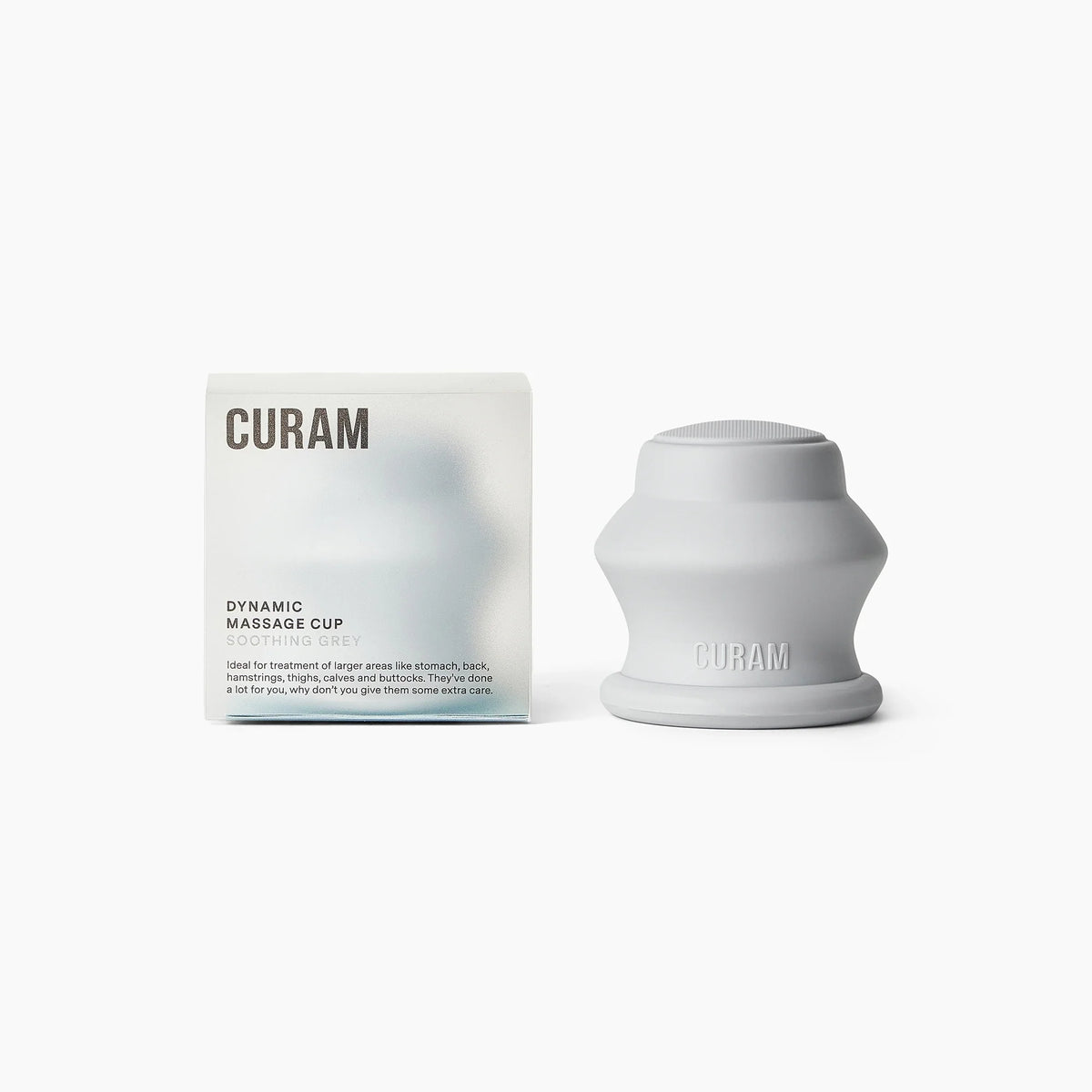
Before the session: two to three minutes of quick, light cupping of the front of the thigh, hip flexor and calf increases blood flow and mobility so the squat gets deeper with the heels on the floor. After the session and in the days after: calm, deeper cupping of the front and back of the thighs, the glutes and the calves reduces soreness and stiffness, see the guide to muscle soreness. Use the dynamic cup with massage oil.
- Front of the thigh: long strokes from a hand's width below the groin down towards the knee, two minutes per leg. Not on the kneecap.
- Back of the thigh: lie on your front, strokes from the back of the knee up towards the glutes, two minutes per leg.
- Glutes: circles and long strokes over the whole gluteal muscle, and lightly on the side of the glutes where the clam is felt, two minutes.
- Calf: strokes from the heel up towards the back of the knee, one minute per leg.
- Before the session quick and light, after the session slow and deeper. Do not cup swollen joints, wounds, varicose veins or freshly injured muscle.
Ready-made routines per sport are in the program for runners and the program for crossfit.
Frequently asked questions
What are the best glute exercises at home?
Bridges and hip thrusts with a pause at the top, Bulgarian split squats, single-leg Romanian deadlifts, step-ups, clams and side-lying leg lifts for the sides of the glutes. The key is to squeeze the glutes at the top, lower slowly and train one leg at a time when two becomes too easy.
How often should you train legs and glutes?
Twice a week with at least two days in between is enough for clear results; three times for those who have trained for a while. Muscles grow during rest, so sleep, protein and light movement on the days between matter.
Can you build leg and glute muscle without weights?
Yes, a long way: one leg at a time, slow lowering, a pause at the bottom, a raise under the foot and jumps make body-weight exercises heavy enough for months. When you manage 15–20 controlled repetitions of the hardest variant it is time for extra weight in a backpack or containers.
Why do my knees hurt from leg exercises?
Usually because the knees fall inwards, the heels lift or the depth is greater than your mobility allows; sometimes because only the front is trained. A band around the knees, less depth, as much back as front and cupping of the calf and thigh before the session solve most of it. Swelling or locking should be assessed.
Does cupping help after a leg session?
Yes, calm cupping of thighs, glutes and calves after the session or the day after increases circulation and reduces soreness and stiffness, and quick light cupping before the session increases mobility in the squat. It does not replace sleep and gradually increased load.
Sources
- 1177 Vårdguiden (Swedish national health guide), search for "styrketräning" and "träningsvärk" for general information.
- Curam's FAQ and cupping programs, developed with trained massage therapists.
Related guides
Written by Curam. Last updated 17 October 2026. This is general self-care information and does not replace medical care. For sudden, severe or unusual symptoms, contact your doctor. Talk to your doctor before cupping if you are pregnant, take blood thinners or have a condition affecting skin, blood vessels or blood.


