


Core means the trunk's muscle cylinder: the deep abdominals, the side abdominals, the long back muscles, the pelvic floor and the diaphragm, which together keep the spine stable when the arms and legs work. A strong core is what lets you lift, twist, run and sit without the lower back suffering, and it is the best documented preventive measure against recurrent back pain. It is not built with sit-ups but with exercises where the trunk resists: planks, bird dogs, hip bridges and their variations, done with control and breathing. Here are ten exercises without equipment in the right order, how often to do them, the most common mistakes, what applies with back pain and after pregnancy, and how a short cupping session of the back and glutes prepares the session.
Ab exercises or core exercises: what is the difference?
Ab exercises in the everyday sense, sit-ups and crunches, train the straight abdominal muscle at the front, the one that shows. Core exercises train the whole corset of the trunk: the deep abdominal muscles that draw in the waist and stabilise the spine, the obliques, the small muscles of the back, the pelvic floor and the diaphragm. It is that corset that protects the lower back when lifting, keeps the pelvis stable when you run and lets force from the legs reach the arms. That is why the programme below contains few classic sit-ups and many exercises where you resist movement: planks, dead bug, bird dog, side plank and Pallof press. If you want visible abs the same exercises apply, plus cardio and diet; crunches in quantity give neither a flat stomach nor a protected back. If you have back pain, are pregnant or have recently given birth, read the section below before you start.
Before you start
The exercises suit healthy adults and those with ordinary, non-specific back pain. See a doctor first if you have back pain with numbness, weakness, bladder or bowel changes, pain after an injury, fever or night pain at rest (see Back pain and lower back pain). After childbirth: start with the pelvic floor and breathing (Pelvic floor training), avoid planks and sit-ups until any abdominal separation (diastasis) has been assessed, and build up gradually. During pregnancy: avoid lying on your back after mid-pregnancy and anything that makes the belly bulge outwards; choose exercises 1, 2, 5 and 7 on the knees or standing in consultation with your midwife. The ground rule for everyone: breathe throughout, keep the back neutral, and make the exercise easier if you lose form.
Ten core exercises in the right order
- Braced breathing (the foundation). Lie on your back with bent knees, hands on the lower abdomen. Breathe into the belly, then tighten lightly as if bracing for a push in the stomach, without holding your breath, and breathe out against the resistance. Ten breaths. This is the "tension" you should have in all the other exercises.
- Dead bug. Lie on your back, arms towards the ceiling, knees at 90 degrees. Slowly lower the right arm back and the left leg forward while keeping the lower back on the floor, return, switch. Ten per side. The best beginner exercise.
- Hip bridge. Lie on your back with bent knees, lift the pelvis to a straight line, hold two seconds, lower. Three sets of twelve. Glutes and hamstrings.
- Bird dog. On all fours, extend the opposite arm and leg, keep the back flat (a glass of water on the lower back should stay put), five seconds, switch. Ten per side.
- Plank on the knees → on the toes. Forearms on the floor, body straight from head to knees (or toes), brace the trunk as in exercise 1, breathe. Hold 20–60 seconds. If the lower back sags: go back to the knees.
- Side plank on the knee → on the foot. Lie on your side, support on the forearm, lift the hip to a straight line, hold 20–45 seconds per side. The side abdominals, which stabilise the pelvis in walking and running.
- Pallof press without equipment (anti-rotation). Stand in a wide stance, clasp the hands in front of the chest and extend the arms slowly straight forward while resisting the upper body twisting, hold three seconds, pull back. Ten. With a band anchored to the side it becomes heavier.
- Slow mountain climbers. In a plank on the toes, draw one knee towards the chest under the body, back, switch, slowly and without the hips rocking. Ten per side.
- Low back extension on the stomach. Lie on your stomach, arms along the sides, lift the chest a few centimetres with the gaze on the floor, hold three seconds. Ten. The long back muscles are core too.
- Hollow hold (advanced). Lie on your back, press the lower back into the floor, lift the shoulder blades and straight legs a few centimetres, arms along the sides or behind the head. Hold 15–30 seconds. Only when the lower back stays on the floor the whole time.
How to structure it, and common mistakes
Beginner: exercises 1–5, three times a week, 10–15 minutes. Experienced: exercises 2–9, three times a week. Advanced: add 10 and longer planks, or do the exercises with weight. Expect six to eight weeks for a noticeable difference in back and posture. Common mistakes: holding your breath (always breathe), arching in the plank (go down on the knees), doing sit-ups and straight-leg raises when the lower back cannot cope (skip them), and training core instead of moving: walks, whole-body strength and less sitting are equally important. Stretching and mobility for the lower back are in Lower back stretches and back exercises at home, and the hips in Hip and hip flexor stretches.
Cupping before and after the core session
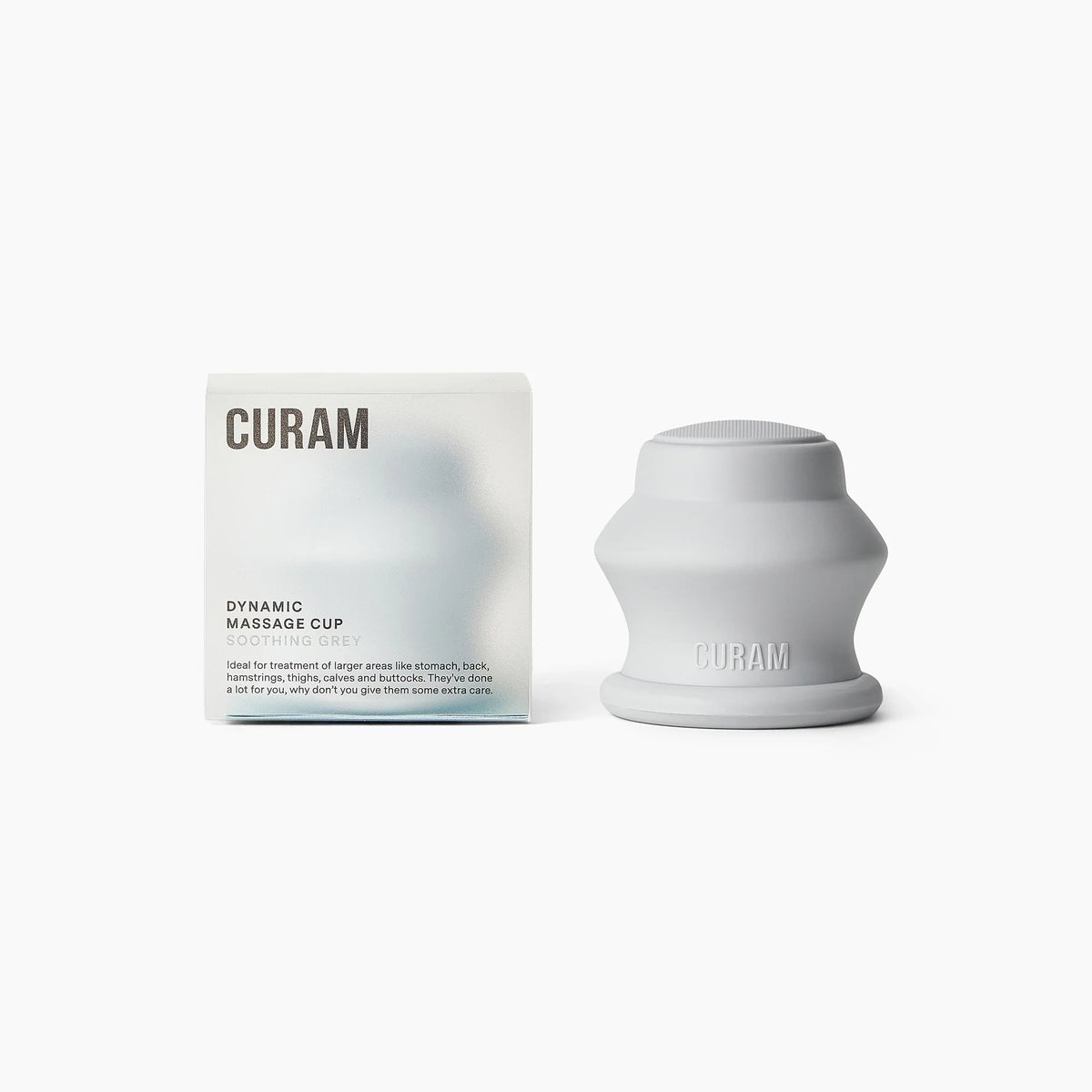
Before the session: five minutes of light cupping of the lower back and glutes makes the muscles warm and easy to activate. After the session, or the next day: light cupping of the lower back, glutes and sides for stiffness and soreness. You need the dynamic cup and body oil, and someone's help for the lower back.
- Oil the lower back and glutes.
- Lower back: light strokes upwards along the muscles a hand's width from the spine, five per side. Never on the spine.
- Glutes: circles and strokes from the sacrum out towards the hip.
- Sides (after the session): very light strokes along the side abdominals from the hip up towards the ribs. Not on the front of the abdomen.
The basics are in Cupping at home and muscle soreness in Muscle soreness. Do not cup the abdomen, not during pregnancy, not directly on the spine, and not without medical advice if you take blood thinners or have osteoporosis.
Frequently asked questions
Which core exercises are best at home?
Dead bug, bird dog, plank, side plank and hip bridge cover all parts of the trunk without equipment. Add anti-rotation (Pallof press) and back extensions for the whole picture. Sit-ups are not needed.
How often should you train core?
Three times a week, 10–15 minutes, with a rest day in between. Core is also trained in all whole-body training, so those who strength train need fewer separate core sessions.
Does core training help with back pain?
Yes, core stability is the best documented preventive measure against recurrent lower back pain, in combination with movement and less sitting. With acute back pain, start with breathing, dead bug and hip bridges and add the rest as the pain decreases.
Can I train core after pregnancy?
Yes, but start with the pelvic floor and breathing, avoid planks and sit-ups until any abdominal separation has been assessed, and build up gradually over six to twelve weeks. A physiotherapist specialising in women's health helps you with the plan.
Does cupping help core training?
As a warm-up of the lower back and glutes before the session, and as relaxation afterwards, yes. Cupping builds no strength; the exercises do. The front of the abdomen is not cupped.
Sources
- 1177 Vårdguiden (Swedish national health guide), search for "träning vid ryggbesvär" for medical information and when to seek care.
- Curam's FAQ and cupping programmes, developed together with trained massage therapists.
Related guides
Written by Curam. Last updated 17 October 2026. This is general self-care information and does not replace medical care. For sudden, severe or unusual symptoms, contact your doctor. Talk to your doctor before cupping if you are pregnant, take blood thinners or have a condition affecting skin, blood vessels or blood.


