


Osteoarthritis means the cartilage covering the bone ends in a joint becomes thinner, uneven and eventually partly gone, so the joint becomes stiff, aches after loading and sometimes swells. It is not "wear" from too much movement, but a process where the joint's ability to repair the cartilage cannot keep up; heredity, previous injuries, excess weight, age and too little movement weigh most. Osteoarthritis is most common in the knee, hip, hands (the finger end joints and the thumb base), big toe joint and the small joints of the spine, and in Sweden one in four people over 45 has it in some joint. It cannot be cured, but you can live well with it: regular exercise that loads the joint moderately reduces pain as much as painkillers, weight loss when overweight greatly unloads the hip and knee, and most people never need surgery. Here is what happens in the joint, the symptoms per joint, the warning signs, the exercise, self-care during flares and the role of cupping.
Osteoarthritis joint by joint
| Joint | Recognised by | Especially important |
|---|---|---|
| Knee | Ache after loading, morning stiffness under 30 minutes, clicking, swelling in flares, difficulty on stairs. See the guide to knee osteoarthritis | Thigh strength, weight control, cycling, with swelling the guide to a swollen knee |
| Hip | Pain in the groin and front of the thigh, sometimes down to the knee, stiff in the morning, hard to put on socks and sit deep, limping at its worst. See the guide to hip pain | Hip mobility, glute and thigh strength, walking with poles, swimming |
| Hands | Nodes on the finger end joints (Heberden's nodes), tender and stiff fingers in the morning, pain at the thumb base with gripping, keys and jars. Most common in women after menopause | Hand exercises, a thumb splint under load, heat, aids; see the guide to thumb pain and hand osteoarthritis |
| Foot | Stiff and tender big toe joint, hard to roll off in the step, sometimes a bump on top of the joint (hallux rigidus) | A stiff rocker sole, wide shoe, foot exercises; see hallux valgus and foot pain |
| Spine and neck | Stiffness and ache in the lower back or neck, worse in the morning and after sitting still, better with movement; can press on nerves (spinal stenosis: leg pain when walking, better when bending forward) | Daily movement, trunk and glute strength, see back pain and neck exercises |
How osteoarthritis feels, and how it differs from rheumatoid arthritis
Osteoarthritis hurts after loading and is stiff for at most half an hour in the morning, often affects one or a few joints, does not cause fever or fatigue, and the swelling is hard (bone) or temporary (fluid in flares). Rheumatoid arthritis hurts at rest and at night, is stiff for more than an hour in the morning, settles symmetrically in many small joints (the finger base joints, wrists, toes), gives soft and warm swelling, fatigue and sometimes fever, and needs medication early. See the guide to rheumatism and joint pain. Unsure: let a clinician assess; blood tests and examination tell them apart.
Seek care if
Seek urgent care if a joint suddenly becomes hot, red, heavily swollen and very tender, especially with fever (infection or gout). Contact your doctor if you have joint pain that has not improved with self-care in six to eight weeks, morning stiffness over an hour, swelling and warmth in several joints, fatigue or fever together with joint pain, night pain, leg pain when walking that eases when you bend forward (spinal stenosis), or if you want an osteoarthritis diagnosis and a referral to a supervised exercise programme. X-rays are rarely needed for the diagnosis and say little about how much it hurts.
The exercise with the best evidence
Movement is the most important treatment for osteoarthritis, and it is not dangerous to train with pain: cartilage gets its nutrition from being loaded and unloaded, and stronger muscles around the joint absorb shocks and stabilise. The Swedish osteoarthritis programme (BOA) is built on three parts: information, supervised exercise with a physiotherapist for six to eight weeks, and then exercising on your own. Results in the registry are less pain, better function and fewer operations. Rule of thumb: pain up to 5 out of 10 during exercise is fine if it has settled by the next morning.
- Strength two to three times a week for the muscles around the affected joint: knee and hip: sit-to-stand squats, lunges, bridges, step-ups, leg press; hands: grip training with a soft ball, thumb exercises against a band; foot: calf raises, short foot.
- Low-impact cardio 30 minutes most days: walking (ideally with poles), cycling, swimming, water aerobics, cross-country skiing. It lowers pain sensitivity and helps with weight.
- Daily mobility: bend and straighten the joint fully every morning, hip circles, finger bends in warm water.
- Balance to reduce fall risk, see balance exercises.
- Dose up slowly: increase the load every other week, not every session. A flare means temporarily less load, not rest.
More exercises are in the guide to the hip, sensitive knees and home workout without equipment.
Self-care beyond exercise
- Weight. Every kilo less reduces the load on the knee by three to four kilos per step; five percent weight loss gives measurably less pain in knee and hip osteoarthritis.
- Heat for stiffness (heat pad, warm bath, warm gloves), cold for swelling in flares.
- Medication when needed: paracetamol has a weak effect, anti-inflammatories (tablet or gel) are better in flares but not daily for months; ask a pharmacist or doctor. A cortisone injection can relieve a flare for a few weeks. Glucosamine and chondroitin have not shown reliable effect.
- Aids: poles, shoes with cushioning and a stiff rocker sole, a thumb splint, jar openers, a raised toilet seat and chair for hip osteoarthritis.
- Sleep and stress affect pain sensitivity; see sleep problems.
- Surgery (joint replacement) is considered when pain at rest and at night and reduced function persist despite at least three to six months of exercise and self-care. Most people with osteoarthritis never need surgery.
Cupping for osteoarthritis: the muscles around the joint
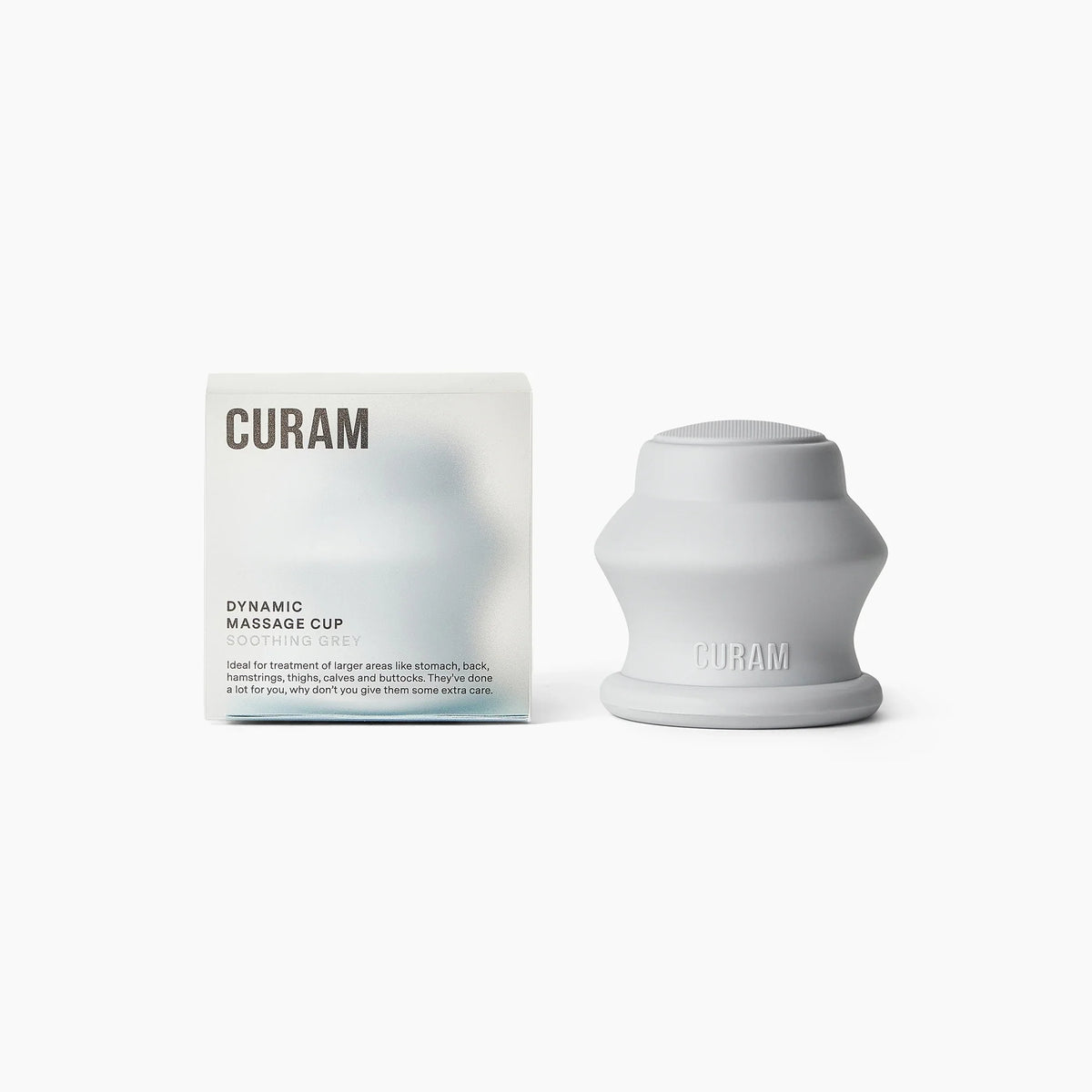
Cupping does not affect the cartilage and should not be done directly on a swollen, hot joint. What it does is increase circulation in and soften the muscles around the joint, which in osteoarthritis are often tight and tender from guarding the joint, and which make the joint stiffer than the cartilage itself does. Studies on knee osteoarthritis show moderate short-term pain relief from cupping as an addition to exercise, see Cupping in numbers; it does not replace the exercise but can make it easier to carry out. Use the dynamic cup with light suction and massage oil, outside flares.
- Knee: the front, inside and outside of the thigh from the groin down towards the knee, and the back of the calf, two minutes each. Not on the kneecap or joint line.
- Hip: the front and outside of the thigh and the glutes, two minutes each; see trochanteric bursitis for the technique on the outside of the hip.
- Hands: the inside and top of the forearm with the mini cup, from the wrist towards the elbow, one minute per side. Not on the finger joints; warm water and massage with the fingers work better there.
- Foot: sole and calf with the mini cup, two minutes; not on the big toe joint.
- Spine and neck: the muscles of the lower back and neck as in Cupping on the back, never on the spine.
Do it before exercise or in the evening, two to three times a week. Do not cup in a flare with a hot and swollen joint, directly over the joint, with suspected infection or gout, after a cortisone injection (wait a week), or on skin thinned by cortisone treatment. The guided program for knees is the cupping program for sensitive knees.
Frequently asked questions
What is osteoarthritis?
A joint disease where the cartilage becomes thinner and uneven so the joint becomes stiff and aches after loading, most common in the knee, hip, hands, foot and spine. Heredity, previous injuries, excess weight, age and too little movement increase the risk. It cannot be cured but is highly influenceable with exercise and weight control.
Is it dangerous to exercise with osteoarthritis?
No, the opposite: exercise is the most important treatment and reduces pain as much as medication. Cartilage needs loading to get nutrition. Pain up to 5 out of 10 during exercise is fine if it has settled by the next morning; increase the load slowly.
Does cupping help osteoarthritis?
For muscle tension and stiffness around the joint, yes, and studies on knee osteoarthritis show moderate short-term pain relief as an addition to exercise. It does not affect the cartilage and should not be done on a swollen, hot joint or directly over the joint.
What is the difference between osteoarthritis and rheumatoid arthritis?
Osteoarthritis hurts after loading, is stiff for at most half an hour in the morning and affects single joints without fever or fatigue. Rheumatoid arthritis hurts at rest, is stiff for over an hour in the morning, settles symmetrically in many small joints with soft, warm swelling and fatigue, and needs medication early.
What helps osteoarthritis pain quickly?
Heat for stiffness, cold for swelling, gentle movement (a walk or bike ride usually hurts less afterwards), cupping or massage of the muscles around the joint, and in a flare an anti-inflammatory for a few days. In the long run, exercise and weight give the largest effect.
Sources
- 1177 Vårdguiden (Swedish national health guide), search for "artros" and "artrosskola" for medical information, treatment and when to seek care.
- Curam's FAQ and cupping programs, developed with trained massage therapists; research overview in Cupping in numbers.
Related guides
Written by Curam. Last updated 17 October 2026. This is general self-care information and does not replace medical care. For sudden, severe or unusual symptoms, contact your doctor. Talk to your doctor before cupping if you are pregnant, take blood thinners or have a condition affecting skin, blood vessels or blood.


