


The foot has 26 bones, over 30 joints and a hundred muscles, tendons and ligaments, and carries several times body weight with every step. Foot pain is therefore common, and where it hurts usually says what it is: pain under the heel with the first steps is plantar fasciitis (heel spur), at the back of the heel the Achilles tendon, under the forefoot metatarsalgia or a pinched nerve bundle (Morton's neuroma), in the big toe joint a bunion (hallux valgus) or gout, and on the top of the foot an overloaded tendon or stress fracture. Almost all variants are due to too much load in the wrong shoes, and almost all improve with the right shoes, offloading, stronger feet and calves and a gradual return. Cupping of the sole and calf helps stiff muscles let go and the arch become more mobile, but is never used on swollen, injured or inflamed joints. Here is the map of foot pain, the self-care for each cause, the warning signs and the cupping routine.
Where does it hurt? The map of foot pain
| Location | Likely cause | How it feels | What helps |
|---|---|---|---|
| Under the heel | Plantar fasciitis / heel spur | Sharp with the first steps in the morning, better after warming up | Calf strength, stretching, insoles; Heel spur and plantar fasciitis |
| Back of the heel or just above | Achilles tendinopathy | Stiff, tender tendon in the morning and at the start of training, sometimes thickened | Heavy, slow heel raises; Achilles tendinopathy |
| Under the forefoot, "like a stone in the shoe" | Metatarsalgia (overloaded metatarsal heads) | Burning or aching under the ball of the foot when standing and walking, often with calluses | Wider, cushioned shoes, a metatarsal pad, lower heels, stronger arches |
| Between the toes, usually the third and fourth | Morton's neuroma (pinched nerve) | Burning, tingling pain into the toes, a feeling of a folded sock, worse in tight shoes | Wide shoes, a pad; healthcare can give an injection or surgery |
| Big toe joint | Bunion (hallux valgus) or arthritis of the joint; a sudden, red, hot joint: gout | A bump on the inside that rubs, stiffness; gout is very painful and comes overnight | Wide shoes, toe separator, foot exercises; gout is assessed by a doctor |
| Top of the foot or midfoot | Tendon overload (shoes laced too tight, new activity) or stress fracture | Diffuse aching on loading; stress fracture: point-tender, hurts at rest | Loosen the laces, offload; point-tender pain is X-rayed |
| The ankle after a twist | Sprain | Swelling, bruising, painful to bear weight | Sprained ankle |
| The whole foot, tired and heavy | Tired feet from standing, weak foot muscles, flat feet, swelling | Aching in the evening, swelling around the ankles | Foot exercises, elevation, cupping; Swollen legs and feet |
When to see a doctor
See a doctor the same day if the foot is swollen, warm and red with a fever (infection or gout), if you cannot bear weight on the foot after an injury or if it hurts when you press on a bone (fracture), if the foot is cold, pale or numb, if you have diabetes and get a wound, redness or new pain in the foot (diabetic feet are always assessed), or if a joint suddenly becomes very painful and hot. Contact your doctor if the pain sits at one point on a bone and hurts at rest (stress fracture), if you have burning or tingling pain into the toes that does not go away, if the big toe is drifting further out of line, if you have numbness or tingling in both feet, if the foot changes shape, or if you are not better after six to eight weeks of self-care. Children with foot pain and limping are always assessed.
Self-care that helps almost all feet
- Shoes that fit. Wide enough in the forefoot, cushioned, with arch support and a low heel. Replace worn-out shoes and loosen the laces if the top hurts. Tight, flat or high shoes cause more foot problems than anything else.
- Offload what hurts, but keep moving. Temporarily swap running and long standing shifts for cycling and swimming, and return gradually.
- Strengthen the feet. Towel scrunches with the toes, the "short foot" (draw the ball of the foot towards the heel without curling the toes), spreading the toes, picking up small objects with the toes, and heel raises on a step. Five minutes a day. Strong arches offload the heel, forefoot and knees.
- Mobility. Roll the sole on a ball, stretch the calf against a wall, circle the ankle.
- Insoles and pads can offload the heel and forefoot during healing; a podiatrist or orthotist fits them.
- Cold after loading with inflammation, heat for stiff muscles and tired feet.
- Elevation and a foot bath in the evening for tired, swollen feet.
- Patience. The foot's tendons and bones adapt slowly; expect weeks to months, and increase the load by at most ten percent a week.
Cupping the sole and calf, step by step
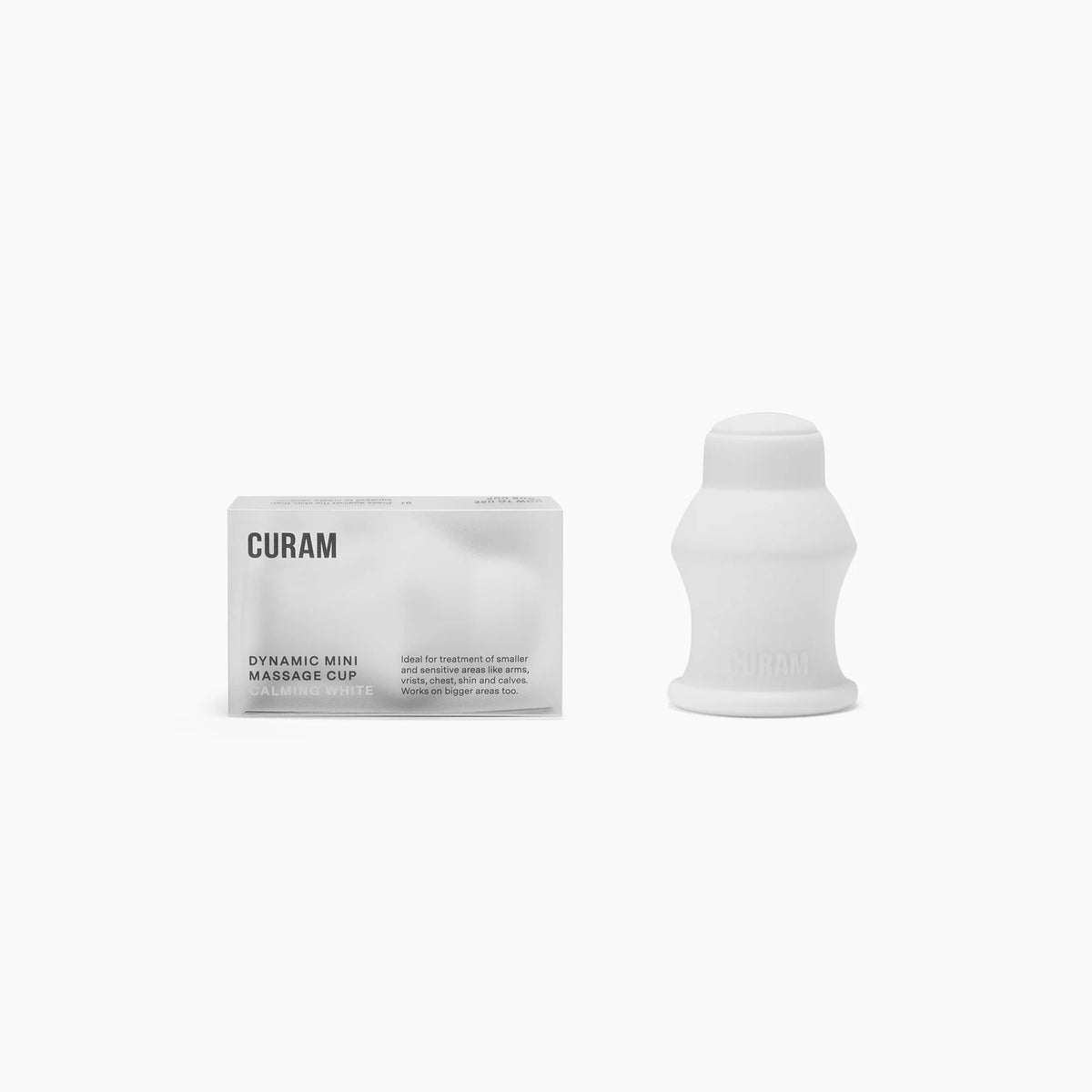
Cupping is used on the muscles: the muscles of the sole and calf, which are often stiff and tired with all forms of foot pain and which pull on the heel and arch. It is not used on joints, swelling, tendons or bone. You need the dynamic mini cup and body oil; everything is done sitting and by yourself.
- Warm the feet in a foot bath or a warm shower for five to ten minutes.
- The calf. Oil. Strokes from the heel up towards the back of the knee, inside, middle and outside, five per line, light suction. Stiff calves are involved in almost all foot pain.
- The sole. Foot on the opposite knee. Light to moderate strokes from the heel towards the toes along the arch, five to eight strokes, and small circles in the middle of the arch. Skip the underside of the heel if it is tender and the ball of the foot if the forefoot is tender.
- Top of the foot very lightly, from the toes towards the ankle, only if it is stiff, not if it is tender.
- Finish with the foot exercises above and a calf stretch.
Two to three times a week, or daily for tired feet. The basics are in Cupping at home, and the feet's role in balance in Balance exercises at home.
When not to cup the foot
Not on a swollen, warm or red foot, not on an acutely inflamed joint (gout, arthritis), not on the Achilles tendon or the tender point of the heel, not on a suspected stress fracture, not with diabetes and reduced sensation or wounds on the feet without medical advice, not on varicose veins, eczema or athlete's foot, not with a suspected blood clot in the calf, and not without medical advice if you take blood thinners or are pregnant.
Frequently asked questions
Why does it hurt under the forefoot when I walk?
Usually metatarsalgia, an overload of the metatarsal heads, from tight or flat shoes, heels, a lot of standing or weak arches. Wider, cushioned shoes, a metatarsal pad and foot exercises usually help. Burning pain into the toes may be a Morton's neuroma.
How do I know if it is a heel spur or the Achilles tendon?
Heel spur/plantar fasciitis hurts under the heel, worst with the first steps in the morning. The Achilles tendon hurts at the back of the heel or a few centimetres above, is stiff in the morning and tender to squeeze. Both are treated with calf strength but in different ways; see each guide.
Does cupping help with foot pain?
Cupping the muscles of the sole and calf can reduce stiffness, increase mobility in the arch and relieve tired feet. It does not affect joints, tendon attachments or nerve entrapments, and is never used on swelling or inflammation. Shoes, offloading and strong feet are what heal.
When should I have the foot X-rayed?
When you cannot bear weight after an injury, when it hurts to press on a bone, when the pain sits at one point and hurts at rest (stress fracture), or when the foot has changed shape. Soft tissue problems such as plantar fasciitis and metatarsalgia rarely need an X-ray.
Can bad shoes cause foot pain?
Yes, it is the most common cause. Tight forefeet give metatarsalgia, bunions and neuromas; flat shoes without support give plantar fasciitis; worn-out shoes give overload; shoes laced too tight give pain on the top. The right shoes often solve half the problem.
Sources
- 1177 Vårdguiden (Swedish national health guide), search for "ont i foten" for medical information and when to seek care.
- Curam's FAQ and cupping programmes, developed together with trained massage therapists.
Related guides
- Hallux valgus (bunions) – what helps and exercises
- Morton's neuroma and metatarsalgia – forefoot pain
- Flat feet and arch pain – exercises, shoes, cupping
Written by Curam. Last updated 17 October 2026. This is general self-care information and does not replace medical care. For sudden, severe or unusual symptoms, contact your doctor. Talk to your doctor before cupping if you are pregnant, take blood thinners or have a condition affecting skin, blood vessels or blood.


