


Forefoot pain has two common causes that resemble each other but are treated slightly differently. Metatarsalgia is overload of the ball of the foot, the bones and joints under the forefoot: it feels like walking on a stone or a fold in your sock, worse when standing and walking in thin or high-heeled shoes. Morton's neuroma is a thickened and irritated nerve between the metatarsal bones, usually between the third and fourth toes: burning or electric pain radiating into the toes, numbness, a feeling of a marble under the foot, and relief when you take off the shoe and massage the foot. Both come from crowding and pressure in the forefoot (narrow shoes, heels, hard loading, a flat forefoot, hallux valgus, a tight calf) and both improve with wider shoes, a pad that lifts the metatarsal bones apart, exercises for the toes and arch, and softening the sole and calf. Here is how to tell them apart, when to seek care, the self-care and how cupping is used.
Metatarsalgia or Morton's neuroma?
| Metatarsalgia | Morton's neuroma | |
|---|---|---|
| Where | Under the ball of the foot, often under the second and third toe joints | Between the metatarsal bones, usually between the third and fourth toes, sometimes second and third |
| How | Dull, "walking on a stone", a callus under the joint, tender to pressure from below | Burning, stinging, electric pain into the toes, numbness, a feeling of a marble or a fold in the sock |
| Worse with | Standing, walking, running, thin soles, heels | Narrow shoes, heels, squeezing the forefoot; relieved when the shoe is removed and the foot massaged |
| Test | Tender when pressing under the heads of the metatarsal bones | Pain and sometimes a click when the forefoot is squeezed from the sides (Mulder's sign) |
| Common in | Runners, people with a high arch or flat forefoot, hallux valgus, hammer toes, over 50 | Women aged 40–60, heel wearers, runners, people with hallux valgus |
Pain in other parts of the foot, from heel to toes, is mapped in the guide to foot pain; heel pain in plantar fasciitis and tired feet and a crooked big toe in the guide to hallux valgus.
Seek care if
Seek urgent care if the foot is heavily swollen and you cannot bear weight after a jump or fall, or if the forefoot is hot, red and swollen with fever. Contact your doctor if the pain has not improved with self-care in six to eight weeks, if you have numbness that does not pass, if the pain is present at rest or at night, if you have diabetes or reduced sensation, if a toe changes position or swells, or if you suspect a stress fracture (pain in the midfoot that gets worse with every run, a tender point on the top of the foot).
Exercises and self-care for Morton's neuroma and metatarsalgia
- Wider shoes with a low heel and a cushioned sole. The toes should have room next to each other, the heel under 3 cm, the sole thick and soft. This alone solves more than half of cases.
- A metatarsal pad placed behind the tender spot, not under it: it lifts the metatarsal bones apart and offloads both the nerve and the joints. Available at pharmacies and shoe shops; an orthotist can fit insoles.
- Reduce the load for a few weeks: shorter sessions, softer surfaces, cycle instead of running, avoid standing for long in thin shoes.
- Stretch the calf and sole. A tight calf puts more weight on the forefoot with every step; stand against a wall with a straight leg, 30 seconds x 3, daily. Roll the sole over a ball for a minute.
- Toe and foot exercises (5 minutes daily): toe spreading, "short foot", towel scrunches, picking up marbles with the toes, calf raises. Stronger toes and arch distribute the load.
- Cold for 10–15 minutes after loading with metatarsalgia; with Morton's neuroma, taking off the shoe and massaging the foot often helps.
- For Morton's neuroma that does not settle: a doctor can give a cortisone injection around the nerve, and in stubborn cases the nerve is removed surgically; most avoid that with shoes and a pad.
Cupping the sole and calf for forefoot pain
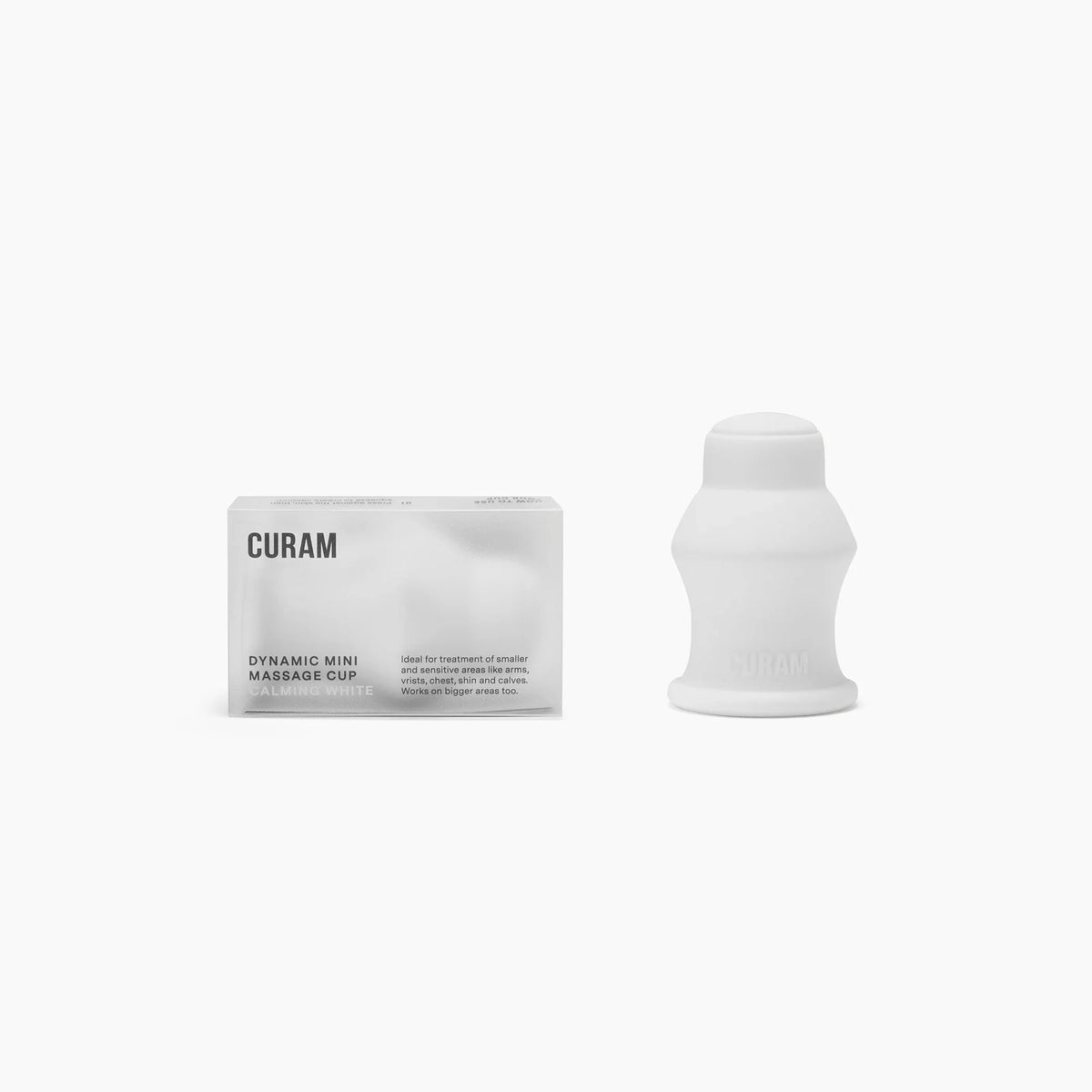
Cupping the sole softens the plantar fascia and the small muscles under the foot, increases circulation in the overloaded ball of the foot and reduces the crowding between the metatarsal bones as the tissue becomes softer. Cupping the calf removes the tightness that pushes the forefoot into the ground. Use the mini cup with light suction and massage oil.
- Sit with the foot in your lap. Oil the sole and calf.
- Arch: long strokes from the heel forward towards the ball of the foot, two minutes.
- Ball of the foot: small strokes across under the forefoot, from the big toe side out to the little toe and back, one minute. For Morton's neuroma: light strokes along the spaces between the metatarsal bones, from the ball of the foot back towards the heel, 30 seconds; light suction, the nerve is irritated.
- Top of the foot: very light strokes between the metatarsal bones from the toes up towards the ankle, 30 seconds (thin skin, lightest suction).
- Calf: strokes from the heel up towards the back of the knee, two minutes, and circles on the thickest part of the calf.
- Finish with a calf stretch and toe spreading. Three times a week, or every evening after days with a lot of standing. The full foot routine is in the Footloose cupping program.
Do not cup with a suspected stress fracture, on a hot and swollen forefoot, on sores or cracked calluses, with reduced sensation from diabetes or nerve damage, or straight after a cortisone injection (wait a week).
Prevent
Shoes with room for the toes and a low heel for everyday use, cushioned running shoes replaced in time, gradual increase in running volume, daily calf stretching and foot exercises, and cupping of the sole and calf after long days on your feet. If you have hallux valgus, hammer toes or a very high arch: insoles from an orthotist prevent both metatarsalgia and neuroma.
Frequently asked questions
How do I know if I have Morton's neuroma?
Burning or electric pain between the toes, usually the third and fourth, radiating into the toes, numbness, a feeling of a marble or a fold under the foot, worse in narrow shoes and better when you take off the shoe and massage. Squeezing the forefoot from the sides hurts, sometimes with a click. A doctor can confirm with ultrasound.
What is metatarsalgia?
Overload of the bones and joints of the ball of the foot, with a dull pain under the forefoot like walking on a stone, often with a callus under the second or third toe joint. Caused by thin or high-heeled shoes, hard loading, a flat forefoot, hallux valgus, hammer toes or a tight calf.
Does cupping help Morton's neuroma and metatarsalgia?
As a complement, yes: cupping the sole and calf softens the tissue under the foot, increases circulation and reduces the crowding around the nerve and joints. Shoes and a pad are what offload; cupping makes the foot less tender and tight. Cup lightly with a neuroma, and not with a stress fracture or reduced sensation.
Where should the metatarsal pad sit?
Behind the tender spot, towards the heel, so it lifts the metatarsal bones apart just before they press into the ground. If it sits under the tender spot it gets worse. Try a few millimetres at a time; an orthotist can place it correctly in an insole.
Does Morton's neuroma need surgery?
Rarely. Most people get better with wide shoes, a pad, exercises and time. If that does not help, a doctor can give a cortisone injection, and in stubborn cases the nerve is removed, with a risk of lasting numbness in the toes. Surgery is considered only after months of other treatment.
Sources
- 1177 Vårdguiden (Swedish national health guide), search for "Mortons neurom" and "ont i foten" for medical information and when to seek care.
- Curam's FAQ and cupping programs, developed with trained massage therapists.
Related guides
Written by Curam. Last updated 17 October 2026. This is general self-care information and does not replace medical care. For sudden, severe or unusual symptoms, contact your doctor. Talk to your doctor before cupping if you are pregnant, take blood thinners or have a condition affecting skin, blood vessels or blood.


