


Shoulder impingement, also called subacromial pain syndrome, means the rotator cuff tendons and the bursa are pinched in the narrow space between the upper arm bone and the shoulder blade's bony arch when you lift the arm. Typical is a painful arc: it hurts between roughly 60 and 120 degrees of lift but less at the top, an ache on the outside of the upper arm that can radiate towards the elbow, pain lying on your side and difficulty putting on a jacket or reaching behind you. It is sometimes called "inflammation in the shoulder", but in most cases the cause is not inflammation but an overloaded tendon and a shoulder blade that does not move as it should. What has the best evidence is gradual training of the rotator cuff and shoulder blade muscles, better posture and a period with less overhead work; surgery is rarely better than training. Here are the causes, the warning signs, the exercises, what to avoid and how cupping is used.
Why does the shoulder get pinched?
The space under the arch is only a centimetre, and anything that makes it narrower or the tendon thicker causes impingement: repeated overhead work (painting, swimming, throwing, strength training with presses), a rotator cuff that has become weak or overloaded so the upper arm bone slides up instead of being held centred, a shoulder blade that tilts forward from rounded posture and tight chest muscles, an irritated bursa, and with age calcium deposits or a more hooked arch. In people over 50 the tendon may be partly worn. Frozen shoulder instead gives stiffness in all directions, see the guide to frozen shoulder and shoulder pain; neck problems can give similar pain without a painful arc, see stiff neck.
Recognised by
- A painful arc: pain when the arm is lifted to the side between 60 and 120 degrees, less at the top.
- An ache on the outside of the upper arm, sometimes down towards the elbow, rarely below.
- Pain lying on the shoulder, putting on a jacket, fastening a bra, reaching up to a shelf or behind the back.
- Weakness or pain when lifting the arm with the thumb down against resistance.
- Came on gradually after a period with more overhead work, a new training programme or with worse posture.
Shoulder pain radiating into the arm
Pain from impingement often radiates from the outside of the shoulder down the upper arm towards the elbow, as a dull ache, but rarely below the elbow and never with numbness in the fingers. If the pain radiates all the way into the forearm and hand, with tingling or numbness in specific fingers, neck stiffness or pain that increases when you turn your head, it comes from the neck instead (a nerve root in the lower cervical spine) and should be handled as a neck problem, see the guide to a stiff neck. Left shoulder pain radiating into the arm together with pressure over the chest, shortness of breath, cold sweat or nausea, especially on exertion, can be the heart and is an emergency: call emergency services. Impingement hurts when you lift the arm and is tender at the shoulder, not on exertion as such; if unsure, let a clinician assess it.
Seek care if
Seek urgent care if the shoulder is deformed or you cannot move the arm after a fall (fracture, dislocation), if you suddenly lost strength in the arm after a jerk or fall (suspected tendon rupture, especially over 40), or if the shoulder is hot, red and swollen with fever. Contact your doctor if the pain has not improved with self-care in six to eight weeks, if you have night pain that does not depend on lying position, if the arm becomes stiff in all directions (frozen shoulder), if you have numbness or tingling down into the hand, or if the pain came with chest pain or shortness of breath (the left shoulder and arm can be the heart, seek urgent care).
What to avoid for a few weeks
- Work and training with the arms above shoulder height: overhead press, upright rows, lateral raises with the thumb down, swimming, painting ceilings.
- Lying on the sore shoulder; sleep on your back or on the other side with a pillow in front of the chest for the arm to rest on.
- Stretching the shoulder hard into pain; gentle mobility is good, forceful stretching is not.
- Total rest: the arm should be used in a pain-free range every day, otherwise the shoulder stiffens.
Shoulder impingement exercises with the best evidence (10–15 minutes, daily)
Gradual strength training of the rotator cuff and shoulder blade muscles has as good an effect as surgery in studies and is the first choice. Some pain during the exercise (up to 3–4 out of 10) is fine if it has settled by the next day.
- Pendulum. Lean forward with support, let the arm hang and swing in small circles, one minute. Relaxation and mobility without load.
- External rotation with a band. Elbow at the side with a rolled towel under it, pull the band outwards, 3 x 15. The rotator cuff's most important exercise.
- Internal rotation with a band, same position, 3 x 15.
- Shoulder blade pull: band row with the elbows close to the body and the shoulder blades together down and back, 3 x 15.
- Wall slides: stand facing a wall, hands slide upwards along the wall with the shoulder blades down, as high as possible without pain, 10 times. Teaches the shoulder blade to rotate upwards so the space opens.
- Doorway chest stretch, 30 seconds x 3, so the shoulder blade can sit correctly.
- Lift in the scapular plane: lift the arm diagonally forward (30 degrees in front of the side) with the thumb up, first without weight, then with a light weight, 2 x 10, only as high as is pain-free.
Increase the resistance every other week. More exercises are in the guide to shoulder exercises and the posture work in forward head posture and better posture. Expect six to twelve weeks for clear improvement and three to six months for full function.
Cupping around the shoulder for impingement
Cupping is used to soften the muscles that pull the shoulder blade forward and the upper arm upwards (chest muscles, upper trapezius, the muscles of the back of the shoulder) and to increase circulation in the overloaded rotator cuff. You cup the muscles around the joint, not the front of the shoulder joint itself where the tendon is pinched, and not a hot and swollen bursa.
- Oil the chest, back of the shoulder, neck and outside of the upper arm with massage oil.
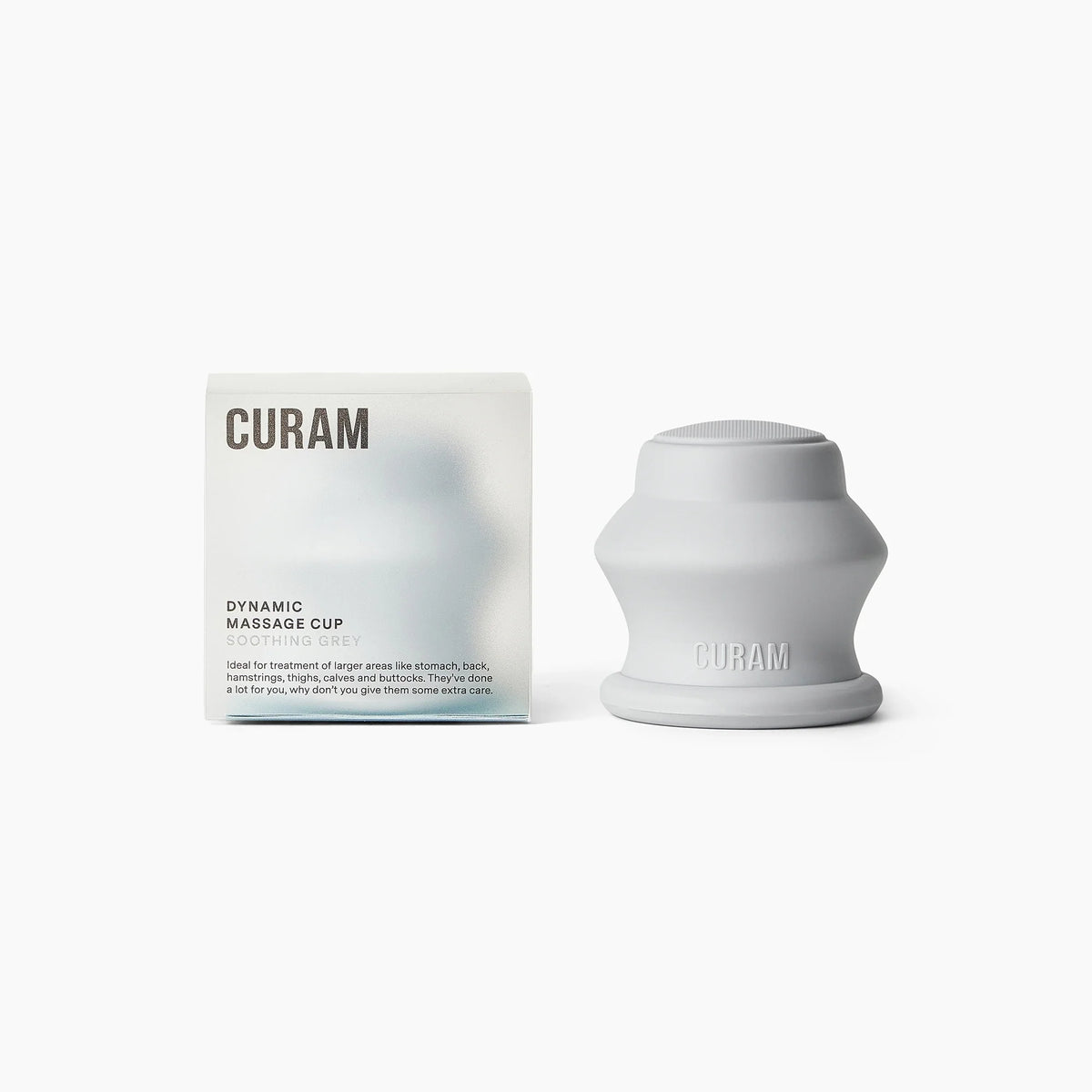
- Chest muscle: the dynamic cup from the breastbone out towards the shoulder below the collarbone, one minute. Tight chest muscles tilt the shoulder blade forward and narrow the space.
- Back of the shoulder and the shoulder blade: strokes from the spine out over the shoulder blade towards the shoulder joint, and circles on the back of the shoulder, two minutes. Ask someone for help, or use static cups left in place for two minutes.
- Upper trapezius: the mini cup from the base of the neck out over the top of the shoulder, one minute.
- Outside of the upper arm (deltoid): strokes from the shoulder down towards the elbow, one minute, where the ache often sits.
- Finish with pendulum, wall slides and the band exercises. Two to three times a week. Do not cup over the front of the shoulder joint where it is most tender, on a hot and swollen shoulder, after a fall before it is assessed, or with numbness.
The technique is in Cupping on the back; the programs for swimmers and golfers include the shoulder.
Frequently asked questions
What is shoulder impingement?
The rotator cuff tendons and the bursa being pinched under the shoulder blade's bony arch when the arm is lifted, giving pain between 60 and 120 degrees of lift, an ache on the outside of the upper arm and pain lying on your side. The cause is usually overload of the tendon and a shoulder blade that does not move correctly, not an inflammation.
How long does impingement take to heal?
With the right training most notice a difference in six to twelve weeks, and full function often takes three to six months. Without training it can go on for years. If it is not improving in six to eight weeks, or the arm becomes stiff in all directions, let a clinician assess it.
Does cupping help impingement?
As a complement, yes: cupping the chest muscles, shoulder blade muscles, upper trapezius and upper arm softens what pulls the shoulder blade forward and increases circulation in the overloaded tendon. The space under the arch is opened with training and posture; cupping makes the training easier to do correctly.
Should I have a cortisone injection for impingement?
It reduces the pain for a few weeks and can make it possible to get started with training, but gives no better effect than training at one year, and repeated injections can weaken the tendon. Discuss with your doctor; training is the foundation either way.
Does impingement need surgery?
Rarely. Large studies show that surgery (widening the space under the arch) gives no better results than structured training. Surgery is considered with a clear tendon injury or when months of training have not helped.
Sources
- 1177 Vårdguiden (Swedish national health guide), search for "impingement" and "ont i axeln" for medical information and when to seek care.
- Curam's FAQ and cupping programs, developed with trained massage therapists.
Related guides
Written by Curam. Last updated 17 October 2026. This is general self-care information and does not replace medical care. For sudden, severe or unusual symptoms, contact your doctor. Talk to your doctor before cupping if you are pregnant, take blood thinners or have a condition affecting skin, blood vessels or blood.


