


Frozen shoulder (adhesive capsulitis) means the capsule of the shoulder joint becomes inflamed, thickened and contracts, so the shoulder first hurts and then becomes very stiff, especially when you lift the arm out to the side, reach behind your back or up into a cupboard. It often comes without an obvious cause, most commonly between 40 and 60, more often in women and in people with diabetes or thyroid disease, and runs through three phases over one to three years in total. It almost always resolves on its own, but handling each phase correctly, pain relief early and movement within the pain limit, makes the course easier. But not all shoulder pain is frozen shoulder: impingement, calcific tendinitis, arthritis and radiation from the neck are at least as common. Here you tell them apart, learn what helps, when to see a doctor and how cupping the muscles around the shoulder can relieve pain and make the exercises easier.
Which shoulder pain do you have?
| Cause | How it feels | What helps |
|---|---|---|
| Frozen shoulder | Creeping ache that becomes severe, also at night; then marked stiffness in all directions, especially external rotation (hand behind the neck). Cannot be moved passively by someone else either. | Pain relief, early cortisone injection, movement within the pain limit, patience |
| Impingement / rotator cuff problems (most common) | Pain when lifting the arm out and up, especially between 60 and 120 degrees, and when lying on the shoulder. The range of movement is there but hurts. | Strengthen the rotator cuff and shoulder blade, avoid repeated overhead work, physiotherapy |
| Calcific tendinitis | Sudden, very intense shoulder pain, often at night, cannot move the arm at all for a few days; calcium shows on X-ray. | Pain relief, cortisone, sometimes lavage of the calcium via healthcare |
| Shoulder / AC joint arthritis | Ache and stiffness increasing slowly over years, clicking, pain on top of the shoulder (AC joint) when bringing the arm across the chest. | Movement, strength, pain relief, orthopaedic referral if needed |
| Radiation from the neck | Pain from the neck out over the shoulder blade and shoulder, sometimes down the arm with tingling; worse with neck movements. | Treat the neck: Stiff neck and tight shoulders |
Frozen shoulder has three phases: the freezing phase (2–9 months) with increasing pain and beginning stiffness, the frozen phase (4–12 months) where the pain eases but the stiffness is at its greatest, and the thawing phase (5–24 months) where movement slowly returns. What helps differs between the phases, see below.
When to see a doctor
Call emergency services if shoulder or arm pain comes together with pressure over the chest, shortness of breath, cold sweats or nausea; it may be the heart. Seek urgent care if the shoulder pain came after a fall or jerk and you cannot lift the arm (suspected tendon rupture or fracture), if the shoulder looks deformed (dislocation), or if the shoulder is red, warm and swollen with a fever (infection). Contact your doctor if you have severe pain disturbing sleep despite painkillers, if the stiffness is increasing quickly, if you have numbness or weakness in the arm, if you are diabetic with new shoulder pain, or if you are not better after four to six weeks of self-care. With frozen shoulder it pays to go early: a cortisone injection in the freezing phase shortens the painful period considerably.
Self-care that helps, phase by phase
- Freezing phase: relieve the pain and keep the shoulder moving without provoking it. Over-the-counter painkillers as advised by your pharmacist, heat, sleep with a pillow under the upper arm or on the good side with the arm resting on a pillow. Pendulum exercises: lean forward supported by the good arm and let the sore arm hang and swing in small circles, one minute several times a day. Avoid hard stretches; they increase the inflammation in this phase.
- Frozen phase: stretch gently and often. Wall crawls (walk the fingers up the wall forwards and sideways), towel behind the back (the good arm pulls the sore one upwards), lying arm raises with a stick, and external rotation with the elbow at your side. To the pain limit, never past it, 5–10 minutes three times a day. This is where physiotherapy does most good.
- Thawing phase: build strength. Add resistance bands for the rotator cuff and shoulder blade muscles, and return gradually to overhead work.
- For impingement and rotator cuff problems: reduce overhead work temporarily, strengthen the external rotators and shoulder blade muscles with bands, keep the upper back mobile, and avoid sleeping on the shoulder.
- Keep the rest moving. Neck, upper back, elbow and hand stiffen easily when the shoulder is rested. Move them daily.
- Medical options: cortisone injection (especially in the freezing phase), hydrodilatation (the capsule is stretched with fluid), and in rare, prolonged cases arthroscopic capsular release.
Cupping around the shoulder, step by step
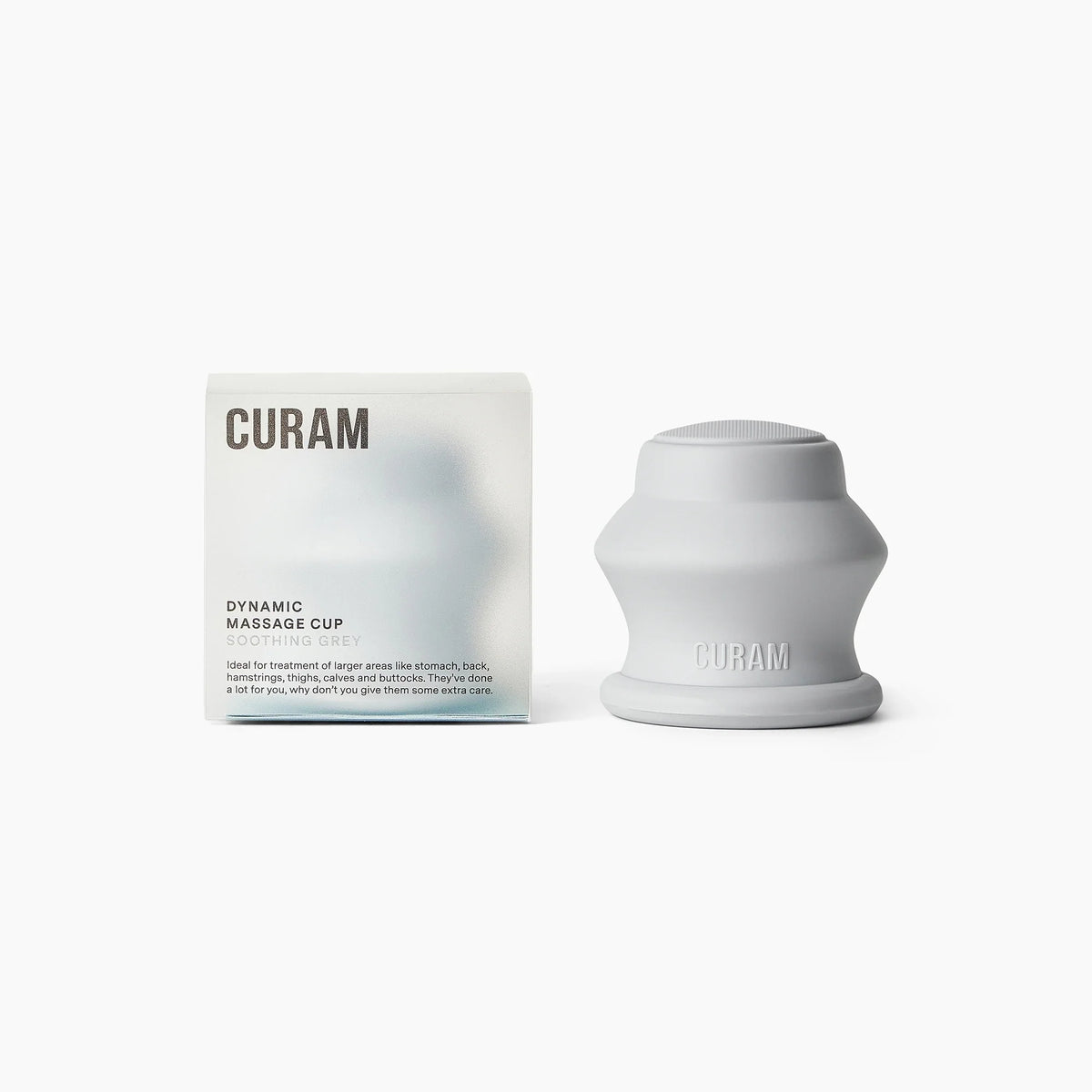
Cupping does not reach the joint capsule and does not cure frozen shoulder, but the muscles around a sore shoulder almost always become hard and overactive: the trapezius, the deltoid, the muscles on the shoulder blade (infraspinatus), the chest muscle and the upper arm. When they let go, the ache decreases, sleep improves and the stretches become easier to do. You need someone to help with the shoulder blade, the dynamic cup or the mini cup, static cups and body oil. The ground rule: the muscles around the shoulder, not the front of the joint or the armpit, and always light suction.
- Warm up the shoulder and shoulder blade with a shower or heat pad for ten minutes.
- Trapezius. Oil. Glide the cup with light suction from the base of the neck out towards the shoulder joint, five to eight strokes, and in circles over the top of the shoulder.
- Shoulder blade. Strokes in all directions over the flat back of the shoulder blade (infraspinatus) and along its inner edge, where many people with shoulder problems have their most tender points. Not on the bony edge itself with strong suction.
- Deltoid and upper arm. Strokes from the edge of the shoulder down towards the elbow on the outside and back of the upper arm.
- Chest muscle. Light strokes from the breastbone out towards the shoulder below the collarbone. A tight chest muscle pulls the shoulder forward and worsens impingement.
- Static. One to two static cups with light suction on the most tender points of the shoulder blade and trapezius, two to three minutes.
- Finish with pendulum exercises and the stretches that belong to your phase.
Two to three times a week, ideally before the stretches. How static and dynamic cupping work is in Cupping at home, and cupping of the back and shoulder blades in Cupping on the back.
When not to cup
Not on the front of the shoulder joint or in the armpit, not if the shoulder is red, warm and swollen, not after a fall before the injury has been assessed, not over the collarbone, not on wounds, rashes or bruises, and not without medical advice if you take blood thinners, are pregnant or have an active rheumatic inflammation. With calcific tendinitis in the acute, very painful stage: wait until the worst has settled. If the pain increases with cupping, stop.
Frequently asked questions
How long does frozen shoulder last?
Usually one to three years in total, divided into the freezing, frozen and thawing phases. Most people regain almost all their movement, but it is slow. An early cortisone injection and physiotherapy can shorten and ease the course.
How do I know if it is frozen shoulder or impingement?
With frozen shoulder the shoulder is stiff in all directions even when someone else tries to move it, especially external rotation. With impingement the movement is there but hurts in a certain position, usually when the arm is lifted out and up. A physiotherapist or doctor can tell them apart in a few minutes.
Does cupping help with frozen shoulder?
Not the joint capsule itself, but cupping the tight muscles around the shoulder (trapezius, shoulder blade, chest, upper arm) can reduce the ache and make the stretches easier. It is a complement to pain relief, movement exercises and a possible cortisone injection.
Should I rest the shoulder or move it?
Move it, within the pain limit. Complete rest makes a frozen shoulder stiffer and an impingement shoulder weaker. But never force past the pain in the freezing phase; that increases the inflammation.
Why does the shoulder hurt most at night?
Pressure on the shoulder when lying down, fewer distractions, and inflamed joints ache more at rest. Sleep on the good side with the sore arm on a pillow in front of you, or on your back with a pillow under the upper arm.
Sources
- 1177 Vårdguiden (Swedish national health guide), search for "frozen shoulder" and "ont i axeln" for medical information and when to seek care.
- Curam's FAQ and cupping programmes, developed together with trained massage therapists.
Written by Curam. Last updated 17 October 2026. This is general self-care information and does not replace medical care. For sudden, severe or unusual symptoms, contact your doctor. Talk to your doctor before cupping if you are pregnant, take blood thinners or have a condition affecting skin, blood vessels or blood.


