


Forward head posture, sometimes called tech neck, means the head hangs in front of the body's plumb line while the shoulders round and the upper back bends forward. It is not a deformity but a habit: hours with the phone in the lap, a screen too low, chairs without support and a life with little movement backwards. The head weighs four to five kilos in a neutral position, but for every centimetre it is pushed forward the load on the neck muscles multiplies, giving tight neck muscles, headaches from the neck, stiff shoulders, pain between the shoulder blades and over time a "hump" at the base of the neck. What helps is not "standing up straight" by willpower but strengthening what should hold the head (deep neck flexors, lower trapezius), softening what has tightened (chest muscles, upper trapezius), and changing screen and sitting habits so the head is not pulled forward again. Here is the self-test, the exercises, the ergonomics and how cupping is used.
Self-test: do I have forward head posture?
- The wall test. Stand with heels, buttocks and shoulder blades against a wall. Does the back of your head touch the wall without lifting the chin or straining the neck? If you have to work at it, or there are several centimetres left, the head is forward.
- Side profile. Ask someone to take a photo from the side while you stand relaxed. The ear should be roughly straight above the shoulder; if the ear is clearly in front of the shoulder you have forward head posture.
- Symptoms. A tight neck in the afternoon, headaches starting at the base of the skull, pain between the shoulder blades, a feeling that the shoulders "hang from the ears", or a small hump at the lowest neck vertebra.
What happens in the neck, shoulders and upper back?
When the head is pushed forward, the deep neck flexors are stretched out and stop working, while the upper trapezius and the small muscles under the base of the skull shorten to keep the gaze horizontal. The chest muscles pull the shoulders forward, and the muscles between the shoulder blades (lower trapezius, rhomboids) become lengthened and weak. The upper back gets stuck in a bent position and loses the ability to extend backwards. The result is a body where the front is short and tight and the back long and weak; that is why chest stretching and upper back strength are the core of all training for forward head posture, not just neck exercises. More on neck pain is in the guide to a stiff neck and on the upper back in upper back pain.
Seek care if
Forward head posture itself is harmless, but contact your doctor if you have numbness or weakness in the arms or hands, headaches that are new, increasing or worst in the morning, dizziness or visual disturbances with neck movements, neck pain after a trauma, or pain that has not improved with exercises in eight weeks. In children and young people with a rapidly increasing rounded back, the spine should be assessed (Scheuermann's disease, scoliosis).
Six exercises for forward head posture (10 minutes a day)
- Chin tuck. Sit or stand straight, draw the chin straight back as if making a double chin, without bending the head. Hold 5 seconds, 10 repetitions. Activates the deep neck flexors; the most important exercise.
- Wall angels. Stand with back and head against the wall, arms in a "W" with the backs of the hands against the wall, slide the arms up to a "Y" and back without them leaving the wall. 10 repetitions. Opens the chest and activates the lower trapezius.
- Doorway chest stretch. Forearms against the door frame at shoulder height, step forward until you feel the stretch in the chest, 30 seconds, three times. Softens what pulls the shoulders forward.
- Upper back extension over a roller or rolled towel. Lie on your back with a roller across under the shoulder blades, hands behind the head, let the upper back sink backwards over the roller, move the roller a few centimetres and repeat. 2 minutes. Gives the upper back its extension back.
- Band row or "shoulder blade squeeze". Pull the band towards the belly with elbows close to the body and squeeze the shoulder blades down and back, 3 x 15. Strength in what should hold the shoulders in place.
- Prone Y/T. Lie on your front, lift straight arms in a Y and then a T with thumbs up, 10 each. Strength for the lower trapezius and back.
Complement with neck exercises and shoulder exercises twice a week. Expect the posture to feel natural only after six to twelve weeks; the muscles need time to make it the new normal.
The ergonomics that make it last
- Screen at eye level: the top line of the screen level with the eyes, an arm's length away. Laptop on a stack of books with a separate keyboard.
- Phone up to the face, not face down to the phone. Hold it at eye level with the elbow supported, and limit the long sessions.
- Stand up every half hour and do three chin tucks and three shoulder rolls backwards. Thirty seconds is enough; it is the frequency that counts.
- The pillow: just high enough that the neck is straight when lying on your side; not two pillows on your back.
- The bag: a backpack with both straps instead of a shoulder bag on one side.
- Strength training backwards: rows, deadlifts and face pulls do more for posture than bench press and ab exercises. See also the guide for people who sit a lot.
Cupping the neck, shoulders and upper back for forward head posture
Cupping softens the muscles that have shortened (upper trapezius, the muscles at the base of the skull, chest muscles) and increases circulation in the lengthened, sore muscles between the shoulder blades. It makes the exercises easier to do with the right feeling and relieves the tension pain; the strength you have to build yourself.
- Oil the neck, shoulders and upper chest with massage oil.
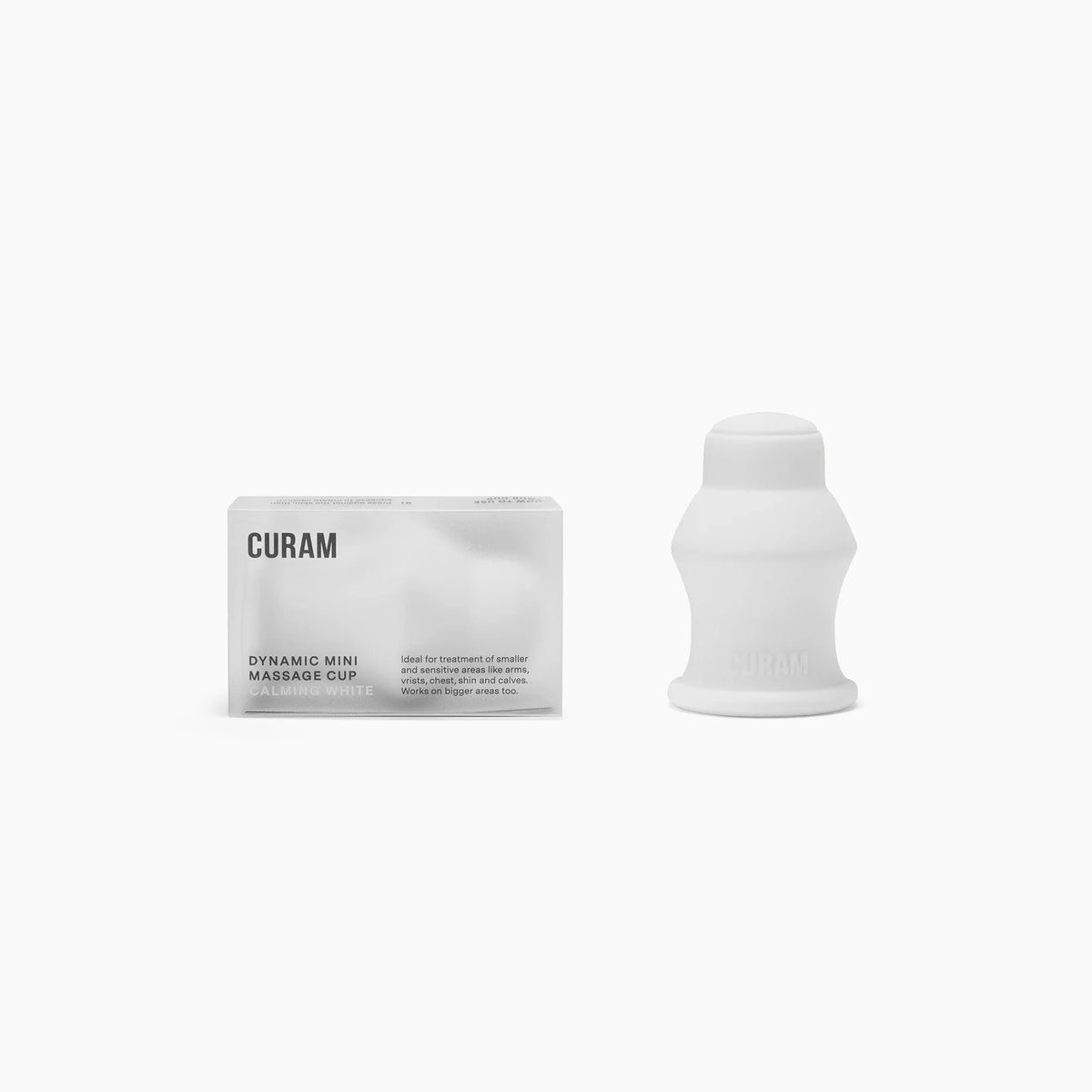
- Upper trapezius: the mini cup with light suction from the base of the skull down along the sides of the neck and out towards the shoulders, two minutes. Do not cup over the spine itself or on the front of the throat.
- Chest muscles: the dynamic cup from the breastbone out towards the shoulder joint below the collarbone, one minute per side. This is the spot most people forget, and the one pulling the shoulders forward.
- Between the shoulder blades (ask someone for help, or use static cups): long strokes along the muscles on both sides of the spine, two minutes.
- Finish straight away with chin tucks and wall angels; warmed-up tissue learns the new position better. Three times a week, or daily after long screen days.
A guided routine in the cupping program for the office and the technique in Cupping on the back.
Frequently asked questions
Can forward head posture be corrected?
Yes, in most cases, since it is muscles and habits, not the skeleton, that hold the head in front of the body. Daily chin tucks, chest stretches, upper back strength and a screen at eye level give a clear difference in six to twelve weeks. A pronounced hump in older people can have bone changes that do not reverse, but the posture can still improve.
What causes forward head posture?
Hours with the phone and screen below eye level, sitting without back support, heavy shoulder bags, a weak upper back and tight chest muscles. The head is pushed forward to see the screen, and the muscles adapt to the position.
Does forward head posture cause headaches?
Yes, it is a common cause of headaches that start at the base of the skull and radiate forward to the temple or behind the eyes (cervicogenic headache), because the small muscles at the base of the skull shorten and tighten. Chin tucks and cupping of the upper trapezius usually help; see the guide to tension headache.
Does cupping help forward head posture?
It softens the upper trapezius, skull-base muscles and chest muscles and relieves the tension, which makes the exercises easier, but it does not correct the posture on its own. Strength in the deep neck flexors and upper back, and a screen at eye level, are what give lasting change.
Does a posture brace help?
As a reminder for short periods, maybe, but worn around the clock it weakens the muscles because it takes over their job. Exercises and ergonomics beat the brace; use it at most an hour a day as a signal, not as support.
Sources
- 1177 Vårdguiden (Swedish national health guide), search for "nacksmärta" and "hållning" for medical information and when to seek care.
- Curam's FAQ and cupping programs, developed with trained massage therapists.
Related guides
- Shoulder impingement – exercises that help, cupping
- Dizziness – causes, BPPV, neck dizziness and what helps
- Scoliosis – symptoms, exercises and self-care for adults
- Vertebral compression fracture – symptoms, healing, exercises
Written by Curam. Last updated 17 October 2026. This is general self-care information and does not replace medical care. For sudden, severe or unusual symptoms, contact your doctor. Talk to your doctor before cupping if you are pregnant, take blood thinners or have a condition affecting skin, blood vessels or blood.


