


A blocked nose is almost always a swollen lining, not "too much mucus": with a cold, allergy, dry air, hormonal changes and overuse of nasal spray the lining swells and closes the airway, and when the openings to the sinuses swell shut, the pressure over the cheeks, forehead and behind the eyes called sinusitis arises. Nine out of ten cases of sinusitis are viral or swelling after a cold and heal by themselves in one to three weeks; antibiotics rarely help. What helps is saline rinsing, steam and heat, movement, sleeping with the head raised, decongestant nasal spray for at most ten days, allergy treatment if it is allergy, and light massage or face cupping that drains the swelling around the nose, cheeks and forehead. Here are the causes, the warning signs, the self-care and how face cupping is used.
Why is the nose blocked?
| Cause | Recognised by | What helps |
|---|---|---|
| Common cold | Blocked and runny, sore throat, tiredness; worst on days 2–4, better in a week | Saline rinsing, steam, rest, decongestant spray for at most ten days |
| Sinusitis | Pressure and pain over the cheeks, forehead or behind the eyes, worse when bending forward, thick discoloured mucus, reduced smell; usually after a cold | As for a cold plus heat, sleeping raised, steroid nasal spray; medical care if it lasts more than ten days or worsens after improving |
| Allergy (pollen, dust mites, pets) | Blocked, runny, itchy nose and eyes, sneezing; seasonal or indoors all year | Antihistamine, steroid nasal spray, avoiding what you react to |
| Oversensitive lining (vasomotor rhinitis) | Blocked by cold air, spices, smoke, perfume, stress, without allergy; often alternating sides | Saline rinsing, steroid spray, avoiding triggers |
| Nasal spray dependence | Blocked as soon as the spray wears off, after more than ten days of use | Stop the spray (one nostril at a time), saline and steroid spray as support; takes one to two weeks |
| Dry air, pregnancy, medication | Blocked at night and in winter; pregnancy rhinitis; some blood pressure drugs | Humidifier, saline, sleeping raised; talk to your doctor about medication |
| Nasal polyps, deviated septum | Constantly blocked, often one side, reduced smell, recurrent sinusitis | Doctor; steroid spray, sometimes surgery |
Seek care if
Seek urgent care if you have severe headache with high fever and a stiff neck, swelling and redness around the eye or in the forehead, visual disturbance or double vision, or if you are generally unwell (very tired, confused). Contact your doctor if the sinus symptoms have lasted more than ten days without improvement, if you get worse again after starting to improve, if you have a fever over 38.5 degrees Celsius for more than three days, severe one-sided pain in the cheek or a tooth, recurrent sinusitis (four or more a year), constant blockage on one side, bloody mucus from one nostril, or if reduced smell does not return. Children under one year with breathing difficulties should always be assessed.
Self-care that helps
- Saline rinsing (neti pot or spray) two to four times a day is what has the best evidence: flushes away mucus, pollen and viruses, moisturises and reduces swelling. Use boiled, cooled water and ready-made salt sachets.
- Steam and heat. A hot shower, steam over a bowl (not for children) or a warm towel over the nose and cheeks for ten minutes softens mucus and relieves the pressure.
- Sleep with the head raised (extra pillow or raised head end) so the lining swells less at night and the sinuses drain.
- Movement. A walk or light exercise opens the nose temporarily through adrenaline; many breathe better for half an hour afterwards.
- Decongestant nasal spray (xylometazoline) opens quickly but may be used for at most ten days; longer causes dependence. Steroid nasal spray is safe long term and is the first choice for allergy and long-standing problems.
- Drink, humidify the air, avoid smoke and perfume. Dry indoor air in winter makes it worse.
- Allergy: antihistamine tablet and steroid spray, wash your hair in the evening during pollen season, mite-proof bedding.
- Massage and face cupping around the nose, cheeks and forehead drain swelling and relieve the pressure; see below.
Face cupping and lymphatic drainage for a blocked nose and sinus pressure
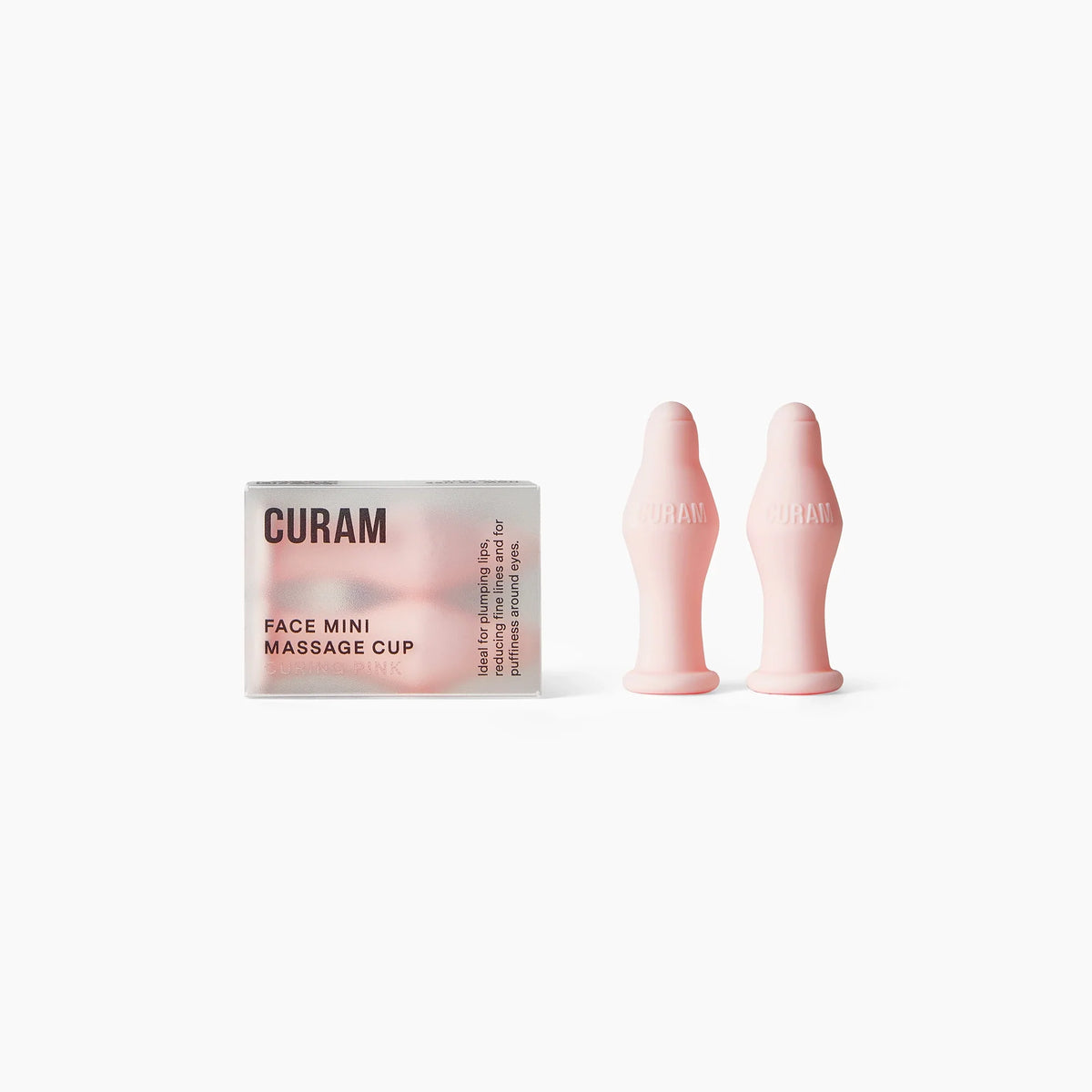
The pressure over the cheeks and forehead comes from swelling in the lining and the tissue around the sinus openings. Light lymphatic drainage and face cupping reduce the swelling in the soft tissues of the face and increase circulation, which many experience as "it releases" and easier breathing for a while. It does not affect the infection itself, but relieves the symptoms and helps drainage. Use the mini cup with very light suction and face oil.
- Open the lymph. Stroke with your fingers from the temple down in front of the ear to the collarbone, five times per side, and press lightly in the hollow above the collarbone five times.
- Sides of the nose. The mini cup from the nostril upwards along the nose to the root of the nose and then out under the eyebrow towards the temple, five strokes per side. Keep the skin taut with the other hand.
- Cheeks (maxillary sinuses). From the nostril outwards and upwards across the cheekbone towards the ear, five to eight strokes per side. This is where the pressure usually sits.
- Forehead (frontal sinuses). From the inner end of the eyebrow upwards towards the hairline and out to the temple, five strokes per side.
- Finish by stroking down from the temple to the collarbone again, and press lightly with the fingertips on the points at the root of the nose, below the cheekbones and at the inner ends of the eyebrows, five seconds each.
- Three to five minutes, once or twice a day during a cold. The skin should turn lightly pink, never red.
Guided program: the cupping program for a blocked nose and sinuses. More on lymphatic drainage of the face in the guide to lymphatic massage for the face and the basics in face cupping.
Do not cup with high fever, swelling and redness around the eye or in the forehead, active skin infection, wounds, acne or rosacea in a flare, or near the eyes (never on the eyelid). Lymphatic drainage should be light; do not press hard over tender sinuses.
Prevent a blocked nose and sinusitis
Saline rinsing daily during cold season and pollen season, treat allergy in time, never stop abruptly a steroid spray your doctor has prescribed, avoid smoke, humidify the air in winter, and keep the head raised when you have a cold. Stopping smoking is the single most important thing for anyone with recurrent sinusitis.
Frequently asked questions
How do I know if it is sinusitis?
Pressure or pain over the cheeks, forehead or behind the eyes that gets worse when bending forward, thick discoloured mucus and reduced smell, usually after a cold. Most cases heal by themselves in one to three weeks. If it lasts more than ten days, worsens after improving or gives a high fever, it should be assessed.
Does sinusitis need antibiotics?
Rarely. Most cases are viral or swelling and heal by themselves. Antibiotics are considered with severe symptoms, high fever, severe one-sided pain or symptoms lasting more than ten days without improvement; the doctor decides.
What helps fastest against a blocked nose?
Saline rinsing, a hot shower or steam, a walk, and decongestant nasal spray (at most ten days). Light lymphatic drainage and face cupping around the nose and cheeks open many people up for a while. Sleep with the head raised.
Does face cupping help a blocked nose and sinuses?
It reduces the swelling in the soft tissues of the face around the sinus openings and increases circulation, which relieves the pressure and lets many breathe more easily for a while. It does not cure the infection or the allergy, but complements saline, steam and medication when needed.
Why is my nose blocked only at night?
When you lie down blood flow in the lining increases and it swells, dry indoor air makes it worse, and dust mite allergy makes itself known in bed. Sleep with the head raised, humidify the air, rinse the nose in the evening and consider mite-proof bedding.
Sources
- 1177 Vårdguiden (Swedish national health guide), search for "bihåleinflammation", "nästäppa" and "nässprayberoende" for medical information, medication and when to seek care.
- Curam's FAQ and face cupping programs, developed with trained skin and massage therapists.
Related guides
- Exercising with a cold – the neck rule and when to rest
- Swollen lymph nodes – causes, when to seek care and what you can do
- Snoring and sleep apnoea – causes, how to stop snoring and when to get tested
- Jaw pain and jaw joint pain – causes, exercises and what helps
- Strengthen the immune system – what actually works
Written by Curam. Last updated 17 October 2026. This is general self-care information and does not replace medical care. For sudden, severe or unusual symptoms, contact your doctor. Talk to your doctor before cupping if you are pregnant, take blood thinners or have a condition affecting skin, blood vessels or blood.


