


Lymph nodes are the body's checkpoints: 500–700 bean-shaped nodes, most smaller than a centimetre, gathered in groups in the neck, under the jaw, behind the ears, in the armpits, along the chest, in the abdomen and in the groin. All lymph, the fluid that seeps out of the blood vessels and bathes the tissues, passes through at least one node on its way back to the blood, and in the node sit millions of white blood cells that screen the fluid for bacteria, viruses, damaged cells and foreign substances. If they find something, the node grows within hours to days, because the cells multiply to fight it, and it becomes tender because the capsule around it is stretched. That is why the nodes in the neck swell with colds and strep throat, the nodes under the jaw with dental infection, the node in the armpit after a vaccination or an infected wound on the hand, and the nodes in the groin with eczema, wounds or fungal infection on the legs and feet. Each group drains its own area, so the location of the swelling tells you where the problem is. Swelling of this kind, soft, tender, mobile, on one or both sides, that goes back within two to four weeks after the infection has healed, is harmless and extremely common. Here is how to tell it from what should be examined, how long you can wait, and what you can do yourself in the meantime, and why lymphatic massage and cupping belong around, never on, a swollen node.
Where the lymph nodes sit and what each group drains
| Node group | Where you feel them | Drains | Typically swells with |
|---|---|---|---|
| Under the jaw and chin | Along the underside of the jawbone, under the chin | Teeth, gums, lips, floor of the mouth, tip of the tongue | Dental infection, wisdom teeth, mouth ulcers |
| Front of the neck | Along the large neck muscle, from the ear down towards the collarbone | Throat, tonsils, larynx, thyroid | Colds, strep throat, glandular fever, covid |
| Behind the ear and in the nape | Behind the earlobe, along the hairline at the back of the neck | Scalp, outer ear, back of the head | Scalp eczema, lice, rubella (rare), ear infection |
| Above the collarbone | In the hollow above the collarbone | Chest and abdomen | Should always be examined, whatever the size |
| Armpit | High up in the armpit, against the chest wall | Arm, hand, breast, skin of the chest | Wound or infection on arm/hand, vaccination, shaving rash, mastitis |
| Inside of the elbow | On the inside above the elbow | Forearm, hand | Infected wound on the hand, cat bite |
| Groin | Along the groin crease, often pea-sized and palpable even in healthy people | Leg, foot, genitals, lower abdomen, buttocks | Athlete's foot, eczema, leg wounds, sexually transmitted infection, urinary infection |
| Back of the knee | Deep in the back of the knee, rarely palpable | Lower leg and foot | Infection in foot or lower leg |
The whole system is described in how the lymphatic system works.
Why lymph nodes swell
- Viral infections (most common): colds, flu, covid, glandular fever (often markedly swollen nodes throughout the neck, armpits and groin, with sore throat and fatigue for weeks), chickenpox, herpes.
- Bacterial infections: strep throat, dental infection, infected wounds, abscesses, ear and sinus infections, cat scratch disease, Lyme disease.
- Skin problems in the drainage area: eczema, acne, infected hair follicles, athlete's foot, shaving injuries. Groin nodes in someone with athlete's foot or eczema on the legs is classic.
- Vaccination: the node in the armpit on the side you had the injection, for one to several weeks; common after covid and flu vaccines.
- Immunological diseases: rheumatoid arthritis, lupus, sarcoidosis; the nodes are then part of a bigger picture with joint pain, rashes, fatigue.
- Medications: some epilepsy medicines, allopurinol and antibiotics can cause swollen nodes as a side effect.
- Malignant causes (uncommon, but these are the ones you want to rule out): lymphoma, leukaemia and spread from a tumour in the drainage area. These nodes are typically hard, painless, fixed to the underlying tissue, grow slowly over weeks, and come without infection.
Harmless node or node that should be examined
| Suggests harmless (reactive node) | Suggests examination | |
|---|---|---|
| Feel | Soft to firm, elastic, tender to pressure | Hard as stone or rubbery, painless |
| Mobility | Slides under the fingers, mobile against skin and underlying tissue | Fixed to the underlying tissue or skin, matted together with neighbouring nodes |
| Size | Under 1–2 cm, shrinking as the infection heals | Over 2 cm, or growing steadily over two to three weeks |
| Course | Came with an infection, goes back within 2–4 weeks after it healed | Came without infection, or remains for more than 4–6 weeks |
| Location | Neck, jaw, armpit, groin in the area that had infection or a wound | Above the collarbone (always), or in many places at once without infection |
| Other | Fever and sore throat belonging to the infection | Drenching night sweats, unexplained weight loss, fever without infection, itching, fatigue for weeks |
When to seek care
- Urgently (emergency services or emergency department): swelling in the neck that makes it hard to swallow, breathe or open the mouth; rapidly growing, very tender, red and warm swelling with high fever (abscess); node swelling with stiff neck, headache and fever.
- Your doctor within a few days: sore throat with fever and swollen nodes without cough and runny nose (suspected strep, tested); a node that is red, warm and very tender (may need antibiotics); node swelling in a child that doesn't go back in two weeks.
- Your doctor within a couple of weeks, book now: a node above the collarbone; a node that is hard, painless and fixed; a node larger than 2 cm; a node that remains after 4–6 weeks or grows; swollen nodes in several places without infection; nodes together with night sweats, weight loss, unexplained fever or itching; a new node in the armpit in a woman who hasn't recently been vaccinated (breast examination).
The examination is simple: the doctor feels the nodes, looks in the throat, ears and at the skin in the drainage area, takes blood tests (blood count, CRP, possibly a glandular fever test) and if needed an ultrasound. A tissue sample is only taken if the picture doesn't fit infection. The great majority of examined nodes turn out to be reactive.
How long is it normal for nodes to be swollen?
With a common cold or throat infection the nodes swell within a couple of days, are largest when the infection is at its worst, and then shrink slowly over two to four weeks after you've recovered; sometimes it takes six weeks before a node is fully back. After glandular fever the nodes can be palpable for several months. In children and slim adults, small, pea-sized, mobile nodes in the neck and groin are palpable year-round, especially after many infections, and that is normal as long as they don't grow. The rule of thumb: a node that hasn't started to shrink after three to four weeks, or that grows, should be shown to a doctor.
What you can do yourself
During the infection
- Rest, drink, and treat the infection as it should be treated; the nodes follow down on their own. Over-the-counter painkillers ease the tenderness.
- A warm shower or a warm towel against the neck eases tenderness and increases blood flow; with a warm, red, throbbing node, however, don't apply heat but contact your doctor.
- Don't touch, squeeze or massage the swollen node. Pressing on it causes more tenderness, can spread a local infection and gives no "drainage": what makes the node big is the cells in it, not fluid that can be pressed away.
- Keep good oral hygiene and treat wounds, eczema and athlete's foot in the drainage area; that is often the real cause of a long-standing swollen node in the jaw or groin.
Once the infection has healed and the node is only slowly going back
Now light lymphatic massage of the surroundings can help drainage: lymph moves through the node faster when the tissue around it is emptied and the valve upstream is open. The technique is to first open the central stations, then work from the healthy area towards the node group, never over the swollen node itself. Start with five deep belly breaths (it is the pressure changes in the chest that drive central lymph flow), then stroke with a flat hand and minimal pressure ten times along the sides of the neck from the angle of the jaw down towards the hollows above the collarbones, and ten times from the collarbones in towards the top of the breastbone. For nodes in the armpit: circle lightly in the armpit with the palm, then stroke from the upper arm in towards the armpit. For nodes in the groin: stroke from the inside of the thigh up towards the groin crease. Press so lightly that only the skin moves, not the muscle. The whole routine is in lymphatic massage at home, the face and neck in lymphatic massage for the face and the principles in lymphatic drainage.
Cupping and lymph nodes
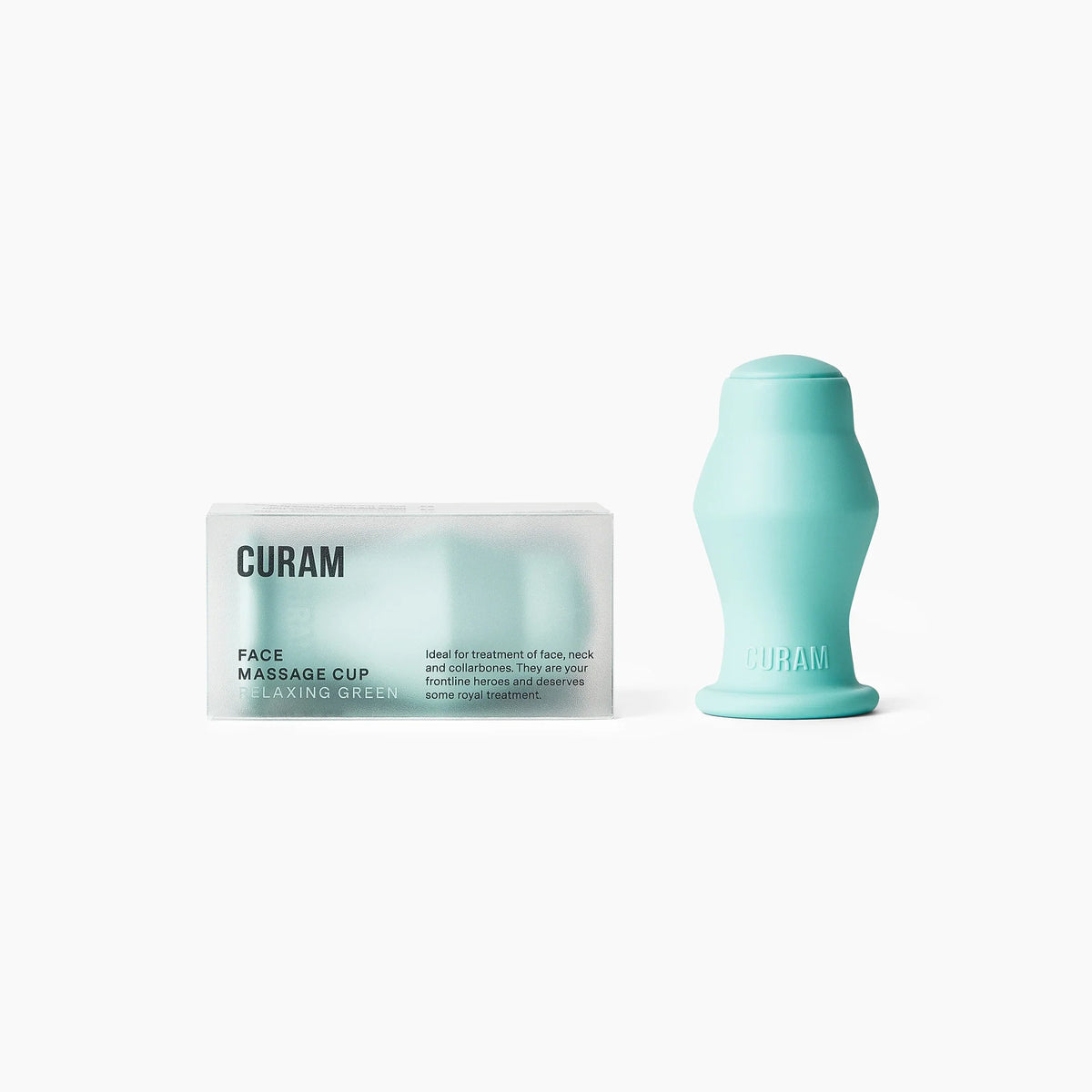
Cupping is never used on a swollen lymph node, never on the front of the neck (where nodes, thyroid and large vessels lie superficially) and never during an infection with fever. What cupping can do is, when you are well, keep lymph flow moving in the tissues that feed the nodes: light, gliding strokes with the face cup from the angle of the jaw down along the side of the neck towards the collarbone and along the jawbone out towards the ear, one minute per side, and the dynamic cup on thighs and upper arms directed towards groin and armpit. Always with oil, minimal suction and in the direction of the nearest node group, without running over it. The routine is in the cupping programme for breathing and sinuses and in lymphatic health with cupping; see also when to avoid cupping.
Swollen lymph nodes in children
Children have larger and more active nodes than adults, because the immune system is meeting everything for the first time, and most children have palpable nodes in the neck and groin more or less constantly. Swollen, tender neck nodes with colds and sore throats are the norm. Seek care if a node in a child is larger than 2 cm, red and warm, remains unchanged after two to three weeks, sits above the collarbone, or comes with fever lasting more than five days, pallor, bruising or fatigue out of proportion to the infection.
Read more
The lymphatic system: how it works, what is lymphatic massage, lymphoedema (when nodes have been removed or irradiated), fluid retention in the body and fatigue: causes and what helps.
Frequently asked questions
Why do lymph nodes swell?
Because they are working: the nodes are filters where white blood cells meet bacteria, viruses and damaged cells from the area they drain, and when they find something the cells multiply and the node grows within hours to days. Most common are colds, strep throat, dental infection, nearby wounds and eczema, glandular fever and vaccination. Tenderness comes from the capsule around the node being stretched.
How long can lymph nodes stay swollen after a cold?
Two to four weeks after you've recovered is normal, sometimes up to six; after glandular fever several months. The node should be soft to firm, tender and mobile, and gradually shrink. A node that hasn't started to shrink after three to four weeks, that grows, or that is hard and painless should be shown to a doctor.
What does a dangerous lymph node feel like?
Typically hard or rubbery, painless, fixed to the underlying tissue, larger than 2 cm, slowly growing over weeks, without an infection to explain it, often together with night sweats, weight loss, unexplained fever or itching. A node above the collarbone should always be examined. But even nodes with these features often turn out to be benign; the point is that they should be examined, not that they are dangerous.
Can you massage swollen lymph nodes?
Not the node itself: pressing and massaging it causes more tenderness, can spread a local infection and drains nothing, since it is cells and not fluid that make it big. Once the infection is over, light lymphatic massage of the area around it (sides of the neck towards the collarbones, upper arm towards the armpit, thigh towards the groin) with minimal pressure can help flow through the node. With fever, redness or warmth over the node: no massage, contact your doctor.
Can you cup with swollen lymph nodes?
No, not on or near a swollen node, not on the front of the neck and not during an infection with fever. When you are well, light gliding cupping with the face cup along the sides of the neck and the jawbone, directed towards the collarbones, and with the dynamic cup on thighs and upper arms towards groin and armpit, can keep lymph flow moving. Always oil, minimal suction and never over the node.
Related guides
- Headache – types, where it hurts, when to seek care and what helps
- Armpit pain – what it can be and when to seek care
Written by Curam. Last updated 17 October 2026. This is general self-care information and does not replace medical care. For sudden, severe or unusual symptoms, contact your doctor. Talk to your doctor before cupping if you are pregnant, take blood thinners or have a condition affecting skin, blood vessels or blood.


