


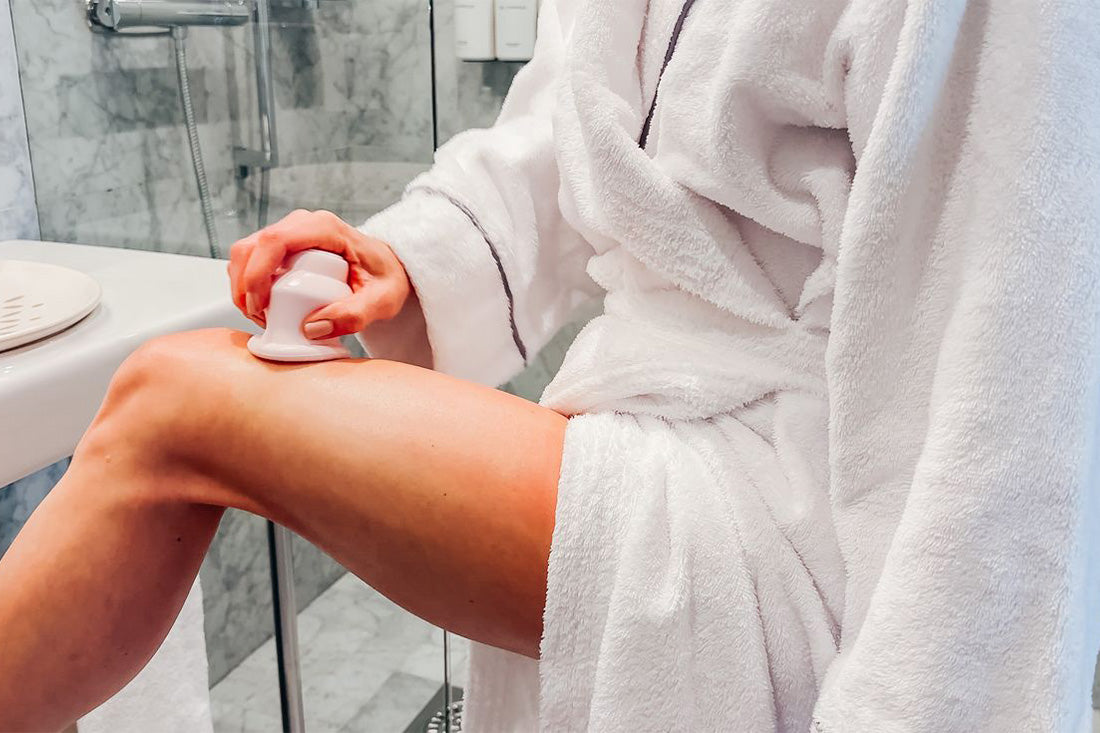
The lymphatic system transports away waste products, reduces swelling and is a central part of the immune system and recovery, but it has no pump of its own. It depends on movement, breathing and manual stimulation. Cupping is one of the simplest ways to give it that stimulation at home. Here is why the lymph needs support, how to stimulate it with cups, which cup suits which need and when to be careful.
Why the lymph needs support
Unlike blood circulation, which is driven by the heart, lymph fluid only moves when the muscles work, when we breathe deeply and when the tissue is stimulated from outside. Stress, sitting still, tension in the fascia and hormonal changes make the system more sluggish. The result is swelling, heaviness, stiffness and tiredness, and waste that remains in the connective tissue can contribute to dense tissue and cellulite.
How to stimulate the lymphatic system with cups
- Activate the lymph nodes first. Place and pump gently with a cup, or with your fingertips, at the stations: the collarbones (use the face cup), the armpits and groin (face cup or Dynamic Mini Cup).
- Oil the area with Curam Body & Massage Oil.
- Work with a dynamic cup in sweeping motions towards the stations. Legs: from ankle towards the back of the knee, from knee towards the groin. Arms: from wrist towards the armpit. Torso: from the waist towards the armpit.
- Slow, light strokes. The focus is gentle flow, not deep massage. Two to three strokes per line are enough at the start.
- Finish by pumping at the collarbones again, and drink a glass of water.
Do the routine two to four times a week with rest days in between. Never leave cups stationary directly on the lymph nodes. The complete routine for the whole body: Lymphatic massage at home.
Recommended cups by need
Curam Dynamic Cup
For larger areas such as legs, sides of the torso and hips. The most powerful cup, allowing deeper work in the fascia. Used with body and massage oil. Can feel firm at first but softens with time; warm it in warm water or press it from all sides before use. Dynamic Cup.
Curam Dynamic Mini Cup
Ideal for smaller areas: knees, ankles, calves, arms and ribcage. A gentler alternative to the Dynamic Cup, with thinner walls and softer silicone. Used with oil. Dynamic Mini Cup.
Curam Static Cups
When you want to deepen the treatment and create more local circulation, for example with swelling, fluid retention or tension. To stimulate the abdomen, one of the six major lymph stations, you can place a cup on either side of the lower front of the ribs and one over the navel. Static Cups.
Curam Face Cups
The face's lymphatic system is as important as the body's and affects swelling, tension and the skin's glow. The face cup is used on the face, along the neck and below the collarbones, but also on the body when you want a gentler treatment, for example on legs with visible blood vessels. Face Cup and Face Cup Mini.
When to be careful
Do not do lymphatic massage with fever, infection or acute inflammation. If you have lipoedema or lymphoedema, are pregnant, have heart or kidney disease or take blood thinners: consult a doctor or lymphatic therapist first and use light suction.
For those who want to deepen their lymphatic health
Curam offers online workshops and guides on how to work with lymph and fascia in everyday life, see events. With the right tools and regularity you quickly notice how the body responds when flow improves, whether you want to reduce swelling, release tension or calm the nervous system. Related: Swollen legs and feet.
Frequently asked questions
Which cups should I use for lymphatic massage?
All Curam's cups affect lymphatic flow because they release the fascia. For lymphatic massage in motion the dynamic cups are recommended, and the face cup for gentle lymphatic massage on sensitive skin.
Should you only cup upwards?
For lymphatic massage the cup is drawn towards the nearest major lymph station: below the collarbone from the bottom up, on the face from the top down towards the collarbones. If you have had a blood clot or are at risk, consult a doctor first.
What can a sluggish lymphatic system lead to?
Swelling, heaviness, stiffness and tiredness. Waste that remains in the connective tissue can also contribute to dense tissue and cellulite.
I have lipoedema, can I cup?
Many with lipoedema experience relief from light dynamic cupping towards the lymph stations, but start gently, avoid prolonged static cupping and preferably consult a specialist first.
Related guides
Written by Curam. Last updated 16 October 2026. This is general self-care information and does not replace medical care. Talk to your doctor before cupping if you are pregnant, take blood thinners or have a condition affecting skin, blood vessels or blood.


