


Most of what hurts in the hand is controlled from the forearm: the fingers' flexor and extensor tendons come from muscles just below the elbow and run through the wrist in tendon sheaths, and the nerves that give sensation and power (median, ulnar, radial) pass through narrow passages at the elbow and wrist. That is why an aching hand often has its cause in tight forearm muscles, overloaded tendons or a pinched nerve, and why offloading, exercises and cupping of the forearm are so effective. In the hand itself it is the joints that hurt: osteoarthritis in the fingers' end and middle joints (nodes, stiffness, worse with the years, hereditary, most common in women after 50) and in the base of the thumb (pain on gripping, twisting, key in lock), rheumatoid arthritis in the base joints and wrists (symmetric, swelling, morning stiffness over an hour), gout (suddenly red-hot joint), and after injuries. The connective tissue plate of the palm can contract (Dupuytren's contracture, cords and fingers that curl), the tendon sheaths can become tight (trigger finger, de Quervain's), and small cysts (ganglion) can bulge on the back of the hand. The signs that something needs care right away are few and clear: injury with deformity or inability to move, a red warm swollen hand or joint with fever, sudden weakness or numbness, and a white, cold, painful hand. Here is the hand part by part, the warning signs, and what helps.
Where in the hand does it hurt, and what it usually means
| Location and character | Most common | How it feels | What helps |
|---|---|---|---|
| The fingers' end and middle joints, nodes, stiffness | Finger osteoarthritis (Heberden's and Bouchard's nodes) | Stiff, tender, slightly swollen joints in the morning that loosen in minutes; hard nodes on the sides of the joints; tenderness to pressure; worse in cold; hereditary, women after 50 | Heat, finger exercises, paraffin bath, grip aids, cupping of the forearm; over-the-counter anti-inflammatory during flares; see hand osteoarthritis |
| The fingers' base joints and the wrists, both hands, swelling, morning stiffness | Rheumatoid arthritis | Soft, warm swelling over the knuckles and wrists, morning stiffness over an hour, fatigue, tender to "shake hands"; symmetric | Your doctor soon: blood tests and referral, early treatment is decisive; see rheumatism and joint pain |
| The base of the thumb, pain on gripping and twisting | Thumb base osteoarthritis (CMC osteoarthritis) | Pain opening jars, turning a key, pinching, holding the phone; a bump at the thumb base over time | Thumb brace under load, offload pinch grip, exercises, heat, cupping of the thenar and forearm; cortisone or surgery for severe problems; see the same guide |
| The thumb side of the wrist, pain when lifting with the thumb up | De Quervain's tenosynovitis | Sharp pain at the thumb side of the wrist when lifting children, twisting, writing; tender and sometimes swollen over the tendons; test: thumb in the fist, tilting the hand towards the little finger hurts | Thumb splint for two to four weeks, offload lifts with the thumb up, cold, then exercises; cortisone if needed; see wrist pain |
| A finger that gets stuck bent and snaps | Trigger finger (tendovaginitis) | The finger gets stuck bent, especially in the morning, and releases with a click or has to be straightened with the other hand; a tender nodule in the palm at the base of the finger | Offload gripping, a night splint that keeps the finger straight, gentle stretching; a cortisone injection cures most; minor surgery if it recurs |
| Numbness and tingling in thumb, index and middle finger, worst at night | Carpal tunnel syndrome | Waking and shaking the hand, dropping things, clumsy, numbness when cycling, driving, on the phone; weakness in the thumb over time | Night splint, offload a bent wrist, nerve gliding; your doctor with weakness or numbness that doesn't release; see carpal tunnel syndrome |
| Numbness in ring and little finger | Ulnar nerve compressed at the elbow (cubital tunnel) or wrist | Worse when the elbow is bent for long (phone, sleeping with a bent arm), leaning on the elbow, handlebars | Avoid prolonged bending, a soft elbow pad at night, nerve gliding; see numbness in the hands |
| Sore palms, forearms, tired hands after screen work, tools, training | Overload, mouse arm, tight forearm muscles | Diffuse ache and tiredness in palm and forearm, tender points in the forearm, stiffness; no numbness or swelling | Breaks, ergonomics, forearm stretches, strength, cupping of forearm and hand; see mouse arm |
| Cords in the palm, fingers that curl (usually ring and little finger) | Dupuytren's contracture | A hard nodule or cord in the palm that slowly pulls the finger into a bent position; usually men over 50, hereditary; painless | No massage cures it; a hand surgeon when the finger can't be laid flat on the table |
| A round, soft lump on the back of the hand or wrist | Ganglion cyst | Firm or soft, changes size, usually painless; can ache under load | Harmless; left, aspirated or removed if it bothers you |
| A joint suddenly red-hot, red, swollen, extremely tender | Gout, or infection | Comes within hours, often at night; with infection fever and spreading redness | Your doctor the same day; infection in the hand is urgent |
| After a fall or blow, swelling, inability to grip | Fracture (scaphoid, metacarpals, fingers), ligament injury, dislocation | Tender over a bone, swelling, deformity; a scaphoid fracture hurts in the "anatomical snuffbox" at the thumb base and is often missed | Care the same day with deformity, inability to move or tenderness in the snuffbox after a fall on an outstretched hand |
| Cold, white or blue fingers in cold or stress | Raynaud's phenomenon | Fingers that turn white, then blue, then red and tingling; harmless in most | Warmth, gloves, quitting smoking; investigate if it starts after 40 or causes sores; see cold hands |
When to seek care
- Same day: injury with deformity, marked swelling, inability to bend or straighten a finger, or tenderness in the snuffbox after a fall; a red, warm, swollen hand, finger or joint with fever or red streaks (infection in the hand spreads quickly); wounds with a deep puncture, bites (especially cat bites) or a foreign body; sudden weakness or numbness in the hand; a white, cold, painful hand.
- Your doctor within one to two weeks: swollen, warm joints in both hands with morning stiffness over an hour (rheumatism is investigated and treated early); numbness that persists, night-time numbness that doesn't release with a splint in four weeks, or weakness in the thumb; a finger that gets stuck; hand pain not improved in four to six weeks with offloading; a lump that grows or hurts; fingers that can't be laid flat; Raynaud's starting after 40 or sores on the fingertips.
What helps hand pain
1. Offload the right movement, not the whole hand
Find the movement that hurts (pinch grip, lifting with the thumb up, hard grip, a bent wrist at the keyboard) and change it: thicker handles on tools and pens, a jar opener, carrying on the forearm instead of in the fingers, mouse and keyboard so the wrist is straight, shorter spells and more breaks. Total rest makes the hand stiff and weak; use it for what doesn't hurt.
2. A splint when needed
A night splint that keeps the wrist straight for carpal tunnel (studies show an effect within weeks), a thumb brace for thumb base osteoarthritis and de Quervain's under load, a finger splint at night for trigger finger. Splints are used in periods, not around the clock for months; movement in between.
3. Hand and finger exercises, five minutes a day
- Fist and splay: make a fist slowly, open and splay the fingers maximally, 10 times.
- Fingertips to thumb: touch the thumb to each fingertip in turn, 5 rounds.
- Tendon gliding: straight hand, hook (bend only the end joints), fist, flat fist (bend the base joints, straight fingers), 10 rounds; keeps the tendons gliding with trigger finger and after injuries.
- Wrist flexion and extension with the other hand, 20 seconds each, and forearm stretch with a straight elbow, palm up and palm down.
- Strength: squeeze a soft ball or therapy putty 10 times, splay against a rubber band around the fingers 10 times; with osteoarthritis light and without pain.
- Nerve gliding for carpal tunnel and ulnar nerve: see the linked guides.
4. Heat or cold
Heat (warm water, wheat bag, paraffin bath from the pharmacy) for stiff osteoarthritic joints and tight muscles, especially in the morning and before exercises; cold for 10 minutes for an acutely irritated tendon (de Quervain's, trigger finger in a flare) or a swollen joint. With gout: cold, rest and your doctor.
5. Ergonomics and habits
Screen at eye level, forearms resting, mouse close, wrist straight, light keystrokes; phone in both hands or on a table; breaks every half hour with fist-and-splay and forearm stretches; gloves in the cold. See cupping for people who sit a lot.
6. Cupping the forearm, palm and thenar
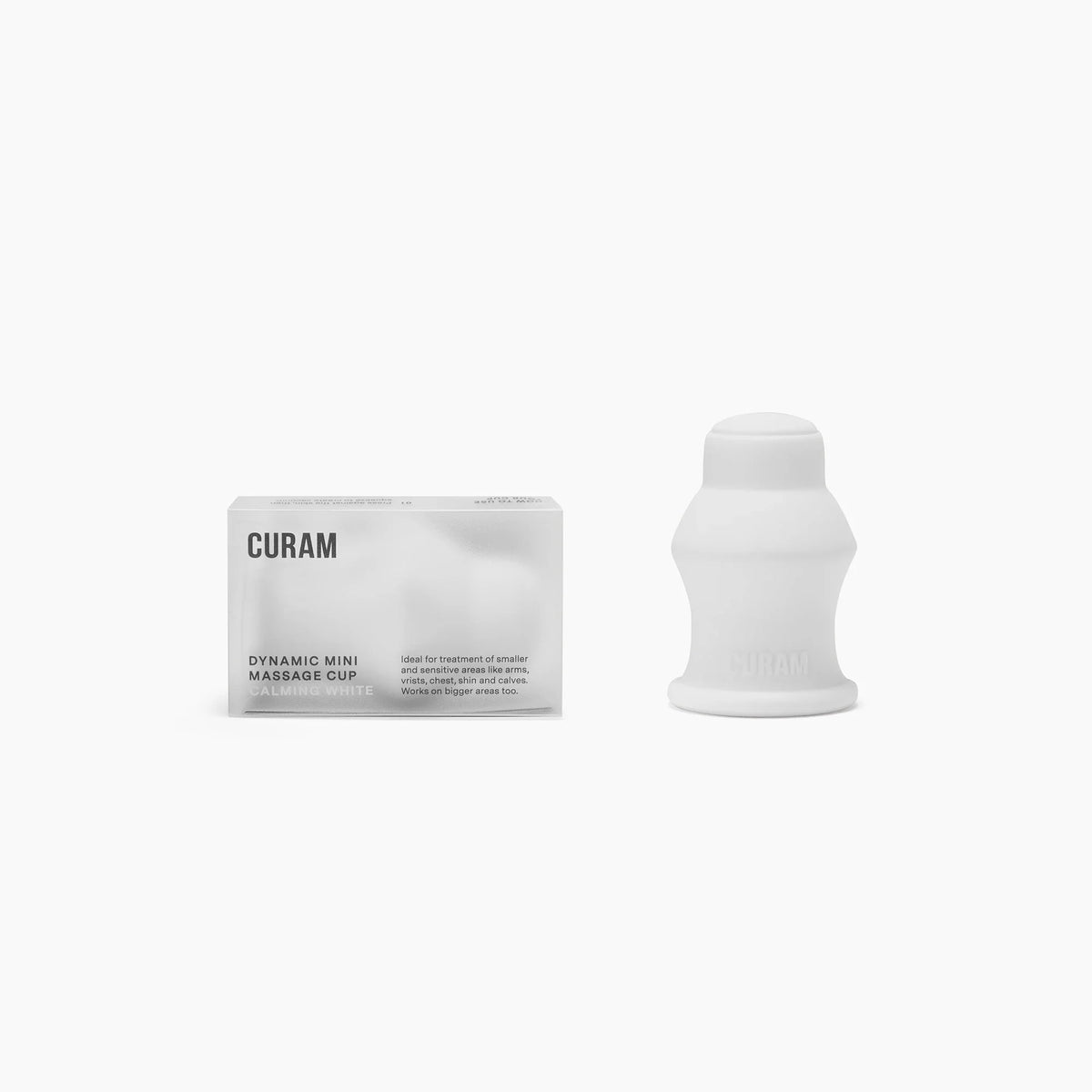
The forearm muscles are the origin of most tension in the hand, and they respond very well to cupping: the suction releases the flexors on the inside and the extensors on top, increases blood flow to tendons with poor circulation, and reduces the pressure in the narrow passages at the wrist. How to: oil the skin, glide the mini cup with light suction along the inside of the forearm from the wrist towards the elbow, 2 minutes, and along the top, 2 minutes, with extra time on tender points; then over the palm from the base of the fingers towards the wrist and in small circles over the thenar, one minute, and on the back of the hand between the metacarpals with minimal suction, 30 seconds. Finish with tendon gliding and wrist stretches. Two to three times a week, or daily during a period of heavy screen work. Don't cup directly over the carpal tunnel with strong suction, not over swollen, warm joints in a flare, not over a lump that hasn't been examined, not with infection or wounds, not during a Raynaud's attack, and not if you take blood thinners without having asked; see when to avoid cupping. Routines in the cupping programme for hands and forearms and tennis elbow and mouse arm.
Deeper guides
Thumb pain and hand osteoarthritis, carpal tunnel syndrome, numbness in the hands, wrist pain, tennis elbow and mouse arm, arm pain, rheumatism and joint pain, swollen hands and fingers and dry hands.
Frequently asked questions
Why does my hand hurt?
Depends on where: tender, stiff finger joints with nodes are osteoarthritis; swollen knuckles and wrists on both hands with long morning stiffness are rheumatism; pain at the base of the thumb on gripping is thumb base osteoarthritis or de Quervain's; a finger that gets stuck is trigger finger; numbness in thumb, index and middle finger at night is carpal tunnel; sore palms and forearms after screen and tools are overload. A suddenly red-hot joint is gout or infection, and should be assessed the same day.
When should I seek care for hand pain?
The same day for an injury with deformity or inability to move, tenderness in the snuffbox after a fall, a red warm swollen hand or joint with fever, deep punctures or bites, sudden weakness or numbness, or a white cold painful hand. Within one to two weeks for swollen joints in both hands with morning stiffness over an hour, numbness that doesn't release, a finger that gets stuck, a lump that grows, or pain not improved in four to six weeks.
What helps stiff and sore fingers in the morning?
With osteoarthritis: heat (warm water, wheat bag, paraffin bath) for five minutes, then fist-and-splay, fingertips to thumb and tendon gliding, 10 rounds each; cupping of the forearm in the evening; thicker handles and grip aids. Stiffness lasting over an hour in the knuckles and wrists of both hands, with swelling, is rheumatism and should be investigated soon, since early treatment is decisive.
Which exercises help hand pain?
Five minutes a day: fist and splay (10), thumb to each fingertip (5 rounds), tendon gliding (straight hand, hook, fist, flat fist; 10 rounds), wrist flexion and extension with the other hand, forearm stretch with a straight elbow, and light strength with a soft ball and a rubber band around the fingers. For carpal tunnel and ulnar problems also nerve gliding. Light and pain-free with osteoarthritis; offload what provokes it.
Does cupping help hand pain?
Yes, above all via the forearm, where the fingers' tendons and muscles originate: cupping of the inside and top of the forearm releases flexors and extensors, increases blood flow to the tendons and reduces pressure at the wrist; light cupping of the palm and thenar releases local tension. Two to three times a week followed by tendon gliding and stretching. Not with strong suction over the carpal tunnel, over swollen warm joints in a flare, lumps that haven't been examined, infection or wounds.
Written by Curam. Last updated 17 October 2026. This is general self-care information and does not replace medical care. For sudden, severe or unusual symptoms, contact your doctor. Talk to your doctor before cupping if you are pregnant, take blood thinners or have a condition affecting skin, blood vessels or blood.


