


The scalp is five layers between the skin and the skull bone, and the middle one is a broad, flat sheet of tendon, the galea aponeurotica, stretched between the forehead muscle in front, the neck muscles behind and the small ear muscles on the sides. When you furrow your brow, clench your teeth, stare at a screen or hunch your shoulders, the galea tightens, and a tight galea is one of the main mechanisms behind tension headache: the band-like pressure around the head, the heaviness over the crown, the tenderness when you pull your hair. The scalp is also very richly supplied with nerves (the trigeminal nerve in front, the neck's nerves behind) and blood vessels, which is why touch there feels so strong and why massage lowers activity in the stress system faster than in most other places: studies on head massage show a lowered pulse, lowered blood pressure, lowered cortisol and increased heart rate variability after fifteen to twenty minutes, plus less pain and fewer days with tension headache when done regularly. The effect on the hair is more modest but real: regular scalp massage increases blood flow to the hair follicles and stretches the skin cells mechanically, which in small studies has given thicker hair strands after six months, but it doesn't give new hair where the follicles have stopped producing, and it doesn't cure hereditary hair loss. It is a complement to treatment, and a very pleasant one.
Head massage on yourself: two minutes at the desk
- The temples: fingertips (index, middle and ring finger) flat against the temples, small slow circles with moderate pressure, 20 seconds. The jaw muscle (temporalis) attaches here, and it is tense in everyone who clenches.
- The hairline: all fingers in the hairline from the forehead and backwards over the crown, press and move the whole scalp against the skull in circles (the skin should move, the fingers shouldn't slide in the hair), 30 seconds.
- The base of the skull: thumbs under the skull base on each side of the spine, press upwards and inwards, hold 10 seconds, release, repeat 3 times; then small circles along the whole skull base out towards the ears. The suboccipital muscles sit here, and they give the headache that starts in the neck and radiates forward to the eyes.
- The eyebrows: pinch lightly along the eyebrows from the nose outwards, 5 times, and press on the point where the eyebrow begins at the bridge of the nose, 10 seconds.
- Finish: draw the fingers through the hair from forehead to neck with a light pull at the roots, 5 times, and roll the shoulders backwards 5 times.
Head massage on yourself: ten minutes on the sofa or in the shower
Sit comfortably or lie with the head on a pillow; in the shower with shampoo in works excellently, as does dry hair with or without oil (oil below). Start with three slow exhalations. 1. The whole scalp (3 min): fingertips spread, press against the skull and move the scalp in circles, systematically from the hairline backwards in five to six "lanes" until you have covered the crown, sides and back of the head; the right pressure is when it feels good and the skin moves, not when it hurts. 2. Hair pulling (1 min): grasp tufts of hair near the roots with the whole hand and pull lightly and evenly outwards from the skull, hold 5 seconds, move on; stretches the galea and gives a clear relaxation. Thin or fragile hair: skip. 3. Temples and jaw (2 min): circles on the temples, then down in front of the ear to the jaw joint and jaw muscle, circles there with the mouth open. 4. Skull base and neck (2 min): thumbs or knuckles under the skull base, press and circle, then down along the neck muscles on each side of the spine to the shoulders, knead. 5. Forehead and eyes (1 min): stroke with the fingertips from the middle of the forehead outwards towards the temples, 10 times, then light pressure with the palms over closed eyes for 20 seconds. 6. Finish (1 min): long strokes from the forehead over the crown down to the neck and out over the shoulders, ever slower. More on the neck in neck exercises and on the eyes in tired eyes.
Head massage on someone else
Let the person sit on a chair with back support, or lie on their back with you at the head end (most comfortable for both). Ask about pressure, whether they want oil, and whether any spot should be avoided. Start with the hands still on the head for ten seconds so the body has time to relax. Then follow the same order as above: the whole scalp in circles with both hands at the same time on each side, light hair pulling, temples with the fingertips, the skull base with the fingers under the neck (when the person is lying down: let the weight of the head rest on your fingertips at the skull base, it is the most effective relaxation of all), forehead and eyebrows, and finishing long strokes down into the neck and out over the shoulders. Fifteen to twenty minutes. Don't talk unnecessarily. Common mistakes: too light pressure that tickles, too fast movements, sliding in the hair instead of moving the scalp, and forgetting the skull base, which is the spot that gives most.
For tension headache, stress, a stiff neck and tired eyes
- Tension headache: the two-minute routine at the first sign of pressure, with extra time on temples and skull base; the ten-minute routine in the evening on days you have had a headache; and preventively three times a week if you have headaches more than one day a week. Combine with heat on the neck and the exercises in tension headache and tight jaw. Migraine: massage can help in the prodrome but is often unbearable during the attack; respect that.
- Stress and sleep: ten minutes before bed, preferably by someone else, lowers the revs noticeably; studies on head massage show improved sleep quality and lower perceived stress after four weeks of regular massage. See stress.
- A stiff neck: the neck loosens from above: the skull base and the small neck muscles that control the head's position are often what keeps the rest tense. Skull base plus neck kneading, followed by neck rolls. See stiff neck.
- Tired eyes and screen fatigue: temples, eyebrows, the point at the bridge of the nose and the palms over the eyes; the eye muscles and the forehead relax together.
- Jaw tension and teeth grinding: the temples and the jaw muscle in front of the ear are head massage's most important contribution; see also teeth grinding.
Scalp massage and hair growth: what research says
Two mechanisms are established: increased blood flow to the hair follicles, and mechanical stretching of the skin cells in the scalp that changes gene expression in the dermal papilla cells towards growth. The most cited study had healthy men massage the scalp four minutes a day with a massage device for 24 weeks and found thicker hair strands (not more) at the end; a larger survey study of people with hereditary hair loss who massaged 11–20 minutes a day for months reported that a majority experienced stabilisation or improvement, but without a control group. The conclusion: regular scalp massage, five to ten minutes a day for at least six months, can give somewhat thicker hair and a healthier scalp environment, is a reasonable complement to minoxidil and other treatment, and improves the uptake of solutions you massage in. It doesn't recreate hair where the follicles have disappeared, doesn't help hair loss from iron deficiency, thyroid, stress or medicines until the cause is addressed, and "hair growth oils" with rosemary, castor or peppermint have weak support in themselves (rosemary oil has in one study been compared with minoxidil 2% with similar results after six months, but the study is small). Massage with the fingertips or a soft silicone brush, never so hard that it scratches, and be careful during active shedding: don't pull the hair.
Tools and oils
- The fingers are best: they feel the tension and adjust the pressure.
- A silicone scalp brush (shower brush): good in the shower with shampoo, for those with long nails or weak hands, and for hair growth massage; circle slowly, don't press hard.
- The "head spider" (wire massager): gives goosebumps and is pleasant, but doesn't massage the muscles; nothing for headache.
- Electric scalp massagers: convenient for the hair growth routine, too superficial for neck and temples.
- Massage gun: never on the head.
- Oil: not necessary, but pleasant in the evening before washing the hair: a few drops of jojoba, argan or a light massage oil on the fingertips, massaged into the scalp (not the lengths), 20 minutes or overnight, then shampoo twice. Not with an oily scalp, fungal dandruff (seborrhoeic dermatitis, where oil often makes it worse) or acne at the hairline. See massage oil.
Head massage plus light cupping of neck, temples and forehead
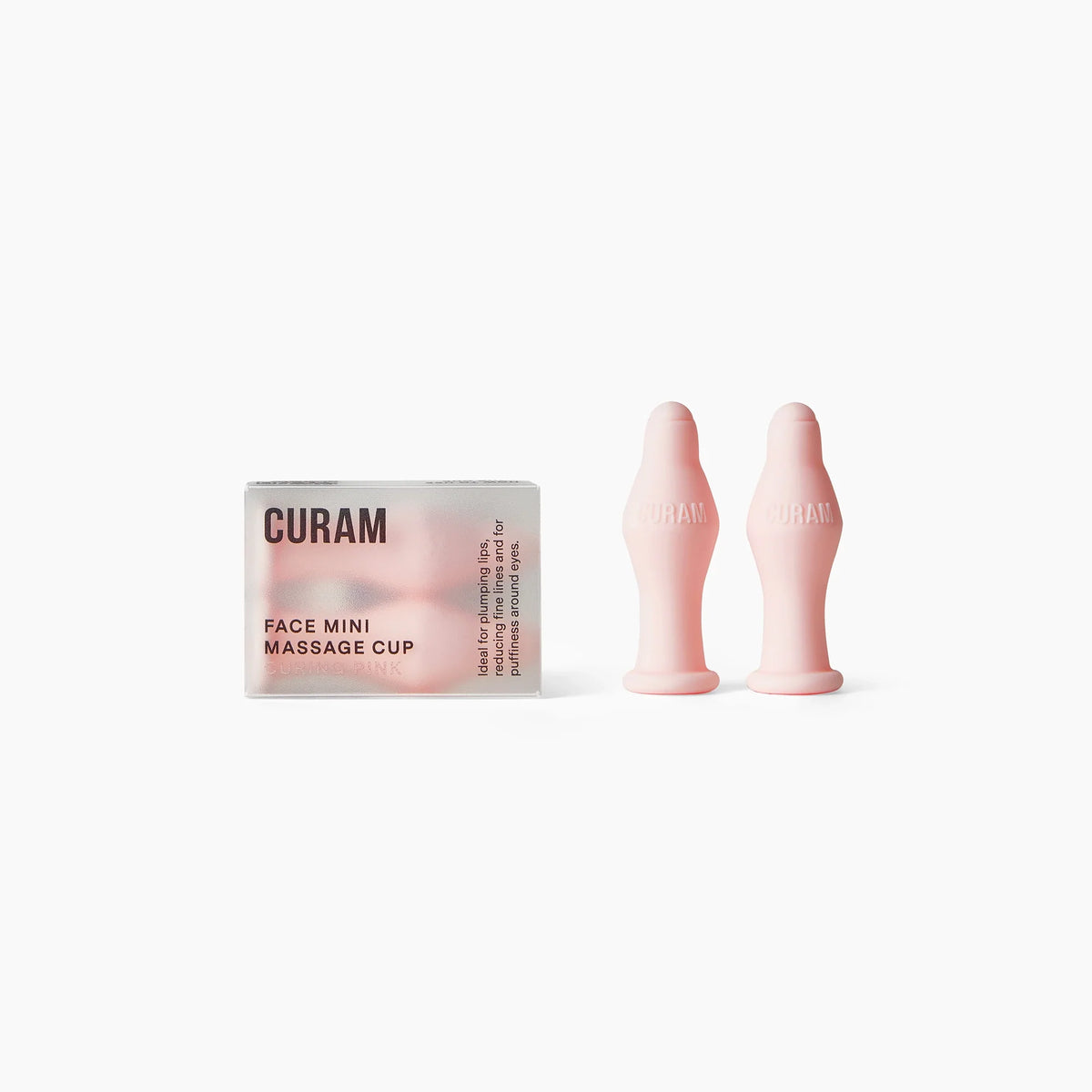
For those with recurring tension headache or a neck that is always tense, the combination of head massage and light cupping of the neck muscles is what gives most, because the massage loosens the scalp and skull base and the cupping reaches deeper into the neck muscles that pull on them. How to, after the head massage: oil the neck and upper shoulders. Glide the dynamic mini cup with light suction from the skull base downwards along the neck muscles on each side of the spine (never on the vertebrae themselves, never on the front or sides of the throat where the vessels run) to the shoulders, ten strokes per side, and from the neck out along the trapezius towards the shoulder joint, ten strokes. Temples and forehead: the mini face cup with the lightest suction, still for 20–30 seconds on each temple (not over the hairline), and strokes from the middle of the forehead outwards towards the temples, five per side; it is the same movement as in the smoother forehead cupping programme. Don't cup the scalp (the cup doesn't seal on hair and suction on thin scalp skin bruises), not during a migraine attack, fever, dizziness or a headache that is new and unusual for you (see the warning signs in headache), and not with strong suction on the neck: there it should be light and slow. Five minutes, three times a week, evaluate after four weeks.
Read more
Tension headache and tight jaw, headache: types and where it hurts, stiff neck, neck exercises, tired eyes, facial massage at home, stress and massage oil.
Frequently asked questions
How do you do a head massage on yourself?
Fingertips flat against the temples in small circles, then all fingers in the scalp with pressure against the skull so the skin moves in circles (not sliding in the hair), from the hairline backwards over the whole head, thumbs under the skull base with pressure upwards and circles out towards the ears, light pinching along the eyebrows, and finishing strokes through the hair from forehead to neck. Two minutes at the desk or ten on the sofa or in the shower. The right pressure is when it feels good and the skin moves.
Does head massage help tension headache?
Yes, for many as well as a painkiller for mild to moderate tension headache, and preventively regular massage reduces the number of headache days. The key spots are the temples (the jaw muscle's attachment), the skull base (the small neck muscles) and the scalp over the crown (the tendon sheet that tightens when you furrow your brow and clench). Combine with heat on the neck, neck exercises and light cupping of the neck muscles. With migraine, massage sometimes helps in the prodrome but rarely during the attack.
Does scalp massage give more hair?
Somewhat thicker hair strands and a better scalp environment with regular massage, five to ten minutes a day for at least six months, through increased blood flow and mechanical stretching of the skin cells; small studies show thicker strands after 24 weeks. It doesn't recreate hair where the follicles have disappeared, doesn't cure hereditary hair loss and doesn't help hair loss from iron deficiency, thyroid or stress until the cause is treated. As a complement to minoxidil and for massaging in solutions it is reasonable.
How often should you massage the scalp?
For tension and stress: two minutes daily at the desk and ten minutes three times a week, or as needed when the headache starts. For hair growth: five to ten minutes every day for at least six months, with the fingertips or a soft silicone brush, without scratching or pulling the hair. You can't massage too often with moderate pressure; too hard pressure gives a sore scalp and can damage hair strands.
Can you cup the head?
Not the scalp: the cup doesn't seal on hair and thin scalp skin bruises. But the neck muscles (light suction, from the skull base downwards and out towards the shoulders, never on the vertebrae or the front of the throat), the temples (a still mini cup with the lightest suction for 20–30 seconds) and the forehead (strokes from the middle outwards), after the head massage, three times a week. Not during a migraine attack, fever, dizziness or a headache that is new and unusual for you.
Related guides
Written by Curam. Last updated 17 October 2026. This is general self-care information and does not replace medical care. For sudden, severe or unusual symptoms, contact your doctor. Talk to your doctor before cupping if you are pregnant, take blood thinners or have a condition affecting skin, blood vessels or blood.


