


The hip joint is a ball-and-socket joint where the head of the femur rotates in the socket of the pelvis, both covered in cartilage and surrounded by a strong joint capsule and the body's strongest muscles. In osteoarthritis the cartilage breaks down faster than it is built up, the bone beneath densifies and forms ridges (osteophytes), the joint capsule thickens and shrinks, the joint fluid changes and the muscles around the joint weaken and tighten. The result is pain, stiffness and reduced mobility, especially internal rotation (turning the foot inwards), which goes first. Hip osteoarthritis is most common after 50, more common in women, with heavy physical work and elite sport, after hip injuries in youth (impingement, dysplasia, Perthes) and in families with osteoarthritis; overweight increases the risk but less than for knee osteoarthritis. And the important thing: the degree of change on X-ray correlates poorly with the degree of pain. Many have clear osteoarthritis on imaging without symptoms, and many with major symptoms have moderate imaging changes. The pain is governed by inflammation in the joint, by the muscles, by how you load and by the nervous system's sensitivity, and all four can be influenced. Hip osteoarthritis is chronic but not steadily worsening: with the right training many remain stable or improve for years, and only a minority need a replacement.
How hip osteoarthritis feels, and what resembles it
| Hip osteoarthritis | Trochanteric bursitis (outside) | The back (nerve root, SI joint) | Hernia / muscle | |
|---|---|---|---|---|
| Where | The groin, the front of the thigh, sometimes down to the knee (the hip joint refers to the knee, so "knee pain" can be the hip); rarely on the outside | The outside of the hip, tender to lie on | Buttock, back of thigh, down to the foot; back pain | The groin, a lump that grows when straining (hernia); tender at the muscle attachment (strain) |
| When | Loading, the first steps after rest, morning stiffness under 30 minutes, difficulty crossing the legs, putting on socks, cutting toenails, getting out of the car | Lying on the side, stairs, standing up | Sitting, bending, coughing | Lifting, straining, kicking |
| Mobility | Internal rotation and flexion decrease first; the leg "feels shorter"; limping gait | Normal | Normal hip | Normal |
| Read more | This guide | Trochanteric bursitis | Sciatica, the pelvis | Groin pain |
The diagnosis is made clinically: typical pain in the groin on loading, morning stiffness under 30 minutes, age over 45, and reduced internal rotation on examination are enough according to guidelines; X-ray isn't needed to start treatment but only when in doubt or before surgery. Blood tests are taken to rule out rheumatic disease with swelling, night pain or stiffness over an hour. Seek care soon for sudden severe hip pain with fever (joint infection), after a fall in an older person (fracture, even if you can walk), night pain that wakes you every night, weight loss, or pain that comes without loading in someone with previous cancer or cortisone treatment (bone death).
What actually slows it down: education, training and weight
Swedish guidelines and the BOA register (over 100,000 osteoarthritis patients) are clear: the core treatment for hip osteoarthritis is information, training and if needed weight loss, and everyone should be offered it before medicines, injections and surgery. Patients who have attended osteoarthritis education and trained for three months have less pain, better function and fewer operations, and the effect on pain is of the same order as painkillers, without side effects. This is what it looks like:
- Osteoarthritis education at your health centre or via a physiotherapist (also digital): three sessions of knowledge about osteoarthritis, followed by supervised training for six to twelve weeks. Ask for a referral or book yourself.
- Strength training for the hip muscles two to three times a week, 20–30 minutes: it is the muscles that offload the joint and control the loading. See the exercises below.
- Fitness that doesn't hurt: cycling (saddle a little higher than usual), swimming and water aerobics, Nordic walking, walks on soft ground for the distance the joint tolerates; 30 minutes most days.
- Weight: every kilo less reduces the load on the hip by three to four kilos per step; five to ten per cent weight loss gives measurably less pain.
- Pain during training is okay up to 5 on a 10-point scale, if it has returned to baseline by the next morning. That is the threshold osteoarthritis education teaches, and it lets you dare to load enough.
Exercises for hip osteoarthritis
- Glute bridge: on your back with bent knees, lift the hips, hold 3 seconds, 3 × 10. The glutes, which are the first to weaken in hip osteoarthritis.
- Side-lying leg lift: lie on your side with the painful leg on top, lift the leg straight up 20–30 cm with the toes forward, 3 × 10 per side. Gluteus medius, which stabilises the pelvis when you walk and prevents the limp.
- Sit to stand without hands, slowly down, 3 × 10; when it is easy, from a lower chair or with weight in the hands. The most functional exercise there is.
- Step-up: step up onto a stair with the painful leg, 3 × 10; increase the height over time.
- Kneeling hip flexor stretch: 30 seconds per side, 3 times; the hip flexor shortens in osteoarthritis and pulls the joint into a poor position. See hip stretches.
- Mobility: on your back, pull the knee to the chest and circle the hip in both directions, 10 rounds; sitting, let the knees fall apart and together (the butterfly), 20 times; the leg in internal and external rotation lying down, 10 times. Lubricates the joint and keeps what is left.
- Balance: stand on one leg at the counter 30 seconds × 3 per side; see balance exercises.
- Cycle 20–30 minutes as a warm-up or for fitness.
Three times a week for at least twelve weeks before you evaluate; the effect comes slowly and lasts as long as you continue. A physiotherapist doses it right from the start.
Daily life and pain relief
- Move often, a little at a time: the hip stiffens with sitting still; get up every half hour, take the stairs when you can.
- Aids without shame: a cane in the opposite hand offloads the hip by 20–30 per cent, a sock aid, a grabber and a raised toilet seat save the joint for things that are more fun.
- Shoes with cushioning, soft ground when you walk, avoid uneven terrain on bad days.
- Sleep on your back with a pillow under the knees or on the good side with a pillow between the knees; see hip pain at night.
- Heat on groin and buttock before training and in the evening; cold after a session that hurt.
- Medicines: paracetamol has a weak effect in osteoarthritis; anti-inflammatories as tablets (short periods, if stomach, kidneys and heart allow) or as gel have better; a cortisone injection into the joint can give relief for weeks to months during a flare and be used to get going with training, but shouldn't be repeated often; hyaluronic acid and PRP have weak support in the hip; glucosamine and chondroitin have no certain effect; opioids are avoided.
- Diet: no diet cures osteoarthritis, but a Mediterranean diet and less sugar reduce inflammation and weight; vitamin D if you are deficient.
When a hip replacement is an option
Hip replacement surgery is one of healthcare's most successful operations: nine in ten are very satisfied, the pain usually disappears completely, and the prosthesis lasts 20–25 years in most. It is considered when you have trained as above for at least three to six months without sufficient effect, when the pain wakes you at night, when walking distance and daily life are severely limited, and when X-ray shows pronounced osteoarthritis. Age is not an obstacle in itself. Rehab after surgery: walking with crutches from day one, home after one to three days, most walk without aids after four to six weeks, cycle after six to eight, and are back in full activity after three to six months; what you have built up before the operation decides how fast it goes afterwards. See rehab after hip replacement.
Cupping for hip osteoarthritis
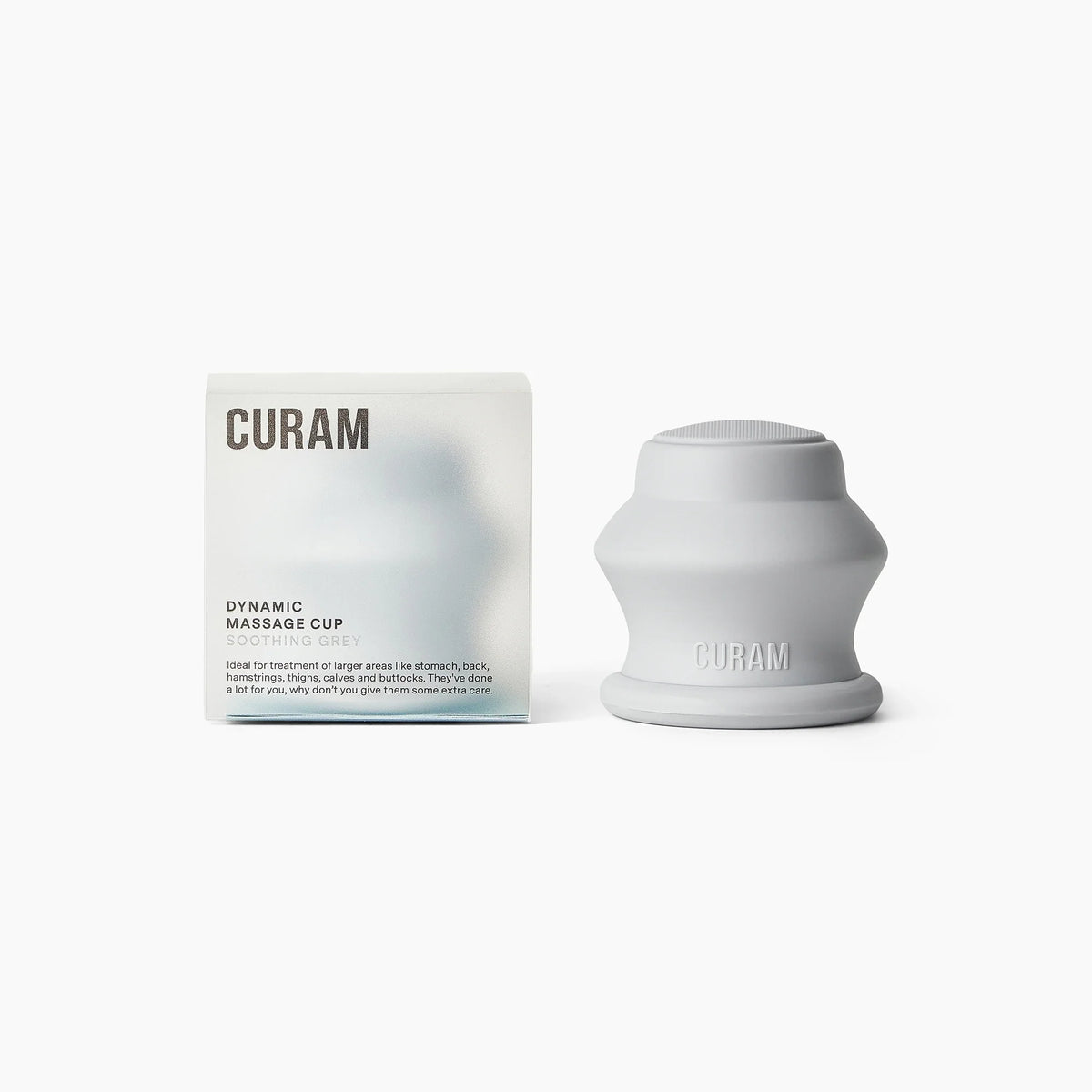
Cupping doesn't reach into the joint and doesn't slow the osteoarthritis, but a large part of the pain in hip osteoarthritis comes from the muscles around the joint: the hip flexor that is short and tight, the glutes that are weak and tender, the outer thigh (tensor fasciae latae and the thick IT band) that is taut, and the adductors on the inside that compensate for the limp. Released muscles give less pain, better mobility and make training easier, and the increased blood flow around the joint from cupping feels good to many when stiff. How to, before training or in the evening: lie on the good side with a pillow between the knees, or on your back; oil the skin. Glide the dynamic cup with moderate suction over the glutes in large circles and from the sitting bone up towards the hip crest, ten strokes; along the outer thigh from the knee up towards the hip bone, ten strokes (the IT band is taut and can be tender, start light); on the front of the thigh and the hip flexor from the knee up towards the groin crease, ten strokes, not into the groin itself where vessels and lymph nodes lie; and on the inner thigh from the knee towards the groin with light suction, five strokes. Then place static cups with moderate suction on the glute and on the outer thigh just below the hip bone for five to eight minutes. Finish with the hip flexor stretch and hip circles. Three times a week. Don't cup directly over the hip joint at the front in the groin (too deep and too many vessels), not over a swollen, warm joint, not with fever, not over the replacement scar in the first eight weeks (after that good for scar tightness), and not with strong suction on thin skin in older people. More on osteoarthritis in osteoarthritis: what it is and what helps and on the hip in hip pain.
Read more
Hip pain, osteoarthritis, knee osteoarthritis, trochanteric bursitis, hip stretches, hip pain at night, rehab after hip replacement and cupping – the complete guide.
Frequently asked questions
How does hip osteoarthritis feel?
An ache in the groin and front of the thigh, sometimes down towards the knee, on loading and in the first steps after rest; morning stiffness under 30 minutes; difficulty crossing the legs, putting on socks, cutting toenails and getting out of the car; and over time a limping gait and a leg that feels shorter. Pain on the outside of the hip is more often trochanteric bursitis, and pain in the buttock radiating into the leg more often the back. The diagnosis is made clinically on symptoms and examination; X-ray isn't needed to start treatment.
What helps hip osteoarthritis best?
Osteoarthritis education, strength training for the hip muscles two to three times a week (glute bridge, side-lying leg lift, sit to stand, step-up), fitness such as cycling and swimming, and weight loss if overweight. It has as good an effect on pain as painkillers, improves function and reduces the need for surgery. Pain up to 5 out of 10 during training is okay if it has eased by the next morning. Give it twelve weeks.
Does hip osteoarthritis get worse from moving?
No, the opposite: the cartilage gets its nutrition from varying load, the muscles that offload the joint weaken with rest, and those who train have less pain and better function in follow-ups over years. What should be avoided is sudden overload, hard impacts on bad days and training so the pain lingers the next day. Cycling, swimming, strength training and walks on soft ground are the right dose.
When do you need a hip replacement?
When you have trained according to the osteoarthritis education programme for at least three to six months without sufficient effect, the pain wakes you at night, walking distance and daily life are severely limited and X-ray shows pronounced osteoarthritis. Hip replacement is one of healthcare's most successful operations: nine in ten are very satisfied, the pain usually disappears completely, and the prosthesis lasts 20–25 years. The stronger you are before the operation, the faster the rehab afterwards.
Does cupping help hip osteoarthritis?
Not the osteoarthritis in the joint, but the tight and tender muscles around it that account for a large part of the pain: the hip flexor, the glutes, the outer and inner thigh. The dynamic cup with moderate suction over the glutes, along the outer and front thigh towards the hip (not into the groin), then static cups on the glute and outer hip for five to eight minutes, followed by stretching, three times a week before training or in the evening. Not over a warm swollen joint, with fever or over a fresh replacement scar.
Written by Curam. Last updated 17 October 2026. This is general self-care information and does not replace medical care. For sudden, severe or unusual symptoms, contact your doctor. Talk to your doctor before cupping if you are pregnant, take blood thinners or have a condition affecting skin, blood vessels or blood.


