


The outside of the hip is the point on the body that bears the most pressure when you lie on your side: the whole weight of the upper body rests on the greater trochanter, and between it and the skin lie the gluteal tendon attachments and a bursa. If you sleep on your side with the upper leg falling forward over the lower one, the upper leg's tendon attachments are also pulled across the bony prominence all night. In a healthy hip the structures tolerate it; in a hip where gluteus medius and minimus are weakened (sitting, pregnancies, the hormonal changes of menopause, a rapid increase in walking or running) the tendon attachments become irritated and tender, and that is called trochanteric bursitis or, more correctly, gluteal tendinopathy. It is by far the most common cause of hip pain at night: tender right over the bony prominence on the outside, impossible to lie on that side, often painful on the other side too because the upper leg's tendon is stretched, ache down the outside of the thigh, and pain on stairs and when standing up after sitting. Second most common is hip osteoarthritis, which gives a deep ache in the groin and the front of the thigh, stiffness in the morning and difficulty finding a position, then a tight hip flexor and tight glutes that ache when they finally relax at night, and pain from the lower back and SI joint radiating to the hip. The good news is that almost all of this responds to the same measures: offload the tendon attachments in bed, strengthen the outside of the hip, release what is tight. Here are the causes, the warning signs, the sleeping positions and the exercises.
Why does the hip hurt at night?
| Cause | How it feels | What helps |
|---|---|---|
| Trochanteric bursitis / gluteal tendinopathy (outside) | Tender right on the bony prominence on the outside, can't lie on that side, pain even when the sore hip is up if the leg falls forward, ache down the outside of the thigh, pain on stairs, standing up and single-leg stance; most common in women 40–65 | Pillow between the knees, don't cross the legs, don't lie on that side, strength in gluteus medius for 8–12 weeks, cupping around the outside. See trochanteric bursitis |
| Hip osteoarthritis | Deep ache in the groin and front of the thigh, sometimes down towards the knee, stiffness in the morning and after sitting, difficulty putting on socks, can't find a position at night during flares | Strength and mobility daily, weight loss, heat, the right mattress; your doctor for diagnosis. See hip pain and osteoarthritis |
| Tight hip flexor | Dull ache at the front of the hip and groin when lying stretched out on your back, better with bent knees; after a day in the chair or car | Hip flexor stretch in the evening, pillow under the knees on your back, cupping the front of the thigh. See hip stretches |
| Overloaded glutes and piriformis | Deep ache in the buttock and back of the hip, worse after running, stairs or long sitting; sometimes tingling down the thigh | Glute strength, piriformis stretch, cupping the glutes. See buttock pain |
| Lower back and SI joint | The pain starts in the lower back or just below the belt line on one side and radiates to the hip and buttock; worse when turning in bed | Pillow between the knees, back and glute strength, cupping of lower back and glutes. See lower back pain |
| Wrong mattress or pillow | Pain in both hips, better in another bed, the mattress has a dip or is hard as the floor | See the mattress section below |
| Inflammatory joint disease (rheumatoid arthritis, ankylosing spondylitis) | Ache and stiffness in hips and lower back that is worst in the second half of the night and in the morning for over an hour, better with movement, often under 45 | Your doctor: blood tests and referral |
| Meralgia paresthetica | Burning, tingling numbness on the outside of the thigh, without tenderness over the bony prominence | Looser clothes, weight loss; see thigh pain |
When to seek care
- Same day: hip pain after a fall in someone over 65 or with osteoporosis, especially if you can't bear weight or the leg lies rotated outwards and shortened (hip fracture); hip pain with fever and feeling unwell; sudden severe hip pain with a swollen, warm thigh or calf.
- Your doctor within one to two weeks: night-time hip pain unaffected by position and not relieved by turning over (constant pain should be investigated); hip pain with weight loss, night sweats or previous cancer; morning stiffness over an hour in someone under 45; hip pain increasing over weeks despite self-care; groin pain with limping; numbness or weakness in the leg; no improvement at all in six to eight weeks with the exercises below.
The examination is simple: pressure over the bony prominence (tender with trochanteric bursitis), rotation of the hip (limited and painful with osteoarthritis), back and nerve status; X-ray for suspected osteoarthritis, ultrasound for tendon problems that don't respond.
What helps tonight already
- A pillow between the knees and ankles when you lie on your side, thick enough to keep the upper leg level with the hip so the leg doesn't fall forward and stretch the tendon attachment. A long body pillow is best. This is the single most important measure for trochanteric bursitis.
- Don't lie on the sore side. If unavoidable: a folded towel or thin pillow under the waist so the bony prominence doesn't bear all the pressure, or a thin foam pad with a cut-out for the prominence.
- On your back: a pillow under the knees offloads the hip flexor and lower back; with trochanteric bursitis a pillow on each side of the legs can stop the hips rolling outwards.
- Don't cross your legs in bed or on the sofa, and don't sit cross-legged during the day: both stretch the tendon attachments over the prominence.
- Heat before bed: a hot shower or heat pad on the outside of the hip for 15 minutes, followed by cupping or light exercises.
- Avoid what irritates for a couple of weeks: long hilly walks, hip stretches where the leg is pulled across the body (stretches the tendon attachment), and standing with the hip pushed out to the side.
Mattress and bed
For side sleepers with hip problems the mattress should let the hip sink in so the spine is straight, but not so soft that the pelvis sags: medium to medium-soft, with a softer top layer (a 5–7 cm foam or latex topper) on a firm core. Too hard a mattress presses the bony prominence, too soft twists the pelvis. A mattress with a dip where you usually lie should be replaced. Try a topper before replacing the whole bed. The head pillow should keep the neck straight in side-lying, otherwise you compensate with the back and hip.
Exercises that cure, eight to twelve weeks
For trochanteric bursitis and gluteal tendinopathy, strength in gluteus medius and minimus is the treatment; studies show a structured strength programme gives better results than a cortisone injection at one year. Start isometrically and light so the tendon attachment isn't irritated, and progress as the night pain decreases. Three sessions a week:
- Isometric abduction lying on your back: band around the knees, press the knees apart without moving the legs, hold 20–30 seconds; 5 times. Weeks 1–2.
- Glute bridges with a band around the knees, press the knees lightly outwards during the lift, 3 × 12.
- Clamshells lying on the healthy side, 3 × 15; avoid lying on the sore side until it tolerates it.
- Side steps with a band around the ankles, knees slightly bent, 3 × 10 steps each way. Week 3 onwards.
- Single-leg stance with the pelvis level, 30 seconds × 3 per leg; later with the opposite knee lifted.
- Step-ups and reverse lunges, 3 × 10 per leg, week 5 onwards.
- Kneeling hip flexor stretch, 30 seconds × 3 per side, every evening.
For osteoarthritis the same strength applies plus mobility in all directions and low-impact cardio (cycling, swimming, walking on flat ground). Plans in home workout without equipment and kettlebell and dumbbells at home.
Cupping the outer hip and glutes
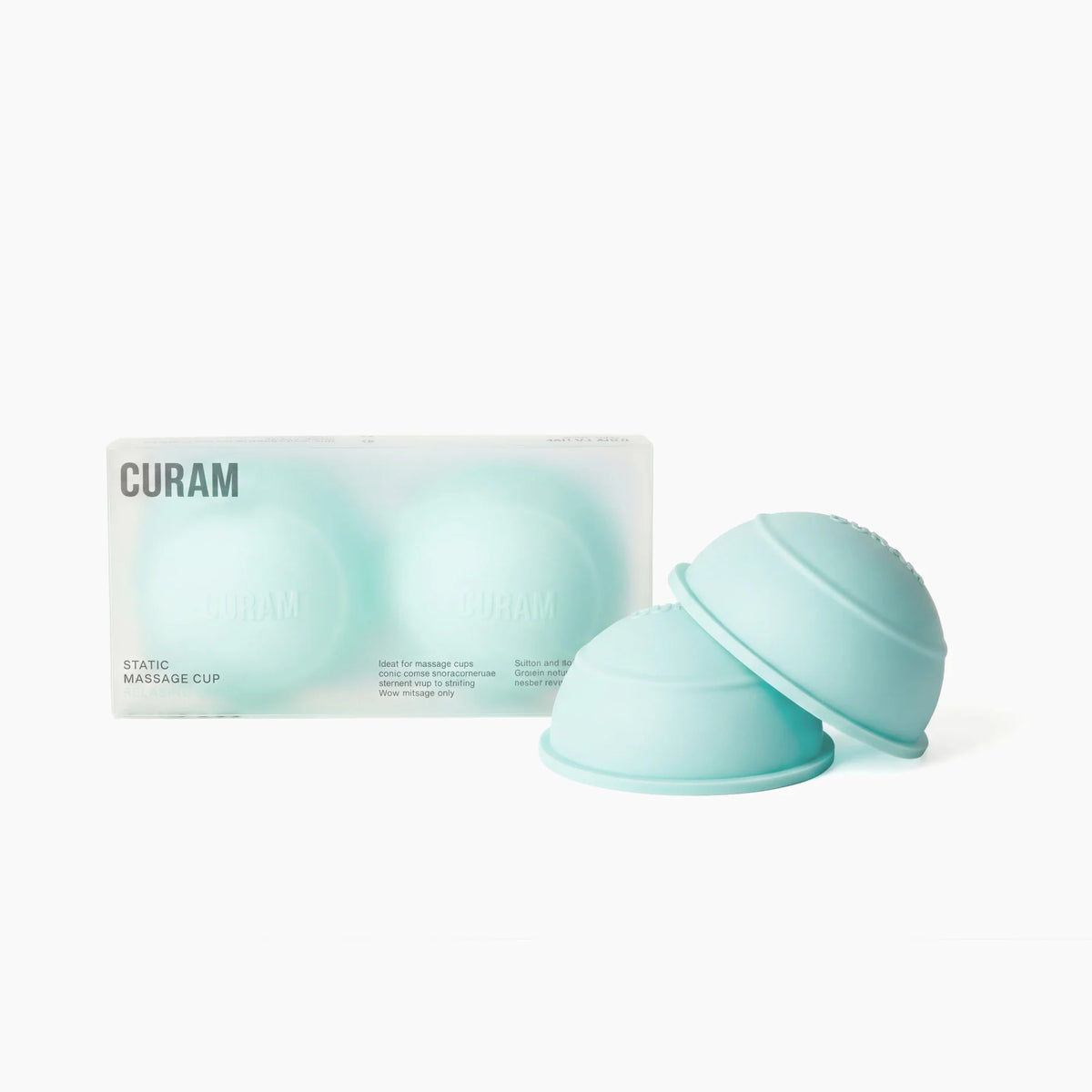
Cupping is a good complement for night-time hip pain because it releases what pulls on the bony prominence (iliotibial band, gluteus medius, tensor fasciae latae) and increases blood flow in an area where the tendon attachments have poor circulation, without pressing on the tender attachment the way a ball or foam roller does. How to, ideally in the evening after heat: lie on the healthy side, oil the outside of the hip and the glutes, glide the dynamic cup with light to moderate pressure in long strokes from the outside of the knee up along the outside of the thigh towards the bony prominence and around it (not over the most tender point in the first weeks), 3 minutes, and from the sacrum out across the glutes towards the hip, 3 minutes. Then place static cups just above and behind the bony prominence, over gluteus medius, and in the middle of the buttock, 5 minutes with light suction. Finish with the hip flexor stretch and a few isometric contractions. Two to three evenings a week. For osteoarthritis: cup the front and outside of the thigh and the glutes for mobility and ache, never over the groin itself and the joint. Don't cup with fever, over swollen warm skin, after a fall without assessment, with a suspected blood clot, over varicose veins, or if you take blood thinners without having asked; see when to avoid cupping. Programmes: the cupping programme for runners (hip and thigh) and cupping on the back.
Read more
Trochanteric bursitis, hip pain, buttock pain, thigh pain, deep sleep and sleeping position, bursitis and cupping during menopause.
Frequently asked questions
Why does my hip hurt when I lie on my side?
Usually because the tendon attachments and bursa on the outside of the hip (trochanteric bursitis, gluteal tendinopathy) are compressed against the bony prominence when you lie on that side, and stretched when you lie on the other side with the leg falling forward. It is most common in women over 40 and is due to weakened gluteal muscles on the outside. A pillow between the knees, not lying on the sore side, and strength in gluteus medius for eight to twelve weeks is the treatment.
How should I sleep with hip pain?
On the healthy side with a thick pillow between the knees and ankles so the upper leg is kept at hip height, or on your back with a pillow under the knees. If you must lie on the sore side: a folded towel under the waist or a thin pad with a cut-out so the prominence doesn't bear the pressure. Don't cross your legs, and choose a medium to medium-soft mattress that lets the hip sink in without the pelvis sagging.
When is hip pain at night dangerous?
Seek care the same day after a fall if you are over 65 or have osteoporosis, with hip pain and fever, or with a swollen warm thigh. Book your doctor if the pain is constant and unaffected by position, comes with weight loss or night sweats, if you have morning stiffness over an hour and are under 45, if you limp, have numbness or weakness, or if nothing has improved in six to eight weeks with exercises.
Which exercises help hip pain at night?
For trochanteric bursitis: strength in the outside of the hip three times a week, starting with isometric abduction with a band and glute bridges, then clamshells, side steps with a band, single-leg stance and step-ups, plus a hip flexor stretch every evening. Studies show such a programme beats a cortisone injection at one year. For osteoarthritis the same strength plus mobility and cycling or swimming. Avoid stretches that pull the leg across the body.
Does cupping help hip pain?
As a complement, yes: cupping the outside of the thigh, around the bony prominence and over the glutes releases the iliotibial band and gluteal muscles that pull on the tendon attachment and increases blood flow where the tendons have poor circulation, without pressing on the tender point. Do it in the evening after heat, two to three times a week, followed by stretching and light exercises. Not over the groin itself, not with fever, after a fall or with a suspected blood clot.
Related guides
Written by Curam. Last updated 17 October 2026. This is general self-care information and does not replace medical care. For sudden, severe or unusual symptoms, contact your doctor. Talk to your doctor before cupping if you are pregnant, take blood thinners or have a condition affecting skin, blood vessels or blood.


