


Each toe has two or three small joints, its own tendons from the lower leg, nerves running between the metatarsal bones, and a nail that can cause trouble. The big toe is the most important: it takes 40 percent of the load at push-off, which is why most toe complaints sit there, either as a misalignment (bunion, hallux valgus), a stiffness (hallux rigidus), a gout attack or an overload of the tendon attachment under the joint (sesamoiditis). The small toes get deformities (hammer toe, claw toe) that cause rubbing and corns, crowding that pinches the nerves between them (Morton's neuroma), and knocks and fractures. Almost all toe complaints are worsened by shoes that are too narrow at the front, too high at the heel or too soft in the sole, and almost all improve with the opposite plus mobility and strength in the foot. Here are the toes part by part, the warning signs, and what helps.
Where does it hurt? The toes part by part
| Location and character | Most common | How it feels | What helps |
|---|---|---|---|
| Big toe base joint, inside, with a bump | Bunion (hallux valgus) | A bump on the inside that rubs in shoes, the big toe points towards the other toes, tenderness and redness over the bump, over time ache in the joint | Wide shoes, toe separators, foot exercises, offloading insoles; surgery for major problems. See bunions |
| Big toe base joint, stiff and swollen on top | Hallux rigidus (osteoarthritis of the big toe joint) | Difficulty bending the big toe upwards, pain at push-off, stairs and squatting, bony lump on top of the joint, worse in soft shoes | Stiff sole or rocker sole, insoles, avoid high heels; cortisone or surgery for severe problems |
| Big toe suddenly red-hot, red, swollen, often at night | Gout | Extremely tender, can't bear the sheet, the attack comes within hours; often men over 40, after alcohol, shellfish, red meat, dehydration, diuretics | Your doctor the first time (blood test for urate, rule out infection); anti-inflammatory, cold, rest; preventive medication for recurrent attacks. No massage or cupping during an attack |
| Under the big toe base joint, painful to push off | Sesamoiditis (irritated small bones in the tendon under the joint) | Tenderness under the ball of the foot at the big toe, worse barefoot and in thin shoes, with running and dancing | Offloading insoles with a cut-out, stiffer sole, rest from push-off; X-ray if fracture is suspected |
| Under the forefoot, burning, with numbness between the third and fourth toe | Morton's neuroma | Feels like walking on a folded sock or a stone, radiates into two toes, worse in narrow shoes, better when you take the shoe off and rub | Wide shoes, insoles with a metatarsal pad behind the ball, toe exercises; see Morton's neuroma |
| Under the forefoot, tender ball of the foot | Metatarsalgia (overloaded metatarsal bones) | Tender to press under the second to fourth toe base joints, calluses, worse with long standing and in high heels | Cushioning insoles, metatarsal pad, stronger arch; see the same guide |
| A toe that curls, rubbing on top of the middle joint or at the tip | Hammer toe or claw toe | Corn on top of the joint, the nail wears against the shoe, the toe can't be fully straightened | Roomy shoes with a high toe box, protective pads, toe exercises while the toe is still flexible; surgery if it has become stiff and the rubbing can't be solved |
| Little toe, outside, with a bump | Tailor's bunion (bunionette) | Like a bunion but on the little toe, rubbing against the shoe | Wide shoes, protective pad, insoles |
| Toe after a knock, swollen, blue | Contusion or fracture | Swelling and bruising within hours, painful to bear weight; with a fracture often misalignment or large swelling | Rest, cold, tape to the neighbouring toe (not the big toe: X-ray); X-ray if you can't bear weight, with misalignment or if not improved in a week |
| Pain in a toe or the midfoot after more running or walking, without injury | Stress fracture of a metatarsal or toe | Pain that comes with load and disappears at rest, increases over weeks, point-tender on top of the foot | Your doctor: X-ray/MRI; offloading for six to eight weeks |
| At the nail, red, swollen, throbbing | Ingrown nail or nail fold infection | The nail edge grows into the skin, pus, tenderness; most common on the big toe | Warm foot baths, lift the nail edge with cotton, cut straight; your doctor with pus, fever or diabetes |
| Toes that go numb, burn or are cold, often both feet | Nerve involvement (diabetes, B12 deficiency, alcohol), circulation, Raynaud's | Stocking-like distribution, worse at night, reduced sensation | Your doctor: blood tests; see poor circulation and cold feet |
| Stiff, aching toe joints in the morning, several toes, often both feet | Rheumatoid arthritis or psoriatic arthritis | Swollen base joints, morning stiffness over an hour, tender to squeeze across the forefoot | Your doctor: blood tests and referral; see rheumatism and joint pain |
The whole foot: foot pain: where does it hurt.
When to seek care
- Same day: a red, warm, swollen toe with fever or red streaks up the foot (infection); a suddenly extremely tender, red, swollen big toe joint for the first time (gout should be confirmed and infection ruled out); a cold, pale or blue-white toe with pain (circulation); a toe injury with misalignment, an open wound or where you can't bear weight; any sores, blisters or redness on the toes if you have diabetes or reduced sensation.
- Your doctor within a week or so: suspected stress fracture (load-related pain increasing over weeks); ingrown nail with pus; toe pain not improved in two to three weeks with the right shoes and offloading; morning stiffness and swelling in several toe joints; numbness or burning in the toes of both feet; a bump or deformity that rubs and prevents wearing shoes.
What helps toe pain
1. Shoes with room for the toes
The single most important thing. The toe box should be wide enough for the toes to splay when you stand with full weight, high enough that a curled toe doesn't rub, and the sole should be stable but let the foot roll; heels under three centimetres. Trace your foot on paper standing and lay the shoe's insole on top: if the toes stick out, the shoe is too narrow. Many toe complaints disappear within a few weeks with the right shoes and nothing else.
2. Toe exercises, five minutes a day
- Splay the toes: sit barefoot, spread the toes as wide as possible, hold 5 seconds; 10 times. Place a silicone toe separator between the toes for 20–30 minutes a day to regain the space.
- Lift the big toe: keep the four small toes on the floor and lift only the big toe; then the reverse; 10 times. Trains the big toe's own muscles.
- Towel scrunch: pull a towel towards you with the toes, 2 minutes; or pick up marbles with the toes.
- Short foot: draw the ball of the foot towards the heel without bending the toes so the arch lifts, hold 5 seconds; 10 times. A stronger arch offloads the forefoot.
- Big toe stretch: bend the big toe up towards the shin with the hand to tension, 30 seconds; especially for a stiff big toe and sesamoiditis.
- Calf stretch: stiff calves increase pressure on the forefoot; 30 seconds × 3 against a wall, daily.
3. Offloading
A metatarsal pad (a small cushion behind the ball of the foot) offloads Morton's neuroma and metatarsalgia; an insole with a cut-out under the big toe joint offloads sesamoiditis; toe gel pads and protective rings protect corns and hammer toes; a stiff sole or rocker sole means a stiff big toe doesn't need to bend. Available at pharmacies and sports shops; custom insoles via an orthotist when ready-made ones aren't enough.
4. Foot care
Cut the nails straight and not too short, file down hard skin and corns after a foot bath instead of cutting, and let a podiatrist handle corns that keep coming back. If you have diabetes: foot care via healthcare and daily self-checks of the toes.
5. Cupping the sole and calf
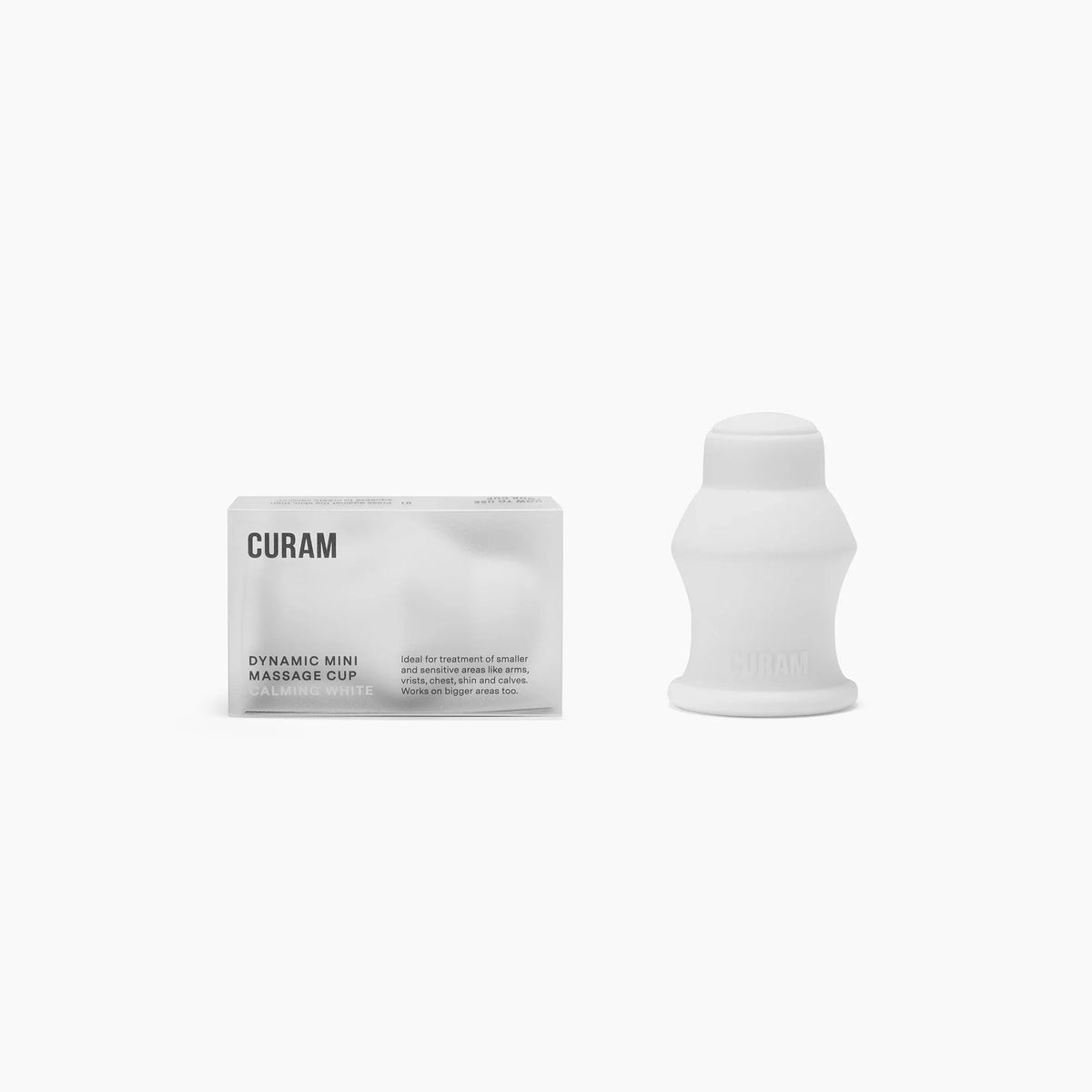
Cups are never placed on the toes themselves, but what makes the toes sore often sits further up: a tight plantar fascia and short calves push the forefoot down, and tight toe flexors in the lower leg pull the toes into a curl. Cupping the sole and calf releases this, increases blood flow in the foot and makes the toe exercises easier. Oil the skin, glide the mini cup with light suction along the sole from the heel towards the toes in long strokes, 2 minutes, and in small circles behind the ball of the foot (not on the toes, not between them), one minute; then the dynamic cup along the calf from the Achilles up towards the back of the knee and along the outside of the shin over the toe extensors, 3 minutes. Finish with toe splays and the big toe stretch. Routines in the cupping programme for the feet and foot massage. Don't cup during a gout attack, on a red, warm or swollen toe or foot, over wounds or fungus, with reduced sensation or a diabetic foot without a doctor's OK, or with a suspected fracture; see when to avoid cupping.
Read more
Bunions, Morton's neuroma and metatarsalgia, foot pain, flat feet and the arch, heel spur and plantar fasciitis and cold feet.
Frequently asked questions
Why does my big toe hurt?
Most common: a bunion (bump on the inside, toe points sideways), a stiff big toe or osteoarthritis in the base joint (swollen on top, difficulty bending up), sesamoiditis (tender under the joint at push-off) or gout (suddenly red-hot, red, extremely tender, often at night). Gout the first time should be confirmed by your doctor; the others improve with wide shoes with a stable sole, toe exercises and offloading insoles.
What does burning pain and numbness between the toes mean?
Usually Morton's neuroma: a thickened nerve between the metatarsal bones, most often between the third and fourth toe, that is pinched in narrow shoes and gives burning pain under the forefoot, numbness in two toes and the feeling of walking on a stone or a folded sock. Wide shoes, a metatarsal pad behind the ball of the foot and toe exercises help most people; numbness in all toes of both feet is instead nerve involvement that should be investigated.
When should I seek care for toe pain?
The same day for a red, warm, swollen toe with fever, a suddenly extremely tender big toe joint for the first time, a cold pale toe with pain, a misaligned toe or when you can't bear weight, and for any sores on the toes if you have diabetes. Within a week or so for load-related pain increasing over weeks (stress fracture), an ingrown nail with pus, morning stiffness in several toe joints, or pain that hasn't eased in two to three weeks with the right shoes.
Which shoes should I wear if my toes hurt?
Shoes with a toe box wide enough for the toes to splay under full weight, high enough for curled toes, a stable but rolling sole and a heel under three centimetres. Trace your foot standing and lay the insole on it: if the toes stick out, the shoe is too narrow. For a stiff big toe a stiff or rocker sole helps; for Morton's neuroma and metatarsalgia a metatarsal pad; for bunions soft uppers over the bump.
Does cupping help toe pain?
Indirectly: cups are never placed on the toes, but cupping of the sole, calf and outside of the shin releases the tight plantar fascia, short calves and toe flexors that push the forefoot down and pull the toes into a curl, increases blood flow in the foot and makes the toe exercises more effective. Not during a gout attack, on a red or swollen foot, over wounds or fungus, with a diabetic foot without a doctor's OK or with a suspected fracture.
Related guides
Written by Curam. Last updated 17 October 2026. This is general self-care information and does not replace medical care. For sudden, severe or unusual symptoms, contact your doctor. Talk to your doctor before cupping if you are pregnant, take blood thinners or have a condition affecting skin, blood vessels or blood.


