


The calf consists of two muscles that both attach into the Achilles tendon: the superficial two-headed gastrocnemius, which runs from the thigh bone across the knee and is therefore stretched most with a straight knee, and the deep soleus, which only crosses the ankle and works all the time when you stand and walk. Together they are the body's second heart: every time you take a step they push the blood in the leg veins back up towards the heart. That is why the calf aches both from being used too much (running, hills, jumping, new shoes) and too little (eight hours on the chair, long flights), and why a calf that isn't used is where blood clots form. The most common causes of calf pain are cramp (often at night, harmless but agonising), overload of the muscle or its attachments (runners who have increased too fast, new shoes, hard surfaces), strain or tear in the gastrocnemius (a stab like a blow on the inside of the calf during a lunge or push-off, "tennis leg"), shin splints along the inside of the shin bone, the Achilles attachment at the bottom, and tight, short calves from sitting and heels. Less common is pain that comes from elsewhere: sciatica from the lower back, a ruptured Baker's cyst from behind the knee, or the vessels: intermittent claudication giving cramp-like calf pain after a certain walking distance in smokers and older people, and blood clot. Here is where it hurts and what it means, the warning signs, and what helps.
Seek care the same day
- The calf has become swollen, warm, tender or red over hours to a couple of days, without injury or after a long period of sitting, travel, surgery, a cast, pregnancy or the pill. It can be a blood clot, and it can't be ruled out without ultrasound. Don't massage, don't cup, call your health line or go to urgent care. Call emergency services if you also get breathless, have chest pain or cough blood.
- A stab in the calf with a snap or a feeling of having been kicked, followed by being unable to walk on tiptoe or push off, and a palpable dent above the heel (Achilles rupture) or large swelling and bruising (larger tear).
- The calf is hard, tense and very painful after hard training or a blow, with numbness in the foot and pain that increases when you bend the toes up (compartment syndrome, uncommon but urgent).
- Calf pain with fever and spreading redness (infection).
Where in the calf does it hurt, and what it usually means
| Location and character | Most common | How it feels | What helps |
|---|---|---|---|
| The whole calf muscle cramps, usually at night or when you point the foot in bed | Calf cramp | Sudden, hard, painful contraction for 30 seconds to a few minutes, tender afterwards; more common with age, with fluid and salt deficiency, pregnancy, certain medications | Pull the foot up towards the shin, stand up, heat; prevent with calf stretches in the evening, fluids, cupping the calf. See calf cramps |
| Sudden stab on the inside of the calf, high up, during a lunge, push-off, tennis, uphill | Strain or tear in the gastrocnemius ("tennis leg") | Like a blow or a kick in the calf, difficult to walk on tiptoe, tender to pressure, swelling and bruising after one to two days | Offload, compression, cold the first days, heel wedge in the shoe, gradual loading; healing 1–6 weeks by grade. See muscle strain in the calf |
| Dull ache in the middle of or deep in the calf, worse after running, hills, jumping, new shoes, hard surfaces | Overload of calf and soleus | Stiff in the morning, tender in the muscle, "heavy" calves, often after a rapid increase in training; most common in runners | Reduce volume 30–50 percent for two weeks, calf raises with bent and straight knee, cupping, review shoes; increase 10 percent per week |
| Along the inside of the shin bone, lower half | Shin splints (medial tibial stress syndrome) | Tender along the bone edge for a hand's width or more, worst at the start of the session, better warmed up, then worse again | Rest from running, cycle/swim, calf and foot strength, shoes and insoles, cupping the calf. See shin splints. Point tenderness on a fingertip that increases: stress fracture, see your doctor |
| Low in the calf and in the Achilles | Achilles tendinopathy | Stiff and tender Achilles in the morning, thickening, pain at the start of running | Eccentric calf raises, cupping the calf (not on the tendon during acute irritation). See Achilles tendinopathy |
| High in the calf towards the back of the knee, with swelling and tension behind the knee | Baker's cyst, sometimes ruptured | Fullness behind the knee, difficulty bending the knee; with rupture sudden swelling of the calf resembling a blood clot | See Baker's cyst; swollen calf: care the same day |
| Pain radiating from the buttock or thigh down into the calf, with tingling or numbness | Sciatica | Burning or electric, worsened by bending forward, coughing, long sitting; often down into the foot | See sciatica |
| Cramp-like calf pain after a certain walking distance, which releases when you stop | Intermittent claudication (atherosclerosis in the leg arteries) | Comes at the same distance every time, better with a minute's rest; smokers, diabetics, over 60 | Your doctor for a vascular check; walking training; quit smoking. See poor circulation |
| Heavy, aching, swollen calves towards evening | Venous insufficiency, varicose veins, sitting still | Better with legs up and in the morning | Movement, the calf pump, compression stockings, lymphatic massage. See swollen legs and feet |
| Swollen, warm, tender calf without injury | Blood clot | See above | Care the same day |
| Stiff, short calves without clear pain, pain in the heel or arch instead | Shortened calves from sitting, heels | Difficulty squatting with heels on the floor, heel pain in the morning | Daily calf stretches, cupping; see heel spur and plantar fasciitis |
The whole leg: leg pain.
What helps calf pain
Acutely, after a stab
The first two to three days: offload (crutches if you can't walk normally), compression with an elastic bandage from the foot up over the calf, leg elevated, cold for 15 minutes a few times a day, a heel wedge or shoes with a little heel in both shoes to shorten the calf. No stretching, no massage, no cupping on a fresh tear. From day three: light calf raises with support, walking on flat ground, and gradually more. Calf tears recur easily; get full healing and strength before you run again.
Strength: calf raises are everything
- Standing calf raises with a straight knee (gastrocnemius), on a step with the heel below the edge, up on two legs, down slowly on one (eccentric); 3 × 15 per leg.
- Seated calf raises or with a bent knee (soleus), with a weight on the knee; 3 × 15–20. The soleus is the runner's most important and most neglected muscle.
- Single-leg calf raises without support, three times a week; the goal is 25 in a row per leg with good control before you increase running volume.
- The small foot muscles: short foot, toe splays, towel scrunches; see flat feet and the arch.
- Glutes and hip: weak hips let the calf compensate; glute bridges, side-lying leg raises, single-leg stance.
Mobility
Calf stretch against a wall with a straight knee (gastrocnemius) and with a bent knee (soleus), 30 seconds × 3 each, daily and especially in the evening if you get night cramps. Ankle mobility: knee to wall with the heel on the floor, 10 times per side. Never stretch a fresh strain. More in stiff body.
Runners: the dose
Increase weekly volume by at most ten percent, add hills and speed sessions gradually, change shoes every 600–800 km and not to a completely different type at once, run on softer surfaces when the calf is tender, and warm up with calf raises and easy jogging. See warm-up before training and the cupping programme for runners.
Fluids, salt, magnesium, medications
Night cramps and sore calves are worsened by fluid and salt deficiency after sweating, and by certain medications (diuretics, statins, asthma medicines). Drink evenly, salt your food after sweaty sessions, and talk to your doctor if the cramp came with a new medicine. Magnesium has weak support against night cramps in most people but helps some, especially pregnant women.
Cupping the calf
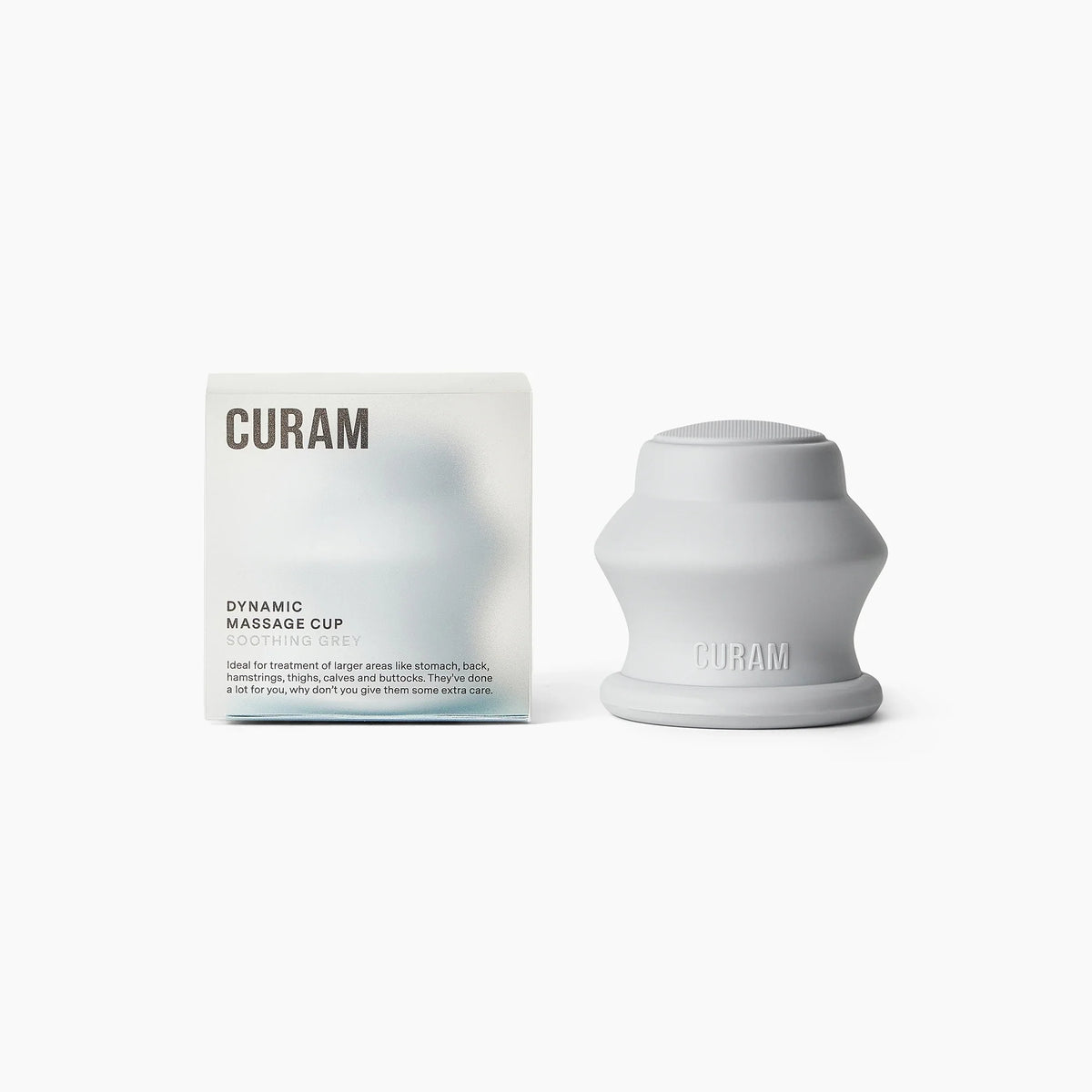
The calf responds very well to cupping: the muscles are superficial, the fascia thick, and blood flow increases markedly, which is exactly what tight, overloaded or cramp-prone calves need. Cupping is used to release tension and trigger points, for recovery after running and long days on your feet, to soften scar tissue after healed tears, and as an evening routine against night cramps. How to: lie on your front or sit with the leg extended, oil the skin, glide the dynamic cup with light to moderate pressure in long strokes from the Achilles up towards the back of the knee (always towards the heart), 3–4 minutes per calf, with extra time on the tender points in the muscle bellies and along the inside; stop a hand's width below the back of the knee. Place static cups on the most tender points for 3–5 minutes while you slowly flex and point the foot. Finish with calf stretches with straight and bent knee, and ten calf raises. Two to three times a week, or every evening during a period of night cramps. Never cup with a suspected blood clot (swollen, warm, tender calf without injury), not on a fresh strain or tear (wait at least a week and until the bruise has faded), not over varicose veins, not with claudication or diabetic feet with reduced sensation without a doctor's OK, not with fever or redness, and not if you take blood thinners without having asked; see when to avoid cupping. The basics in the complete guide and massage cups for training and recovery.
Deeper guides
Calf cramps, muscle strain in the calf and thigh, shin splints, Achilles tendinopathy, Baker's cyst, leg pain and swollen legs and feet.
Frequently asked questions
Why does my calf hurt?
Most common are cramp (often at night), overload after more running, hills or new shoes, a strain in the calf muscle (sudden stab at push-off), shin splints along the shin bone, an irritated Achilles, or tight, short calves from sitting and heels. Less common: sciatica from the back, a Baker's cyst from behind the knee, atherosclerosis (cramp-like pain after a certain walking distance) and blood clot. Where it hurts and how it started point to the cause.
When is calf pain dangerous?
When the calf has become swollen, warm, tender or red over hours to a couple of days without injury, especially after sitting, travel, surgery, a cast, pregnancy or the pill: it can be a blood clot and should be assessed the same day, with emergency services for breathlessness or chest pain. Also seek care the same day for a snap in the calf with inability to walk on tiptoe, a hard tense calf with numbness after hard training, and calf pain with fever.
How do I tell a strain from a blood clot?
The strain comes suddenly during a movement (push-off, lunge, hill) like a stab or a kick, is tender at a specific spot in the muscle, hurts when you contract or stretch the calf, and bruises after a couple of days. The blood clot comes gradually without injury, gives swelling of the whole calf or leg, warmth, heaviness and diffuse tenderness, and isn't particularly worsened by contracting the muscle. If you are at all unsure: ultrasound the same day.
What helps sore calves after running?
Reduce volume for two weeks, do calf raises with straight and bent knee three times a week (goal 25 on one leg), stretch the calves daily, review shoes and surfaces, warm up, and cup the calves in long strokes towards the back of the knee for 3–4 minutes per side after the session or in the evening. Then increase ten percent per week. Point tenderness on the shin that increases over weeks should be examined (stress fracture).
Does cupping help calf pain?
Yes, the calf is one of the best areas: cupping releases tension and trigger points, increases blood flow, speeds recovery after running and reduces night cramps in many people when done in the evening together with stretching. Glide the cup from the Achilles towards the back of the knee, 3–4 minutes per calf, and place static cups on tender points. Never with a suspected blood clot, on a fresh tear, over varicose veins or with vascular disease without a doctor's OK.
Related guides
Written by Curam. Last updated 17 October 2026. This is general self-care information and does not replace medical care. For sudden, severe or unusual symptoms, contact your doctor. Talk to your doctor before cupping if you are pregnant, take blood thinners or have a condition affecting skin, blood vessels or blood.


