


The jaw joint sits right in front of the ear, where the lower jaw's condyle glides against the skull base with a small cartilage disc between them, and it is controlled by the chewing muscles: the masseter on the outside of the cheek (the body's strongest muscle for its size), the temporalis on the temple, and two small muscles on the inside. Every time you clench, grind, chew gum, bite your nails or hold the jaw tense from concentration and stress they work, and most people do it for many hours a day without noticing, and at night without knowing. The result is the most common jaw pain: sore, tired chewing muscles that ache in the morning or afternoon, refer to the temple and ear, cause tension headache and sometimes tinnitus, and are tender when you press on the cheek. TMJ disorders (temporomandibular dysfunction) are the next group: clicking when you open because the disc jumps, pain right in the joint in front of the ear, locking where the mouth can't open fully or gets stuck open, and grating sounds with wear. Muscles and joint are connected and treated with the same things. Less often the jaw pain comes from the teeth (dental infection, wisdom teeth, cracked teeth), the sinuses (upper jaw), the ears, a nerve (trigeminal neuralgia, brief electric shocks), or from something more serious that must not be missed: temporal arteritis in people over 50 (tender temple, pain on chewing, visual disturbance) and the heart (jaw pain on exertion with chest discomfort). Here is where it hurts and what it means, when it is urgent, and what helps.
Where does it hurt, and what it usually means
| Location and character | Most common | How it feels | What helps |
|---|---|---|---|
| The cheek, over the angle of the jaw, tender to press, tired jaws | Tight masseter, teeth grinding, clenching | Ache in the morning (night grinding) or afternoon (daytime clenching), fatigue when chewing, tender knots in the muscle, sometimes enlarged jaw muscles | Lips together, teeth apart; jaw exercises; heat; night guard; cupping the masseter. See teeth grinding and tight jaw |
| The temple, dull, often with headache | Tight temporalis | Ache in the temple worsened by chewing and clenching, tender to press on the temple, headache like a band | Same as above; see tension headache and tight jaw. Over 50 with a tender, swollen temple: see below |
| Right in front of the ear, in the joint itself, clicking or grating when you open | TMJ disorder: disc displacement, joint irritation, wear | Click on opening or closing (the disc jumps), pain opening wide, chewing tough food, yawning; the jaw deviates on opening; locking | Soft food, small bites, don't open maximally, jaw exercises, heat, night guard; dentist/orofacial pain specialist for locking or symptoms over a few weeks |
| The jaw locks, can't open more than two fingers, or gets stuck open | Disc displacement without reduction (closed lock) or the condyle has dislocated (open lock) | Closed: the mouth can't open fully, often after a period of clicking. Open: the mouth gets stuck wide open after a yawn | Open lock that doesn't go back within a few minutes: emergency dentist or emergency department. Closed: dentist within a few days, exercises |
| The teeth or gums, throbbing, worse with hot/cold or when you bite | Dental infection, cracked tooth, wisdom tooth, gum disease | Localised to one tooth, heat or cold sensitivity, swollen gums, bad taste; swelling on the cheek | Dentist; swelling with fever or difficulty swallowing: emergency |
| The upper jaw and cheeks, pressure, worse bending forward | Sinusitis | The upper teeth ache, congestion, runny nose, after a cold | See blocked nose and sinuses |
| The ear, feeling of blockage, ache, tinnitus | The jaw joint and chewing muscles refer to the ear; or ear infection | Earache without hearing loss and without fever is often the jaw; the ear is normal on examination | Jaw treatment; see tinnitus; fever and hearing loss: your doctor |
| Brief, intense electric shocks in one side of the face or jaw, seconds long | Trigeminal neuralgia | Triggered by touch, chewing, tooth brushing, cold wind; pain-free in between; usually over 50 | Your doctor: treated with medication; no massage or cupping on the trigger zone |
| Under the jawbone, tender lump | Lymph node or salivary gland | Node: with infection in mouth, throat or teeth. Salivary gland: swelling that increases at mealtimes (stone) | See swollen lymph nodes; swelling at meals: your doctor |
| Jaw and neck at the same time, stiff neck, forward head | Posture and neck | The jaw muscles tense when the head is pushed forward; neck pain, headache | See neck pain and forward head posture |
When jaw pain is urgent
- Call emergency services: jaw pain or heaviness in the jaw that comes on exertion or at rest together with pressure or discomfort in the chest, breathlessness, cold sweat, nausea or arm pain (the heart borrows the jaw's nerve pathways; more common in women, older people and diabetics); swelling in the jaw, floor of the mouth or throat that makes it difficult to swallow or breathe.
- Same day: over 50 with new pain in the temple, a tender, swollen temporal artery, jaw pain on chewing (the jaw "tires" after a minute of chewing) and especially visual disturbance (temporal arteritis, treated with cortisone immediately to protect the sight); the jaw stuck wide open (open lock) and not going back; toothache with swelling on the cheek, fever or difficulty opening (abscess); jaw pain after a blow or fall with misalignment, a bite that doesn't fit or bleeding (fracture); sudden weakness or numbness in one side of the face.
Dentist or doctor
The dentist is the right place for TMJ disorders, teeth grinding, clicking and locking and any pain that may come from the teeth; the dentist (or an orofacial pain specialist on referral) examines the joint, the muscles, the bite and the teeth, and makes a night guard. Book if you have clicking with pain, difficulty opening normally (less than three fingers in height), closed lock, jaw pain lasting more than two to three weeks, worn teeth or tender chewing muscles every morning. Your doctor for suspected sinusitis, trigeminal neuralgia, temporal arteritis, ear problems, salivary gland swelling or jaw pain with general illness.
What helps jaw pain
1. Lips together, teeth apart
The jaw's resting position is with the lips closed, the tip of the tongue lightly against the palate behind the front teeth and a few millimetres of air between the teeth. Most people with jaw problems have their teeth together for large parts of the day without knowing it. Set a reminder on your phone every hour for two weeks, check and release; it is the single most effective measure against daytime clenching.
2. Offload the jaw for one to two weeks
Soft food in small pieces, no chewing gum, no nail or pen biting, no maximal opening (support with the knuckle under the chin when you yawn), don't rest the chin in the hand, no phone between ear and shoulder, and don't sleep on your front with the jaw twisted. Chew on both sides.
3. Jaw exercises, five minutes twice a day
- Relaxed opening: tongue tip on the palate, open the mouth slowly as far as it goes with the tongue in place, hold 5 seconds, close slowly; 10 times. Trains straight, controlled opening.
- Resisted opening: knuckle under the chin, open the mouth against light resistance, hold 5 seconds; 10 times. Then resistance from the side: hand against the side of the jaw, push the jaw towards the hand; 10 per side.
- Controlled straight opening in front of the mirror: open and close so the jaw goes straight down without deviating to the side; 10 times. If the jaw deviates, start with a smaller opening.
- Side movements: move the lower jaw to the right, hold 3 seconds, to the left; 10 times. Protrusion of the lower jaw, 10 times.
- Chin tucks for the neck, 10 times, because jaw and neck belong together.
The exercises should feel like a stretch and light work, not pain; with clicking, do them within the range that doesn't click. Allow six weeks before the jaw is clearly better.
4. Heat and self-massage
A warm, moist towel against the cheeks and temples for 10–15 minutes, followed by self-massage: circle with two fingers with firm pressure over the masseter from the angle of the jaw up towards the cheekbone for a minute per side, and over the temple in small circles for a minute, preferably with the mouth slightly open. Press gently on tender knots for 30 seconds until they soften.
5. Night guard
A custom-made night guard from the dentist worn at night protects the teeth from grinding, reduces muscle activity and relieves both muscle pain and TMJ problems in most people after a few weeks. Soft guards from the pharmacy can increase clenching in some; a hard, custom guard is standard.
6. Stress, sleep and habits
Teeth grinding and jaw tension follow stress, sleep deprivation, coffee, nicotine and alcohol, and are worsened by snoring and sleep apnoea. Breathing exercises and relaxation in the evening, regular sleep and fewer stimulants measurably reduce night grinding; see stress, relaxation exercises and snoring and sleep apnoea.
7. Light cupping of the jaw muscles and temple
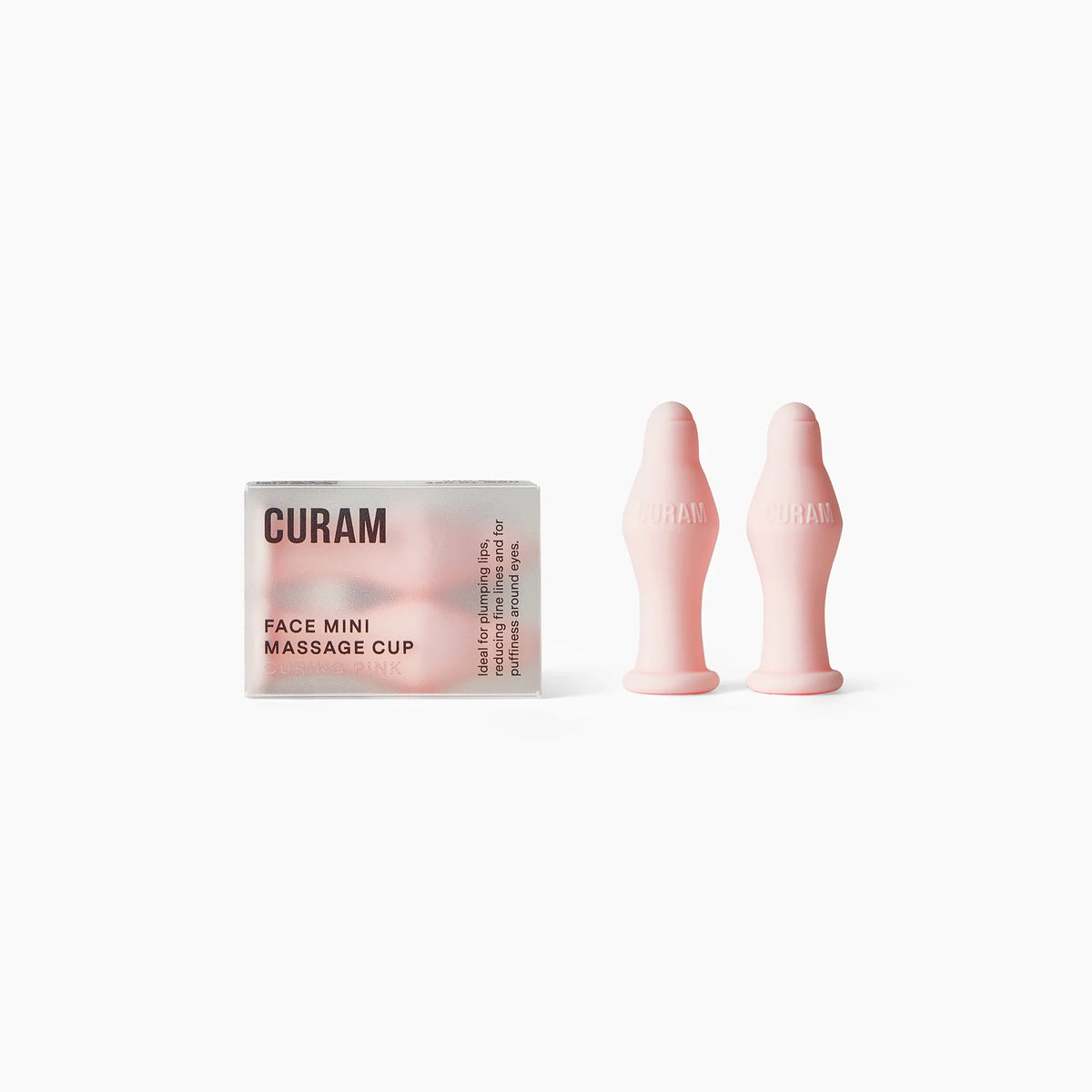
Cupping the jaw muscles does what the fingers do, but with lift instead of pressure: the suction lifts the skin and fascia from the masseter and temporalis, increases blood flow in muscles that have been running at full speed and releases the trigger points that refer to the temple, ear and teeth. It is light cupping with the smallest cup and minimal suction, never on the jaw joint itself in front of the ear and never over the pulsating artery of the temple. How to: wash the face, apply a few drops of the face oil, and glide the face cup mini with the least possible suction in slow strokes over the masseter from the angle of the jaw diagonally up towards the cheekbone, 8–10 strokes per side, and from the angle of the jaw backwards and downwards along the jawbone towards the neck (lymph direction), 5 strokes; then over the temple from the end of the eyebrow upwards and backwards towards the hairline, 5–8 light strokes per side, with the mouth slightly open so the muscles are relaxed. Keep the cup moving at all times on the face; pause at most a second on a tender point. One to two minutes per side is enough, in the evening after heat, three to four times a week. Finish with the relaxed opening. Don't cup the jaw joint, not over the temporal artery, not with acute locking, not with dental infection, swelling or fever, not with trigeminal neuralgia, not with suspected temporal arteritis, not on irritated skin or fillers (wait two weeks), and not if you take blood thinners without having asked; see when to avoid cupping. Routines in face cupping, lymphatic massage for the face and the cupping programme for a smoother forehead (which also covers the temples).
Deeper guides
Teeth grinding and tight jaw, tension headache and tight jaw, tinnitus, headache, neck pain, blocked nose and sinuses and muscle knots and trigger points.
Frequently asked questions
Why does my jaw hurt?
Most often because the chewing muscles work too much: teeth grinding at night, clenching from stress and concentration during the day, chewing gum, nail biting and a forward head. The muscles on the cheek and temple become sore and ache, often with headache and a feeling in the ear. Clicking, grating and pain right in front of the ear are TMJ disorders; throbbing pain in one tooth is the teeth; pressure in the upper jaw the sinuses; brief electric shocks trigeminal neuralgia.
Why does my jaw click when I open my mouth?
Because the cartilage disc in the jaw joint lies slightly in front of the condyle and jumps into place when you open (click) and off when you close (sometimes a second click). It is very common and harmless as long as it doesn't hurt or lock. Clicking with pain, difficulty opening normally or a jaw that gets stuck should be assessed by a dentist; soft food, avoiding maximal opening, jaw exercises and a night guard help most people.
When is jaw pain dangerous?
Call emergency services for jaw pain on exertion or at rest together with chest discomfort, breathlessness, cold sweat or arm pain (the heart), and for swelling that makes it difficult to swallow or breathe. Seek care the same day if you are over 50 with new pain in the temple, a tender temporal artery, chewing fatigue or visual disturbance (temporal arteritis), if the jaw is stuck open, with toothache with swelling and fever, and after a blow with misalignment or a bite that doesn't fit.
What helps quickly against jaw pain?
Lips together and teeth apart with the tongue on the palate, soft food in small pieces and no chewing gum for a week, a warm moist towel against the cheeks for 10–15 minutes, self-massage or light cupping of the masseter and temple, and the jaw exercises (relaxed opening with the tongue on the palate, resisted opening, straight opening in front of the mirror). Allow a few weeks; for night grinding a custom night guard from the dentist.
Can you cup the jaw?
Yes, light cupping of the jaw muscles (the masseter on the cheek and the temporalis on the temple) with the smallest face cup and minimal suction, in slow strokes with the mouth slightly open, one to two minutes per side, releases tight chewing muscles and trigger points and increases blood flow. Never on the jaw joint itself in front of the ear, never over the temporal artery, not with acute locking, dental infection, fever, trigeminal neuralgia or suspected temporal arteritis.
Written by Curam. Last updated 17 October 2026. This is general self-care information and does not replace medical care. For sudden, severe or unusual symptoms, contact your doctor. Talk to your doctor before cupping if you are pregnant, take blood thinners or have a condition affecting skin, blood vessels or blood.


