


Leg pain is one of the most common complaints in primary care, and in most cases it comes from muscles and circulation: tired, heavy or aching legs after a day on your feet or a day at the desk, muscle soreness, calf cramps at night, or restless legs with crawling sensations in the evening. Burning or electric pain radiating down the leg with numbness comes from nerves in the back (sciatica) or in the leg, and aching in the knee or hip from the joints. Two causes are emergencies and must be ruled out first: a blood clot in the leg (one-sided swollen, hot, tender calf) and reduced blood flow in the leg arteries (calf pain when walking that eases at rest, cold pale feet). What helps with the common, muscular ache is movement, strength in legs and glutes, legs raised, heat and cupping of thighs and calves. Here is the cause table, the warning signs, the self-care and the cupping.
Why do the legs hurt? The cause table
| Cause | Recognised by | What helps |
|---|---|---|
| Tired, heavy legs from standing or sitting | Dull ache and heaviness in calves and thighs in the evening, often slight swelling around the ankle, better with legs raised | Movement during the day, legs raised, support stockings, cupping of the calves. See swollen legs and feet |
| Muscle soreness and overload | Tender and stiff muscle one to two days after a session, in thighs, glutes or calves | Light movement, heat, cupping. See muscle soreness |
| Calf cramps | Sudden, hard knot in the calf, often at night; tender the day after | Stretching, fluids, magnesium if deficient. See calf cramps |
| Restless legs | Crawling, tingling and an irresistible urge to move the legs in the evening and at night, eased by movement | Iron tests, routines, movement and cupping in the evening. See restless legs |
| Sciatica and nerve involvement from the back | Sharp, burning or electric pain from the buttock down the leg, often below the knee, with tingling or numbness; worse with sitting | Movement, relieving positions, gradual training. See sciatica and herniated disc |
| Reduced blood flow in the arteries (intermittent claudication) | Pain in the calves or thighs that comes after a certain walking distance and eases when you stop; cold, pale feet, wounds that do not heal; smokers and diabetics over 50 | Doctor: investigation and treatment, prescribed walking training. No cupping before assessment |
| Blood clot in the leg | One-sided swelling, warmth, redness and tenderness in the calf or thigh, sometimes after travel, surgery, bed rest or the pill | Urgent care |
| Spinal stenosis | Pain, heaviness or numbness in both legs when walking or standing, better when you sit down or bend forward (leaning on the shopping trolley); over 60 | Doctor; trunk strength, cycling, sometimes surgery |
| Nerve damage (polyneuropathy) | Burning, stinging or "walking on cotton" feeling in both feet and lower legs, worst at night; diabetes, B12 deficiency, alcohol | Tests and assessment |
| Joints (knee or hip osteoarthritis, trochanteric bursitis) | Ache around the knee or hip after loading, stiffness in the morning, painful to lie on the hip | See osteoarthritis and trochanteric bursitis |
| Shin splints, Achilles, stress fracture | Pain along the shin or in the Achilles tendon with running; a tender point on the bone that worsens with every session | See shin splints; a stress fracture needs an X-ray |
| Growing pains in children | Aching in both legs in the evening and at night in children aged 3–12, gone in the morning, no other symptoms | Massage, heat, reassurance; one-sided pain, limping, swelling or fever should be assessed |
| Medication | Statins cause muscle pain and weakness in thighs and glutes weeks after starting; diuretics can cause cramps | Talk to your doctor; do not switch on your own |
Seek care if
Seek urgent care if a leg suddenly becomes swollen, hot, red and tender, especially in the calf (blood clot), if you get shortness of breath or chest pain at the same time, if a leg suddenly becomes cold, pale and painful (arterial blockage), if you lose strength in a leg, get numbness in the genital area or difficulty passing urine (cauda equina), or if a child limps, has one-sided pain, swelling or fever. Contact your doctor if you have calf pain when walking that eases at rest, foot wounds that do not heal, burning pain or numbness in both feet, leg pain at rest or at night that is not cramp, unexplained weakness, pain that has not improved with self-care in four to six weeks, or pain together with fatigue, weight loss or fever.
Self-care for muscular pain and tired legs
- Movement every hour. The calf muscle is the legs' pump; stand up, do ten calf raises and take a short walk every hour at a desk job, and change position and walk around if you stand a lot. See the guide for people who sit a lot.
- Legs raised for 15–20 minutes in the evening, ideally against the wall, so fluid and fatigue drain back.
- Strength in legs and glutes twice a week: squats, lunges, bridges, calf raises. Strong muscles tire later and support joints and vessels. See leg and glute exercises.
- Walking, cycling, swimming 30 minutes most days; it is the best treatment for tired legs, reduced circulation and restless legs alike.
- Heat and stretching in the evening for stiff muscles: a warm shower, calf stretch and hamstring stretch 30 seconds each.
- Fluids, salt in balance, magnesium for cramps and after sweaty sessions; alcohol and caffeine late worsen cramps and restless legs.
- Support stockings during the day for standing work, pregnancy and varicose veins.
- Shoes with cushioning and support; thin soles and hard floors tire the legs faster.
Cupping the legs for aching and tired legs
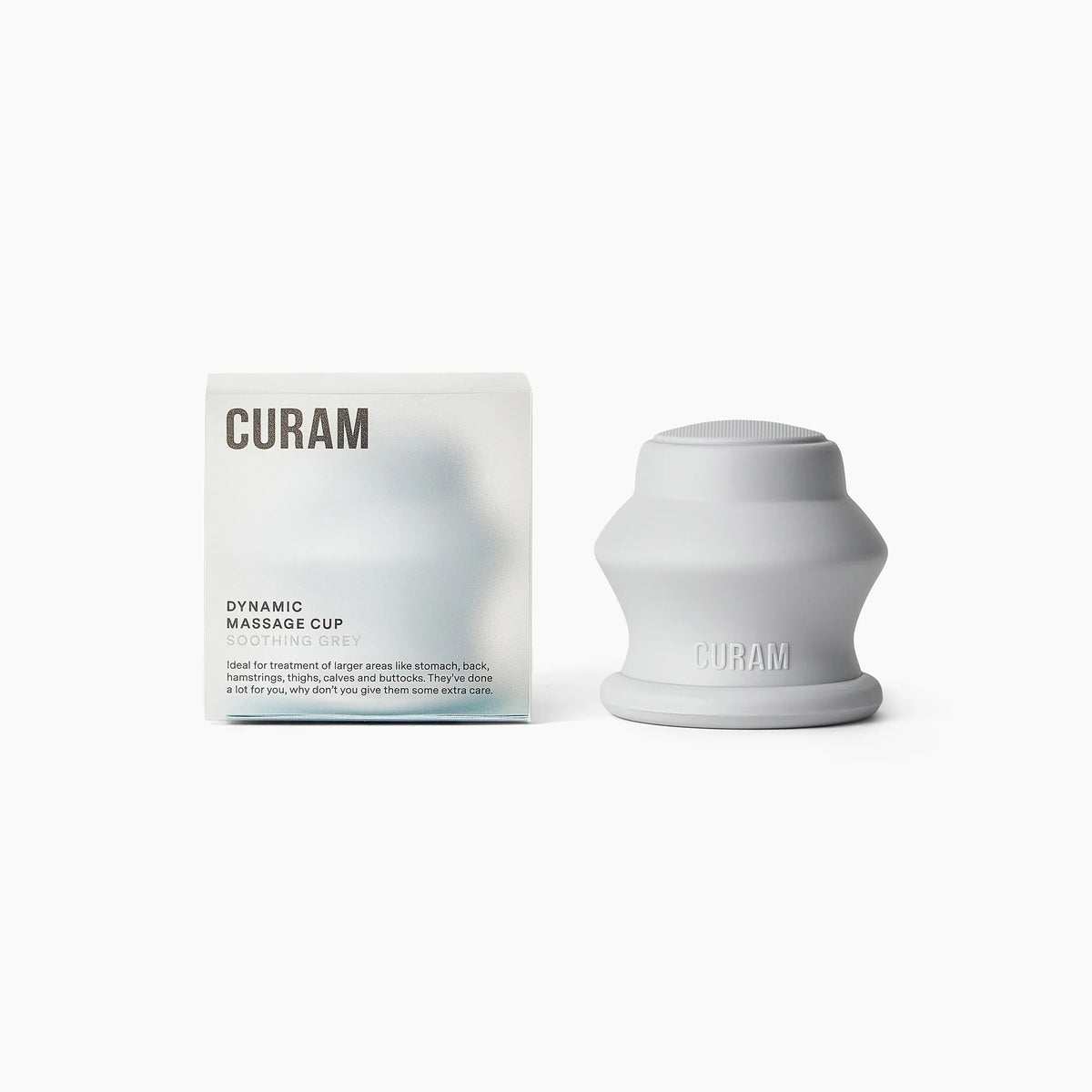
Dynamic cupping of thighs and calves increases blood flow, softens tight muscles and fascia and helps fluid and fatigue on their way upwards. It suits tired heavy legs, muscle soreness, cramps the day after, restless legs in the evening and muscular aching; it does not suit a blood clot, vascular disease or swelling that has not been assessed. Use the dynamic cup with light to moderate suction and massage oil.
- Sit or lie with the leg slightly raised. Oil the calf and thigh. First stroke with the hand from the knee up towards the groin ten times to open the lymph path.
- Calf: long strokes from the heel up towards the back of the knee, towards the heart, two to three minutes per leg. Skip the back of the knee.
- Back of the thigh: strokes from the back of the knee up towards the glutes, two minutes.
- Front and outside of the thigh: strokes from a hand's width below the groin down towards the knee, and from the hip down along the outside, two minutes.
- Glutes: circles and strokes, one minute, since tight glutes often give pain down the leg.
- Finish with legs raised or a short walk. Daily in the evening for tired legs and restless legs, three times a week for muscle pain.
The full leg routine is in the cupping program for lymph flow and the program for restless legs; the technique in Cupping at home. Do not cup a leg that is swollen, hot and tender on one side, with known vascular disease in the legs, severe varicose veins, reduced sensation, wounds, or on freshly injured muscle.
Frequently asked questions
Why do my legs ache in the evening?
Usually tired muscles and slight fluid retention after a day of standing or sitting, or restless legs if it itches and crawls and eases with movement. Legs raised, a walk, a calf stretch and cupping of the calves in the evening help. Pain at night that wakes you without cramp, or in only one leg, should be assessed.
When is leg pain dangerous?
With one-sided swelling with warmth and tenderness (blood clot), with a suddenly cold, pale and painful leg (arterial blockage), with calf pain when walking that eases at rest (reduced circulation), with weakness, numbness in the genital area or difficulty passing urine, and in children with one-sided pain, limping or fever. The first two are emergencies.
Does cupping help leg pain?
For muscular pain, tired heavy legs, muscle soreness and restless legs, yes: cupping thighs and calves increases blood flow, softens the muscles and helps fluid upwards. Not with a blood clot, vascular disease or swelling that has not been assessed, and not on the joints themselves.
What is the difference between muscle pain and nerve pain in the leg?
Muscle pain is dull, sits in the muscle, is tender to pressure and improves with heat and movement. Nerve pain is sharp, burning or electric, radiates along the leg, comes with tingling or numbness and is often worsened by sitting or certain positions. Nerve pain with weakness or numbness should be assessed.
Why do my legs hurt when I walk?
Calf pain that comes after a certain distance and eases when you stop is the classic sign of reduced blood flow in the leg arteries and should be investigated, especially if you smoke or have diabetes. Heaviness and numbness in both legs that eases when you bend forward points to spinal stenosis. Tender muscles that hurt from the first step are usually overload.
Sources
- 1177 Vårdguiden (Swedish national health guide), search for "blodpropp i benet", "fönstertittarsjuka", "restless legs" and "växtvärk" for medical information and when to seek care.
- Curam's FAQ and cupping programs, developed with trained massage therapists.
Related guides
Written by Curam. Last updated 17 October 2026. This is general self-care information and does not replace medical care. For sudden, severe or unusual symptoms, contact your doctor. Talk to your doctor before cupping if you are pregnant, take blood thinners or have a condition affecting skin, blood vessels or blood.


