


A muscle strain ("pulled muscle", "muscle tear") is a partially or completely torn muscle, usually at the junction between muscle and tendon, and it almost always happens suddenly during a fast, forceful movement: the sprint, the jump, the tackle, the last interval. The most common are the calf ("tennis leg", the inner calf muscle, feels like a blow to the calf), the hamstring (sprinting and football), the front thigh (rectus femoris, kicking and jumping) and the groin (adductors, sideways movements). Grade 1 is a strain with few torn fibres and mild pain, grade 2 a partial tear with clear weakness and swelling, grade 3 a complete rupture with a dent in the muscle and inability to use it. The first days now follow PEACE & LOVE instead of rest and ice: protect, offload, compress, elevate, and start moving early; rest and anti-inflammatory tablets in the first days delay healing. Grade 1 heals in one to three weeks, grade 2 in three to eight, grade 3 needs a doctor and sometimes surgery. Cupping may start only once the acute phase is over, to soften the scar tissue and the surrounding muscles. Here are the grades, the first days, rehab week by week and when you can run again.
Which grade is it?
| Grade | Recognised by | Healing time |
|---|---|---|
| Grade 1 – strain | Sudden twinge or tightness, can keep walking and often jog with discomfort, mild tenderness to pressure, little or no swelling, near-normal strength almost immediately | 1–3 weeks |
| Grade 2 – partial tear | Clear pain at the moment, often a "pop" or the feeling of a blow, limping, hard to contract the muscle against resistance, swelling within hours, bruising after 2–5 days that travels downward (toward the heel in a calf tear) | 3–8 weeks |
| Grade 3 – complete rupture | Severe pain that may quickly ease, cannot use the muscle at all, a palpable dent or lump in the muscle, large swelling and bruising | Doctor the same day; months, sometimes surgery |
Pain that has crept on over weeks without a sudden event is rarely a tear: in the calf it is more often cramp, shin splints or Achilles tendinopathy; in the thigh overload or referred pain from sciatica or the hip; overview in leg pain.
When should you seek care?
- The same day: if you cannot bear weight on the leg or contract the muscle at all, feel a dent in the muscle, heard a loud pop behind the heel and cannot stand on tiptoe (Achilles rupture; test: lie on your front, someone squeezes the calf, the foot should move), or if the lower leg swells, becomes warm and tender without a clear injury or a few days later (suspected blood clot, especially with the pill, smoking, long travel, recent surgery).
- Within a few days: grade 2 with pronounced weakness, bruising over large parts of the thigh or calf, or a tear near the sitting bone (hamstring origin) or the groin, where the attachment may have come away and sometimes needs surgery.
- Doctor or physiotherapist if you are not clearly better after two weeks, if the same muscle tears again, or if you want a rehab programme back to sport.
The first days: PEACE & LOVE instead of rest and ice
The advice RICE (rest, ice, compression, elevation) has been replaced by PEACE & LOVE, because ice and anti-inflammatory tablets in the first days dampen the inflammation needed for healing, and complete rest makes the new tissue weak and disorganised.
- P – Protect: offload for 1–3 days, avoid what hurts, crutches if needed, but not complete rest.
- E – Elevate: leg higher than the heart as often as you can the first days.
- A – Avoid anti-inflammatories: avoid ibuprofen, naproxen and ice for the first 2–3 days; paracetamol is fine for the pain.
- C – Compress: an elastic bandage or compression sock during the day reduces swelling and bleeding.
- E – Educate: a tear heals by itself with movement; passive treatments (machines, injections) don't shorten the time.
- L – Load: start loading as soon as pain allows (day 2–3): walk normally, contract the muscle lightly, move the joint.
- O – Optimism: fear of movement prolongs; the vast majority of tears heal completely.
- V – Vascularisation: pain-free cardio early (cycling, swimming, walking) increases blood flow to the injury.
- E – Exercise: progressive strength and mobility from the first week, as below.
Rehab week by week
| Phase | Calf | Hamstring/thigh/groin | Rule |
|---|---|---|---|
| Days 1–3 | Offload, compression, elevation, gentle ankle pumps, walk as normally as possible | Same; don't sit long with a bent hip (hamstring), avoid stretching | Never stretch a fresh tear |
| Days 3–7 | Light calf raises on both feet (3 × 10), easy cycling, walk without a limp | Isometric contraction without movement (press the heel into the floor lying down, 5 × 10 s), easy cycling, leg swings | Pain up to 3 out of 10 during exercise is okay, not more the next day |
| Weeks 2–3 | Single-leg calf raises, eccentric (up on two, down on one, slowly) 3 × 12, uphill walking, easy jog on flat ground when a single-leg calf raise is pain-free | Romanian deadlifts with light weight, single-leg hip bridges, supported Nordic hamstring (eccentric), side lunges for the groin; easy jog when walking is pain-free | Strength before stretch; gentle stretching only when the muscle is pain-free to pressure |
| Weeks 3–6 | Two-leg hops, then single-leg, running with gradual speed, hill running, changes of direction | Full Nordic hamstring, sprint preparation: high knees, running drills, accelerations at 60–80 % speed, then 90 % | Return to sport when strength is 90 % of the other side and top speed is pain-free |
| After | Continue eccentric calf raises twice a week for three months | Nordic hamstring twice a week and sprinting in training cut the risk of a new tear by up to half | The risk of re-tearing is highest in the first two months |
Exercises for the whole lower body in leg and glute exercises at home, and a good warm-up is the best prevention: most tears happen in cold muscles, at the end of the session when the muscles are tired, or after a period with too little strength training.
When cupping can start, and how
Don't cup in the first 5–7 days, and never on a tear that is still swelling, bleeding (the bruise is growing) or painful at rest; suction pulls healing tissue apart and increases bleeding. Once the swelling has settled, the bruise has turned yellow and the muscle is pain-free to light pressure (usually week 2 for grade 1, weeks 3–4 for grade 2), cupping is used for three things: increasing blood flow to the healing area, softening the scar tissue that otherwise becomes a hard, short knot that tears easily again, and releasing the surrounding muscles that tightened to protect the injury.
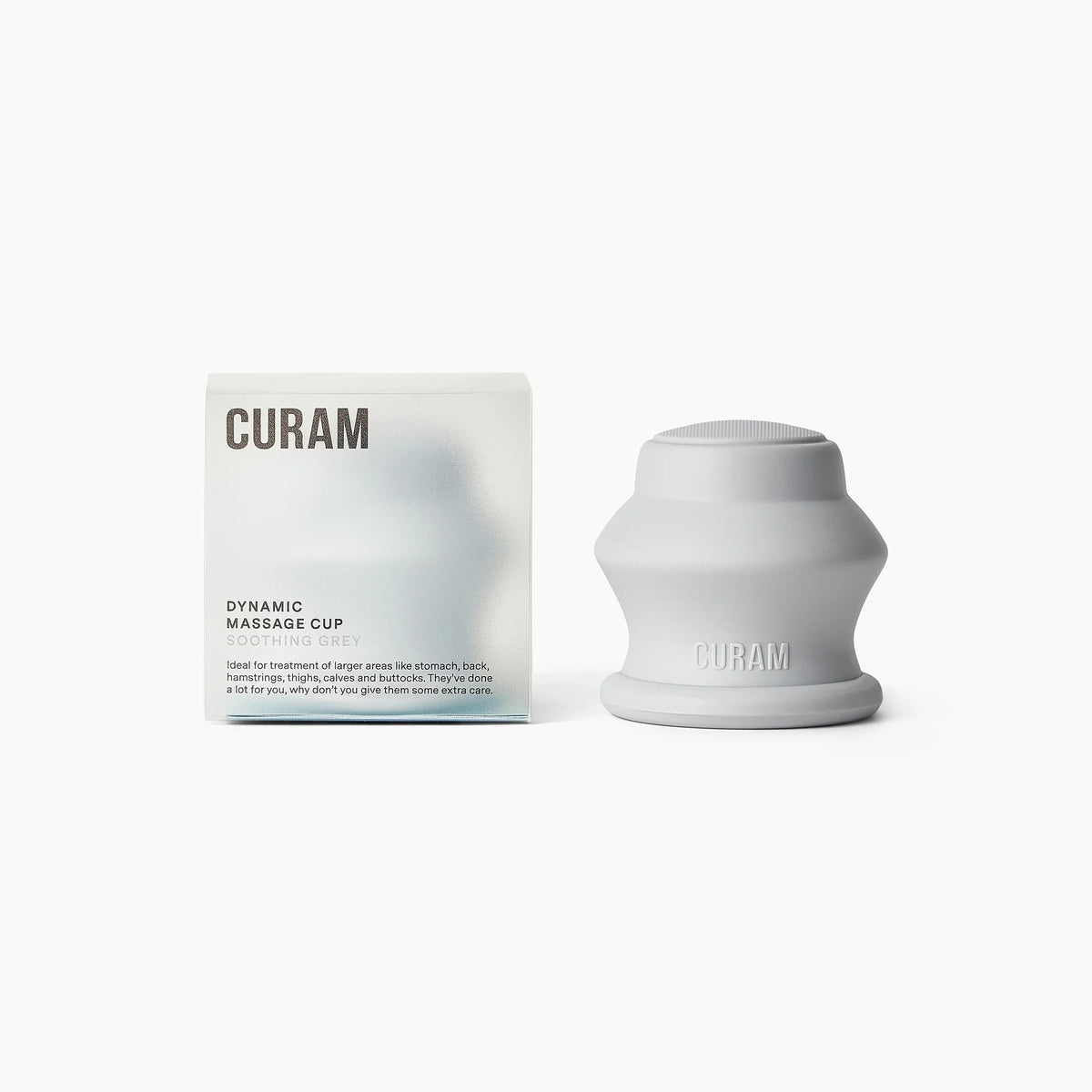
- Around the injury first: the dynamic cup with massage oil, light suction, long strokes above and below the tear along the muscle, toward the heart, 2 minutes. The first few times not over the spot itself.
- Over the scar tissue from weeks 3–4: light suction, short strokes in different directions over the spot that feels hard or lumpy, 1–2 minutes, followed by a gentle stretch of the muscle. Build to medium suction over a few weeks. For scars after larger tears: see scars and scar tissue.
- Surrounding muscles: with a calf tear also the Achilles (lightly) and hamstrings; with a hamstring tear the glutes and lower back; with a groin tear the inner thigh and hip flexors. 1–2 minutes per area. Static cups can sit 3–5 minutes on a tight spot above the injury.
- After training in the rehab phase: light cupping along the muscle after the session reduces next-day stiffness; see recovery after training and the cupping programme for runners.
Never cup with a suspected blood clot (swollen, warm, tender calf), over a dent in the muscle, over fresh bruises, or if pain increases afterwards; and ask your doctor first if you take blood thinners.
How to avoid tearing it again
- Strength, especially eccentric: Nordic hamstring, eccentric calf raises, Romanian deadlifts, side lunges; twice a week all year.
- A progressive warm-up before all fast running: 10 minutes jogging, running drills, 4–6 accelerations up to match pace.
- Sprinting in training every week, even if you mostly run slowly; muscles that never sprint tear when they suddenly have to.
- Return in steps, not from zero to match; most recurrences happen within two months because rehab stopped when the pain disappeared.
- Sleep, fluids and not too many hard sessions in a row; tired muscles tear.
Frequently asked questions
How do I know if I have a muscle tear or just a strain?
A strain (grade 1) gives a twinge or tightness but you can walk and often jog, strength is almost normal and there is little or no swelling. A tear (grade 2) often gives a pop or the feeling of a blow, you limp, can't contract the muscle against resistance, it swells within hours and a bruise appears after a few days. A dent in the muscle and inability to use it is grade 3 and should be assessed the same day.
Should you ice or heat a muscle strain?
Neither ice nor anti-inflammatory tablets are recommended any more in the first 2–3 days, because they slow healing; compression, elevation and early gentle movement are what count. Heat and cupping are used only once the swelling has settled and the muscle is pain-free to pressure, usually from week two to four.
How long does a muscle tear take to heal?
Grade 1 heals in one to three weeks, grade 2 in three to eight weeks, grade 3 takes months and needs a doctor. A calf tear in recreational athletes usually allows jogging after two to three weeks; a hamstring tear often takes longer, and the risk of re-tearing is highest in the first two months if strength training stops too early.
When can I run again after a calf strain?
When you walk without a limp, can do single-leg calf raises pain-free and can hop on one leg without pain; for most grade 1–2 after two to four weeks. Start with jogging on flat ground, increase speed and hills gradually, and continue eccentric calf raises twice a week for three months.
Does cupping help a muscle strain?
Not in the acute phase; don't cup in the first five to seven days or as long as it is swelling and bleeding. From week two to four, when the muscle is pain-free to pressure, light cupping around and then over the injury is used to increase blood flow, soften the scar tissue and release surrounding muscles that have tightened. Never cup with a suspected blood clot.
Related guides
- Sprained ankle – first aid and rehab
- Meniscus tear – symptoms, locking, exercises and cupping
- Inflammation in the body, muscles and tendons – what helps
- Thigh pain – front, back, outside and inside: what it can be
- Calf pain – where does it hurt and what it can be
Written by Curam. Last updated 17 October 2026. This is general self-care information and does not replace medical care. For sudden, severe or unusual symptoms, contact your doctor. Talk to your doctor before cupping if you are pregnant, take blood thinners or have a condition affecting skin, blood vessels or blood.


