


Kettlebells and dumbbells give what bands and bodyweight don't: constant, heavy load that can be increased precisely, and exercises where the whole body works at once (swings, deadlifts, carries). A 12 kg and a 16–20 kg kettlebell, or adjustable dumbbells up to 20–25 kg per hand, are enough for most people for years. The twelve exercises below cover lower body, pulling, pressing, core and grip, and the programme runs them three times a week with clear progression. The only exercise that requires real technique learning is the kettlebell swing: it is a hip hinge, not a squat and not an arm lift, and done right it is the most effective exercise for hamstrings, glutes and back you can do at home. Here are the exercises, the weights, the programme and the recovery.
Which weights should you buy?
| Equipment | Starting weight | Worth knowing |
|---|---|---|
| Kettlebell | Untrained women 8–12 kg for press and row, 12–16 kg for swings and deadlifts; untrained men 12–16 kg for press, 16–24 kg for swings. Two weights (e.g. 12 and 20 kg) cover everything | Cast iron with a smooth handle without a casting seam; "competition" models are the same size regardless of weight and are good for two-handed work. Swings and deadlifts take heavier weight than you think, presses lighter |
| Adjustable dumbbells | 2–20 kg or 2–24 kg per hand (dial or lever model) | More expensive but replaces a whole rack; choose a model where the weight changes in seconds, otherwise you skip the progression. Fixed dumbbells: 2 × 8, 2 × 12 and 2 × 16 kg cover a lot |
| Extras | A mat, chalk or gloves for sweaty handles, a bench or stool for step-ups and rows | Resistance bands for back (lat pulldowns, pull-aparts) and light activation fill the gaps |
The kettlebell swing step by step
- The hip hinge first, without weight: stand hip-width, place your hands in the hip creases, push the hips back with a flat back and slightly bent knees until the torso is nearly horizontal, then drive the hips forward to standing tall by squeezing the glutes. That is the whole movement; the knees bend only a little, the back doesn't move.
- Kettlebell deadlift: weight between the feet, hinge down, grip with both hands, flat back, stand up with the glutes. 2 × 10 as a warm-up every time.
- Hike pass: weight half a metre in front of the feet, hinge, grip, pull the weight back between the legs like a centre snap in American football and set it down again. 5 times. Teaches the backward start.
- The swing itself: hike, and instead of setting the weight down: drive the hips forward explosively so the weight flies up to chest height on its own. The arms are ropes, not lifters. Let the weight fall back between the legs, hinge at the last moment (the weight should pass high on the thighs, near the groin, not down by the knees) and swing again. Finish by letting the weight swing forward and setting it down under control in front of you.
- Common mistakes: bending the knees as in a squat (then it becomes a front raise with the arms), arching or rounding the back at the bottom, lifting the weight with the shoulders, letting the weight go overhead, looking up at the ceiling. Put a phone on the floor to the side and film; the back should be a straight line throughout.
- Dosage: start with 5 sets × 10 swings with 30 seconds' rest, build to 10 × 10. Swings are breathless training for the posterior chain and back; 100 swings take five minutes and replace a cardio session.
12 exercises with a kettlebell or dumbbells
Lower body
- Goblet squat: hold the weight against the chest with both hands, elbows in, squat deep with knees over toes, up. 3 × 8–12. The best squat variation for learning depth and a flat back.
- Kettlebell swing or dumbbell Romanian deadlift: swings as above, or RDL: dumbbells in front of the thighs, hinge with a flat back until the hamstrings stretch, up with the glutes. 3 × 8–12.
- Weighted lunges or step-ups: a dumbbell in each hand, step forward or up onto a stool, 3 × 8–10 per leg. More in leg and glute exercises at home.
- Single-leg deadlift: weight in one hand, stand on the opposite leg, hinge forward with a flat back and the free leg back, up. 3 × 8 per leg. Balance, hamstrings and ankle; good for runners.
Pulling and back
- Single-arm row: support one hand and knee on a bench or chair, pull the weight toward the hip with the elbow close to the body, lower slowly. 3 × 8–12 per side. The most important exercise against rounded shoulders.
- Gorilla row or two-arm row: hinge with a dumbbell in each hand, pull both toward the stomach, or alternate. 3 × 10–12.
- Carries (farmer's walk or suitcase carry): walk 20–40 metres with a heavy weight in each hand, or in one hand with an upright body. 3 rounds. Grip, core, posture; underrated.
Pressing and shoulders
- Floor press: lie on your back with knees bent, press the dumbbells from chest height to straight arms, lower until the upper arms touch the floor. 3 × 8–12. Chest and triceps without a bench.
- Standing overhead press: weight at the shoulder (kettlebell in the rack position), press straight up without arching, lower under control. 3 × 6–10 per side. See shoulder exercises for the mobility required.
- Clean (kettlebell): from swing to rack position: pull the weight close to the body and let it roll around the wrist without banging. Learn with a light weight; combines into clean & press.
Core and full body
- Turkish get-up (half or full): lie on your back with the weight straight up in one hand, rise to sitting on the elbow and hand, up to kneeling and standing, and back. 3 × 3 per side. Shoulder stability, core, mobility; start with a shoe on your fist.
- Halo and windmill: halo: circle the weight around the head, 2 × 8 each way, loosens the shoulders; windmill: weight held overhead, hinge to the side with straight legs and reach the floor with the other hand, 2 × 5 per side, lateral core and hip mobility. More core exercises at home.
Deadlift technique: the hip hinge everything is built on
The deadlift with a kettlebell or dumbbells is the same movement as the swing, only slow: feet hip-width with the weight between or just in front of the feet, push the hips back until the hands reach the weight with a flat back and slightly bent knees (shins nearly vertical), brace the back by "breaking" the weight with the hands and pulling the shoulder blades down toward the back pockets, push through the whole foot and stand up by driving the hips forward, not by pulling with the back; stand fully tall with the glutes tight without leaning back, and lower under control along the same path by hinging the hips first and bending the knees last. Gaze diagonally down in front of you, not at the ceiling. Common mistakes: a rounded lower back at the bottom (the weight is too far forward or the hips don't go back), squatting instead of hinging (the knees shoot forward and the weight travels around them), a jerk at the start, and overextension at the top. With dumbbells: hold them at your sides (trap-bar style) or in front of the thighs as in a Romanian deadlift. Progression: 2 × 10 light as a warm-up every session, then 3–4 × 6–8 heavy; once technique holds on video from the side you can add weight every week or two. The deadlift is the exercise that best builds hamstrings, glutes and back and protects the lower back in daily life, provided the hinge is right; with back pain during the movement, read lower back pain before continuing.
Programme: three sessions a week, eight weeks
Full body every other day, 40–50 minutes with a warm-up (5 minutes mobility + 2 × 10 light deadlifts and goblet squats). Rest 90 seconds between heavy sets.
| Session | Content |
|---|---|
| Session A (strength) | Goblet squat 4 × 8, floor press 4 × 8, single-arm row 4 × 8 per side, single-leg deadlift 3 × 8 per leg, farmer's walk 3 × 30 m, plank 3 × 40 s |
| Session B (swing and press) | Kettlebell swing 8 × 10 (or RDL 4 × 10), overhead press 4 × 6–8 per side, lunges 3 × 10 per leg, gorilla row 3 × 12, Turkish get-up 3 × 2 per side, halo 2 × 8 |
| Session C (flow) | Complex without putting the weight down: 5 deadlifts, 5 swings, 5 cleans, 5 presses, 5 goblet squats, 5 rows per side = one round; 4–6 rounds with 90 s rest. Plus 2 × 10 windmills |
| Progression | Weeks 1–2: learn technique, 2–3 sets. Weeks 3–5: full sets, build reps to the top of the range. Weeks 6–8: heavier weight or an extra set on squat, row and press; week 8 lighter |
Rotate A-B-C each week. If you have only one weight: use the heavy one for swings, deadlifts, goblet squats and rows, and do presses and single-leg work with more reps or bodyweight. For more conditioning: swings or complexes at the end of each session.
Muscle soreness and cupping
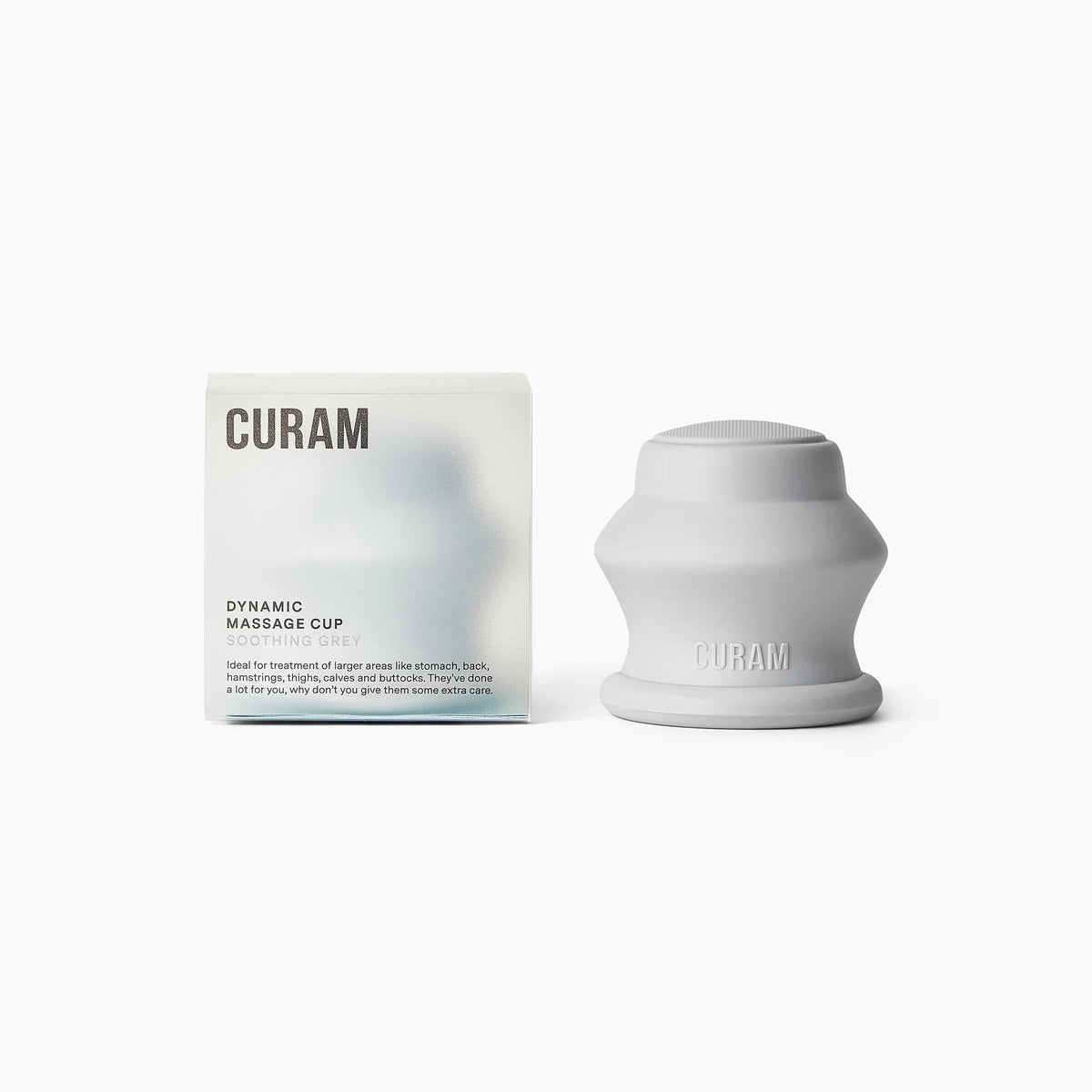
Kettlebell training produces soreness in the hamstrings and glutes (swings), lower back (deadlifts, the first weeks), forearms and grip, and between the shoulder blades. Muscle soreness is normal; a lower back that hurts in movement, rather than being tender to pressure, means technique broke down and you should lighten the weight. Cupping the day after increases blood flow and makes the muscles softer for the next session: the dynamic cup with massage oil, long strokes along the hamstrings and glutes (2 minutes per side), along the lower back muscles either side of the spine (never on the vertebrae), over the forearms, and static cups between the shoulder blades for 5 minutes. Swollen, sore forearms after swings respond well to light cupping toward the elbow. The full approach is in recovery after training, and programmes for people who train in the cupping programmes. Don't cup over fresh bruises (common on the forearms from cleans in the first weeks) or damaged skin.
Frequently asked questions
What kettlebell weight should a beginner use?
Untrained women 8–12 kg for press and row and 12–16 kg for swings and deadlifts; untrained men 12–16 kg for press and 16–24 kg for swings. Two weights, e.g. 12 and 20 kg, cover almost everything. Swings and deadlifts take heavier weight than you think, presses lighter.
How do you do a kettlebell swing correctly?
It is a hip hinge, not a squat: push the hips back with a flat back and slightly bent knees, let the weight pass high between the thighs, and drive the hips forward explosively so the weight flies up to chest height under its own momentum. The arms are ropes. Learn the deadlift and hike pass first, and film from the side: the back should stay straight throughout.
Is a kettlebell enough to build muscle?
Yes, for most goals for years. A heavy and a lighter kettlebell give progressive load in squats, deadlifts, swings, presses, rows and carries. The limit comes when the legs need more weight than you can hold in a goblet squat; then single-leg work, tempo, or a barbell helps.
How often should you train with kettlebells or dumbbells?
Three full-body sessions a week with a rest day between is the best dose for strength and muscle at home; two is enough to maintain. Swings can be done more often as a short conditioning session. Increase weight or reps every other week, and take a lighter week every eighth.
What helps muscle soreness after kettlebell training?
Light movement, sleep, food with protein, and cupping the day after along the hamstrings, glutes, lower back muscles and forearms, 1–2 minutes per area with light suction. A lower back that hurts in movement is technique, not soreness: lighten the weight and practise the hip hinge.
Related guides
Written by Curam. Last updated 17 October 2026. This is general self-care information and does not replace medical care. For sudden, severe or unusual symptoms, contact your doctor. Talk to your doctor before cupping if you are pregnant, take blood thinners or have a condition affecting skin, blood vessels or blood.


