


Recovery after training is about letting the nervous system wind down, getting circulation going in tired muscles and giving the body sleep, fluid and nutrition to rebuild with. We know that training and movement matter for wellbeing, but the recovery afterwards is at least as important, not least when the nervous system is already handling a lot. Here are five simple, effective habits.
What is recovery, and what is active recovery?
Recovery is everything that helps the body back to balance after load: sleep, food and fluids, rest and gentler movement. It is usually split into two kinds.
- Passive recovery is rest without activity: sleep, a quiet evening, sitting or lying down. Needed every day, above all the sleep.
- Active recovery is light, low-intensity movement that increases circulation without loading the body: a walk, easy cycling, swimming, mobility work, stretching, breathing exercises and gentle cupping. Many people feel less stiff and sore the next day when they move a little instead of only resting.
How much recovery do you need? There is no number that fits everyone. The rule of thumb is about 48 hours between hard sessions for the same muscle group, enough sleep, and paying attention to signals such as unusual tiredness, poorer performance, a high resting pulse and low mood. Recovery after running or hard intervals usually takes longer than after an easy strength session. The tips below are routines that make recovery, passive and active alike, more effective.
1. Ten deep breaths with static cups
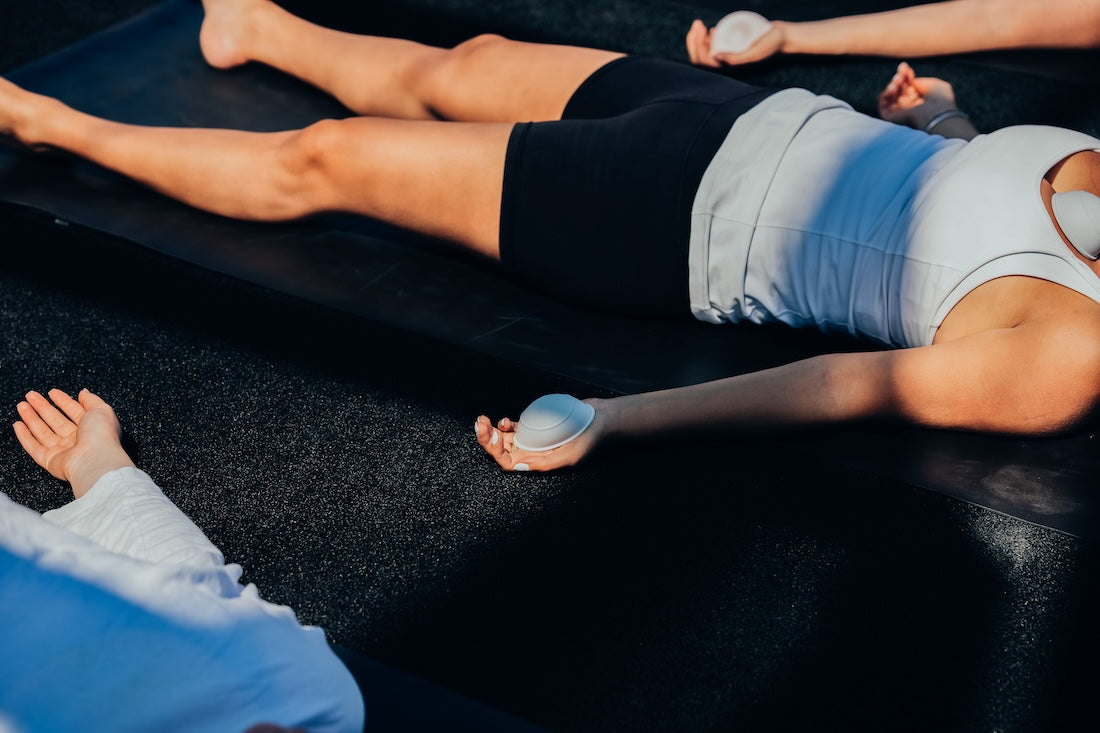
The warm-up starts the nervous system before the session. Just as important is letting it come down afterwards. Place static cups below the collarbones or on the lower ribcage, lie down and take ten slow breaths where the belly and ribcage rise towards the cups. Three minutes is enough to shift gear. Programme: breathwork.
2. Five minutes in the sauna with cups and oil
Straight after the session: take your favourite cups and massage oil into the sauna or the warm shower. The heat makes the tissue soft, the dynamic cup glides easily and you get circulation going in the muscles you have just worked. Light suction, slow strokes towards the groin and back of the knee, two to three minutes per area. In the shower, shower gel can replace the oil.
3. Daylight and fresh air every day
It does not matter how long or what you do, but give yourself a dose of daylight and fresh air daily. It supports the circadian rhythm and sleep, which is the most important recovery of all, and does wonders both for the session you have done and the one to come.
4. Acupressure mat and cupping
The combination can make a big difference for both mental and physical recovery. Our favourite: lie on the acupressure mat on your back and place the static cups around the ribcage. Breathe slowly for five to ten minutes. The mat works on the back, the cups open the breathing, and the nervous system gets a clear signal that the session is over.
5. Short breaks during the day
Even when the to-do list is endless. Stretch, do head-shoulders-knees-and-toes, take the stairs once more, or put the static cups on your shoulders and be present for a moment. Recovery is not only what you do after the session; it is the sum of the breaks in the day.
Recovery for your sport: the cupping programs
The five tips above work for any sport. If you want a ready-made routine for your particular load, Curam has cupping programs per sport, with which muscles to prioritise after the session and how to cup them step by step. All programs are collected on the cupping programs page.
- Runners
- Cyclists
- Golfers
- Crossfit
- Padel
- Skiers
- Cross-country skiers
- Swimmers
- Dancers
- Yogis
- Martial artists
Training at the gym or at home without a particular sport? Then the guide to muscle soreness and home workout without equipment fit, both ending with recovery using cups.
Cupping before or after training?
Both work, with different purposes. Before the session, a few dynamic strokes warm up muscles and fascia and can help prevent injury. After the session, light dynamic strokes and static cups on the tightest points support circulation and reduce stiffness the next day. On rest days: lymphatic strokes and face cupping to wind down. More in How to use massage cups for training, yoga and recovery and the cupping programmes per sport.
Frequently asked questions
Does cupping help with muscle soreness?
Many experience less stiffness and soreness the next day when circulation in the muscles is stimulated. Light suction and short sessions are enough; hard cupping on an already sore muscle is not better.
How soon after training can I cup?
Straight after the session, ideally in the sauna or shower, or later the same day. Listen to your body: if the area is very sore, wait a day.
Which cups suit recovery?
Static cups for breathing, neck, shoulders and specific points; dynamic cups with oil for thighs, glutes, calves and back. All of them are in Body Kit Small.
Can I cup every day?
The body often tolerates daily cupping on different areas, but start with two to three times a week and let sore areas rest.
Related guides
- Muscle soreness (DOMS) – what helps and how to cup sore muscles
- The Curam Recovery® method
- Calf cramps – causes, quick relief and prevention
- Home workout without equipment – 20-minute programme in three levels
- Massage oil – how to choose the right one for body and face
- Stress – symptoms, burnout and stress management
- Sleep problems – causes and routines that help
- Stiff body – stretching and mobility that help
- Warm-up before training – exercises that work
- The vagus nerve – exercises that calm the nervous system
- Yin yoga at home – 8 poses for beginners and cupping
- Sauna, cold plunge and ice baths – recovery that works
- Fatigue – causes, blood tests and what helps
- Resistance band training – 12 exercises, programme, home gym
- Exercising with a cold – the neck rule and when to rest
- Inflammation in the body, muscles and tendons – what helps
- Deep sleep and sleeping position – sleep better, wake pain-free
- Red light therapy – what research says, and red light or cupping
- How many steps a day? 10,000 steps and the research
Written by Curam. Last updated 16 October 2026. This is general self-care information and does not replace medical care. Talk to your doctor before cupping if you are pregnant, take blood thinners or have a condition affecting skin, blood vessels or blood.


