


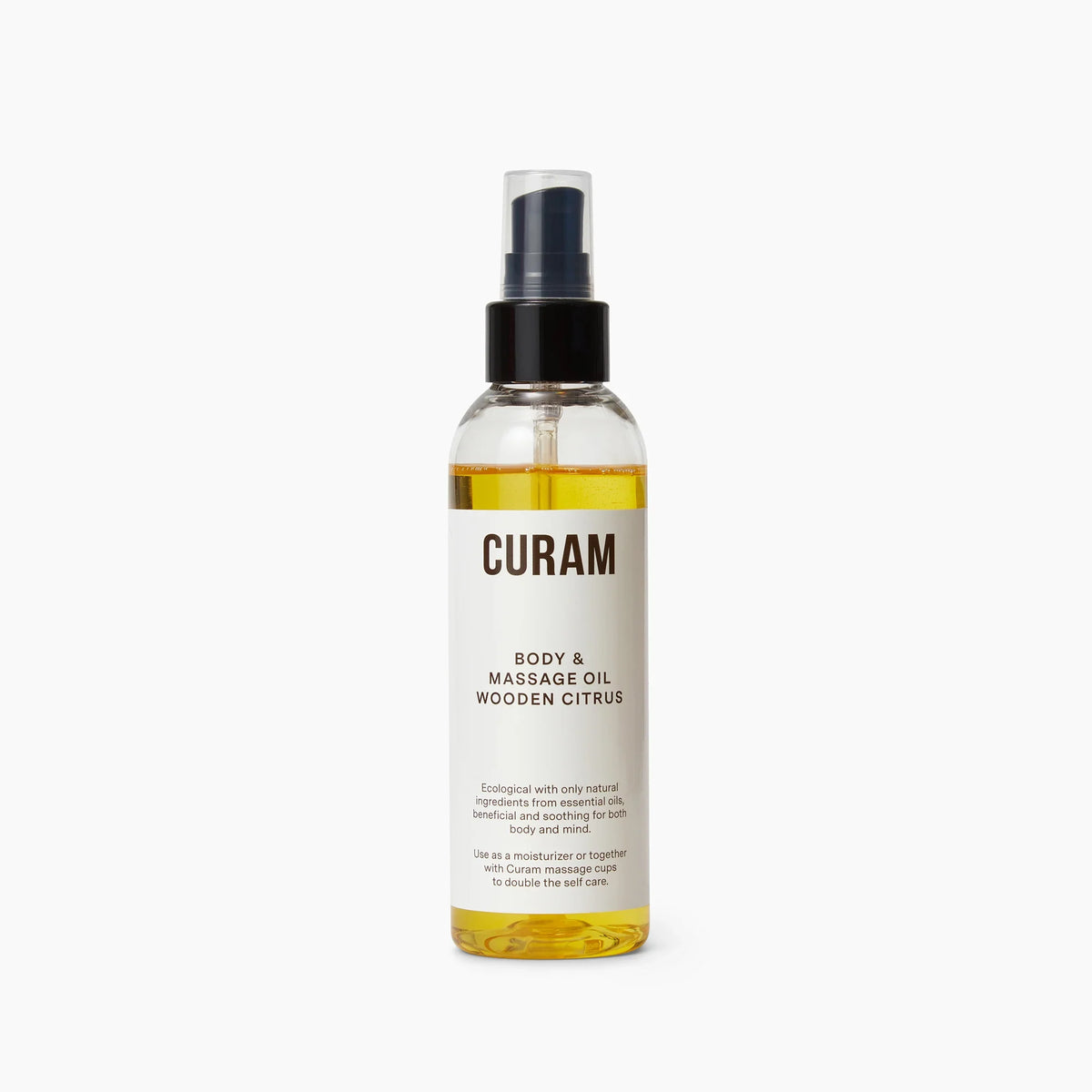
A massage oil needs to do three things: give a glide that lasts five to ten minutes without being absorbed, nourish the skin rather than clog it, and wash off hands, cups and sheets. That rules out many oils: a fast-absorbing "dry oil" disappears after a minute, a thick cream or shea butter drags, and mineral oil sits as a film on top of the skin. The best massage oils are built on light vegetable base oils such as jojoba, rice bran, almond or grapeseed, often with essential oils for scent and relaxation. Body and face have different needs: the face needs a lighter, non-comedogenic oil, the body an oil with stable glide over large areas. Here is how to read the label, which oils suit what, what to avoid, and how to use oil for massage, cupping and as a daily body and face oil.
Massage oil, body oil or face oil: what is the difference?
| Massage oil | Body oil | Face oil | |
|---|---|---|---|
| Job | Glide during massage and cupping, 5–10 minutes before it absorbs | Moisturise and soften the skin after a shower, absorbs within minutes | Nourishment, radiance and light glide for facial massage and face cupping; can stay on as a night oil |
| Typical base oils | Jojoba, rice bran, almond, sunflower, grapeseed | Almond, jojoba, rice bran, macadamia, often "dry oil" blends | Jojoba, squalane, grapeseed, rosehip (non-comedogenic) |
| Scent | Essential oils for relaxation (lavender, cedarwood, eucalyptus) or unscented | Often perfumed | Mild essential oils (frankincense, geranium) or unscented |
| Suits cupping? | Yes, that is what it is made for | Sometimes: if it does not absorb too fast | Yes, for face cups and gua sha |
A good massage oil often works as a body oil too (as Curam's body and massage oil does), while a pure face oil is too light and too expensive for the whole body. Why oil matters so much in cupping specifically is in Best oil for cupping.
The base oils: what they do and who they suit
- Jojoba. Technically a liquid wax that resembles the skin's own sebum, so it is absorbed without clogging pores, does not go rancid and suits all skin types, including acne- and rosacea-prone skin. Light glide that lasts. The best all-round base for body and face.
- Rice bran oil. Light, rich in antioxidants (gamma-oryzanol, vitamin E), calming for sensitive skin, good glide. Common in Asian skincare and massage oils.
- Almond oil. The classic massage oil: soft, nutty scent, good glide, medium absorption. Avoid with nut allergy.
- Grapeseed oil. Thin, light, non-comedogenic, almost scentless, suits oily skin and the face. Goes rancid faster than jojoba.
- Sunflower and rapeseed oil. Cheap, work for body massage in a pinch, but absorb unevenly and smell after a while.
- Coconut oil. Solid at room temperature, good glide once melted, but comedogenic (clogs pores) and should not be used on the face or acne-prone skin.
- Olive oil. Too heavy and sticky for massage, and studies suggest it can weaken the skin barrier with daily use. Leave it in the kitchen.
- Mineral oil and baby oil. Sit as a film on the skin, giving slippery glide without nourishment. They work technically but are not what we recommend.
- Shea and cocoa butter. Excellent for dry skin but too thick for massage and cupping unless blended with a light oil.
Essential oils: scent, effect and caution
Essential oils give massage oil its scent and part of the experience: lavender and cedarwood are perceived as calming, eucalyptus and peppermint as fresh and "opening", citrus as uplifting, frankincense and geranium as balancing and common in face oils. The effect is mainly through scent and ritual; research support for specific skin effects is limited. Important: essential oils must be diluted in a base oil (usually under two percent in body oils and under one percent in face oils), some are phototoxic (bergamot, lemon, cold-pressed lime: avoid sun afterwards), and many are unsuitable in pregnancy, for small children and for pets, especially cats. If you have sensitive skin, fragrance allergy or asthma: choose an unscented oil or patch test on the forearm first.
How to read the label
- The ingredient list (INCI) in descending order. The first names are most of the bottle. "Simmondsia Chinensis Seed Oil" is jojoba, "Oryza Sativa Bran Oil" rice bran, "Prunus Amygdalus Dulcis Oil" almond, "Paraffinum Liquidum" mineral oil.
- Cold-pressed and organic mean gentler production and fewer pesticide residues; reasonable to want in something massaged into warm, well-perfused skin.
- "Parfum" vs essential oils. "Parfum" is synthetic fragrance; essential oils are listed by their Latin names. Allergens such as linalool and limonene must be declared even when they come from natural oils.
- Shelf life. The open-jar symbol gives months after opening. Jojoba keeps for years, grapeseed and almond for six to twelve months. Smell it: rancid oil smells like old fat.
- Vegan, cruelty-free, silicone- and mineral-oil-free if that matters to you; silicones (dimethicone) give glide but no nourishment.
How to use the oil
- Massage: warm a few pumps between the hands, spread over the area and start with long strokes towards the heart. Top up in small amounts; too much oil makes the grip slippery.
- Dynamic cupping: oil the whole area before placing the cup; the cup should glide without pulling on the skin. A palmful of oil is enough for a thigh. Top up when the cup starts to catch. The routines are in Cupping at home.
- Facial massage and face cupping: two to three drops of face oil on clean, ideally slightly damp skin, spread over cheeks, forehead and neck, then work outwards towards the ears and down towards the collarbones. See Face cupping and Facial massage at home. Curam's face oil with jojoba, frankincense, vetiver and geranium is made for exactly that.
- As a body oil: on damp skin straight after the shower; the water helps the oil bind moisture. Wait two minutes before dressing.
- Sauna and recovery: oil and cups in the sauna or after training, see Recovery after training.
- Cleaning: wash cups in warm water with mild soap after every session, and wash sheets and towels hot; oily textiles can in rare cases self-ignite in the tumble dryer, so air dry or tumble cool.
What to avoid and when to be careful
Oil on damaged skin, wounds, eczema flares or fungal infections; nut oils with nut allergy; undiluted essential oils, in the eyes, on children under two or in pregnancy without checking which are safe; phototoxic citrus oils before sun exposure; non-comedogenic-free oils on the face if you have acne; and old, rancid oils. If you get redness, itching or swelling: wash off with mild soap and water and do not use the oil again. For cupping, the safety rules in When to avoid cupping also apply.
Frequently asked questions
Which massage oil is best?
For most people an organic oil with jojoba or rice bran as the base: light, long-lasting glide, nourishment without clogging pores, and a long shelf life. Choose essential oils to taste, or unscented for sensitive skin. For the face: a lighter, non-comedogenic oil.
Can I use body oil as massage oil?
If it does not absorb too fast, yes. Test it: if it gives glide for five to ten minutes it works. "Dry oil" blends disappear too fast for massage and cupping.
Can I use cooking oil as massage oil?
Sunflower or almond oil from the kitchen works in a pinch for body massage, but they absorb unevenly, can go rancid and smell, and are not made for skin. Coconut oil clogs pores, olive oil is too heavy. Do not use them on the face.
Which oil suits the face?
A non-comedogenic oil such as jojoba, squalane, grapeseed or rosehip, ideally organic and with mild or no essential oils. Two to three drops are enough. Avoid coconut oil and heavy butters on the face.
How much oil do I need for cupping?
About a palmful per larger area (a thigh, the back) and two to three drops on the face. The skin should be evenly glossy but not dripping. Top up in small amounts when the cup starts to catch or pull.
Sources
- 1177 Vårdguiden (Swedish national health guide), search for "eksem" and "parfymallergi" for skin reactions and when to seek care.
- Curam's product information and cupping programmes, developed together with trained massage and skin therapists.
Related guides
Written by Curam. Last updated 17 October 2026. This is general self-care information and does not replace medical care. For skin reactions, contact your doctor. Talk to your doctor before cupping if you are pregnant, take blood thinners or have a condition affecting skin, blood vessels or blood.


