


Elbow pain is usually overloaded tendon attachments, and the location tells you which: pain on the outside with wrist movements is tennis elbow, pain on the inside golfer's elbow, a soft swelling on the tip an irritated bursa, and tingling into the ring and little fingers a trapped ulnar nerve. Pain inside the joint with stiffness or locking points to a joint problem. Most of it heals with calmer loading, eccentric training and patience (two to twelve months for tendons), but severe pain after a fall, a hot red joint or increasing numbness needs a doctor. Here is the location map, the warning signs, the self-care and how cupping of the forearm is used as a complement.
Where does it hurt? The location map
| Location | Likely cause | Typical |
|---|---|---|
| Outside of the elbow (the bony bump on the thumb side) | Tennis elbow (lateral epicondylalgia) | Tender over the bump, pain when gripping, twisting, lifting a kettle or using a mouse. Most common at 35–55. See the guide to tennis elbow and mouse arm. |
| Inside of the elbow (the bump on the little-finger side) | Golfer's elbow (medial epicondylalgia) | Pain when flexing the wrist against resistance, carrying bags, pulling or throwing. Sometimes tingling in the little finger if the nerve is irritated too. |
| Tip of the elbow, soft swelling | Bursitis | A fluid-filled lump on the tip after pressure, leaning on a desk or a knock. Usually harmless, but red, hot and very tender means possible infection. |
| Back, just above the tip | Triceps tendon | Pain with dips, push-ups, bench press and straightening the arm against resistance. |
| Inside with tingling in the ring and little fingers | Trapped ulnar nerve (cubital tunnel syndrome) | Numbness that increases when the elbow is bent for long (phone, sleep), weakness in the hand. The "funny bone" is the same nerve. |
| Front, in the crease | Biceps tendon | Pain with heavy palm-up lifts, can be tender deep in the crease. A sudden pop and a lump on the upper arm = possible tendon rupture, seek care. |
| Inside the joint, stiffness, locking | Osteoarthritis, loose body, joint inflammation | Hard to fully straighten or bend, clicking, swelling of the whole joint. Needs assessment. |
| The whole elbow after a fall | Fracture, dislocation | Severe pain, deformity, cannot bend or straighten. Emergency. |
Why do you get elbow pain?
The elbow's tendon attachments gather the force of all the forearm muscles onto two small bony bumps. Repeated gripping, twisting and lifting, especially with new loads (a new racket, more mouse and keyboard, renovation, a new training programme, gardening season), exceeds the tendon's ability to repair itself, and it becomes tender and weak. It is not an inflammation in the usual sense but a tendon that has "fallen behind", which is why rest alone rarely works: the tendon needs gradual loading to rebuild. Posture matters too: rounded shoulders and a tight shoulder girdle make the forearm do more of the work.
Seek care if
Seek urgent care if the elbow is deformed or you cannot bend and straighten after a fall or blow, if the joint is hot, red, swollen and you have a fever (infection), if you heard a pop and have a lump on the upper arm that has changed shape (tendon rupture), or if numbness and weakness in the hand are increasing quickly. Contact your doctor if the pain is severe at rest or at night, if the whole joint is swollen or locks, if the pain has not improved with self-care in six to eight weeks, or if tingling in the fingers persists.
Self-care that works
- Load moderately, do not rest completely. Reduce what hurts most (heavy grips, twisting) for a few weeks, but keep using the arm in pain-free movement. Total rest weakens the tendon.
- Eccentric training is the best-documented self-treatment for tennis and golfer's elbow: for tennis elbow, lower the wrist slowly with a light weight (palm down); for golfer's elbow, the same with the palm up. 3 x 15 repetitions daily for eight to twelve weeks. Some pain during the exercise is fine, more pain afterwards is too much.
- Grip and wrist strength with a soft ball or resistance band once the acute phase has passed.
- Ergonomics: vertical mouse or trackball, lighter racket with a larger grip, lift palm-up instead of palm-down, shorter sessions with more breaks.
- An elbow strap (epicondylitis brace) can unload the attachment during work and sport.
- Heat and massage of the forearm muscles (not the bony bump itself) softens the tension pulling on the attachment.
- Bursa on the tip: avoid pressure against the desk, use an elbow pad, be patient; the fluid usually goes back within weeks. Never drain it yourself.
- Trapped ulnar nerve: avoid keeping the elbow bent for long (switch hands on the phone, sleep with the arm straight, a towel wrapped around the elbow at night helps), do not lean on the elbow.
Cupping for elbow pain
Cupping is used for tennis and golfer's elbow and general overload to increase circulation in the forearm muscles and soften the tension pulling on the tendon attachment. You cup the muscles, not the tender bony bump, and not a bursa, a hot joint or a tingling nerve.
- Rest the forearm on a table with a little massage oil. For tennis elbow: palm down, you work on the top side. For golfer's elbow: palm up, you work on the inside.
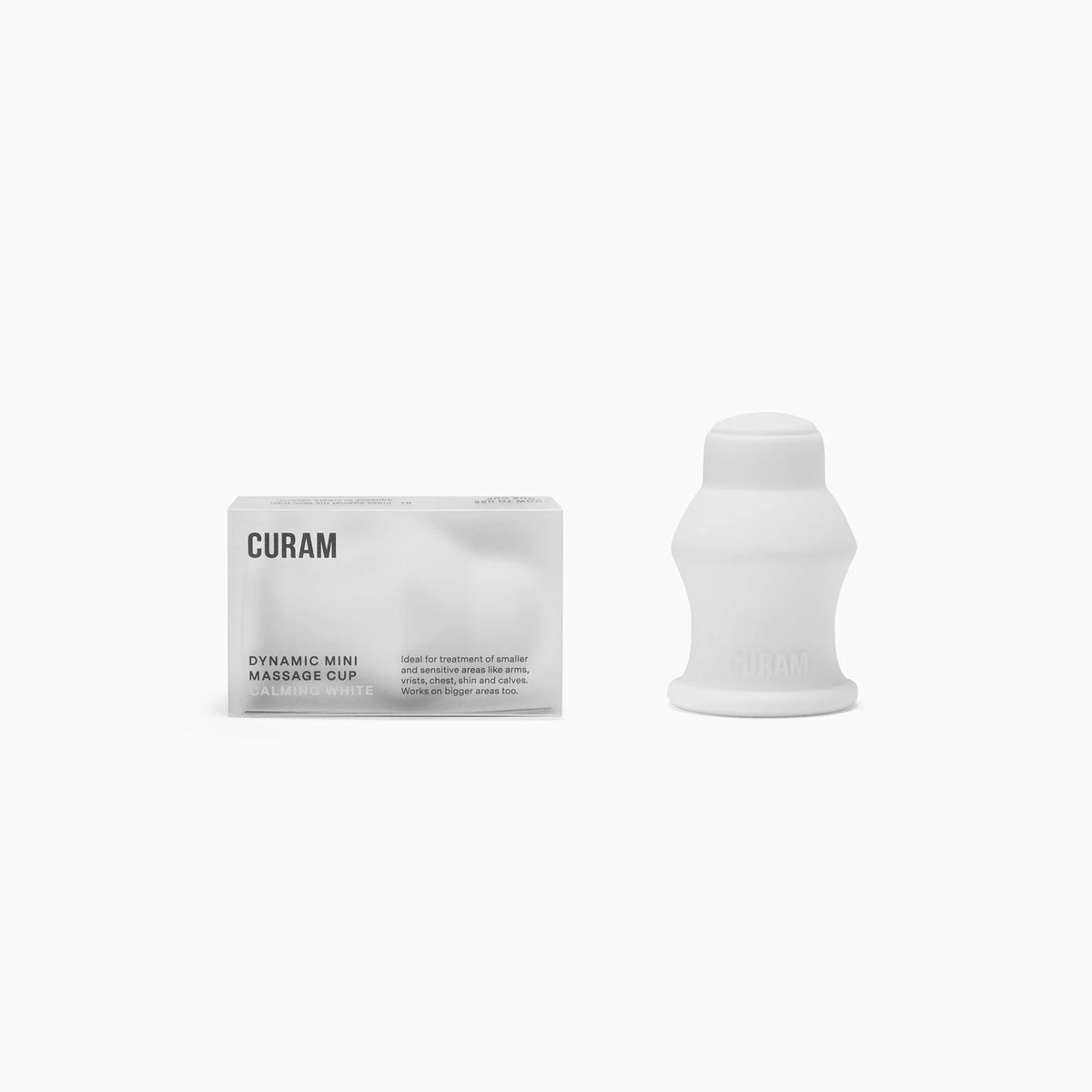
- Use the dynamic mini cup (the forearm is narrow). Squeeze, place on the muscle belly a couple of centimetres below the elbow and glide long strokes down towards the wrist, with light suction. Two to three minutes.
- Continue up the upper arm and out towards the shoulder, one minute, since the tension often sits in the whole arm and shoulder girdle.
- Finish with your eccentric exercises; a warmed-up muscle responds better.
- Two to three times a week. Never cup directly on the bony bump, on a swollen bursa, on a hot joint, over tingling or on freshly injured tissue.
The full forearm routine is in the cupping program for arms; for keyboard and mouse load see the office break program. The basic technique is in Cupping at home.
Prevent
Warm up wrists and forearms before racket sports, climbing and heavy sessions, build up new loads gradually (new mouse, new racket, new programme), take breaks during repetitive work, and train grip strength and shoulders so the forearm does not carry everything. A couple of minutes of cupping the forearm after a heavy session gives the muscles a better start on recovery.
Frequently asked questions
How do I know if it is tennis elbow or golfer's elbow?
Press the bony bumps: tender on the outside (thumb side) with pain when lifting the hand upwards against resistance is tennis elbow; tender on the inside with pain when flexing the wrist downwards against resistance is golfer's elbow. Many have a little of both.
How long does elbow pain take to go away?
Tendon problems heal slowly: expect two to three months with the right training, up to a year in stubborn cases. A bursa on the tip a few weeks. If it is not improving in six to eight weeks, or is worse at night, contact your doctor.
Should elbow pain hurt at rest?
Overloaded tendon attachments hurt when you use the arm and are tender to pressure, but rarely at rest. Constant pain at rest or at night, swelling of the whole joint or fever are signals to seek care.
Does cupping help elbow pain?
As a complement for tennis and golfer's elbow and general muscle tension, yes: it increases circulation in the forearm and reduces the pull on the attachment. The tendon itself is rebuilt with eccentric training; cupping does not replace that. Do not cup a bursa, a hot joint or a tingling nerve.
Can elbow pain come from the neck?
Yes, a nerve root in the lower neck (C6–C7) can give pain and tingling radiating down to the elbow and forearm, often with neck stiffness. Then the elbow is not tender to pressure. See the guide to a stiff neck and let a clinician assess it if it does not pass.
Sources
- 1177 Vårdguiden (Swedish national health guide), search for "tennisarmbåge", "golfarmbåge" and "slemsäcksinflammation" for medical information and when to seek care.
- Curam's FAQ and cupping programs, developed with trained massage therapists.
Related guides
Written by Curam. Last updated 17 October 2026. This is general self-care information and does not replace medical care. For sudden, severe or unusual symptoms, contact your doctor. Talk to your doctor before cupping if you are pregnant, take blood thinners or have a condition affecting skin, blood vessels or blood.


