


Tennis elbow (lateral epicondylalgia) is pain on the outside of the elbow where the forearm's extensor muscles attach, and it is almost always caused by overloading those muscles, not by tennis. Mouse arm is an umbrella term for aching, fatigue and tingling in the hand, forearm, shoulder and neck from long days with a mouse and keyboard, often with tennis elbow as part of the picture. Both heal, but slowly: expect months, not weeks. What heals them is the right load, gradual strength training of the forearm and changed working habits. Here are the causes, the self-care that works, when to see a doctor and how to cup the forearm to get the muscles to let go.
What are tennis elbow and mouse arm?
The forearm's extensor muscles, the ones that lift the wrist and fingers, attach by a common tendon to the bony bump on the outside of the elbow. When the muscles work more than the tendon can recover from, through repeated gripping, twisting or a hand held statically raised over a mouse, the attachment becomes overloaded and tender. Typical signs are pain on the outside of the elbow when you grip, lift a coffee cup, wring out a cloth or shake hands, sometimes with aching down the forearm. If it is the inside of the elbow that hurts, it is called golfer's elbow and the cause is the same but in the flexor muscles.
Mouse arm is not a diagnosis but an umbrella: tennis elbow, tender extensor muscles in the forearm, tendon irritation in the wrist or thumb, tight shoulders and neck, and sometimes tingling in the fingers. What they share is static work in a small range of movement for many hours, without breaks and often with stress. That is why treating only the elbow is rarely enough; the shoulder, the neck and the workstation are part of it. More on the neck and shoulders in Stiff neck and tight shoulders and Cupping for people who sit a lot.
Golfer's elbow – the same thing on the inside
Golfer's elbow (medial epicondylalgia) is the mirror image of tennis elbow: pain on the inside of the elbow where the forearm's flexor muscles attach, the ones that bend the wrist and fingers and turn the forearm inwards. It is roughly five times less common than tennis elbow and comes from repeated gripping and bending, lifting with the palm up, throwing, golf, climbing and heavy work. The self-care follows the same principle, mirrored: reduce what overloads, eccentric training for the wrist flexors (palm up, lift with help, lower slowly), stretching with the palm turned away from you, and cupping the inside of the forearm from the wrist towards the elbow with light suction, not on the bony bump itself. Tingling in the ring and little finger together with golfer's elbow can mean the ulnar nerve is irritated; see a doctor if it does not settle.
When to see a doctor
See a doctor if the elbow is swollen, warm or red, if the pain came suddenly with a jerk or a fall, if you have numbness or tingling in the fingers that does not go away (it may be a trapped nerve at the wrist or elbow), if you have difficulty gripping or drop things, if you have pain at night at rest, a fever or feel generally unwell, or if you are not better after two to three months of self-care. Children and teenagers with elbow pain should always be assessed.
Self-care that helps
- Reduce what overloads, but do not stop using the arm. Remove or change what hurts most (heavy grips, twisting, long mouse sessions), but carry on with daily life. Complete rest makes the tendon weaker.
- Eccentric strength training for the wrist, the best documented self-treatment: sit with the forearm on a table, palm down, a light weight (a water bottle) in the hand. Lift the wrist with the help of the other hand, then lower slowly over five seconds using only the sore arm. Three sets of fifteen, daily. A little soreness during the exercise is fine; increasing pain the next day is too much.
- Stretch the extensors: straight arm, palm down, pull the fingers towards you with the other hand for 30 seconds, three times, several times a day.
- Ergonomics. Mouse close to the body, forearm resting on the desk, wrist straight, elbow at 90 degrees, screen at eye level. Switch to a vertical mouse or trackpad, change hands sometimes, and learn keyboard shortcuts.
- Breaks. Let go of the mouse every 20–30 minutes, shake out, roll the shoulders and stretch the fingers. It is the breaks, not the gadgets, that do most.
- Heat on the forearm before exercises and in the evening. Cold can relieve temporarily straight after loading.
- An elbow strap (a narrow band just below the elbow) offloads the attachment during loading and can be used for a period.
- Patience. Most people are well within six to twelve months, often faster with consistent training. Cortisone injections give short-term relief but poorer long-term results; talk to your doctor.
Cupping the forearm, elbow and shoulder, step by step
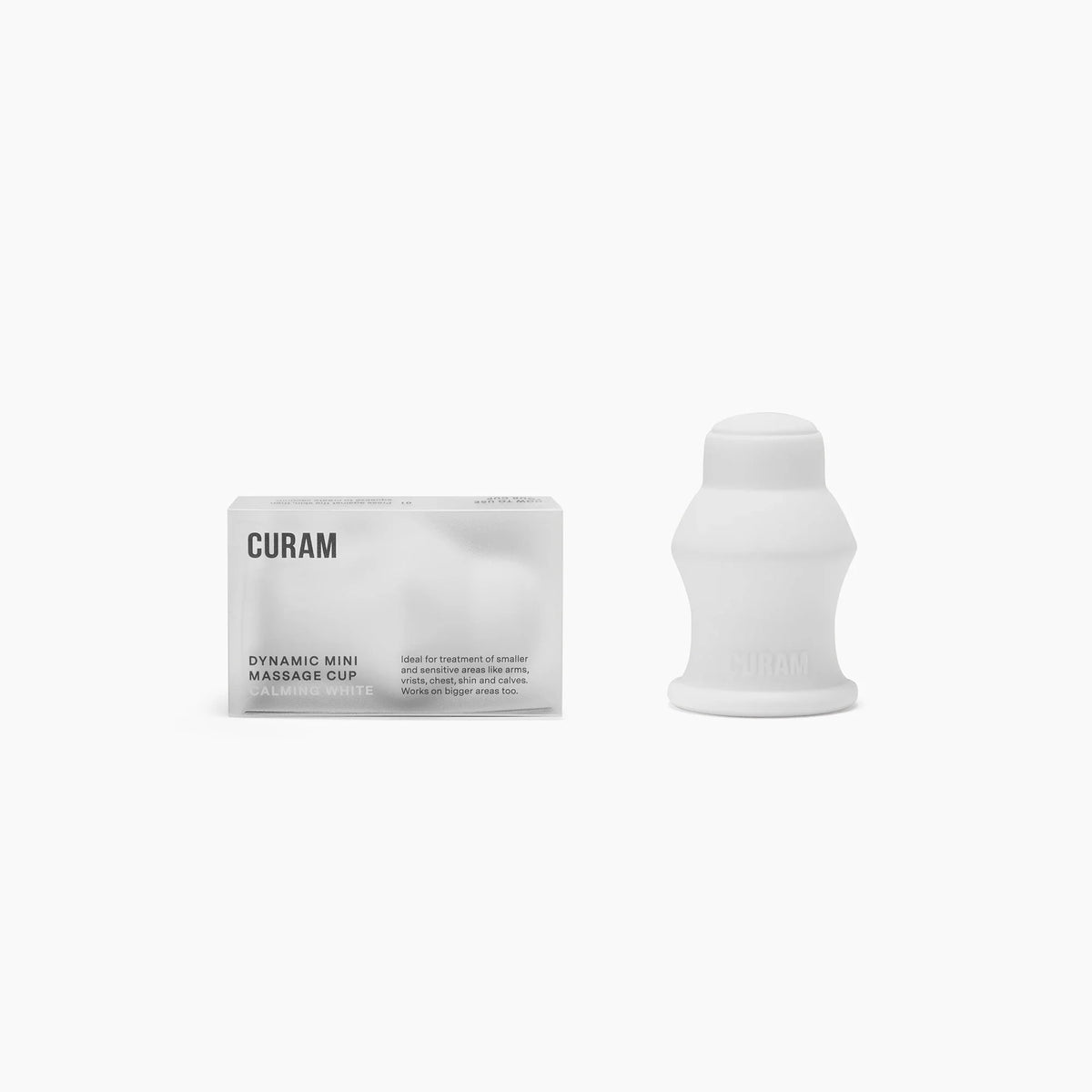
Cupping does not treat the tendon attachment, but it helps the overloaded extensor muscles in the forearm let go and increases circulation in the area, which many find relieving and which makes the exercises easier to do. You need the dynamic mini cup, ideally static cups, and body oil. You can do the forearm entirely by yourself.
- Warm up the forearm with warm water or a heat pad for five to ten minutes.
- Oil the top of the forearm from the wrist to just above the elbow.
- Dynamic, light suction. Rest the arm on a table, palm down. Glide the mini cup in slow strokes from the wrist up towards the elbow along the extensor muscles, five to eight strokes. Move the cup a centimetre sideways and take the next line until you have covered the whole top side. Let the cup release two to three centimetres before the bony bump itself.
- Tender points. Pause with light suction on the most tender spots in the muscle belly (usually a hand's width below the elbow) for ten seconds, while slowly moving the wrist up and down.
- Static. One static cup with light suction on the most tender point of the muscle belly, not on the bony bump, for one to three minutes.
- Mouse arm: continue upwards. Light strokes over the outside of the upper arm, the front of the shoulder and the trapezius from the neck out towards the shoulder. This is easier with someone's help.
- Finish with an extensor stretch and a few slow eccentric wrist lowerings.
Two to three times a week, ideally before the exercises. The basics of static and dynamic cupping are in Cupping at home, and how to choose a cup in How to choose cupping cups.
When not to cup
Not directly on the bony bump or tendon attachment when it is tender, not on a swollen, warm or red elbow, not if you have numbness in the hand that has not been investigated, not on wounds, eczema or recent bruises, not on the inside of the elbow crease with strong suction, and not without medical advice if you take blood thinners or are pregnant. If cupping increases the pain, stop.
Frequently asked questions
How long does tennis elbow take to heal?
Usually six to twelve months without treatment, faster with consistent eccentric training, adapted loading and better working habits. Expect to see improvement after six to eight weeks of training, not after a few days.
Does cupping help with tennis elbow?
Cupping does not treat the tendon attachment, but it helps the overloaded extensor muscles in the forearm let go and increases circulation. Many feel relief and find their exercises easier. It is a complement to strength training and offloading, which is what heals.
Should I rest the arm completely?
No. Reduce what overloads it, but keep using the arm and train the tendon with light eccentric exercises. Tendons get stronger with the right load and weaker with complete rest.
What is the difference between tennis elbow and mouse arm?
Tennis elbow is a specific overload of the tendon attachment on the outside of the elbow. Mouse arm is an umbrella term for problems in the hand, arm, shoulder and neck from computer and mouse work, which can include tennis elbow.
What is the difference between tennis elbow and golfer's elbow?
Tennis elbow sits on the outside of the elbow (the extensor attachment), golfer's elbow on the inside (the flexor attachment). Cause, healing time and self-care are the same, just mirrored: train and cup the side that hurts.
Do I need an elbow strap?
It can offload the attachment when you have to use the arm and reduce the pain temporarily, but it heals nothing in itself. Use it during loading, not around the clock, and combine it with training.
Sources
- 1177 Vårdguiden (Swedish national health guide), search for "tennisarmbåge" and "musarm" for medical information and when to seek care.
- Curam's FAQ and cupping programmes, developed together with trained massage therapists.
Written by Curam. Last updated 17 October 2026. This is general self-care information and does not replace medical care. For sudden, severe or unusual symptoms, contact your doctor. Talk to your doctor before cupping if you are pregnant, take blood thinners or have a condition affecting skin, blood vessels or blood.


