


Yin yoga is the opposite of the yoga most people picture: no flows, no strength, no sweat. You lie or sit in a pose for three to five minutes with the muscles relaxed, so the stretch reaches deeper layers, fascia, joint capsules and ligaments, and the nervous system has time to go from alert to rest. That is why yin works so well for those who are stiff from sitting, stressed, sleeping poorly or need a counterweight to hard training. The principles are three: go into the pose to a clear but soft sensation (about 5 out of 10), become still and release the muscles, and stay for the time with calm breathing. Support from cushions and blankets is not cheating but the method. Static cups on the back or thighs during the poses, or light dynamic cupping before the session, deepen the effect on fascia and relaxation. Here is what yin does, who it suits, eight poses, the breathing, common mistakes and how cups are used.
What yin yoga does, and who it suits
- Connective tissue and joints: long, soft stretches with relaxed muscles affect fascia and joint capsules, which need minutes rather than seconds to change; see the guide to fascia.
- The nervous system: the stillness, the long exhale and the time in each pose lower pulse and stress and are one of the most accessible forms of relaxation for those who cannot sit still in meditation.
- Suits: stiff and sedentary people, stressed people, those who train hard and need recovery, beginners in yoga, older people, and as an evening routine before sleep. Yin complements strength and cardio, it does not replace them.
- Suits less well or needs adaptation: with hypermobility (never go to end range), pregnancy (avoid poses on the belly and deep twists, ask your midwife), acute injuries, a herniated disc in the acute stage, osteoporosis (careful with forward bends) and after surgery. Pain that radiates, numbs or stings is a stop sign.
Three principles and the breathing
- Find the edge, not the maximum. Go into the pose until it feels clear but not painful, about 5 out of 10. Yin is about time, not depth; after a minute you often sink further by itself.
- Become still and release the muscles. Use cushions, blankets and blocks so the body can rest without resisting. Mild discomfort and pull are right, sharp, burning or radiating pain is wrong.
- Stay for the time. Three minutes as a beginner, up to five; come out slowly and lie still for half a minute between poses (the so-called rebound) and notice.
Breathe calmly through the nose with a long exhale, in for four seconds, out for six to eight; it is the same breathing that activates rest-and-digest mode, see the guide to the vagus nerve. Thoughts wander; bring them back to the breath without judging.
Eight poses for beginners (30–40 minutes)
- Child's pose, 3 min. Kneeling, hips towards the heels, forehead on a cushion, arms forward or along the sides. Knees apart if the belly is in the way. Lower back, hips, shoulders.
- Butterfly, 3–5 min. Seated with the soles together a little away from the body, back rounded forward, head heavy. A cushion under the knees if it pulls in the groin. Inner hips, lower back.
- Dragon, 3 min per side. A lunge with the back knee on the floor (cushion under it), hands on blocks or the front thigh, pelvis sinking. Hip flexors and the front of the thigh, the tightest area in people who sit.
- Sleeping swan, 3 min per side. From all fours, bring one knee forward and lay the lower leg across, the back leg straight behind, fold forward over a cushion. Glutes and outer hip. With knee problems: lie on your back and place the ankle over the other knee instead.
- Caterpillar, 3–5 min. Seated with straight legs, fold forward with a rounded back, a cushion on the thighs to rest the head on, knees slightly bent. The whole back of the body.
- Reclining twist, 3 min per side. On your back, knees together and over to one side, arms out, head the other way, a cushion under the knees. Lower back, upper back, abdomen.
- Supported bridge or saddle-light, 3 min. On your back with a cushion or block under the sacrum, legs straight or bent. Opens the front of the hips and lower back; skip with lower back pain.
- Legs up the wall, 5 min. Hips close to the wall, legs up, arms out, eyes closed. Circulation in the legs and relaxation; the perfect finish and start to sleep.
Add a supported forward fold over a cushion for the lower back or sphinx (on the belly on the forearms, 3 min) for those who sit a lot, and melting heart (kneeling with the chest towards the floor and arms forward, 3 min) for shoulders and upper back. More stretches for specific areas in hip stretches and lower back stretches.
Common mistakes
- Too deep too early. Yin is time, not depth. A 5 out of 10 for three minutes gives more than an 8 out of 10 for thirty seconds, and does not damage ligaments.
- Resisting with the muscles. If you tense to hold the pose you need more support: raise the cushion, bend the knees, shorten the time.
- Ignoring tingling and numbness. Change pose immediately; nerves should not be stretched.
- Coming out too fast. Roll out slowly, lie for half a minute and notice; that is where the relaxation happens.
- Yin as the only training. Joints also need strength; complement with home training or walks.
Static cups and light cupping in the yin session
Cups and yin are built on the same idea: time and calm to let the tissue release. Two ways to combine:
- Before the session: three minutes of light dynamic cupping of the tightest area (front of the thigh and hip flexor for dragon, back of the thigh and lower back for caterpillar, upper back for melting heart) with the dynamic cup and oil. The tissue becomes warm and pliable, and you reach the edge more softly.
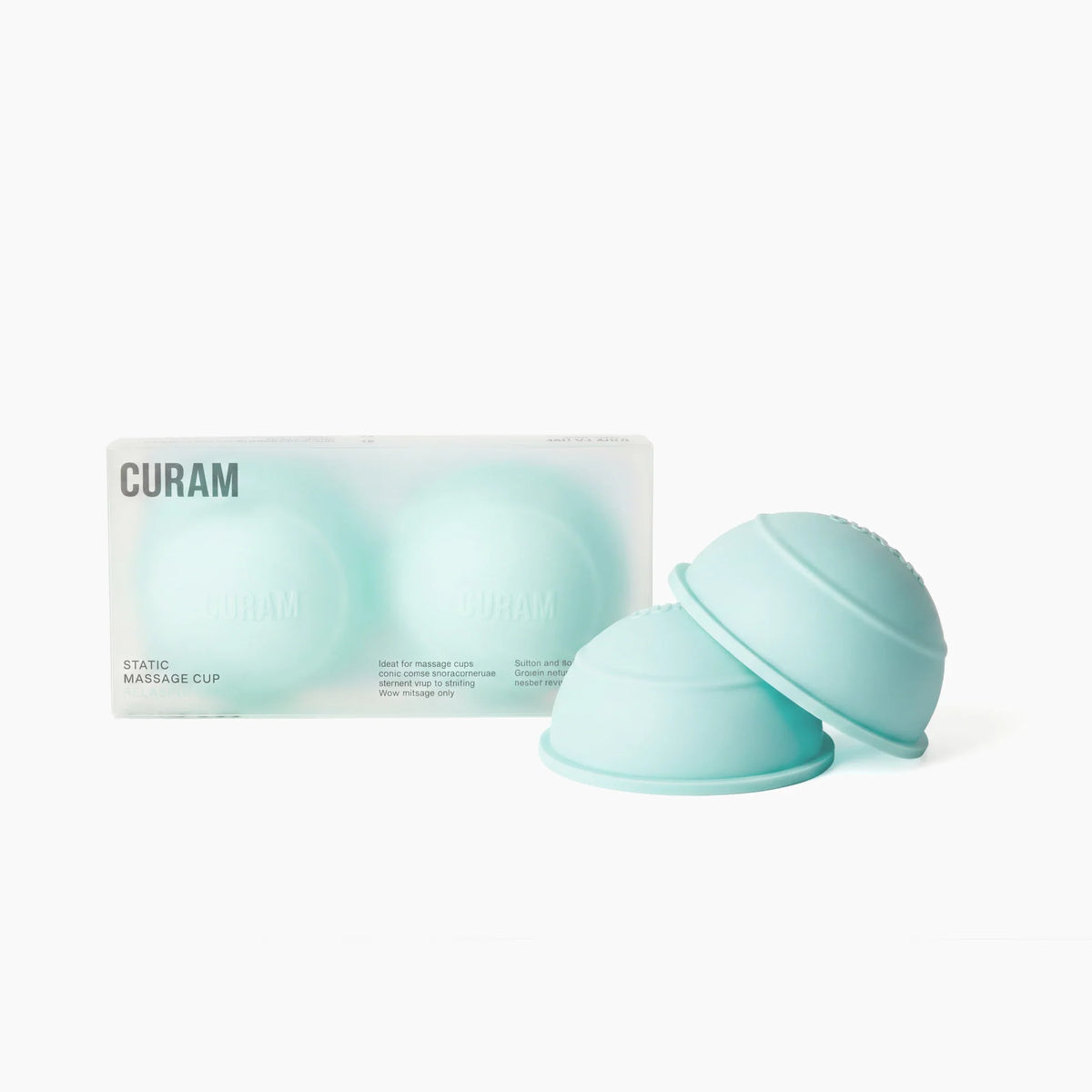
- During the pose: static cups. Place two static cups with light suction on the lower back muscles (a hand's width out from the spine) in child's pose or sphinx, on the front of the thigh in supported bridge, or on the sides of the ribs in the reclining twist and legs up the wall. Leave them for the whole pose (five minutes at most), breathe into them. The lift in the cup and the stretch in the pose work in the same direction, and many experience deeper relaxation. Remove them slowly.
The skin should turn pink, not red; light suction is enough. Do not cup over the spine, back of the knee, groin or armpits, not on swollen joints, wounds or varicose veins, and not during pregnancy on the belly and lower back. The guided routine is in the cupping program for yogis and meditation and relaxation; the evening version in the guide to sleep problems.
Frequently asked questions
What is yin yoga?
Calm yoga where you hold lying and seated poses for three to five minutes with relaxed muscles, so connective tissue, joint capsules and the nervous system have time to release. No flows or strength; support from cushions and blankets is part of the method. Suits stiff, stressed people and those who need recovery.
How long do you hold the poses in yin yoga?
Three minutes as a beginner, up to five once you are used to it; some hold longer. Go in to about 5 out of 10 in sensation, become still, breathe calmly and come out slowly. Time does more than depth.
Is yin yoga suitable for beginners?
Yes, it is one of the most accessible forms of yoga: no demands on strength, balance or mobility, and everything is done with support. If you are hypermobile, pregnant, recently operated or have an acute injury, adapt or ask first.
Can you combine yin yoga and cupping?
Yes, they are built on the same principle of time and calm. Light dynamic cupping before the session makes the tissue pliable, and static cups with light suction on the lower back, thighs or ribcage during the poses deepen the stretch and relaxation. Light suction, never over the spine or joints.
How often should you do yin yoga?
Two to three sessions a week of 30–40 minutes give a clear difference in mobility and sleep within a few weeks; a short evening session with two to three poses can be done daily. Combine with strength and cardio on the other days.
Sources
- 1177 Vårdguiden (Swedish national health guide), search for "yoga" and "avslappning" for general information.
- Curam's FAQ and cupping programs, developed with trained massage therapists and yoga teachers.
Written by Curam. Last updated 17 October 2026. This is general self-care information and does not replace medical care. For sudden, severe or unusual symptoms, contact your doctor. Talk to your doctor before cupping if you are pregnant, take blood thinners or have a condition affecting skin, blood vessels or blood.


