


Fascia is the thin, tough network of connective tissue that surrounds every muscle, muscle fibre, organ, vessel and nerve and binds them into a whole, from head to foot. It is not passive packaging: fascia contains nerve endings that sense pressure, stretch and pain, cells that can contract the tissue, and a water-rich gliding layer that lets muscles move against each other. When you move in varied ways the layers stay soft and gliding; when you sit still, repeat the same movement, are stressed or get injured, the fascia becomes more sluggish, denser and more tender, and that is often what you feel as stiffness, "knots" and diffuse aching. Fascia training means movement with variation, bounce and stretching in long chains, complemented by pressure (ball, foam roller) or lift (cupping) that increases fluid exchange and gliding. The research is younger than the marketing: the short-term effects on mobility and pain are well shown, claims about "releasing" or "reshaping" fascia are not. Here is what fascia is, what has evidence, fascia training step by step, the myths and the role of cupping.
What fascia is and does
- Superficial fascia lies directly under the skin, binds the skin to the layers beneath and contains fat, vessels, nerves and lymph vessels. It is the layer lifted by cupping and gives the "loosening" feeling.
- Deep fascia surrounds muscles and muscle groups like stockings, divides them into compartments and continues into tendons and ligaments. It transfers force between muscles, which is why tension in the calf can be felt in the hamstrings and lower back.
- Visceral fascia surrounds organs, heart and lungs.
- Fascia senses. It has six times more nerve endings than muscle, above all for pressure and stretch, and is an important source of the diffuse, hard-to-locate aching many have in the back and neck.
- Fascia adapts. Loading in varied directions makes it strong and elastic; one-sidedness and stillness make it dense and fibrous in a way that limits gliding. The change takes months, in both directions.
What research says, and does not say
Studies show that fascia responds to loading and stretching by changing water content and tension in minutes, and structure over months; that pressure and stretching (foam roller, massage, cupping) increase mobility and reduce pain in the short term; that fascia contains cells that can contract the tissue under long-term stress and inflammation; and that the lower back fascia is thicker and glides less well in people with long-term back pain. There is no evidence that "adhesions" can be released with hands or tools in healthy people, that fascia can be "reshaped" in one treatment, or that fascia is the cause of all diffuse complaints. A reasonable stance: fascia is an important part of why the body feels stiff or supple, it responds to how you move, and tools such as ball, roller and cup are ways to temporarily increase glide and circulation so movement becomes easier. More on the evidence in Cupping in numbers.
Why fascia becomes stiff and tender
| Cause | What happens | What helps |
|---|---|---|
| Sitting and one-sidedness | The layers glide less well, water content decreases, fascia "sets" in the position it rests in | Variation, movement breaks, fascia training |
| Stress | Fascia's cells contract the tissue; the nervous system raises the resting tension in muscle and fascia | Breathing, relaxation, static cupping; see stress |
| Injury, surgery, inflammation | Scar tissue and adhesions between the layers | Gradual loading, scar massage, cupping around scars; see scars and scar tissue |
| Dehydration, lack of sleep, age | Less water in the gliding layers, slower recovery | Fluids, sleep, regular movement |
| Hard training without recovery | Micro-damage in fascia and muscle; muscle soreness partly sits in the fascia | Light movement, heat, cupping; see muscle soreness |
Fascia training: principles and exercises (10 minutes, three times a week)
Fascia training differs from ordinary stretching and strength in three ways: long chains instead of single muscles, bouncing and varied movements instead of straight repetitions, and slow, long stretches that give the fascia time to change. Expect a clear difference in four to eight weeks; fascia is slow.
- Bouncing hops, 1 minute: light hops on the spot with soft knees and short ground contacts, like skipping without a rope. Trains tendons and fascia to store and return energy.
- World's greatest stretch with rotation, 5 per side: lunge, hand on the floor, rotate the arm towards the ceiling, vary the angle with every repetition. The back chain and the spiral chain.
- Cat-cow with side bends, 10 slow: round, arch, and let the spine go sideways and diagonally; find new angles every round.
- Back chain: stand with slightly bent knees, fold forward, let the head hang, rock gently sideways and twist, 1 minute. Sole to skull base in one chain.
- Front chain: kneeling lunge with arms up and a slight backbend, vary with side bends, 30 seconds per side.
- Side chain: stand with legs crossed, reach the arm over the head and bend sideways, rock gently, 30 seconds per side.
- Slow stretch of the tightest area (hip flexors, chest, calf) for 2 minutes with calm breathing, slowly changing the angle every 20 seconds instead of holding still.
- Pressure or lift: 2 minutes of ball or foam roller on tender areas, or cupping as below, before or after the session.
The mobility programme in stiff body and the strength in home workout without equipment complement; fascia needs both variation and loading.
Cupping and fascia: lift instead of pressure
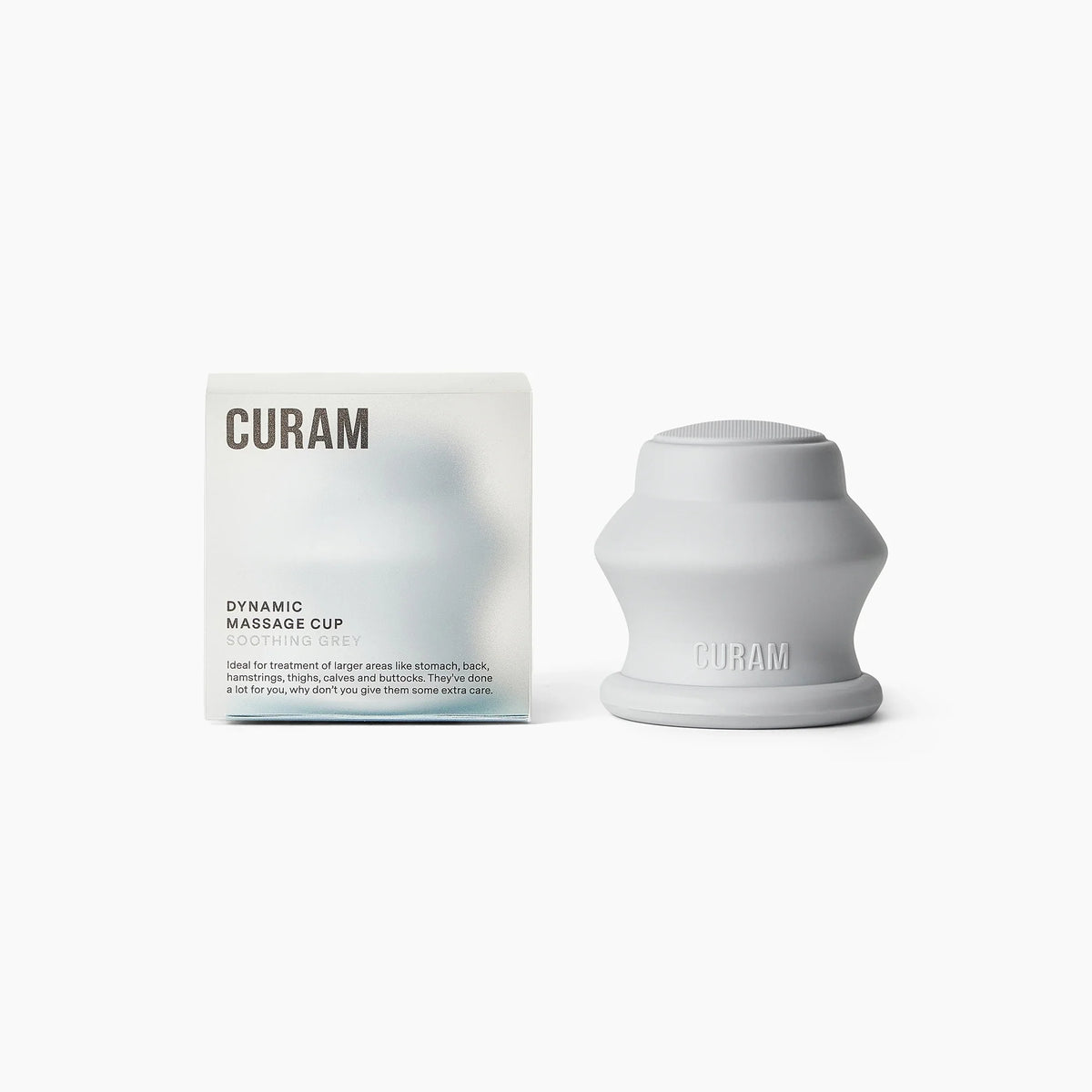
What makes cupping particularly interesting for fascia is the direction: foam roller, ball and hands press the layers against each other, while the cup lifts the skin and the superficial fascia away from the deep fascia, so the layers separate and fluid is drawn into the gliding layer. Ultrasound studies show increased blood flow and changed tissue tension during and after cupping, and studies on neck and lower back pain show reduced pain and increased mobility in the short term. Many experience it as "something releasing", especially where fascia is dense: the lower back, the outside of the thigh, the calves, the upper back and around scars. Use the dynamic cup with massage oil.
- Long strokes along the direction of the muscle and fascia (thigh: from hip to knee; back: along the spine a hand's width out; calf: heel to back of the knee), two minutes per area, moderate suction. It is the glide that does the work, not the strength.
- Cross strokes over dense areas (outside of the thigh, lower back), ten strokes across, to separate the layers in another direction.
- Still lift on a tender point: place the cup, hold still for 20–30 seconds with light suction and move the joint under the cup (bend and straighten the knee with the cup on the thigh). The combination of lift and movement is what gives the largest increase in mobility in studies.
- Finish with the fascia exercises above; the tissue takes the variation better when it is warm and hydrated.
Comparisons with ball and roller are in massage ball or cupping and foam roller or cupping. Do not cup swollen joints, varicose veins, wounds or freshly injured tissue; see when to avoid cupping.
Common myths about fascia
- "Fascia is released by pressure." No; healthy fascia is too strong to be reshaped by hands or tools. What happens is changed water content, tension and nerve signals, which is enough for mobility to increase.
- "Knots are tangled fascia." Tender points are usually tight muscle fibres and sensitive nerves in the fascia, not knots.
- "Fascia must be treated by a therapist." Your own movement, variation and loading do most of it; tools and treatment help.
- "Water dissolves fascia." Fluid is needed, but if you drink normally extra water gives nothing; it is movement that pumps fluid into the tissue.
Frequently asked questions
What is fascia?
The continuous network of connective tissue that surrounds and connects muscles, organs, vessels and nerves throughout the body. It transfers force, senses pressure and stretch and adapts to how you move: varied movement keeps it soft and gliding, stillness and one-sidedness make it dense and stiff.
What is fascia training?
Movement in long chains with bounce, variation and slow stretches, complemented by pressure or lift (ball, roller, cupping). The aim is glide, elasticity and variation rather than maximum strength or mobility in a single muscle. Ten minutes three times a week is enough.
Does cupping help stiff fascia?
Yes, in the short term: the cup lifts the superficial fascia from the deep, draws fluid into the gliding layer and increases blood flow, which in studies gives reduced pain and increased mobility. The effect lasts if you follow up with movement. It does not "release" the fascia permanently; no method does.
Is fascia the cause of my back pain?
Partly, sometimes: the lower back fascia is thicker and glides less well in people with long-term back pain, and it has many pain-sensitive nerve endings. But back pain almost always has several causes (muscles, joints, posture, stress, sleep), and the treatment is movement and strength, where fascia work is one part. See the guide to back pain.
How long does it take to change fascia?
Tension and water content change in minutes, which is why you feel more mobile straight after cupping or rolling. Structure, elasticity and thickness change over months of regular, varied loading, and revert if the movement stops.
Sources
- 1177 Vårdguiden (Swedish national health guide), search for "bindväv" and "ryggsmärta" for general medical information.
- Research overview on cupping, blood flow and mobility in Cupping in numbers; Curam's FAQ and cupping programs, developed with trained massage therapists.
Written by Curam. Last updated 17 October 2026. This is general self-care information and does not replace medical care. For sudden, severe or unusual symptoms, contact your doctor. Talk to your doctor before cupping if you are pregnant, take blood thinners or have a condition affecting skin, blood vessels or blood.


