


Arms are easy to train at home, because the three muscle groups that shape them respond to simple loads: the triceps on the back of the upper arm (two thirds of the upper arm's volume) are trained with all forms of push-ups and dips, the biceps on the front with pulls and curls against resistance, and the shoulders' deltoid with raises and presses. Body weight is enough for triceps and shoulders, and a water container, a backpack with books or a resistance band gives the pull the biceps need. Here are twelve exercises in three levels, a 15-minute session twice a week, progression without weights, the common mistakes that cause pain in elbows, wrists and shoulders, and how cupping of arms and shoulders is used for recovery. Expect stronger arms in four to six weeks and a visible difference in eight to twelve.
Before you start
- Warm up for five minutes: arm circles, wall angels, external rotation with a band and 10 push-ups on the knees. See the guide to warming up.
- Wrists straight, elbows close to the body in triceps exercises, shoulder blades down and back in all lifts. Pain on the outside of the elbow, in the wrist or at the front of the shoulder almost always means wrong technique or too fast an increase; see common mistakes.
- If you have impingement, tennis elbow or wrist problems: start at level 1 and read the guide to impingement or tennis elbow first.
Twelve arm exercises at home
Triceps (back of the upper arm)
- Close-grip push-up. Hands shoulder-width or narrower, elbows back along the body. Level 1: against a wall or table, 3 x 12. Level 2: on the knees, 3 x 10. Level 3: on the toes, 3 x 10, or with the feet on a chair.
- Chair dips. Hands on the edge of a chair behind you, lower the body until the elbows are at 90 degrees, up. Level 1: knees bent, 3 x 10. Level 2: straight legs, 3 x 12. Level 3: feet on another chair. Not with shoulder problems.
- Overhead triceps press with a water container. Hold the container with both hands behind the head, elbows up, extend the arms. 3 x 12.
- Triceps extension with a band. Band anchored high (door) or under the foot, press the forearms down with the elbows still. 3 x 15.
Biceps (front of the upper arm)
- Biceps curl with a water container or backpack. Elbows still at the side, curl up, lower in 3 seconds. Level 1: 1.5 litres, 3 x 12. Level 2: 5 litres, 3 x 10. Level 3: 5 litres one arm at a time, or a backpack with books.
- Band curl. Stand on the band, curl up against resistance, 3 x 15; hammer grip (thumbs up) for the forearms.
- Table row. Lie under a sturdy table, grip the edge, pull the chest up towards the table with the elbows in towards the body. Level 1: knees bent, 3 x 8. Level 3: straight legs, 3 x 10. Trains biceps, back and grip at the same time.
- Isometric towel curl. Stand on a towel, pull upwards with bent elbows as hard as you can for 10 seconds, 5 times. Level 1 and for those without weights.
Shoulders
- Pike push-up. Stand in an inverted V with the hips high, bend the elbows and lower the head towards the floor, press up. Level 1: hands on a chair, 3 x 8. Level 3: feet on a chair, 3 x 8.
- Lateral raises with water bottles with the thumbs slightly up, no higher than shoulder height, 3 x 15. Light weight, slowly down.
- External rotation with a band, elbow at the side, 3 x 15 per arm. The rotator cuff, which keeps the shoulder healthy under everything else.
- Prone Y/T/W. Lie on your front, lift the arms in a Y, T and W with thumbs up, 10 each. Rear shoulder and shoulder blade; the counterweight to all pressing.
A 15-minute session, twice a week
Choose one triceps exercise, one biceps exercise, one shoulder press exercise and always external rotation or Y/T/W. Three rounds with 45 seconds' rest. Session A: close-grip push-up, container curl, pike push-up, external rotation. Session B: dips, table row, lateral raises, Y/T/W. Progression every other week: more repetitions up to 15, then slower lowering (3 seconds), a pause at the bottom, a harder variant, more water in the container. When you manage 15 controlled repetitions of level 3 it is time for real dumbbells or a heavier band. Combine with shoulder exercises for strength and mobility and leg and glute exercises for a whole body, or add the arms to home workout without equipment.
Common mistakes that cause pain in elbows, wrists and shoulders
- Elbows flared out in push-ups and dips: loads the front of the shoulder and causes impingement. Keep them at 45 degrees or closer to the body.
- Bent wrists in push-ups: wrist pain. Press on the knuckles, use handles or do them against a table until the strength is there. See the guide to wrist pain.
- Swinging curls with back and hips: removes the load from the biceps and irritates the lower back. Elbows still, lower weight.
- Lateral raises above shoulder height or with the thumb down: pinches the tendons. Stop at shoulder height, thumb up.
- Too fast an increase of push-ups and pulls: the tendon attachments at the elbow fall behind and cause tennis or golfer's elbow. Increase every other week, not every session, and cup the forearms afterwards.
- Only pressing, no pulling: gives rounded shoulders. As much rowing, Y/T/W and external rotation as push-ups.
Cupping arms and shoulders after the session
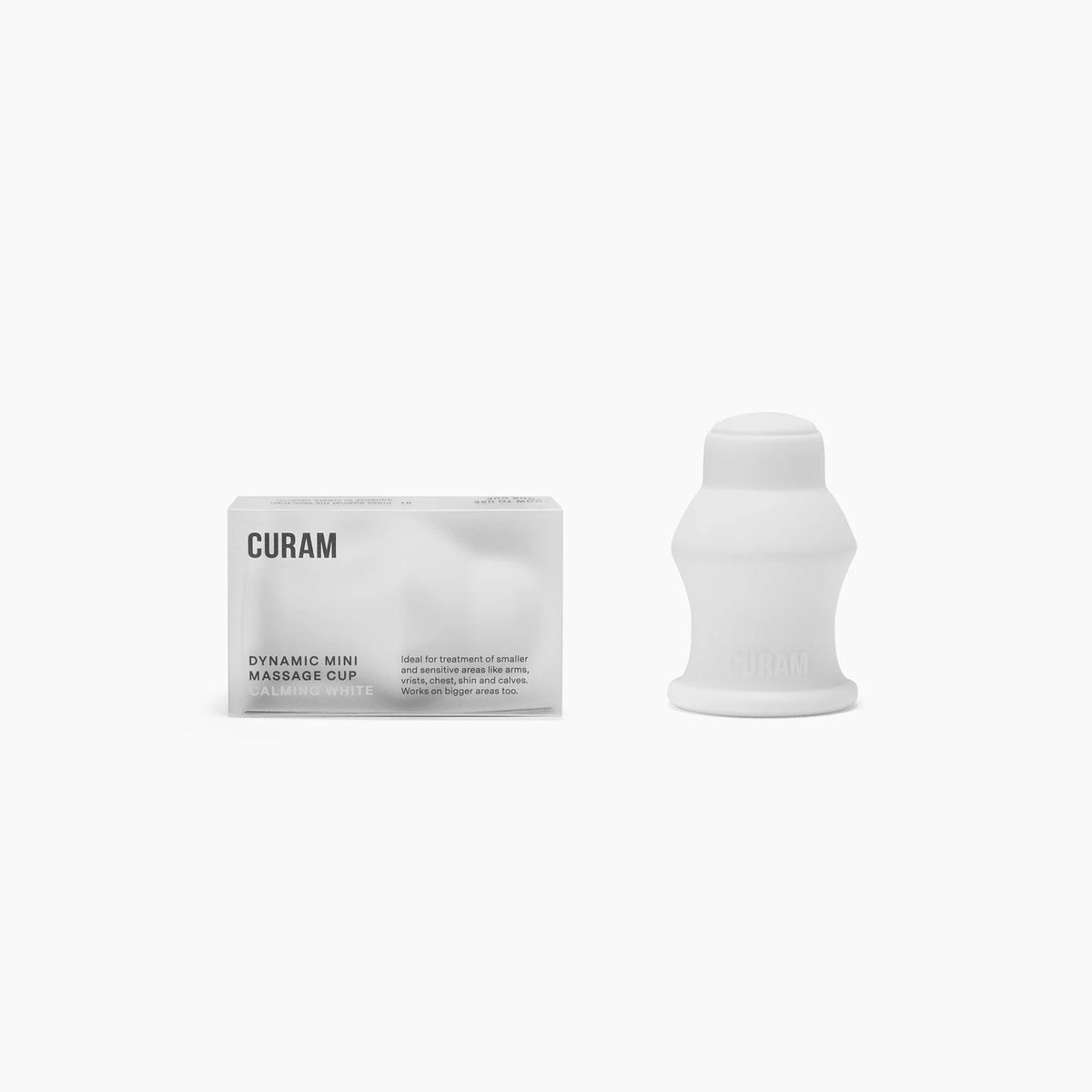
The arm muscles are small and rich in tendons and attachments, and it is the attachments at the elbow and shoulder that protest first under new load. Cupping after the session increases circulation in the upper arm, forearm and shoulder, reduces soreness and keeps the tendon attachments soft; before the session a quick light round is enough as a warm-up. Use the mini cup with light suction and massage oil.
- Forearm: strokes from the wrist up towards the elbow on both the inside and top, one minute per side. Most important for avoiding mouse arm and tennis elbow from arm training.
- Upper arm: strokes from the elbow up towards the shoulder over the triceps at the back and the biceps at the front, one minute each. Not in the elbow crease or armpit.
- Shoulder: circles on the outside and back of the deltoid, and strokes from the breastbone out towards the shoulder below the collarbone, one minute. Not on the shoulder joint itself at the front.
- Finish with arm circles and a chest stretch. Two to three times a week after sessions. Do not cup swollen joints, freshly injured muscle or with numbness.
The full arm and hand routine is in the cupping program for arms and Happy Hands; the technique in Cupping at home.
Frequently asked questions
What are the best triceps exercises at home?
Close-grip push-ups with the elbows close to the body, chair dips, overhead triceps press with a water container and triceps extension with a band. The triceps are two thirds of the upper arm, so those exercises give a visible difference fastest.
How do you train biceps without dumbbells?
Curls with a water container or a backpack with books, band curls, rows under a sturdy table and isometric towel curls. Elbows still, slow lowering and a hammer grip for the forearms. A five-litre container per hand lasts a long time.
How often should you train arms?
Twice a week with at least two days in between is enough; the arms are also trained in all pulling and pressing exercises for back and chest. More than three sessions a week increases the risk of tendon problems at the elbows without giving more.
Why do my elbows hurt from arm training?
The tendon attachments at the elbow fall behind when the load increases too fast, especially with many push-ups, curls with a swinging body and a hard grip; it becomes tennis or golfer's elbow. Increase every other week, keep the wrists straight, cup the forearms after the session and see the guide to elbow pain.
Does cupping help after arm training?
Yes, cupping the forearm, upper arm and shoulder after the session increases circulation, reduces soreness and keeps the tendon attachments at the elbow and shoulder soft, which reduces the risk of mouse arm, tennis elbow and impingement from arm training. Quick light cupping also works as a warm-up.
Sources
- 1177 Vårdguiden (Swedish national health guide), search for "styrketräning" and "tennisarmbåge" for general information and when to seek care.
- Curam's FAQ and cupping programs, developed with trained massage therapists.
Related guides
- Resistance band training – 12 exercises, programme, home gym
- Kettlebell and dumbbell exercises at home – 12 moves and programme
Written by Curam. Last updated 17 October 2026. This is general self-care information and does not replace medical care. For sudden, severe or unusual symptoms, contact your doctor. Talk to your doctor before cupping if you are pregnant, take blood thinners or have a condition affecting skin, blood vessels or blood.


