


Red light therapy is a collective name for treatment with red (630–660 nm) and near-infrared (800–850 nm) light from LEDs or weak lasers, without the heat an infrared sauna gives and without UV radiation. The light penetrates a few millimetres (red) to a few centimetres (near-infrared) into the tissue and is absorbed by an enzyme in the cells' mitochondria, cytochrome oxidase, which then produces more energy (ATP) and signalling molecules that start repair, reduce inflammation and increase the formation of collagen and new small blood vessels. The mechanism is well established in the laboratory and the method has been used in healthcare since the 1990s for wound healing, mucosal damage during cancer treatment and certain pain conditions. In recent years panels and masks for home use have become a big market, and there the promises have outrun the evidence: there is reasonable support for moderate effects on skin structure and fine lines, on pattern hair loss, on muscle soreness after training and on some joint and tendon pain, weaker support for acne and scars, and no support for weight loss, "detox", cellulite, depression or the lamp doing anything for internal organs. The effects require regularity over weeks to months and disappear when you stop. Here is what research says area by area, how to use red light at home, what to look for when buying, and where cupping does the job better.
What research says, area by area
| Area | State of evidence | What to expect |
|---|---|---|
| Skin structure, fine lines, wrinkles | Moderate support: several randomised studies with 630–850 nm show increased collagen density and improved skin texture after 8–12 weeks | Smoother, firmer skin and softer fine lines after two to three months, 3–5 times a week; deep wrinkles are little affected |
| Wound healing and scars | Good support in clinic (hard-to-heal wounds, surgical wounds); weaker for old scars | Faster healing of fresh wounds; somewhat paler and softer new scars |
| Male and female pattern hair loss | Moderate support: helmets and combs with 650 nm give denser hair after 4–6 months in several studies | Less hair loss and somewhat denser hair as long as treatment continues |
| Acne | Weak to moderate support, mainly combined with blue light | Somewhat fewer inflamed spots; not on a par with medical treatment |
| Muscle soreness and recovery after training | Moderate support: near-infrared before or after training has reduced soreness and strength loss in small studies | A little less sore the next day; the effect is small in absolute terms |
| Joint and tendon pain (knee osteoarthritis, tennis elbow, Achilles, jaw joint) | Mixed studies, overall small to moderate short-term pain relief | Relief during treatment periods; doesn't affect the condition |
| Neck and back pain | Weak to moderate support for short-term relief | On a par with heat |
| Pigmentation, rosacea | Weak; some reports of less redness in rosacea | Uncertain |
| Weight loss, fat reduction, cellulite | No sustainable support | None |
| Depression, sleep, "detox", internal organs, immune system | No support for home devices | None (light to the eyes in the morning, light therapy, is something else and well established for seasonal low mood) |
How to use red light at home
- Distance: panels 15–30 cm from the skin (follow the manufacturer's specification, output falls quickly with distance); masks rest against the skin.
- Time: 5–15 minutes per area. More is not better: the dose-response curve is bell-shaped, too high a dose gives a weaker effect.
- How often: 3–5 times a week, not several times a day. Skin and hair need 8–12 weeks before you see anything, muscle soreness is noticed right after the session.
- Clean, bare skin: without make-up, sunscreen or oil, which reflect and absorb light. Apply serum and cream afterwards, not before.
- Eyes: red light isn't dangerous for the eyes in normal doses but strongly unpleasant; use the supplied protection or close your eyes, especially with near-infrared you can't see.
- Combination with face cupping: cup first (increases blood flow and makes the skin more receptive), wipe off the oil, light for 10 minutes, then serum. Or light in the morning and cupping in the evening.
What to look for when buying
- Wavelengths: red 630–660 nm for the skin, near-infrared 810–850 nm for muscles, joints and scalp. A good panel has both. Devices stating "red light" without nanometres are often ordinary coloured LEDs without effect.
- Irradiance (power density): given in mW/cm² at a certain distance. Around 20–100 mW/cm² at treatment distance is reasonable; under 10 mW/cm² requires unreasonably long times. Be sceptical of manufacturers who don't state irradiance or state it measured at the lens.
- Size: a mask covers the face, a handheld wand a small area at a time, a 30 × 60 cm panel covers a back or a thigh. Buy for what you'll treat.
- Safety: CE marking, supplied eye protection, timer. Masks should be flexible and have many diodes (over 100) for an even dose.
- Price: a serious mask costs from a few hundred euros, a panel from several hundred. Cheaper products often lack sufficient output; the most expensive are rarely proportionally better.
Risks and who should avoid it
Red light is essentially safe: no burns, no UV, no known long-term risks in normal doses. Temporary redness, dryness and headache occur. Avoid or ask a doctor if you take photosensitising medicines (some antibiotics, isotretinoin, amiodarone, St John's wort), have light-triggered skin conditions (lupus, porphyria, solar urticaria), have an ongoing skin cancer or a suspicious mole in the area (never illuminate something that should be examined), are pregnant (not over the abdomen, as a precaution), have epilepsy (flashing modes) or an active eye disease. Don't illuminate the thyroid at close range or tattoos with dark ink, which can get warm.
Red light or cupping: what suits what
| Red light therapy | Cupping | |
|---|---|---|
| Works through | Light that increases cellular energy production in skin and superficial tissue; biochemical, slow | Suction that lifts skin, fascia and muscle, increases blood and lymph flow and releases tension; mechanical, immediate |
| Best for | Skin structure and fine lines over time, fresh wounds and scars, pattern hair loss, mild muscle soreness | Tight muscles, stiffness, swelling and fluid, tired legs, skin blood flow and glow right away, lymphatic drainage of the face |
| Time to effect | Weeks to months; disappears when you stop | Right after treatment (blood flow, mobility, less swelling); lasting with regularity |
| Depth | Millimetres (red) to a centimetre or so (near-infrared) | Skin, subcutis, fascia and superficial muscle; indirectly deeper via blood flow |
| Doesn't | Release muscles, drain swelling or increase mobility | Build collagen at cell level, heal wounds or affect hair loss |
| Cost | From a few hundred euros for a device with documented irradiance | A few tens of euros for cups that last for years |
| Risks | Low; medicines and light-sensitive skin | Low; marks, not over varicose veins, wounds, acute inflammation or with blood thinners without a doctor's OK |
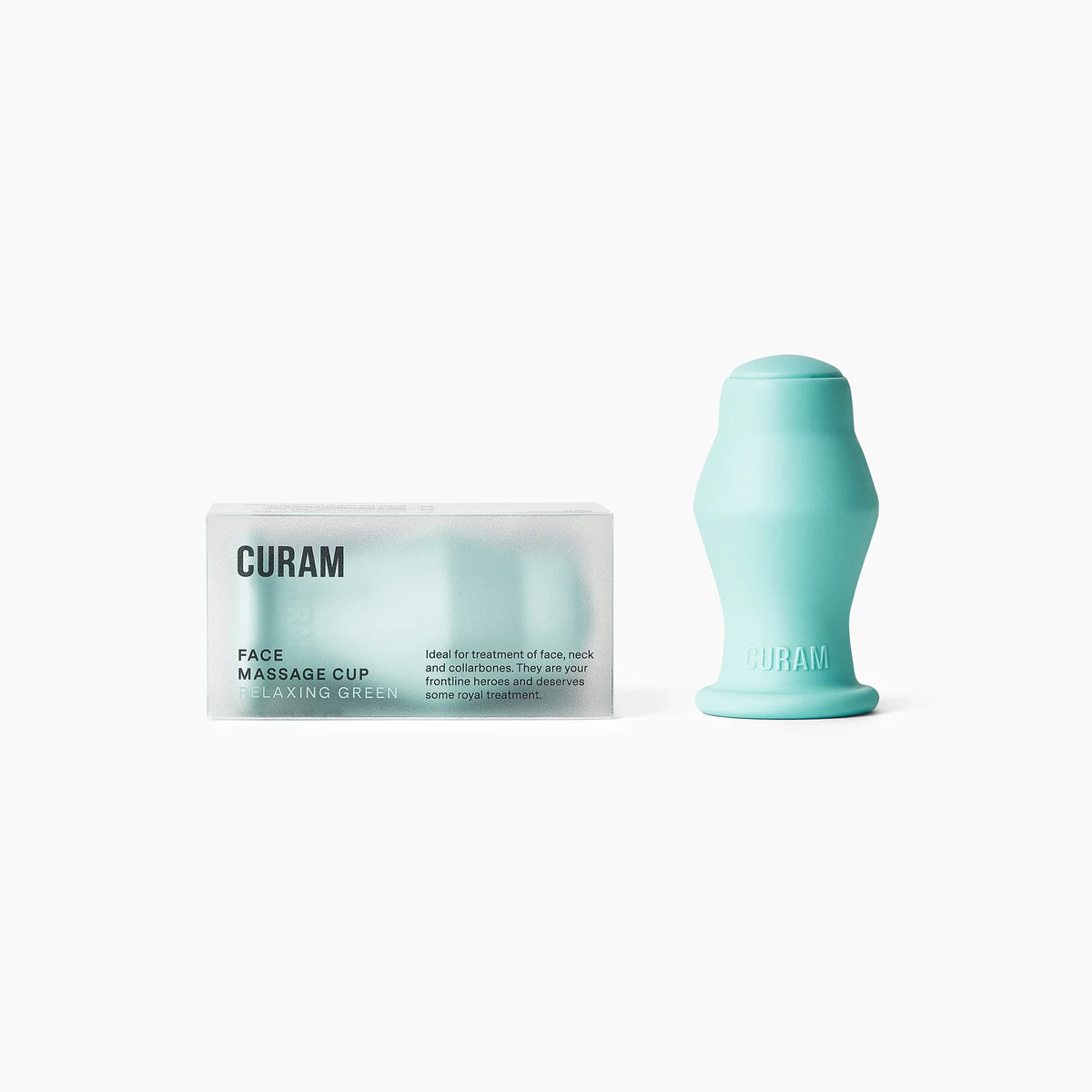
On the face the combination is strong: face cupping with the face cup and the face oil gives immediately increased blood flow, lymphatic drainage and a softer jaw and forehead, while red light builds skin structure over months. For muscles and recovery, cupping is the direct method (recovery after training), red light a small addition. For swelling, fluid and lymph, red light does nothing and cupping and lymphatic massage do everything (lymphatic massage for the face). For deeper wrinkles, around the mouth and in the forehead, it is the muscle tension and skin blood flow cupping reaches, and the collagen red light reaches; read facial cupping before and after for realistic expectations. Other comparisons: gua sha or face cupping, cupping or massage gun and sauna, cold plunge and ice baths. See when to avoid cupping.
Frequently asked questions
Does red light therapy work?
For some things, moderately: skin structure and fine lines after 8–12 weeks of regular use, fresh wounds and scars, pattern hair loss after 4–6 months, and slightly reduced muscle soreness after training. Weak support for acne and joint and tendon pain. No support for weight loss, cellulite, detox or internal organs. The effect requires the right wavelength (630–660 and 810–850 nm), sufficient power density and regularity, and disappears when you stop.
How often should you use red light?
Three to five times a week, 5–15 minutes per area, on clean skin without make-up, sunscreen or oil, at the distance the manufacturer specifies. More or longer doesn't give a better effect; too high a dose gives a weaker one. Allow 8–12 weeks for skin and 4–6 months for hair before you see a difference.
Is red light therapy dangerous?
No, in normal doses: no UV, no heat, no known long-term risks. Temporary redness and headache occur. Protect your eyes. Avoid or ask a doctor with photosensitising medicines, light-triggered skin conditions, suspicious skin changes in the area, pregnancy (not over the abdomen), epilepsy or eye disease.
What is the difference between red light therapy and cupping?
Red light works biochemically at cell level in the superficial layers of the skin, slowly over weeks, and is best for skin structure, wounds, scars and hair. Cupping works mechanically on blood flow, lymph, fascia and muscle, immediately and in depth, and is best for tension, stiffness, swelling and skin glow here and now. Red light releases no muscles and drains no fluid; cupping builds no collagen at cell level. They complement each other, especially on the face.
Can you combine red light and face cupping?
Yes, and it is a good combination: cup first with oil for 5–10 minutes (blood flow, lymphatic drainage, softer muscles), wipe off the oil thoroughly, illuminate for 10 minutes on clean skin, then apply serum and cream. Or red light in the morning and cupping in the evening. Don't illuminate skin that is irritated or has clear cupping marks the same day.
Related guides
- The Wim Hof method – breathing, cold, what research says and safety
- Large pores – why they show, what helps and a routine
Written by Curam. Last updated 17 October 2026. This is general self-care information and does not replace medical care. For sudden, severe or unusual symptoms, contact your doctor. Talk to your doctor before cupping if you are pregnant, take blood thinners or have a condition affecting skin, blood vessels or blood.


