


The thigh consists of four muscle groups pulling in different directions: the quadriceps at the front (straighten the knee, flex the hip), the hamstrings at the back (bend the knee, extend the hip), the adductors on the inside (bring the legs together) and on the outside the iliotibial band, a tendon tract from hip to knee tensioned by the gluteal muscles. Through the thigh also run the large nerves from the lower back: the sciatic nerve at the back, the femoral nerve at the front and the small skin nerve that gives sensation on the outside, and all three can give thigh pain that originates in the back or groin. The hip joint sits deep in the groin, and pain from it is often felt on the front of the thigh all the way down towards the knee. This means thigh pain can be a muscle that is overworked or strained (most common), a tendon irritated at its attachment at the hip or knee, a pinched nerve, a worn joint, or, rarely but importantly, a blood vessel. The location, how it started, and what makes it worse are usually enough to get it right. Here is the thigh part by part, with what the pain can be, when to seek care, and what helps.
Where in the thigh does it hurt? Quick overview
| Location | Most common | Also consider |
|---|---|---|
| Front | Overworked quadriceps (training, stairs, cycling), strain of the rectus femoris (sprinting, kicking), tight hip flexor | Hip osteoarthritis (pain in the groin out onto the front down towards the knee, stiff in the morning), femoral nerve pinched in the back (front pain with weakness straightening the knee, numbness on the inside of the lower leg) |
| Back | Hamstring strain (sudden stab when sprinting or lunging), overload after running, tight hamstrings from sitting | Sciatica (radiates from the buttock down the back, often below the knee, with numbness), hamstring attachment at the sitting bone (pain when sitting on a hard surface), piriformis |
| Outside | Tight iliotibial band (runners, cyclists, pain down towards the outside of the knee), trochanteric bursitis at the top by the hip bone (painful to lie on the side) | Meralgia paresthetica: burning, tingling numbness on the outside of the thigh without weakness, from pressure on the skin nerve in the groin (tight trousers, belt, pregnancy, weight gain) |
| Inside | Adductor strain (groin strain: football, skating, side lunges), overloaded adductor attachment | Inguinal hernia, varicose veins along the inside, blood clot (swollen, warm, tender thigh and calf: care the same day), hip osteoarthritis |
| Whole thigh, deep | Muscle soreness, cramp, muscle ache after infection | Stress fracture of the femoral neck in runners and older people (deep pain in groin and thigh under load), nerve involvement from the back |
Pain at the front of the thigh
Quadriceps and rectus femoris. Soreness and stiffness across the whole front after unaccustomed load (squats, stairs, downhill running, cycling) is soreness or overload and passes in a few days to a week with light movement and heat. A sudden stab in the middle of the front when sprinting, kicking or jumping, followed by difficulty straightening the knee with force, is a strain or tear of the rectus femoris; see muscle strain in the calf and thigh. The hip flexor (iliopsoas) gives pain and tightness at the very top of the front and in the groin, worse when you extend the hip backwards (the last step in walking, lunges) and after long sitting; see hip and hip flexor stretches. Hip osteoarthritis feels like a dull pain in the groin radiating out onto the front of the thigh, sometimes all the way to the knee, with stiffness in the morning and after sitting and difficulty putting on socks; see hip pain. The femoral nerve pinched in the lower back (a high disc herniation) gives front pain with numbness on the front and inside of the thigh down the inside of the lower leg and weakness straightening the knee, for example on stairs; that should be assessed.
Pain at the back of the thigh
Hamstrings. A sudden stab at the back when sprinting, lunging or slipping is a hamstring strain, the most common muscle injury in sport; the grade decides the healing time (one to six weeks or more). Dull soreness at the back after running or strength training is overload. Tightness at the back in someone who sits a lot is shortened hamstrings, released with movement and stretching rather than hard pulling. The hamstring attachment at the sitting bone (proximal hamstring tendinopathy) gives deep pain at the very top of the back, exactly where you sit, worse from sitting on hard surfaces, uphill running and stretching; treated with gradual strength, not stretching. Sciatica differs in that the pain starts in the buttock or lower back and radiates down the whole back, often below the knee, with numbness, tingling or weakness, and worsens with coughing, bending forward and long sitting; see sciatica and piriformis syndrome.
Pain on the outside of the thigh
The iliotibial band is a thick tendon tract along the outside, and when glutes and hip are weak or running and cycling volume increases quickly it becomes tight and tender, most often down towards the outside of the knee (runner's knee) but also along the whole thigh. Foam roller and cupping release it, glute strength cures it; see runner's knee. Trochanteric bursitis sits at the very top of the outside by the hip bone, hurts when lying on the side and climbing stairs, and radiates down the outside; see trochanteric bursitis. Meralgia paresthetica is easy to recognise once you know it: burning, tingling, numb or oversensitive skin on a palm-sized area on the outside or front of the thigh, without weakness and without back pain. The cause is pressure on a small skin nerve where it passes under the inguinal ligament: tight trousers, a heavy belt, pregnancy, rapid weight gain, long standing. It usually disappears by itself when the pressure is removed; looser clothes, weight loss and patience. Symptoms that haven't passed in a few months are assessed by a doctor.
Pain on the inside of the thigh
The adductors are strained with quick sideways movements, side lunges, skating, football and riding, with a stab high up on the inside or in the groin; overload gives dull tenderness at the attachment on the pubic bone. See groin pain. Varicose veins along the inside of the thigh give heaviness and aching towards evening; see varicose veins. A blood clot in the deep veins of the thigh gives a swollen, warm, tender and often reddened thigh or calf, sometimes with heaviness, without clear injury, often after travel, surgery, bed rest, pregnancy or with the pill. It is the only cause of thigh pain that is urgent: seek care the same day, and never cup or massage.
When to seek care
- Same day: swollen, warm, tender thigh or calf without injury (blood clot); emergency services if it comes with breathlessness or chest pain. Sudden severe pain in the thigh or groin after a fall in an older person, with inability to bear weight (hip fracture). Numbness in the genital area or difficulty urinating together with leg pain (emergency).
- Within a few days to a week: increasing weakness in the leg (difficulty straightening the knee, lifting the foot); a palpable dent or large bruise in the muscle after a stab (larger tear); thigh pain with fever; deep pain in groin and thigh under load in runners or older people that doesn't pass with rest (stress fracture).
- Within a few weeks: pain not improved in three to four weeks with self-care; sciatic pain with numbness; morning stiffness in the hip affecting daily life; burning numbness on the outside that doesn't let go in a few months.
What helps
Acutely after a stab
The first two to three days: offload what hurts, light compression with an elastic bandage, leg elevated, cold for 15 minutes a few times a day with swelling, and start moving the leg pain-free from day two (walk, light bend and straighten). No stretching, no massage and no cupping on a fresh tear. From day three to five: light isometric contractions, then gradual strength.
Strength
- Front: squats and lunges to pain-free depth, step-ups, seated leg extensions; 3 × 10–12.
- Back: straight-leg hip lifts on a pilates ball, Romanian deadlifts with light weight, nordic hamstring (light, few reps); eccentric training is what prevents new hamstring injuries.
- Outside and glutes: side-lying leg raises, clamshells, side lunges, single-leg stance; 3 × 15.
- Inside: Copenhagen adduction (short lever at first), side-lying adductor lifts, squeezing a ball between the knees; 3 × 10.
Two to three sessions a week, start light, increase ten percent per week; plans in home workout without equipment and kettlebell and dumbbells at home.
Mobility
Kneeling hip flexor stretch, hamstring stretch with straight leg and straight back (pull the toes towards you instead of dropping the head), adductor stretch in a wide stance, iliotibial band with a foam roller; 30 seconds × 2–3, daily, to tension, never pain. See stiff body.
Cupping the thigh
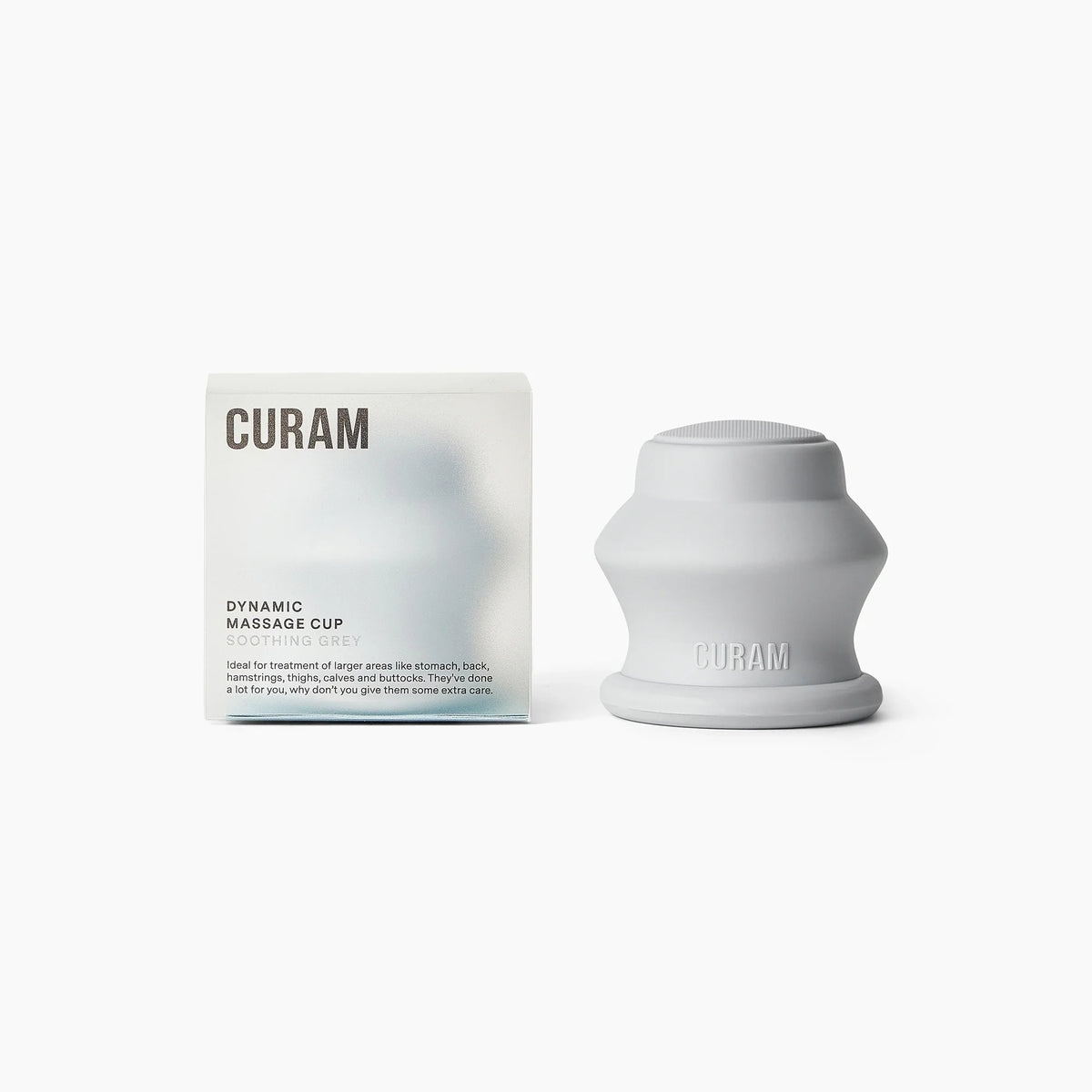
The thigh is the most rewarding area on the body for cupping: large, flat muscles, plenty of room, and thick fascia that responds clearly. Cupping releases tight quadriceps, hamstrings, adductors and iliotibial band, increases blood flow before training and speeds recovery after, and releases the adhesions that form after a healed tear. Oil the skin and glide the dynamic cup with light to moderate pressure in long strokes towards the hip: the front from the kneecap to the groin crease, 3 minutes; the outside from the outside of the knee to the hip bone, 3 minutes (the band tolerates firm pressure but is often tender); the back from the back of the knee to the sitting bone, 3 minutes; the inside with light pressure from the inside of the knee up towards the groin, 2 minutes. Place static cups on the most tender points for 3–5 minutes. Stretch and train afterwards. Programmes: the cupping programme for runners and for sensitive knees; the basics in the complete guide. Don't cup a fresh tear (wait at least a week and until the bruise has faded), never with a suspected blood clot, not over varicose veins on the inside, not in the groin crease, not with numbness that hasn't been investigated, and not if you take blood thinners without having asked; see when to avoid cupping.
Read more
Hip pain, knee pain, groin pain, sciatica, muscle strain, runner's knee and buttock pain.
Frequently asked questions
Why does my thigh hurt without having injured it?
Most common is overload or tension in the thigh muscles after unaccustomed activity or long sitting, a tight hip flexor or iliotibial band, and nerve involvement from the back (sciatica at the back, the femoral nerve at the front) or the small skin nerve on the outside (burning numbness, meralgia paresthetica). In people over 50 with pain in the groin and front and morning stiffness: hip osteoarthritis. A swollen, warm, tender thigh without injury is a blood clot until proven otherwise: seek care the same day.
What does burning pain and numbness on the outside of the thigh mean?
Usually meralgia paresthetica: pressure on a small skin nerve where it passes under the inguinal ligament, from tight trousers, a belt, pregnancy, weight gain or long standing. It gives burning, tingling or numb skin on a palm-sized area, without weakness and without back pain, and usually passes when the pressure is removed. If it persists for months: see your doctor.
How do I tell sciatica from a hamstring injury?
The hamstring injury comes suddenly when sprinting or lunging, sits in the muscle at the back, is tender to pressure and hurts when you contract or stretch the muscle. Sciatica starts in the buttock or lower back, radiates down the back often below the knee, gives numbness, tingling or weakness, and worsens with bending forward, coughing and long sitting, not with contracting the muscle.
When is thigh pain dangerous?
With a swollen, warm, tender thigh or calf without injury (blood clot: care the same day, emergency services with breathlessness); with inability to bear weight after a fall in an older person (hip fracture); with increasing weakness in the leg, numbness in the genital area or difficulty urinating (nerve involvement: emergency); with pain and fever; and with deep load-related pain in groin and thigh in runners or older people that doesn't rest away (stress fracture).
Does cupping help thigh pain?
Yes, the thigh is the area where cupping works best of all: tight quadriceps, hamstrings, adductors and iliotibial band are released, blood flow increases and adhesions after healed tears are softened. Glide the cup in long strokes towards the hip on each side of the thigh, 2–3 minutes per side, and stretch afterwards. Not on a fresh tear, never with a suspected blood clot, not over varicose veins and not in the groin crease.
Related guides
Written by Curam. Last updated 17 October 2026. This is general self-care information and does not replace medical care. For sudden, severe or unusual symptoms, contact your doctor. Talk to your doctor before cupping if you are pregnant, take blood thinners or have a condition affecting skin, blood vessels or blood.


