


The buttock is three layers of muscle on top of the pelvis: outermost the large gluteus maximus, beneath it the gluteus medius that keeps the pelvis level when you stand on one leg, and deepest six small external rotators, of which piriformis is best known because the sciatic nerve passes right under or through it. At the very bottom sits the sitting bone, where the hamstrings attach and where a bursa takes up the pressure when you sit. On the outside sits the hip bone (greater trochanter) with its tendon attachments and bursa, upwards towards the lower back the SI joint between the sacrum and the pelvis, and in the middle at the very bottom the tailbone. Buttock pain comes from one of these: overloaded or weak gluteal muscles (the most common cause, especially in people who sit a lot and then train hard), a tight piriformis irritating the sciatic nerve, sciatica from the lower back, an irritated hamstring attachment or bursa at the sitting bone, SI joint problems, trochanteric bursitis, or the tailbone. The location and what triggers the pain tell them apart, and almost all improve with the same three things: stronger glutes, less continuous sitting, and releasing the deep muscles with cupping and pressure. Here is the buttock part by part, when to seek care, and what helps.
Where in the buttock does it hurt?
| Location | Most common | How it feels | Read more |
|---|---|---|---|
| Deep in the middle of the buttock, often radiating into the back of the thigh | Piriformis syndrome, tight deep rotators | Dull, deep ache worsened by long sitting (especially on a wallet or hard surface), stairs, running; tender when you press deep in the middle of the buttock; sometimes tingling down the leg but rarely below the knee | Piriformis syndrome |
| Buttock and down the whole leg, often below the knee | Sciatica from the lower back (disc herniation, narrow nerve canal) | Sharp, radiating, burning or electric pain with numbness, tingling or weakness; worsened by coughing, sneezing, bending forward, long sitting; often back pain at the same time | Sciatica |
| Exactly where you sit (the sitting bone) | Hamstring attachment tendinopathy, bursitis ("weaver's bottom") | Local, deep pain on the sitting bone, worse from sitting on a hard surface, uphill running, lunges, stretching the back of the thigh; tender to pressure | Bursitis |
| At the very top, on one side towards the lower back, over the small dimple | SI joint problems (pelvic joint) | One-sided, deep ache just below the belt line beside the sacrum, worse from standing up, turning in bed, standing on one leg, climbing stairs; sometimes radiates into the buttock and back of the thigh but not below the knee; common during and after pregnancy | Pelvic girdle pain, lower back pain |
| Outside of the buttock and hip | Trochanteric bursitis, weak gluteus medius | Tender over the hip bone, painful to lie on the side, worse on stairs and when walking; ache along the outside of the thigh | Trochanteric bursitis |
| In the middle, at the very bottom between the buttocks | Tailbone (coccydynia) | Sharp or dull pain right on the tailbone when you sit, especially leaning back and when you stand up; after a fall, childbirth or long sitting | Tailbone pain |
| Whole buttock, sore and tired | Overloaded or weak glutes, muscle soreness, long sitting | Dull soreness in the whole buttock after training (squats, lunges, uphill running) or after a long day in the chair; stiffness when you stand up | Below |
| Deep in the groin and buttock, with stiffness | Hip osteoarthritis, hip impingement | Ache in the groin also felt in the buttock, stiff in the morning, difficulty putting on socks, reduced rotation | Hip pain |
When to seek care
- Emergency: buttock or leg pain together with numbness in the genital area or inner thighs ("saddle area"), difficulty urinating or holding urine, or rapidly increasing weakness in the legs (cauda equina, uncommon but urgent); pain with high fever; severe pain after a fall in an older person.
- Your doctor within a few days to a week: sciatic pain with weakness (foot drop, difficulty walking on toes or heels); pain that wakes you at night and isn't affected by position; buttock pain with weight loss, fever or previous cancer; swelling, redness or warmth over the sitting bone or tailbone (abscess).
- Your doctor within a few weeks: pain not improved in four to six weeks with self-care; recurrent sciatica; SI joint pain limiting daily life; pain that means you can't sit.
What helps buttock pain
1. Break up the sitting
Long continuous sitting is the common denominator for piriformis, the sitting bone, the SI joint and the tailbone: the pressure shuts off blood flow in the deep muscles, the nerve is compressed, and the glutes "forget" to work. Stand up every 30 minutes, walk for a minute, do ten hip lifts or ten standing kick-backs. Don't sit on your wallet. With pain at the sitting bone or tailbone: a wedge cushion or ring cushion that offloads; switch to a standing desk for part of the day. See cupping for people who sit a lot.
2. Stronger glutes
Weak glutes are the cause behind most buttock problems in both sedentary people and runners: when gluteus medius doesn't hold the pelvis, piriformis, iliotibial band, SI joint and lower back are overloaded. Three sessions a week:
- Glute bridges, 3 × 15; later on one leg.
- Clamshells with a resistance band, 3 × 15 per side.
- Side-lying leg raises with a straight leg and toes pointing slightly down, 3 × 15.
- Side steps with a band around knees or ankles, 3 × 10 steps each way.
- Single-leg stance with the pelvis level, 30 seconds × 3; later single-leg squats to a low chair.
- Reverse lunges and step-ups, 3 × 10 per leg.
With pain at the sitting bone: start with isometric hip lifts and avoid deep lunges and hamstring stretching for six weeks; then build up eccentrically. Plans in home workout without equipment and kettlebell and dumbbells at home.
3. The right stretches
- Piriformis and deep rotators: lying on your back, place the ankle on the opposite knee and pull that knee towards the chest (figure four), 30 seconds × 3 per side; or seated with the ankle on the knee, lean forward with a straight back.
- Gluteus maximus: lying down, pull the knee diagonally towards the opposite shoulder, 30 seconds × 3.
- Hip flexor: kneeling lunge, push the hip forward, 30 seconds × 3; a short hip flexor switches off the glutes.
- Not at the sitting bone: hamstring stretching worsens attachment pain; wait until it has calmed down.
More in hip and hip flexor stretches and lower back stretches.
4. Heat and pressure
Heat on the buttock for 15–20 minutes releases the deep muscles before stretching. Pressure with a massage ball or tennis ball against a wall or the floor in the middle of the buttock, 30–60 seconds per tender point, is effective for piriformis and trigger points in gluteus medius; see massage ball or cupping.
5. Cupping the glutes
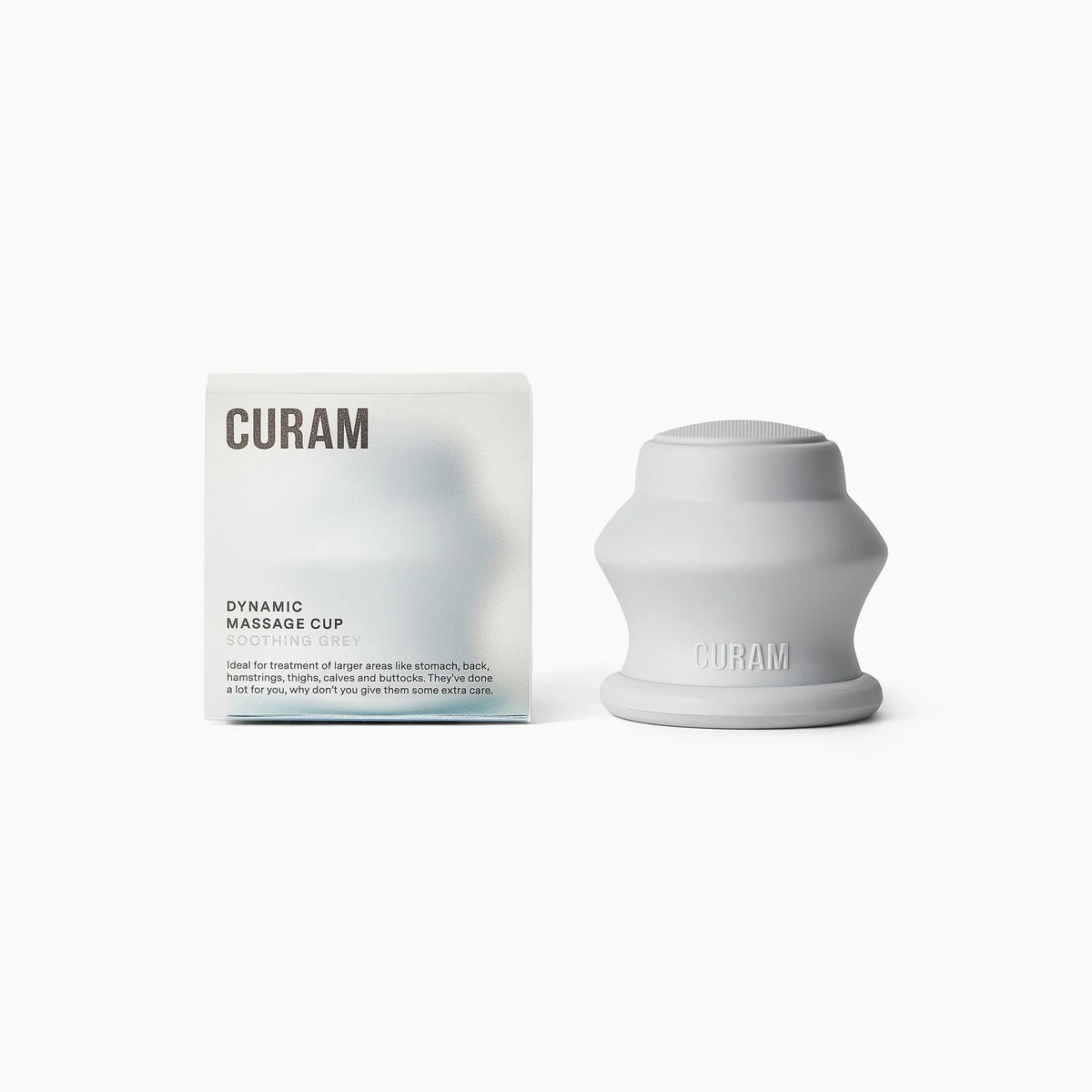
The buttock is one of the areas where cupping makes the biggest difference, because the deep muscles are hard to reach with hands and ball but are clearly lifted and released by the suction: blood flow increases in piriformis and gluteus medius, the fascia between the layers lets go, and the pressure on the sciatic nerve decreases. How to: lie on your front or side, oil the skin, glide the dynamic cup with moderate pressure in long strokes from the sitting bone diagonally up towards the iliac crest and from the sacrum out towards the hip bone, 3–4 minutes per side; then circle slowly in the middle of the buttock over piriformis for a minute. Place static cups (the larger ones) in the middle of the buttock and over gluteus medius just below the iliac crest for 5–8 minutes while you breathe calmly. Finish with the piriformis stretch. Two to three times a week, ideally the evening before a training session. Don't cup directly on the tailbone, on the sitting bone if it is swollen and warm, over the SI joint during pregnancy without the midwife's OK, with acute sciatica with weakness or numbness that hasn't been investigated, or if you take blood thinners without having asked; see when to avoid cupping. Routines in the cupping programme for runners and cupping on the back.
Read more
Piriformis syndrome, sciatica, tailbone pain, trochanteric bursitis, hip pain, thigh pain and back pain: where does it hurt.
Frequently asked questions
Why does my buttock hurt when I sit?
Depends on where: deep in the middle of the buttock with radiation into the thigh is usually a tight piriformis irritating the sciatic nerve; right on the sitting bone is the hamstring attachment or the bursa; at the very bottom in the middle is the tailbone; at the top on one side is the SI joint. Common to all is that long continuous sitting, hard surfaces and a wallet in the back pocket make it worse, and that breaks every half hour, stronger glutes and cupping the buttock help.
How do I know if it is piriformis or sciatica?
Piriformis syndrome gives a deep ache in the middle of the buttock, tender to deep pressure there, worse with sitting, stairs and running, with radiation into the back of the thigh but rarely below the knee, and without back pain. Sciatica from the lower back radiates along the whole leg often below the knee, gives numbness, tingling or weakness, worsens with coughing, sneezing and bending forward, and often comes with back pain. Weakness, numbness in the genital area or difficulty urinating: emergency care.
What helps quickly against buttock pain?
Stand up and walk for a few minutes, heat on the buttock, pressure with a ball against a wall in the middle of the buttock for 30–60 seconds per tender point, the piriformis stretch (ankle on the opposite knee, pull the knee towards the chest), and cupping the buttock with long strokes and static cups in the middle of the buttock for 5–8 minutes. Long term: stronger glutes three times a week and shorter sitting spells.
Which exercises are best for buttock pain?
Glute bridges, clamshells with a band, side-lying leg raises, side steps with a band, single-leg stance with a level pelvis, reverse lunges and step-ups, three times a week. They strengthen gluteus medius and maximus so that piriformis, SI joint and lower back are offloaded. With pain at the sitting bone: start isometrically and avoid deep lunges and hamstring stretching for six weeks.
Can you cup the buttocks?
Yes, and it is one of the most effective areas: the suction lifts and releases the deep muscles that are hard to reach with the hands, increases blood flow in piriformis and gluteus medius and reduces the pressure on the sciatic nerve. Long strokes from the sitting bone towards the iliac crest, circles in the middle of the buttock, and static cups for 5–8 minutes, two to three times a week. Not directly on the tailbone, not on a swollen warm sitting bone, not with uninvestigated sciatica with weakness.
Related guides
- Hip pain at night – causes, sleeping position, exercises and cupping
- Pelvic pain – where does it hurt and what it can be
Written by Curam. Last updated 17 October 2026. This is general self-care information and does not replace medical care. For sudden, severe or unusual symptoms, contact your doctor. Talk to your doctor before cupping if you are pregnant, take blood thinners or have a condition affecting skin, blood vessels or blood.


