


Pilates was developed by Joseph Pilates in the 1920s as a system for strengthening the body's "powerhouse", the core from ribs to pelvis, with controlled movements, conscious breathing and precision rather than number of repetitions. Mat Pilates, what you do at home, consists of some forty classical exercises and countless variations, all built on the same principles: breathe laterally (into the sides and back of the ribcage while the belly is kept lightly active), keep the spine and pelvis in neutral (the natural lumbar curve, neither flat nor over-arched) or deliberately pressed into the floor (imprint) when the exercise requires it, activate the deep core muscles (transversus, pelvic floor, multifidus) before you move arms and legs, move slowly with control through the whole range, and keep the shoulders down and the neck long. The research is clearest for the lower back: regular Pilates reduces pain and improves function in long-standing lower back pain as well as or better than other training, and it improves posture, balance, mobility and core strength in both young and older people. What it doesn't do is give cardio fitness or large muscle mass, and what it requires is patience: the effect comes from quality, and the first weeks are about finding the muscles, not about sweating. Here are the basics, ten exercises, a session and the adaptations.
What Pilates does, and how it differs from yoga and core training
| Pilates | Yoga | Core training (planks etc.) | |
|---|---|---|---|
| Focus | Deep core strength, control, posture, mobility with stability | Mobility, balance, breathing, mental presence; strength in static positions | Maximal core strength and stiffness (anti-rotation, anti-extension) |
| The movement | Flowing, slow, repeated, with precision | Positions that are held, sequences | Static holds and heavy repetitions |
| Breathing | Lateral breathing, exhale on effort | Varying techniques, often nasal breathing | Braced core |
| Best for | Back pain, posture, after childbirth, rehab, sedentary people, older people, a complement to other training | Stiffness, stress, balance, body awareness | Strength lifting, sport, maximal stability |
| Read more | Below | Yoga for beginners, yin yoga | Core exercises at home |
The three basics, before you do a single exercise
- Lateral breathing. Lie on your back with bent knees, hands on the sides of the ribcage. Breathe in through the nose so the ribs widen to the sides and back towards the floor, without the belly puffing up and without the shoulders lifting; breathe out through the mouth as if blowing through a straw and feel how the ribs close and the lower belly draws lightly inwards. In Pilates you exhale on the effortful part of the movement. Five breaths.
- Neutral spine and pelvis. Lying with bent knees: tilt the pelvis so the lower back flattens against the floor (imprint), then so the arch increases, and find the middle position where the hip bones and pubic bone lie in the same plane and the lower back has a small, natural curve you can just get your hand under. That is neutral, and that is where you work unless told otherwise. Imprint is used when the legs are far from the body and the back needs support.
- Centering: activate the deep core. In neutral, breathe out and gently draw the pelvic floor upwards (as if holding urine) and the lower belly inwards towards the spine, about 30 percent of maximum, without holding your breath or flattening the back. That is the tension you hold lightly through every exercise while you keep breathing. It is the whole secret of Pilates, and it takes a few weeks to get without thinking.
10 exercises for beginners, step by step
- Pelvic tilt: on your back, bent knees, neutral. Breathe out, flatten the lower back against the floor by drawing the lower belly in and tilting the pelvis; breathe in, back to neutral. 10 times. Common error: pushing with the glutes or holding the breath.
- Shoulder bridge: from the pelvic tilt, continue lifting the spine vertebra by vertebra up to a straight line from knees to shoulders, breathe in at the top, roll down vertebra by vertebra on the exhale. 8 times. Error: arching at the top, lifting the back as one block.
- Dead bug: on your back, hips and knees at 90 degrees, arms towards the ceiling, back in imprint. Breathe out, lower the right arm back and the left heel towards the floor without the lower back lifting, breathe in back; switch. 8 per side. Error: the back arches; shorten the movement.
- Toe taps: same starting position, lower one foot towards the floor with the knee at 90 degrees on the exhale, back on the inhale; 10 per side. Beginner version of the hundred.
- The hundred (beginner version): on your back, knees bent and feet on the floor (or tabletop legs), lift head and shoulders with the chin towards the chest and gaze towards the knees, stretch the arms along the sides and pump them small up and down: five pumps on the inhale, five on the exhale, 10 breaths = 100. Error: tense neck; put the head down if the neck takes over, pump only with the arms.
- Single leg circles: on your back, one leg stretched towards the ceiling (slightly bent), the other bent with the foot on the floor, pelvis still. Draw small circles with the leg, 5 each way, switch legs. Error: the hip rocks; smaller circles.
- Rolling like a ball (beginner: balance only): sit with knees bent, hands behind the thighs, lift the feet and balance on the sitting bones with a rounded back, 5 breaths. Later: roll back to the shoulder blades and up again, 6 times.
- Swimming (beginner): on your front, forehead on the hands or arms forward, pelvis lightly pressed into the floor, lift opposite arm and leg a few centimetres on the exhale, lower, switch; 10 per side. Strengthens the back. Error: lifting high and arching; small lifts, long neck.
- Side-lying leg lifts (side kick series, beginner): on your side with the body in a straight line, lower arm under the head, upper hand on the floor in front of the chest, lift the upper leg to hip height and lower, 10; then small circles, 5 each way; switch sides. Error: the hip rolls back.
- Spine stretch forward and cat: seated with straight legs hip width apart, arms forward: breathe in, long spine; breathe out, roll forward vertebra by vertebra from the head as if over a ball, breathe in back up. 5 times. Finish on all fours with cat and cow, 5 times.
A 20-minute session, three times a week
Two minutes of the basics (breathing, neutral, centering); pelvic tilt 10; shoulder bridge 8; dead bug 8 per side; toe taps 10 per side; the hundred; single leg circles 5 + 5 per leg; rolling like a ball; swimming 10 per side; side-lying series per side; spine stretch 5; cat and cow 5; two minutes of lying breathing. Do each exercise slowly, with exhale on effort and a lightly active core; quality before quantity. Allow three to four weeks before you find the muscles without thinking, six to eight weeks before posture and back pain noticeably change. Then add harder variations (straight legs in the hundred, criss-cross, teaser preparation, plank and side plank) or an app or online class for guidance.
Common mistakes
- Tense neck and raised shoulders: put the head down, keep the chin slightly tucked, drop the shoulders away from the ears; it is the core that should work.
- Holding the breath: exhale on the hard part, all the time.
- Arching when the legs are far away: go to imprint or shorten the movement.
- Bracing the belly to one hundred percent: 30 percent, so you can breathe and move.
- Too fast: Pilates is control; half as fast as you think.
- Skipping the basics: without centering, Pilates becomes ordinary ab exercises with poor technique.
Adaptations: back pain, after childbirth, neck, pregnancy
With lower back pain Pilates is one of the best documented methods, but start with neutral and imprint, pelvic tilt, shoulder bridge, dead bug with a short movement, swimming with small lifts and cat and cow; in the first weeks avoid exercises where both legs are held straight in the air and deep forward rolls if they hurt. See lower back pain and lower back stretches. After childbirth Pilates is ideal from the postnatal check: pelvic floor and deep core first, shoulder bridge, dead bug, side-lying, and avoid the hundred, sit-ups and planks until the belly holds without doming (diastasis); see diastasis recti and training after childbirth and pelvic floor training. With neck problems: keep the head down in all lying exercises, or support it with the hands; see neck pain. During pregnancy: pregnancy-adapted Pilates with an instructor, no exercises lying on the back after week 20, no ab exercises that dome, focus on pelvic floor, glutes and posture; see back pain in pregnancy. With hypermobility: Pilates is excellent, with focus on control in the middle of the range, not end ranges; see hypermobility.
Cupping and Pilates: release what restricts, recover what has worked
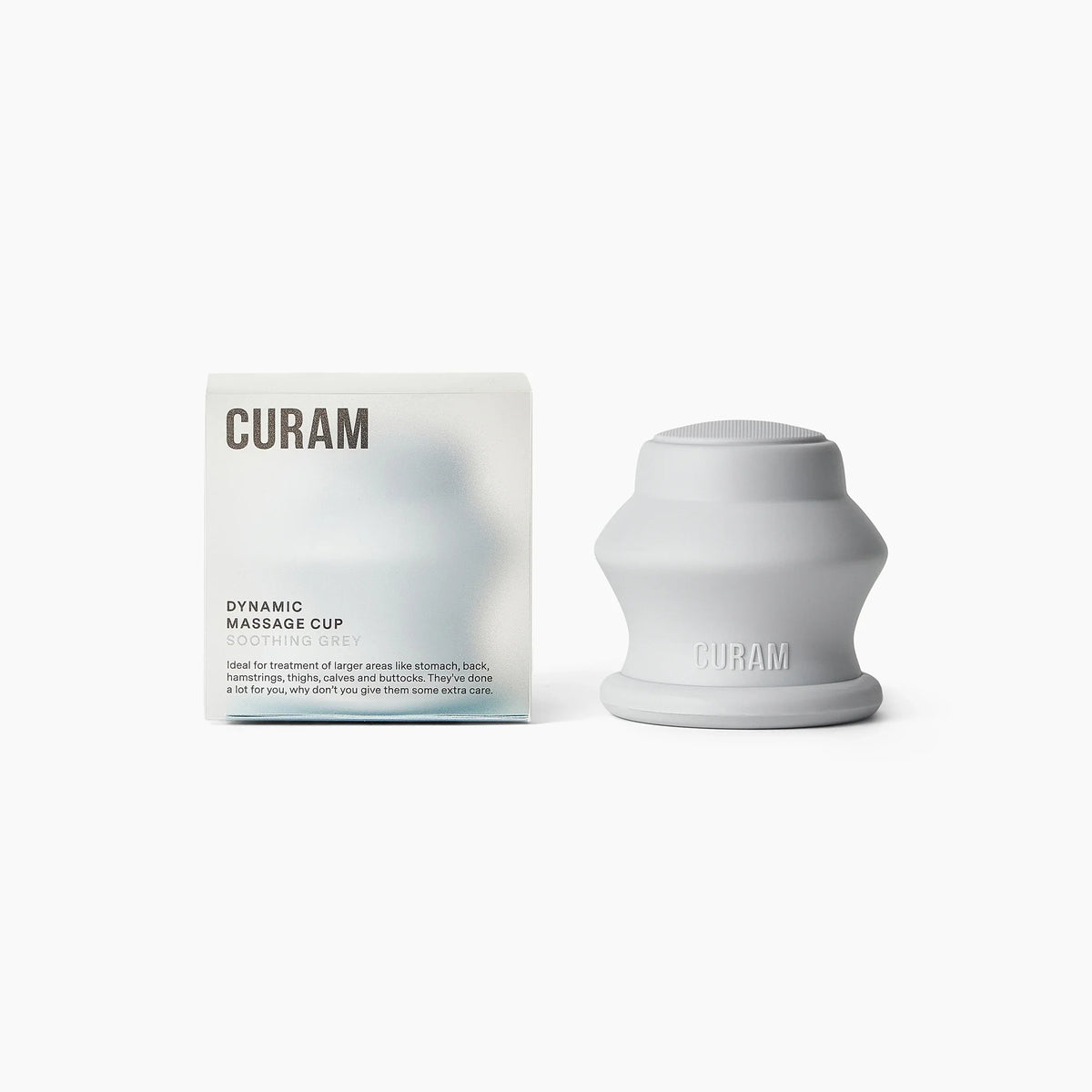
Pilates requires mobility in hips, upper back and hamstrings for the core to work properly, and people who sit a lot often have short hip flexors, a stiff upper back and tight hamstrings that make the lower back take over or the neck tense. Cupping before the session releases exactly that: glide the dynamic cup with light pressure along the front of the thigh towards the hip, along the back of the thigh towards the glutes and along the back from the lower back up between the shoulder blades, 2 minutes per area, followed by cat and cow and a hip flexor stretch; the session becomes deeper and easier immediately. After the session, or on the rest day, cupping of lower back, glutes and thighs helps the muscles recover and reduces soreness; static cups on the upper trapezius for five minutes are also the best way to release a neck that has tensed in the hundred. Don't cup the belly in connection with core training, not over a lower back that is acutely tender, and see when to avoid cupping. Routines in the cupping programme for yogis (suits Pilates just as well), massage cups for training and recovery and the best recovery after training.
Read more
Core exercises at home, yoga for beginners, home workout without equipment, forward head posture and better posture, stiff body and training with resistance bands, pilates ball and yoga block.
Frequently asked questions
What is Pilates good for?
Deep core strength, posture, mobility with control, pelvic floor and the back: regular Pilates reduces long-standing lower back pain and improves function as well as or better than other training in studies, and improves balance and core strength in both young and older people. It suits sedentary people, after childbirth, in rehab and as a complement to running and strength training. It doesn't give cardio fitness or large muscle mass.
How do you start Pilates at home?
Learn the three basics first, five minutes a day for a week: lateral breathing, neutral spine and pelvis, and centering (pelvic floor and lower belly lightly active, 30 percent). Then do the 20-minute session above three times a week: pelvic tilt, shoulder bridge, dead bug, toe taps, the hundred, single leg circles, rolling like a ball, swimming, side-lying series, spine stretch. Slowly, exhale on effort, quality before quantity.
What is the difference between Pilates and yoga?
Pilates is flowing, repeated, precise movements with focus on deep core strength, control and posture, with lateral breathing and exhale on effort. Yoga is positions that are held and sequences with focus on mobility, balance, breathing and mental presence. Pilates is best documented for back pain and posture; yoga for stiffness and stress. Many do both.
Does Pilates help back pain?
Yes, it is one of the best documented applications: Pilates strengthens the deep abdominal and back muscles that stabilise the lower back and teaches you to move with a neutral spine. Start with pelvic tilt, shoulder bridge, dead bug with a short movement, swimming with small lifts and cat and cow; avoid straight legs in the air and deep forward rolls in the first weeks if they hurt. With acute lumbago: wait until the worst pain has released. Back pain with numbness, weakness or night pain should be assessed first.
Can you combine Pilates and cupping?
Yes, they complement each other: cupping of the front and back of the thigh and the back before the session releases short hip flexors, tight hamstrings and a stiff upper back so the core can work properly, and cupping of lower back, glutes and thighs after the session or on the rest day speeds recovery. Static cups on the upper trapezius release a neck that has tensed. Don't cup the belly in connection with core training or over an acutely tender lower back.
Related guides
Written by Curam. Last updated 17 October 2026. This is general self-care information and does not replace medical care. For sudden, severe or unusual symptoms, contact your doctor. Talk to your doctor before cupping if you are pregnant, take blood thinners or have a condition affecting skin, blood vessels or blood.


