


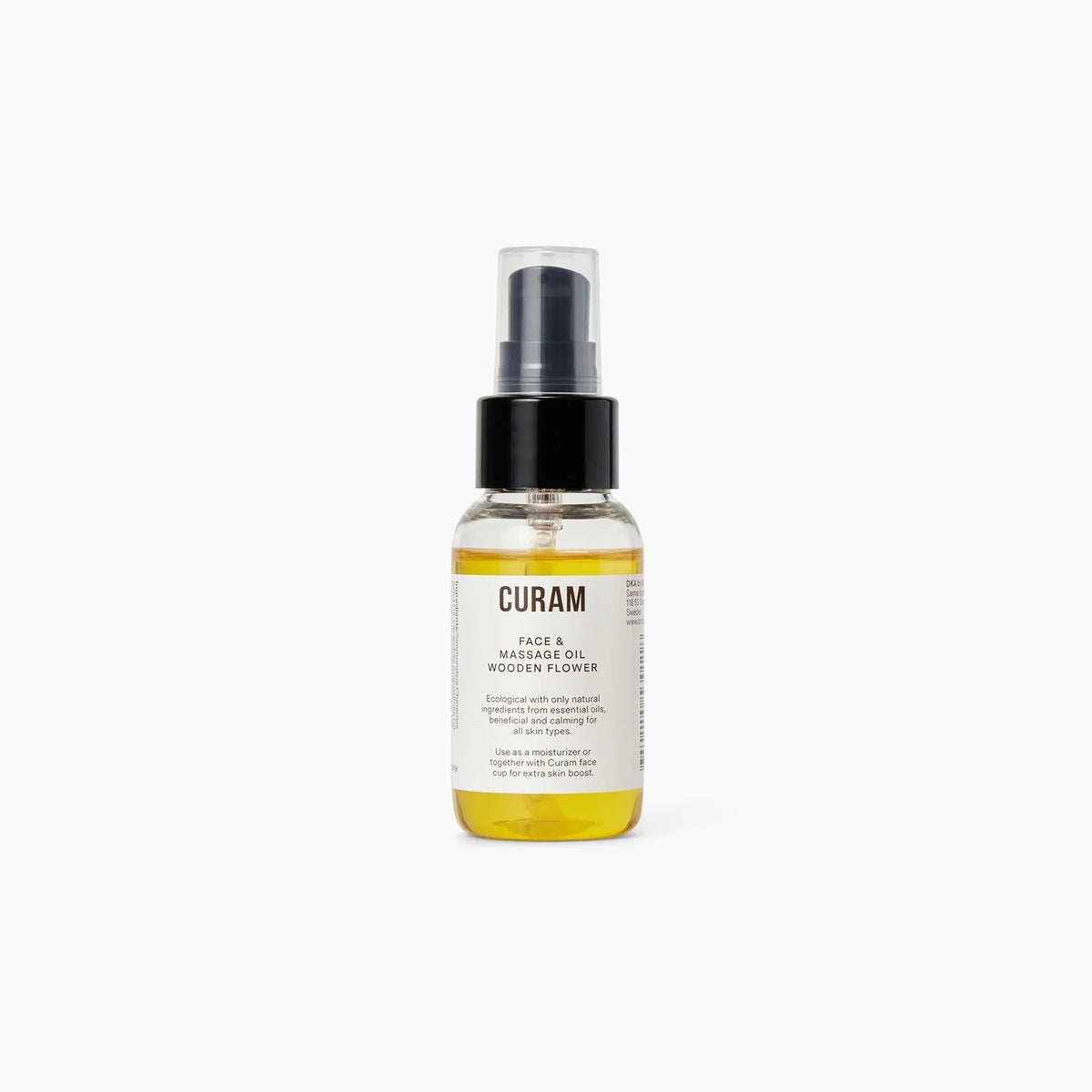
A face oil is a blend of plant oils, sometimes with added vitamins, antioxidants or essential oils, applied as the last step in the routine or mixed into the cream. It does three things. It seals: a thin layer of oil reduces water evaporation from the skin by up to half, so the moisture that serum and cream have supplied stays put; that is why the oil comes last. It supplies: linoleic acid, oleic acid and other fatty acids that the skin itself builds its barrier from, which is why skin with a damaged barrier (dry, flaky, tight, reddening) often calms within a few days with the right oil. And it gives glide: for massage, gua sha and face cupping the oil is what makes the tool glide over the skin instead of dragging it. What it doesn't do is hydrate in itself (oil contains no water; on dry skin without moisture underneath it locks in the dryness), replace a serum with active ingredients, or replace sunscreen; and the wrong oil on the wrong skin causes spots, because some oils clog the pores (comedogenic) while others rather counteract acne. The key is the fatty acid profile: oils rich in linoleic acid (jojoba, hemp seed, grape seed, safflower, squalane) are light, sink in and suit oily and acne-prone skin; oils rich in oleic acid (olive, avocado, almond, marula) are richer and suit dry and mature skin but can clog oily skin; and coconut oil and cocoa butter clog most faces and belong on the body. Here is which oil suits your skin, how to use it, and how it works with face cupping.
Which face oil suits which skin?
| Skin | Suits | Avoid | How to use |
|---|---|---|---|
| Dry and tight | Almond, avocado, marula, rosehip, argan, squalane; richer blends | Nothing in particular; but oil without moisture underneath locks in the dryness | 4–6 drops on damp skin or over hydrating serum and cream, morning and evening |
| Oily and shiny | Jojoba (resembles the skin's own sebum and can calm production), hemp seed, grape seed, squalane, safflower; light, linoleic-rich | Coconut, cocoa butter, wheat germ, olive in larger amounts, thick blends | 2–3 drops in the evening, mixed into a gel cream or alone on damp skin; in the morning often no oil, just light cream and SPF |
| Acne-prone | Hemp seed, jojoba, squalane, rosehip (scars and pigment); non-comedogenic, fragrance-free | Coconut, cocoa butter, flaxseed, palm oil, heavy blends with many essential oils | 2 drops in the evening after the acne treatment has dried in; not over inflamed spots; test for two weeks on one side first |
| Sensitive and reddening | Squalane, jojoba, sunflower oil (high linoleic), sea buckthorn in low dose; without essential oils and perfume | Citrus oils, lavender and tea tree oil in high concentrations, "detox" blends | 2–3 drops in the evening over a barrier-strengthening cream; patch test on the neck first |
| Mature skin, fine lines | Rosehip (vitamin A-like), argan, pomegranate, marula, borage; blends with vitamin E and antioxidants | Nothing in particular | 3–5 drops in the evening, ideally as a base for face cupping twice a week; retinoid and oil work together if the oil goes on top |
| Combination | Jojoba, squalane, hemp seed on the T-zone; richer on the cheeks | The same oil everywhere if the zones differ a lot | Zone it: fewer drops in the centre of the face, more on the cheeks |
| Men, beard | Jojoba, argan, grape seed: lubricate the skin under the beard and soften the hairs | Heavy oils that stay in the beard | 2–3 drops in the palms, massage into the skin under the beard after showering; see skincare for men |
Curam's face oil is made to work as both a daily face oil and a glide for the face cup: light oils that sink in and don't clog, fragrance-free, in a quantity that is enough for both the routine and the cupping. The full oil guide with base oils and labels is in massage oil: how to choose the right one.
In what order, how much, morning or evening
- Cleansing, mild. In the evening double cleansing if you have worn make-up or sunscreen: first a cleansing oil or balm (yes, oil dissolves oil), then a mild gel or milk.
- Toner or essence if you use one (optional).
- Serum with water-soluble actives: hyaluronic acid, niacinamide, vitamin C in the morning; retinoid in the evening. Let it sink in for a minute.
- Moisturiser. The oil can also be mixed into the cream (two drops in a dollop) if you want one step fewer; it is the easiest way for oily and combination skin.
- Face oil last, on slightly damp skin or over the cream: warm 2–5 drops between the palms and press into the skin with flat hands instead of rubbing, outwards and in, upwards. Neck and décolletage too.
- In the morning: sunscreen very last, over the oil once it has sunk in for a few minutes; many prefer no oil at all in the morning under sunscreen and make-up, only in the evening. Oily skin: evening. Dry skin: both.
How much: more than five drops is almost always too much; the skin should feel soft and look dewy after five minutes, not shiny and greasy. If it feels greasy you have used too much or the wrong oil. How often: daily in the evening is standard; with barrier damage twice a day for a week; with oily skin every other evening can be enough.
The mistakes that cause spots, milia and irritation
- The wrong oil for the skin type: coconut oil on the face is the most common reason for "oil gives me spots"; switch to jojoba, hemp seed or squalane.
- Too much: excess sits on top, collects dirt and clogs. Two to five drops.
- Oil before serum: the oil stops water-soluble ingredients from getting in; oil comes last.
- Oil on dry skin without moisture: locks in the dryness. Moisten first (damp skin, serum or cream).
- Not cleansing in the morning: the night's oil plus sebum plus sunscreen becomes a plug; cleanse in the morning even if you only rinsed yesterday.
- Photosensitising oils in the daytime: some essential oils (bergamot, citrus) increase sun sensitivity; avoid them in the morning.
- Rancid oil: plant oils go rancid in 6–12 months, especially in light and heat; if it smells like old crayons it is finished. Store dark and cool, buy small bottles.
- Oil over active acne as treatment: oil doesn't treat acne; treat with BHA, benzoyl peroxide or a retinoid and apply light oil over dry areas. Milia (small white bumps around the eyes) come from products that are too heavy around the eyes; use a light oil and not too close to the eyelids.
Other ways to use face oil
- As a cleanser (oil cleansing): massage a teaspoon of oil into a dry face for a minute, lay a warm damp towel over it for 30 seconds, wipe off, follow with a mild cleanser. Dissolves make-up, sunscreen and sebum without drying out.
- For shaving: a few drops under the shaving gel or instead of it gives glide and fewer razor burns; afterwards the oil calms the skin.
- On damp skin after showering for neck and décolletage.
- As a face mask: a thicker layer for 15 minutes in the evening for acute dryness, wipe off the excess.
- Around the eyes: half a drop, patted in with the ring finger on the bony edge, not on the eyelid.
Face oil and face cupping: how to
Face cupping requires oil: without glide the cup drags the skin and leaves marks, with the right amount it glides and does what it should, increases blood flow, supports lymphatic drainage and releases tension in jaw, forehead and around the eyes. The oil should be light enough not to clog, generous enough for the cup to glide through the whole session, and free from perfume and strong essential oils that irritate when worked in. How to: wash the face; apply the face oil, more than in the daily routine, about six to eight drops spread over forehead, cheeks, chin and neck, so the skin is clearly slippery; glide the face cup with minimal suction in slow strokes from the centre of the face outwards and upwards (chin towards ear, corner of the mouth towards temple, side of the nose towards temple, centre of the forehead towards the hairline) and down the sides of the neck towards the collarbones for drainage, and the mini cup around the nose, the bony edges of the eyes and the mouth; top up oil as soon as the cup starts to catch; keep the cup moving at all times; 5–10 minutes. Afterwards: for dry and normal skin you can press in the excess and go to bed, the night is when the oil does the most good; for oily and acne-prone skin you wash off the oil with a mild cleanser and apply a light cream, so the pores don't fill. Two to three times a week in the evening, or daily in shorter sessions (three minutes) if the skin tolerates it. Don't cup over inflamed acne, rosacea in a flare, eczema, wounds, sunburn or fresh fillers; see when to avoid cupping. The full technique in face cupping, the routine around it in skincare routine with face cupping, and programmes in natural face lift and de-puff eyes.
Read more
Massage oil: how to choose the right one, skincare routine with face cupping, face cupping, large pores, lymphatic massage for the face and gua sha or face cupping.
Frequently asked questions
Should you use face oil before or after moisturiser?
After, as the last step in the evening (and under the sunscreen in the morning if you use oil then), or mixed into the cream. Oil seals in the moisture from serum and cream and stops water-soluble ingredients from penetrating if applied before; serum first, cream then, oil last. In the morning the sunscreen comes very last, a few minutes after the oil.
Can you use face oil if you have oily or acne-prone skin?
Yes, with the right oil and the right amount: light, linoleic-rich oils such as jojoba, hemp seed, squalane and grape seed, two to three drops in the evening, never coconut oil or cocoa butter. Jojoba resembles the skin's own sebum and can calm overproduction. Oil doesn't treat acne; treat the spots with BHA, benzoyl peroxide or a retinoid and apply the oil lightly on dry areas.
How many drops of face oil should you use?
Two to five drops for the whole face and neck, warmed between the palms and pressed into slightly damp skin; oily skin two to three, dry skin four to six. The skin should feel soft and look dewy after five minutes, not shiny. For face cupping you need more, six to eight drops, so the cup glides through the whole session.
Which face oil is best?
The one that suits your skin: dry skin does well with richer oils (almond, avocado, marula, rosehip, argan), oily and acne-prone skin with light linoleic-rich ones (jojoba, hemp seed, squalane, grape seed), sensitive skin with squalane and jojoba without perfume and essential oils, mature skin with rosehip, argan and pomegranate. Avoid coconut oil on the face. A good face oil for cupping is light, fragrance-free and comes in sufficient quantity.
Do you need oil for face cupping?
Yes, always: without oil the cup drags the skin, catches and leaves marks; with six to eight drops of a light oil it glides and does what it should. Top up as soon as the cup starts to catch and keep it moving at all times. Dry skin can leave the oil on overnight; oily and acne-prone skin washes it off afterwards and applies a light cream.
Related guides
Written by Curam. Last updated 17 October 2026. This is general self-care information and does not replace medical care. For sudden, severe or unusual symptoms, contact your doctor. Talk to your doctor before cupping if you are pregnant, take blood thinners or have a condition affecting skin, blood vessels or blood.


